| Author |
 Replies: 13 / Views: 1,424 Replies: 13 / Views: 1,424 |
|
|
Valued Member
Germany
142 Posts |
Hi to everyone! I am relative new to ancient coin collecting, and I am just beginning to learn more on the subject. This is my first roman coin ever, bought one year ago when I only had two or three roman coins in my collection. I am suspicious of some pitting it has on the back... but was never able to tell for sure whether it is fake or not. How can someone really tell when some pitting is real and not some air bubbles made in a casting process? What do you think of it? Oh, almost forgot: Weight is 11,46 grams Thanks a lot for your input, Best! 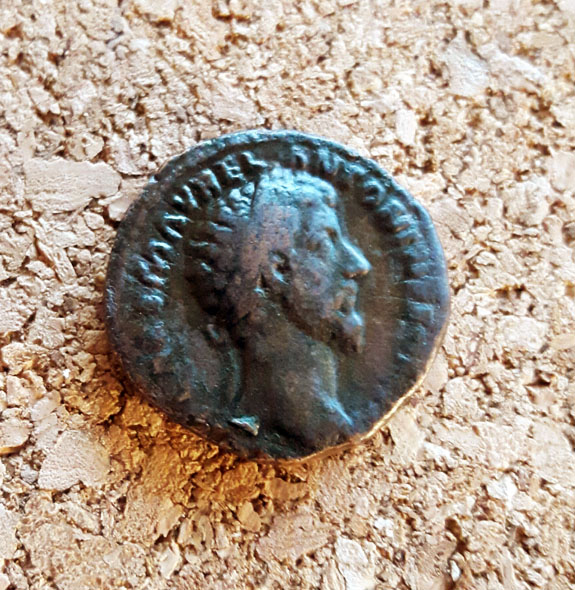 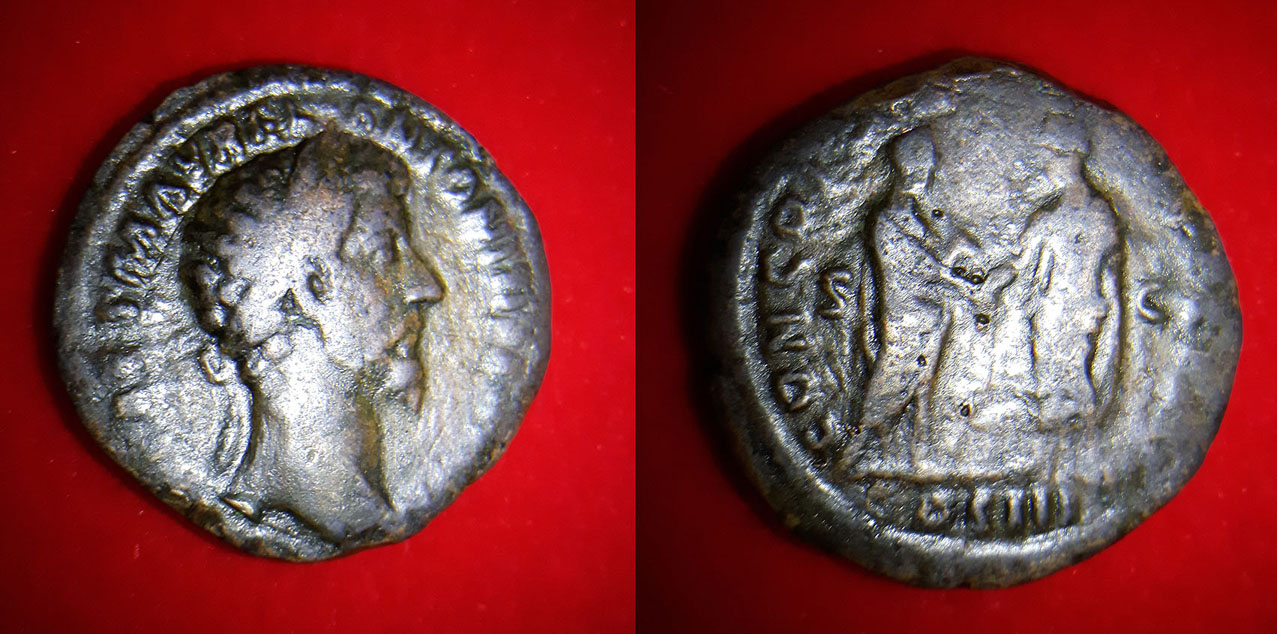 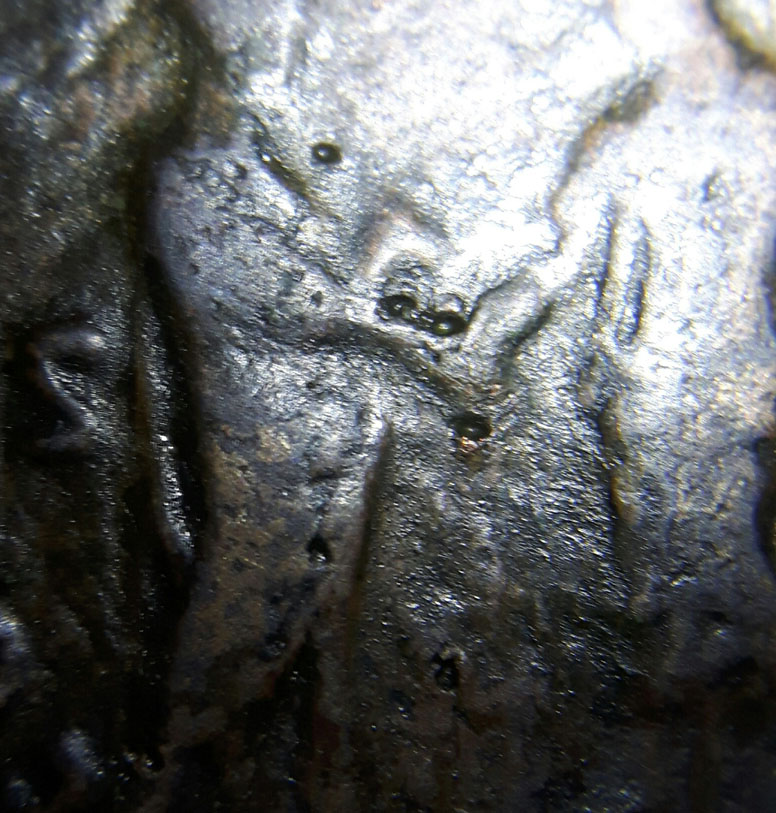 |
|
|
|
Moderator
 United States
23731 Posts |
 to the community Those marks on the reverse look like casting bubbles and the patina also looks applied IMO. I would also be suspicious about it. Lets see what the others have to say. |
|
Valued Member
United States
234 Posts |
Coin doesn't look right to me. I recently purchased a fairly worn AS coin on ebay and when I soaked it in distilled water the patina wiped right off exposing casting bubbles. More fakes than ever on ebay even in the lower quality coins. |
|
Moderator
United States
34560 Posts |
@dirtyharry, first welcome to CCF. Second, is there any evidence of a parting line on the edge of the coin? I know that the cast fakes no longer have them, but evidence of one would be a surefire way to confirm this is fake.
"If you climb a good tree, you get a push."
-----Ghanaian proverb
"The danger we all now face is distinguishing between what is authentic and what is performed."
-----King Adz
|
|
Pillar of the Community
United States
4883 Posts |
Great closeup photography. Those cavities really do raise a red flag, especially since they all look to have a tiny nodule inside.
Colligo ergo sum
|
|
Pillar of the Community
United States
7067 Posts |
Quote:
Those cavities really do raise a red flag, especially since they all look to have a tiny nodule inside.  |
|
Pillar of the Community
United States
3495 Posts |
The pits themselves do not overly trouble me. Corrosion can cause pitting too.
I believe what appear to be nodules are actually reflections produced by the oil that has been applied to the surface. Bronze almost always looks better with a 'wet' look produced by applying any number of substances from a dab of Vaseline to products such as Blue Ribbon coin preservative.
The real "ringer" on bubbles are the ones produced during the investment process where tiny bubbles adhere to the wax copies used in casting. These will appear as casting pearls which resemble tiny orb like pimples on the surface.
I am inclined to say it is a casting but would want to see two things before I condemn it.
1) the coin sans oil !
Wash it with acetone or alcohol. This will leave a dry surface to better examine it.
Tiny pimples in the details mean casting pearls.
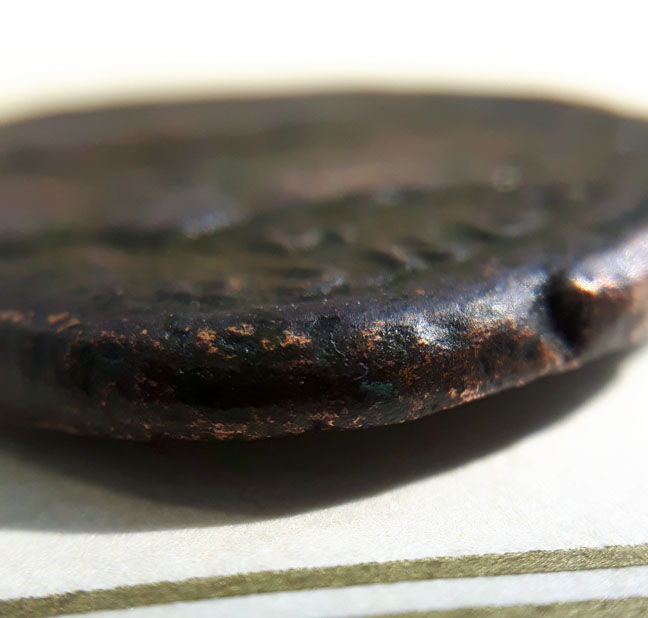
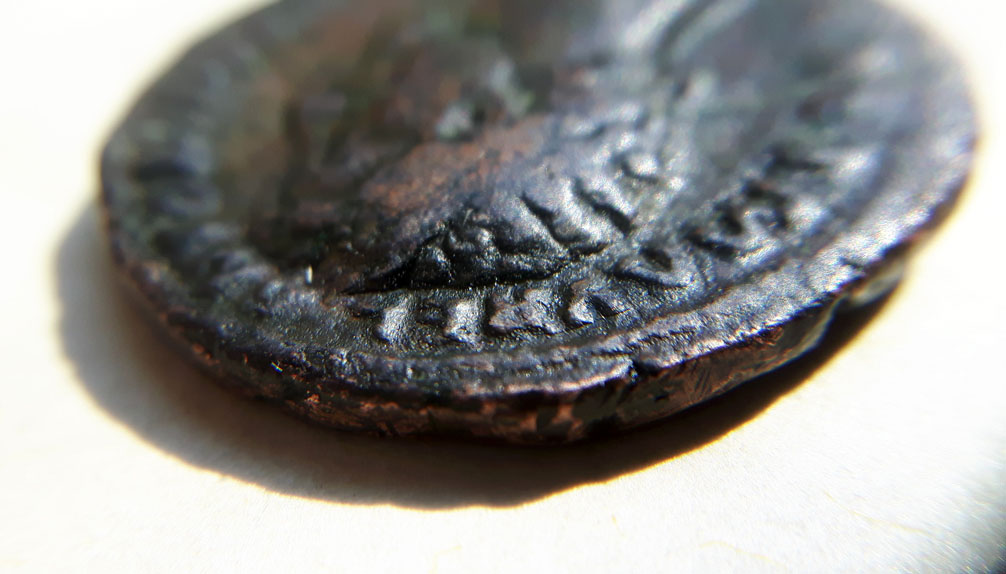
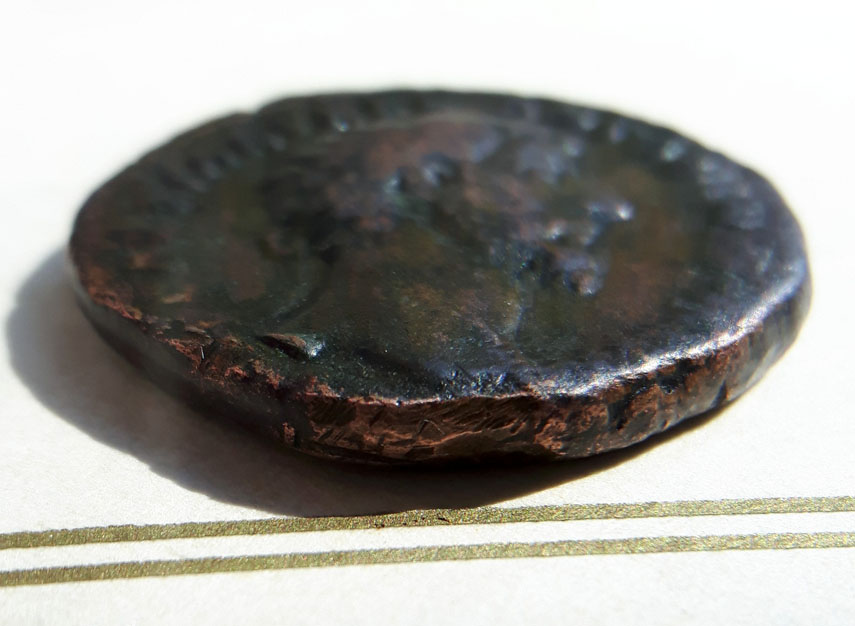
2) the base of the bust of Marcus looks like it may be the point where a sprue was removed by cutting. In the first pic it appears strangely flat both in outline and edge surface. It should have curvature both ways. Sharp angles imply filing.
I want to see the bottom obverse edge in detail.
|
|
Valued Member
 Germany
142 Posts |
Hi! Thanks a lot to everyone for the replies! It´s great to see a lot of knowleadgeable people in this forum.
About the coin:
1) As correctly suggested, the coin has indeed oil residues on it and it was actually my fault.
It was submerged in olive oil for many many days. Then I removed with a wooden toothpick some tiny residues and a couple of tiny green spots very carefully, but did nothing invasive on the surface.
2) I didn´t buy it online, but from a honest dealer I know. The problem is (This only my personal opinion) he has no particular expertise in ancient coins. And I have even less.
3) As you may already know, it is extremely difficult to take good pictures of a coin with a mobile phone and artificial light. The actual color of the coin is different to what the pictures display, and does not really "feel" wrong when holding it or comparing it to other roman coppers I have (Sadly, I have too few to compare :)
I will take and post pictures later today from the edge and from the base of Marcus Aurelius´s bust to reply both to dspenciner and FVRIVS RVFVS interesting points.
Now I am really interested in solving this! :)
|
|
Valued Member
Germany
142 Posts |
|
|
Pillar of the Community
United States
3495 Posts |
Interesting ........ The edge in question looks like it has been scraped which makes me suspicious ! But the edge scrapes don't prove that a sprue was present only that the coin has possibly been 'abused' The finder may have scraped it on a rock to see if it was gold or silver. The coin looks coppery in these pics. That is a good sign ! The coin is an As of Marcus so it should be copper. Likewise ....... copper cannot be cast ! Bronze can be cast but copper won't cast. A good sign. Lastly the unblemished edges have a genuine look about them including some of the green you mentioned. If not for that I would have ignored the mention of it. All sorts of characters have made claims about coins they post. Unless we see the evidence just taking your word for it would be careless. I was 60% con on this coin I am now flipped to 75% pro. A more personal exam is required to more certain. Would I buy it on ebay ? Only if it was dirt cheap ! |
|
Valued Member
Germany
142 Posts |
Thanks a lot for the valuable info! I actually never had the chance to hold, examine and let alone own hundreds of exemplars so this input is much appreciated. Everything I read here helps me to choose my next buys more carefully. Regarding this coin, I paid 40€ for it... I am really not aware of ebay prices but where I buy it doesn't seem truly excessive. Anyway I'm keeping it of course! Best, D |
|
Pillar of the Community
United States
616 Posts |
Interesting exploration. And you've got the right attitude for the hobby. Enjoy! As for taking coin pictures, here's a site I've had bookmarked for years and occasionally reference. http://www.sigma-2.com/camerajim/cjgcoins.htm |
|
Pillar of the Community
United States
4883 Posts |
This is a specimen for which authenticity might best be ascertained through analysis via xray fluorescence.
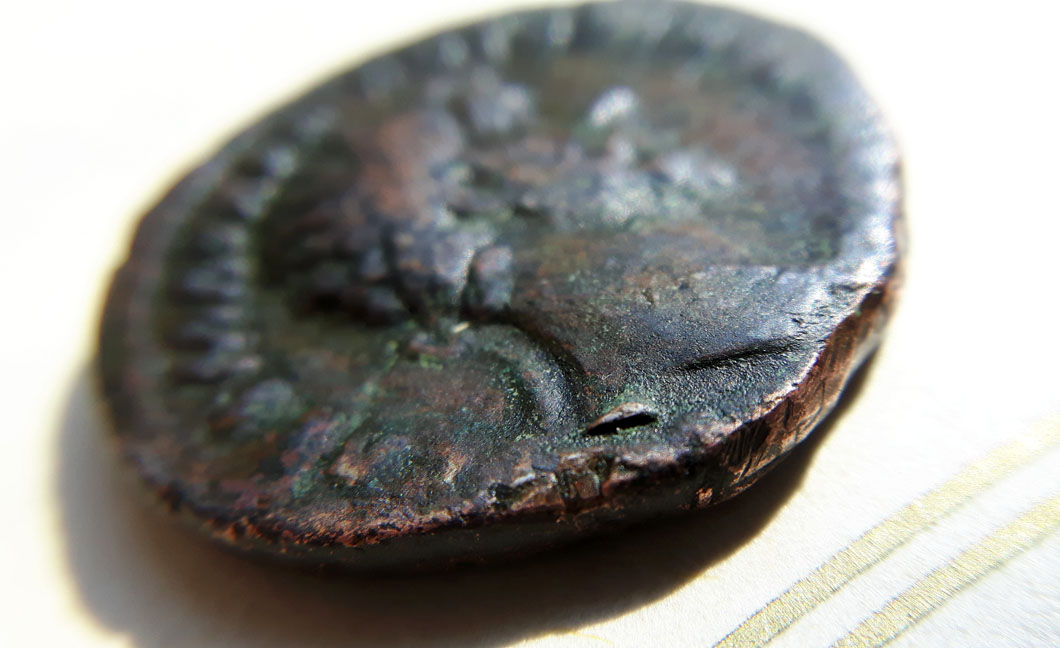
Did the "nodules" turn out to be real or just a photographic artifact due to the olive oil?
Colligo ergo sum
|
|
Valued Member
Germany
142 Posts |
It was a visual effect... from another angle they look different: 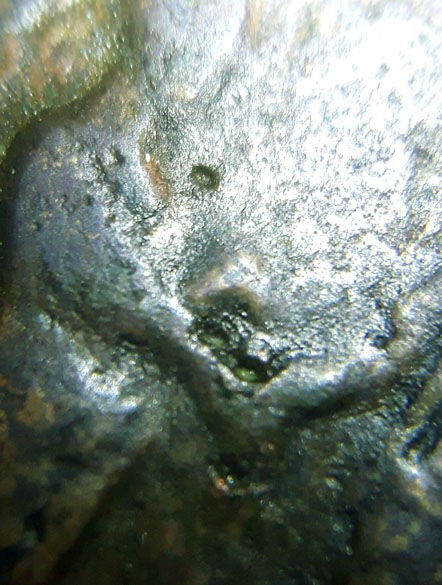 |
| |
Replies: 13 / Views: 1,424 |
|





 Posted 09/10/2016 6:19 pm