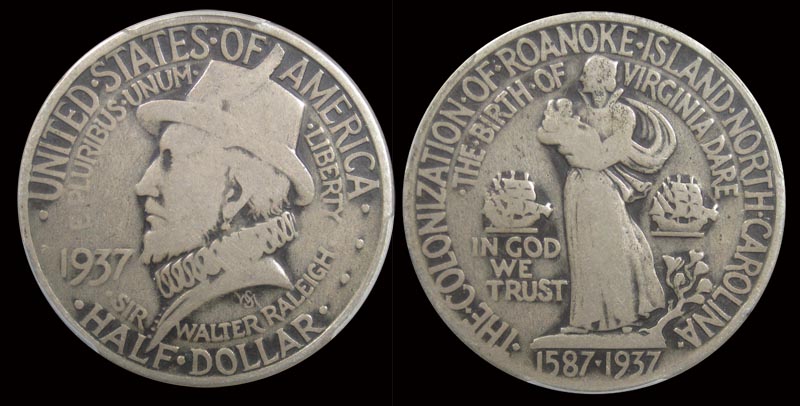
I previously wrote about the Roanoke commemorative half dollar here
Coin Post and here
Ephemera Post. Both were early in my CCF "career" and so both were fairly brief posts.
Tonight, I thought I'd revisit the Roanoke with a story about the efforts of the coin's sponsor on behalf of collectors.
Read More: Commems CollectionRailing Against "Unscrupulous Dealers"The Roanoke half dollar was authorized on June 24, 1936 when President Franklin Delano Roosevelt signed the legislation calling for the coin. Per Public Law 74-790, the coin was issued to commemorate "the three hundred and fiftieth anniversary of Sir Walter Raleigh's colony on Roanoke Island, North Carolina, known in history as the Lost Colony, and the birth of Virginia Dare, the first child of English parentage to be born on the American continent." The coin was sponsored by the Roanoke Colony Memorial Association (RCMA) and was to feature a "1937" date regardless of whether the coins were struck in 1936 or 1937.
The coin's legislation specified that a single mint facility was to be used for the striking of the coin - no P-D-S sets for the Roanoke! - and that each order placed by the coin's sponsor needed to be for at least 25,000 coins. No maximum mintage was specified in the law, but production was limited by the calendar as no coins could be struck after July 1, 1937.
By the time the coin was authorized, the peak of the commemorative coin "craze" had passed and market prices for the various issues were beginning to soften. A contributing factor to the decline was the unfair manipulation of the sales and distribution of multiple issues by dealers, sponsors or combinations of both. A few that come to mind are Horace Grant's handling of the Rhode Island coins, C. Frank Dunn's "management" of the multi-year Boone program and the seemingly never-ending series of Oregon Trail Memorial coins that tried hard to exploit the desire of collectors to form complete sets.
In contrast, from the day its coin first went on sale, the Roanoke Colony Memorial Association wanted to make sure that the sale and distribution of its half dollar was carried out in a manner that was unquestionably fair to collectors.
It set the original selling price for the coin at $1.50, a reasonable price point considering that most commemorative coins of the mid-1930s sold for between $1.00 and $2.00 per coin. It also limited the number of coins per order to 10 (more on this later).
One had to look no further than their ads to understand their intent. A January 1937 ad in
The Numismatist stated "No collusion tactics to boost the price will be permitted and all bona-fide coin collectors will be given a square deal in the distribution of the Virginia Dare-Sir Walter Raleigh commemorative coins."
In April, 1937, D. Bradford Fearing, a North Carolina state senator and chairman of the RCMA, stated "Speculation in the field of memorial coins by a few unscrupulous dealers constitutes a problem to organization fostering historical commemorations." This pronouncement was prompted by reports that Fearing had received of dealers selling their coin for prices higher than what was being charged by the Association and their attempts to justify the higher cost by claiming they were sold out at the source. Fearing quickly denounced the claims and stated that it was "ridiculous to pay a dealer between two and three dollars" for the coin when approximately 8,000 of them were still available from the Association for just $1.50 plus $0.15 to cover postage, insurance and handling. He went on to note that while the Association was limiting orders to 10 coins, it reserved the right to reject orders that "were a ringer for a dealer."
In my review of dealer ads of 1937, I found that examples of the Roanoke half dollar, variably referred to as being dated "1936" or "1937," were generally offered for between $2.00 and $2.60 each. A markup over the $1.50 issue price for sure, but far less than the markups that some dealers had charged for certain issues just a year before when the commemorative market was hot. It was nice to see the coin's sponsor being vocal in its support of collectors and working to prevent dealers from preying upon them with artificially-inflated prices.
In the months that followed, the Association sold enough of their coins to merit asking the Mint to strike an additional batch of 25,000; the second group was delivered in June. Sales slowed, however, as the anniversary year went on and only about 4,000 additional coins were sold. Eventually, 21,000 of the coins were returned to the Mint to be melted - the final net mintage (not including assays) for the coin was 29,000.
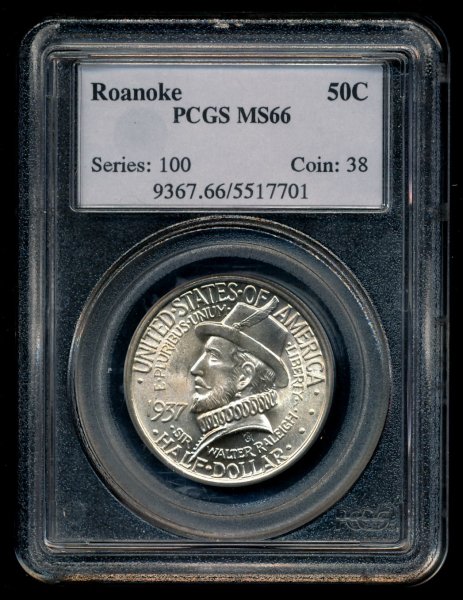
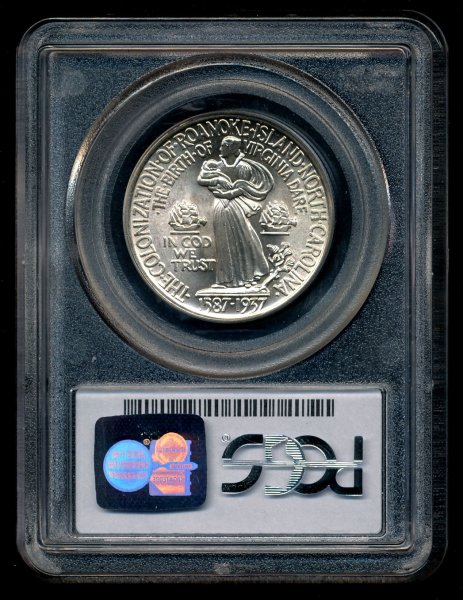
The net mintage has allowed the Roanoke to be readily available in today's market for reasonable prices across the grading spectrum. Even higher-end coins such as those grading MS-66 can be purchased for approximately $250 in today's soft market.
If you decide to purchase one, there's a very good chance that its first owner was a collector rather than a dealer; you can thank D. B. Fearing and the RCMA for that!
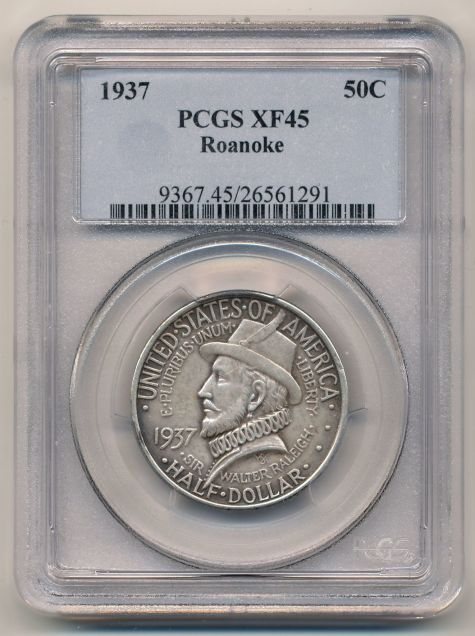
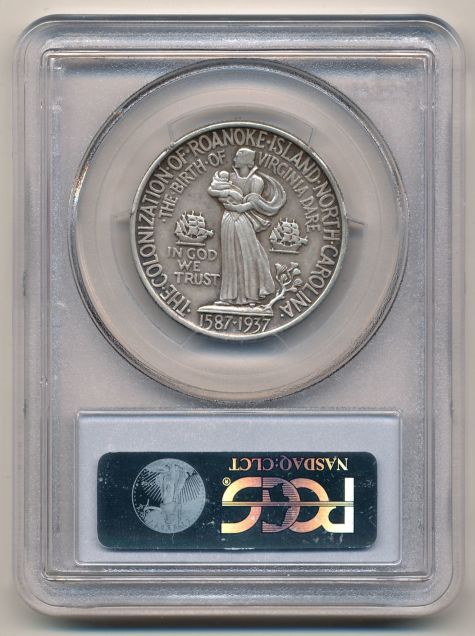
Here are two of the Roanoke half dollars I have in my collection. (A tip of my feathered hat to nickelsearcher for making his XF-45 available to me some time back - it was too high of a grade for his lowball set!

)






 Posted 01/08/2017 01:25 am