| Author |
 Replies: 814 / Views: 111,864 Replies: 814 / Views: 111,864 |
|
|
|
Pillar of the Community
United States
3843 Posts |
Not a coin but I recently acquired this bank. I'm thinking it is 1960's era. 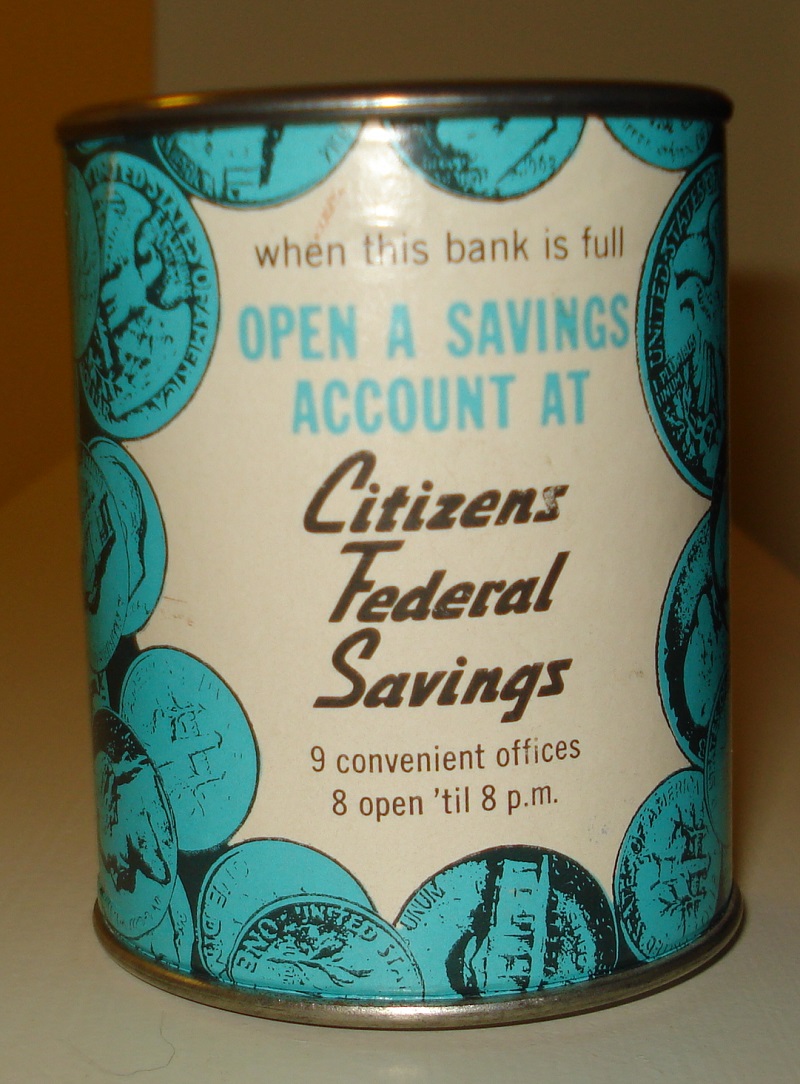 |
|
Bedrock of the Community
 United States
11966 Posts |
Very nice. Reminds me of saving coins when I was a kid and dreaming about buying a trans am when I grew up.  IN NECESSARIIS UNITAS - IN DUBIIS LIBERTAS - IN OMNIBUS CARITAS THE MAN IN THE ARENA, Theodore Roosevelt at the Sorbonne Paris on April 23, 1910: " It is not the critic who counts; not the man who points out how the strong man stumbles or where the doer of deeds could have done better. The credit belongs to the man who is actually in the arena, whose face is marred by dust and sweat and blood, who strives valiantly, who errs and comes up short again and again, because there is no effort without error or shortcoming, but who knows the great enthusiasms, the great devotions, who spends himself in a worthy cause; who, at the best, knows, in the end, the triumph of high achievement, and who, at the worst, if he fails, at least he fails while daring greatly, so that his place shall never be with those cold and timid souls who knew neither victory nor defeat." My coin website: https://fairfaxcoins.com |
|
Pillar of the Community
 United States
5029 Posts |
Nice addition to the thread  |
|
Moderator
United States
195559 Posts |
Quote:
Not a coin but I recently acquired this bank. I'm thinking it is 1960's era. Very nice! |
|
Bedrock of the Community
United States
11966 Posts |
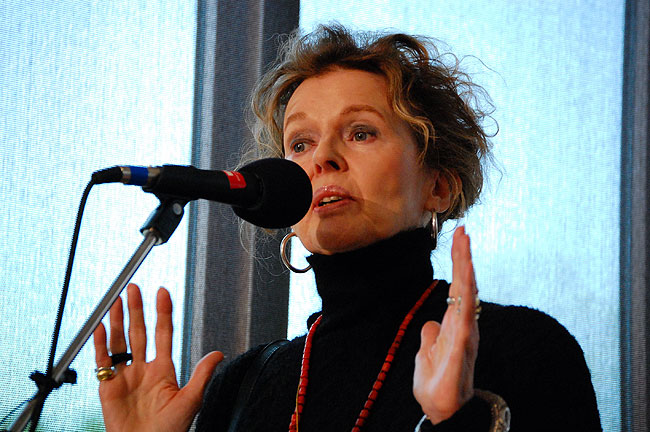 Elizabeth Jones was the first female Chief Engraver of the United States, appointed by President Ronald Reagan. She served the 11th term of the United States Mint from 1981-1991. During this era, buying silver coins was becoming very popular, and the 1986 American Silver Eagle was minted and distributed for collectors. In 1983, Jones designed the Los Angeles XXIII Olympiad, Olympic One Dollar commemorative coin, obverse. Jones' design incorporated the traditional discus thrower of conjoined outlines, appearing to be in stroboscopic motion in a three-layered outline. She described her own distinctive carving style as "mildly abstract." IN NECESSARIIS UNITAS - IN DUBIIS LIBERTAS - IN OMNIBUS CARITAS THE MAN IN THE ARENA, Theodore Roosevelt at the Sorbonne Paris on April 23, 1910: " It is not the critic who counts; not the man who points out how the strong man stumbles or where the doer of deeds could have done better. The credit belongs to the man who is actually in the arena, whose face is marred by dust and sweat and blood, who strives valiantly, who errs and comes up short again and again, because there is no effort without error or shortcoming, but who knows the great enthusiasms, the great devotions, who spends himself in a worthy cause; who, at the best, knows, in the end, the triumph of high achievement, and who, at the worst, if he fails, at least he fails while daring greatly, so that his place shall never be with those cold and timid souls who knew neither victory nor defeat." My coin website: https://fairfaxcoins.com |
|
Moderator
United States
195559 Posts |
A worthy report. |
|
Bedrock of the Community
United States
11966 Posts |
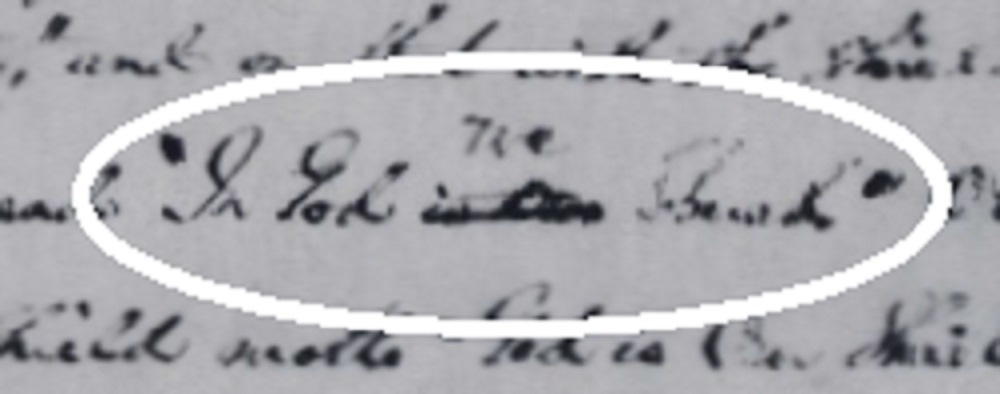 Salmon P. Chase, Treasury Secretary, scribes " In God is our Trust," scratches out " is our" and overwrites " We" to arrive at " In God We Trust" in a December 9, 1863, letter to James Pollock, Director of the Philadelphia Mint. Chase, Salmon P (December 9, 1863). Letter to James Pollock. Document # RG 104_UD 87-A_Folder In God We Trust 1861_Part1. National Archives and Records Administration. p. 11. Salmon Portland Chase (January 13, 1808 - May 7, 1873) was an American politician and jurist who served as the sixth Chief Justice of the United States. He also served as the 23rd Governor of Ohio, represented Ohio in the United States Senate, and served as the 25th United States Secretary of the Treasury. Chase served as Secretary of the Treasury in President Lincoln's cabinet from 1861 to 1864, during the Civil War. In that period of crisis, there were two great changes in American financial policy, the establishment of a national banking system and the issue of paper currency. The former was Chase's own particular measure. He suggested the idea, worked out the important principles and many of the details, and induced the Congress to approve them. It not only secured an immediate market for government bonds, but also provided a permanent, uniform and stable national currency. Chase ensured that the Union could sell debt to pay for the war effort. He worked with Jay Cooke & Company to successfully manage the sale of $500 million in government war bonds (known as 5/20s) in 1862. The first issue of $1 notes in 1862 as legal tender, featured Chase. The first U.S. federal currency, the greenback demand note, was printed in 1861-1862 during Chase's tenure as Secretary of the Treasury. It was Chase's responsibility to design the notes. In an effort to further his political career, his face appeared on a variety of U.S. paper currency, starting with the $1 bill so that the people would recognize him. IN NECESSARIIS UNITAS - IN DUBIIS LIBERTAS - IN OMNIBUS CARITAS THE MAN IN THE ARENA, Theodore Roosevelt at the Sorbonne Paris on April 23, 1910: " It is not the critic who counts; not the man who points out how the strong man stumbles or where the doer of deeds could have done better. The credit belongs to the man who is actually in the arena, whose face is marred by dust and sweat and blood, who strives valiantly, who errs and comes up short again and again, because there is no effort without error or shortcoming, but who knows the great enthusiasms, the great devotions, who spends himself in a worthy cause; who, at the best, knows, in the end, the triumph of high achievement, and who, at the worst, if he fails, at least he fails while daring greatly, so that his place shall never be with those cold and timid souls who knew neither victory nor defeat." My coin website: https://fairfaxcoins.comEdited by numismatic student
01/12/2018 8:02 pm
|
|
Moderator
United States
195559 Posts |
|
|
Bedrock of the Community
United States
11966 Posts |
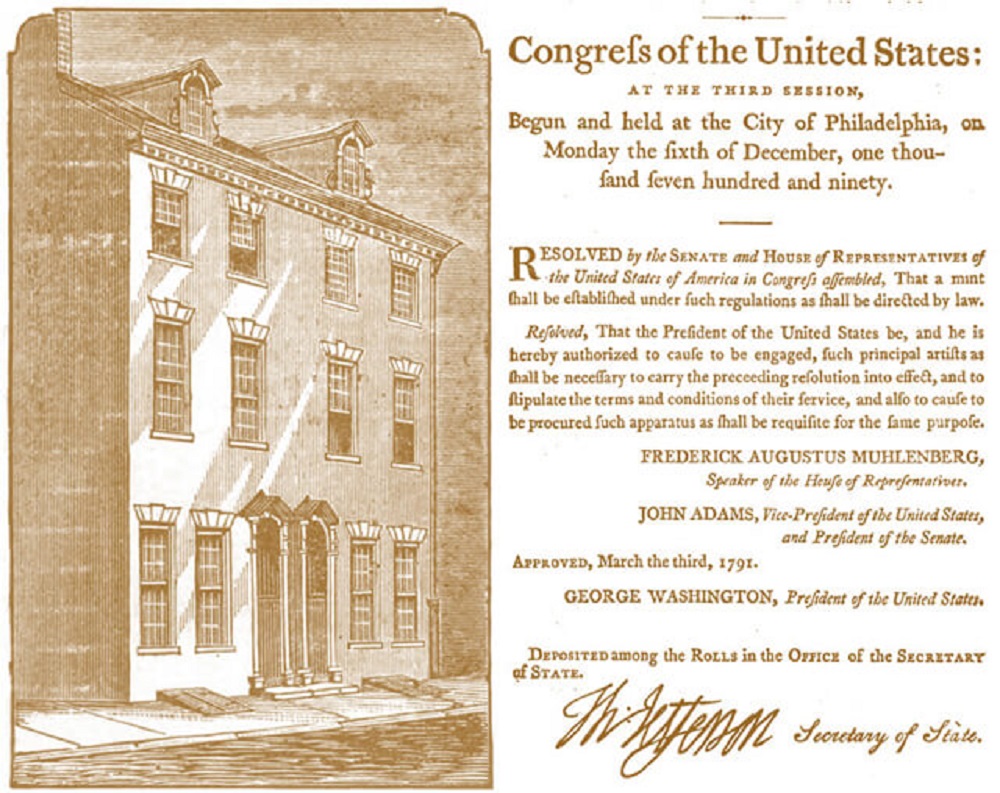
Just a few hours after the Declaration of Independence was adopted by the Continental Congress on July 4, 1776, the first committee to design a seal for the United States was appointed, and its design began. After undergoing numerous changes, on June 20, 1782, the seal was officially adopted by the Continental Congress. print-friendly version The Great Seal of the United States is the symbol of our sovereignty as a nation. Its obverse is used on official documents to authenticate the signature of the President and it appears on proclamations, warrants, treaties, and commissions of high officials of the government. The Great Seal's design, used as our national coat of arms, is also used officially as decoration on military uniform buttons, on plaques above the entrances to U.S. embassies an consulates, and in other places. Both the obverse and the less familiar reverse, which is never used as a seal, are imprinted on the one-dollar bill. The history of the Great Seal begins with the day of our founding as a nation. The Continental Congress appointed a committee to design a seal for the United States on July 4, 1776, just a few hours after they adopted the Declaration of Independence. The committee members—Benjamin Franklin, Thomas Jefferson, and John Adams—prepared a very complicated design that was promptly tabled by Congress. However, one prominent feature of their design appeared in the design that was originally adopted—the motto E Pluribus Unum, "Out of Many, One." In 1780, a second committee—James Lovell of Massachusetts and John Morin Scott and William Churchill Houston of Virginia—developed a second design, but it was also tabled by Congress. Like the first design, the second had elements that were later incorporated into the final seal, including the olive branch, the constellation of 13 stars, and the shield with red and white stripes on a blue field. A third committee was appointed in May of 1782. This committee's design employed the eagle for the first time, in the crest. Early in 1782, Congress referred the three designs to Secretary of the Continental Congress Charles Thompson. Thompson made a fourth design that was revised by William Barton, a Philadelphia student of heraldry. Thompson submitted a written description of his final version to the Continental Congress that described the design and explained its symbolism. The Continental Congress approved this design on June 20, 1782. (Information excerpted from The Great Seal of the United States. National Archives and Records Administration: Washington, DC, 1986.) The influence of the seal on U.S. coinage is unmistakeable. FIRST GREAT SEAL OF THE UNITED STATES, 1782 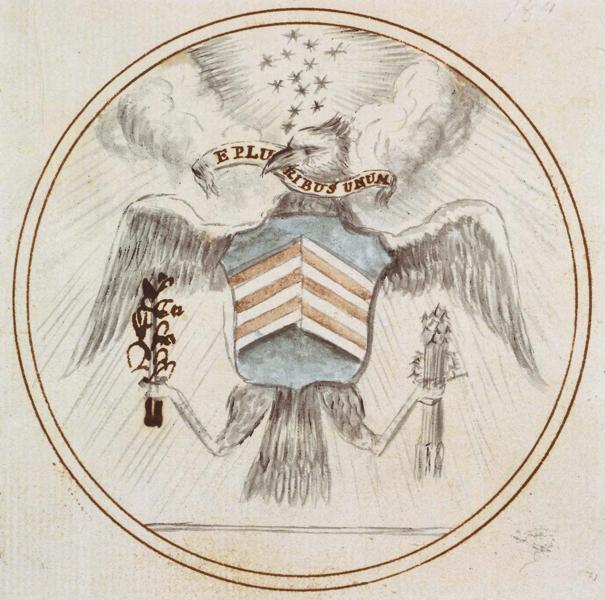 This is a 1903 press and counterdie for imprinting the Great Seal of the United States on official government documents: 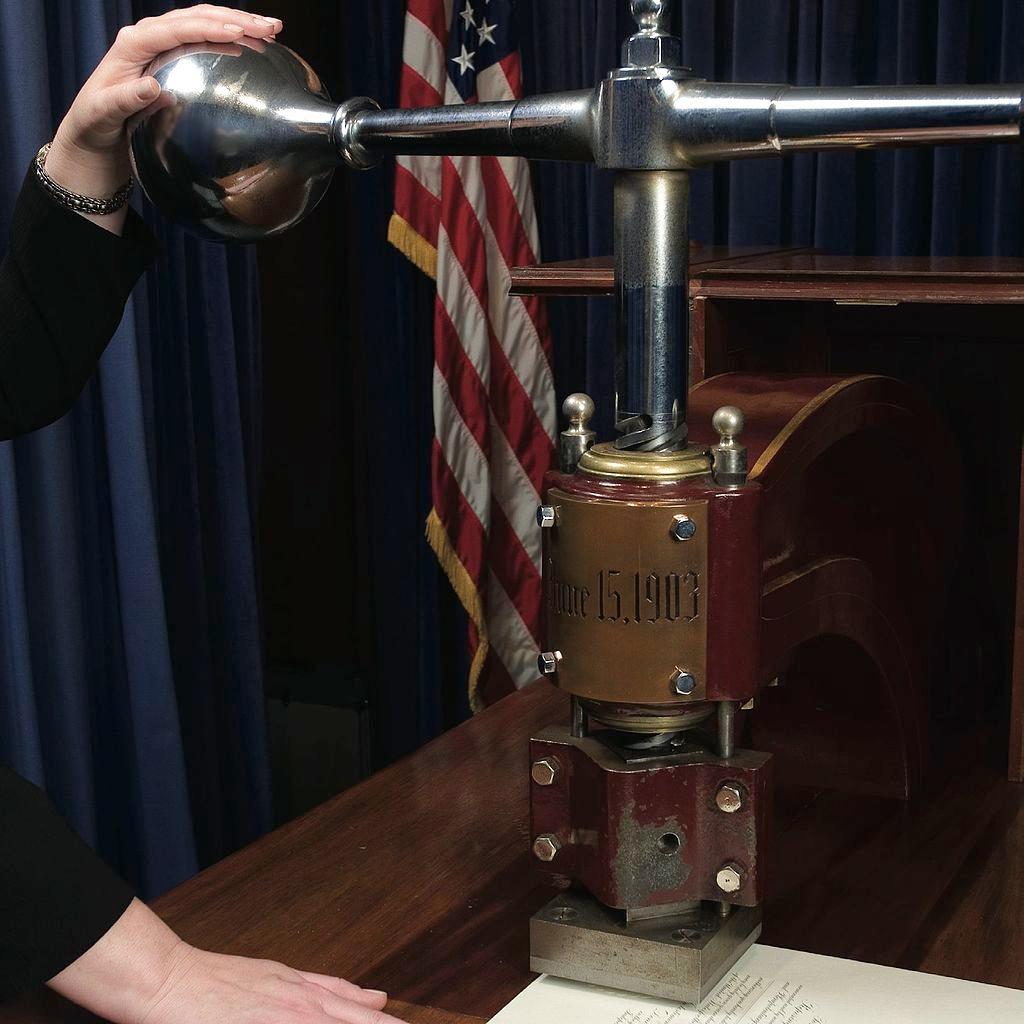 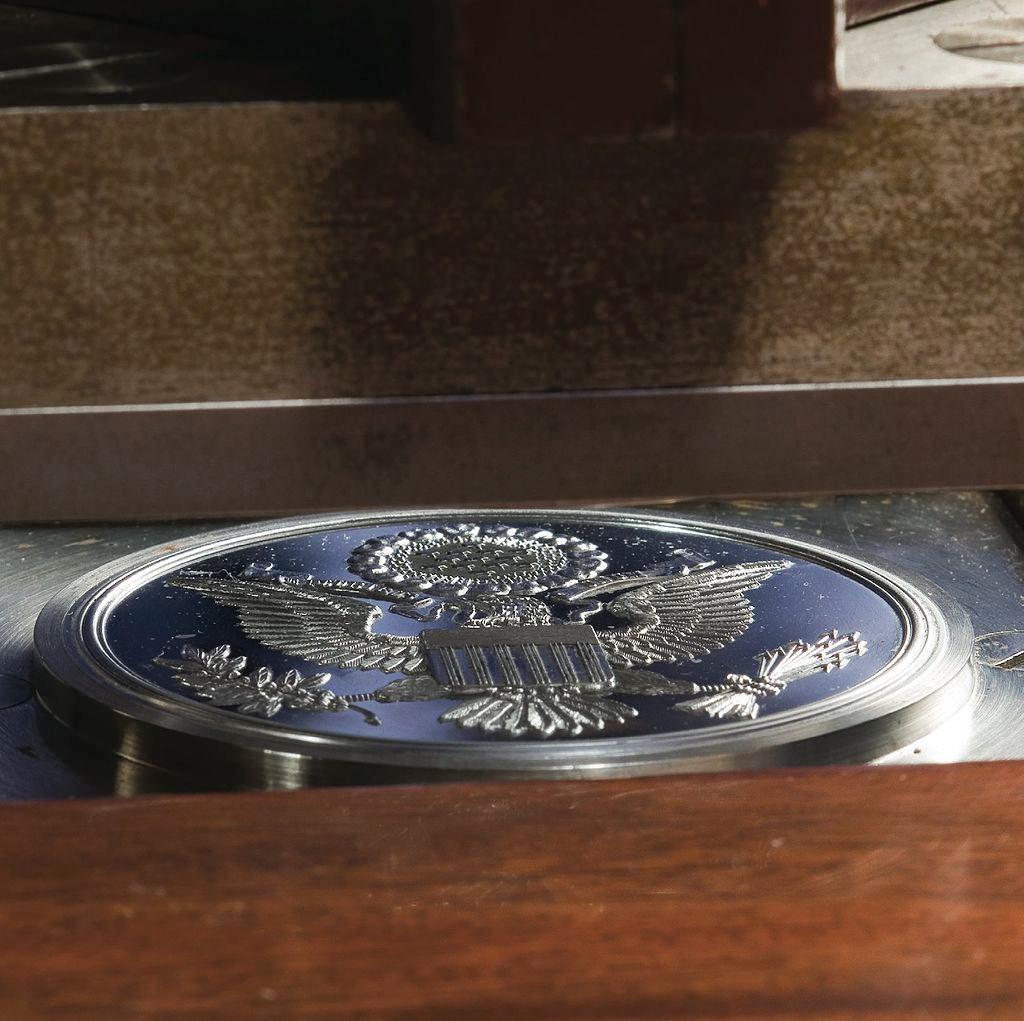 IN NECESSARIIS UNITAS - IN DUBIIS LIBERTAS - IN OMNIBUS CARITAS THE MAN IN THE ARENA, Theodore Roosevelt at the Sorbonne Paris on April 23, 1910: " It is not the critic who counts; not the man who points out how the strong man stumbles or where the doer of deeds could have done better. The credit belongs to the man who is actually in the arena, whose face is marred by dust and sweat and blood, who strives valiantly, who errs and comes up short again and again, because there is no effort without error or shortcoming, but who knows the great enthusiasms, the great devotions, who spends himself in a worthy cause; who, at the best, knows, in the end, the triumph of high achievement, and who, at the worst, if he fails, at least he fails while daring greatly, so that his place shall never be with those cold and timid souls who knew neither victory nor defeat." My coin website: https://fairfaxcoins.comEdited by numismatic student
01/30/2018 8:51 pm
|
|
Bedrock of the Community
United States
10284 Posts |
Great additions since my last visit.
|
|
Moderator
United States
195559 Posts |
Excellent post on the Great Seal! |
|
Bedrock of the Community
United States
10065 Posts |
 - The Great Seal is also why I like the JFK half design so much. Hey, the seal shown in the pic is the No FG variety!  How much squash could a Sasquatch squash if a Sasquatch would squash squash? Download and read: Grading the graders Costly TPG ineptitude and No FG Kennedy halveshttps://ln5.sync.com/dl/7ca91bdd0/w...i3b-rbj9fir2 |
|
Pillar of the Community
United States
5029 Posts |
Great post numismatic student |
|
Moderator
United States
195559 Posts |
Quote:Hey, the seal shown in the pic is the No FG variety!  |
|
Bedrock of the Community
United States
11966 Posts |
IN NECESSARIIS UNITAS - IN DUBIIS LIBERTAS - IN OMNIBUS CARITAS THE MAN IN THE ARENA, Theodore Roosevelt at the Sorbonne Paris on April 23, 1910: " It is not the critic who counts; not the man who points out how the strong man stumbles or where the doer of deeds could have done better. The credit belongs to the man who is actually in the arena, whose face is marred by dust and sweat and blood, who strives valiantly, who errs and comes up short again and again, because there is no effort without error or shortcoming, but who knows the great enthusiasms, the great devotions, who spends himself in a worthy cause; who, at the best, knows, in the end, the triumph of high achievement, and who, at the worst, if he fails, at least he fails while daring greatly, so that his place shall never be with those cold and timid souls who knew neither victory nor defeat." My coin website: https://fairfaxcoins.com |
| |
Replies: 814 / Views: 111,864 |
To participate in the forum you must log in or register.
Disclaimer: While a tremendous amount of effort goes into ensuring the accuracy of the information contained in this site, Coin Community assumes no liability for errors. Copyright 2005 - 2026 Coin Community Family- all rights reserved worldwide. Use of any images or content on this website without prior written permission of Coin Community or the original lender is strictly prohibited.
Contact Us | Advertise Here | Privacy Policy / Terms of Use
|
| Coin Community Forum |
© 2005 - 2026 Coin Community Forums |
| It took 0.66 seconds to rattle this change. |
 |
|








 First Page
 Previous Page


 Posted 01/01/2018 3:56 pm