| Author |
 Replies: 814 / Views: 111,851 Replies: 814 / Views: 111,851 |
|
|
|
Bedrock of the Community
 United States
11966 Posts |
MacNeil stated that the obverse depicted Liberty "stepping forward in ... the defense of peace as her ultimate goal". According to art historian Cornelius Vermeule, "Liberty is presented as the Athena of the Parthenon pediments, a powerful woman striding forward" and states that, but for the Stars and Stripes on her shield, "everything else about this Amazon calls to mind Greek sculpture of the period between Pheidias to Praxiteles, 450 to 350 BC." |
|
Valued Member
United States
56 Posts |
Very interesting, thank you for the follow-up. This brings to mind the use of Greek architecture in the early U.S., and that it had been about 80 years since the Classic Head designs of Half Cents, cents and gold made less storied reference to that era. Apparently the impact of WWI and the desire for peace were enough to overcome the resistance to including references to other countries on our coins. |
|
Bedrock of the Community
United States
11966 Posts |
Quote:
This brings to mind the use of Greek architecture in the early U.S. The Greek Parthenon in the Acropolis in Athens 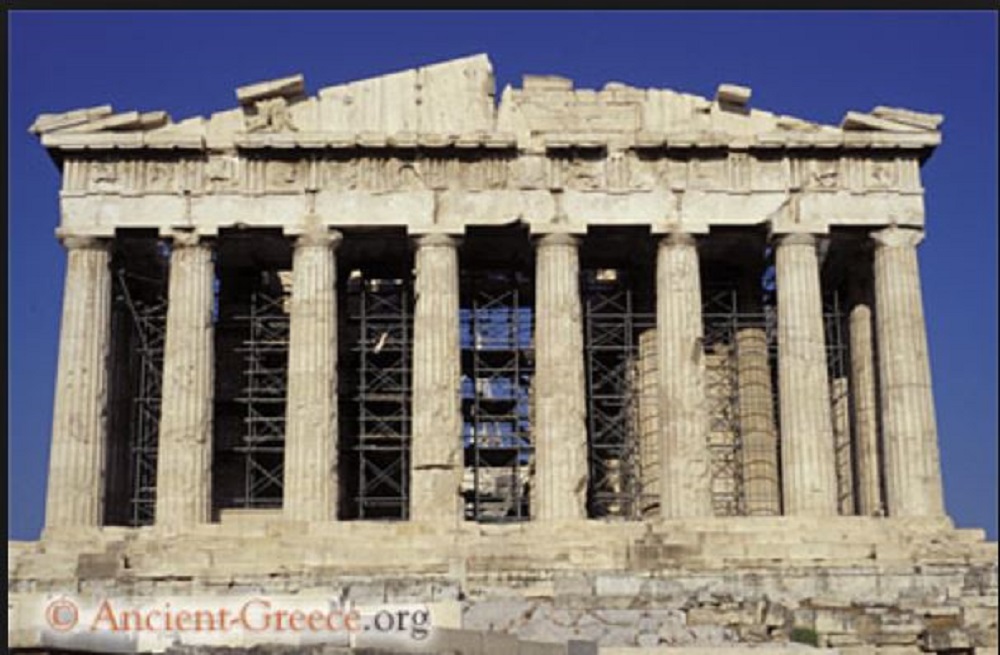 The main Treasury Building in Washington DC 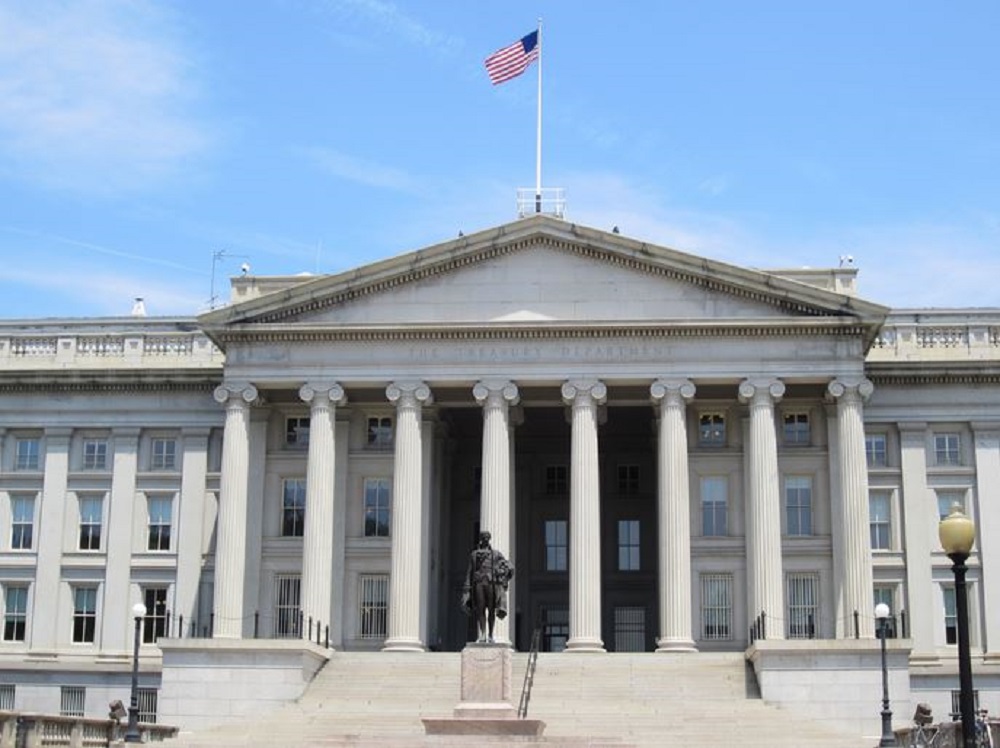 |
|
Moderator
 United States
195559 Posts |
Nice comparison.  |
|
Bedrock of the Community
United States
11966 Posts |
For me, seeing the 1913 Liberty nickel on Hawaii 5-0, one of my favorite shows when I was a kid, left a real impression. That coin was the Olsen speciment, and is the second finest of the five known. I will always think this one is more special than the Eliasberg specimen which may grade higher. Book'em Dan-O! Love the serial # 5050505-050. Someone had a sense of humor...  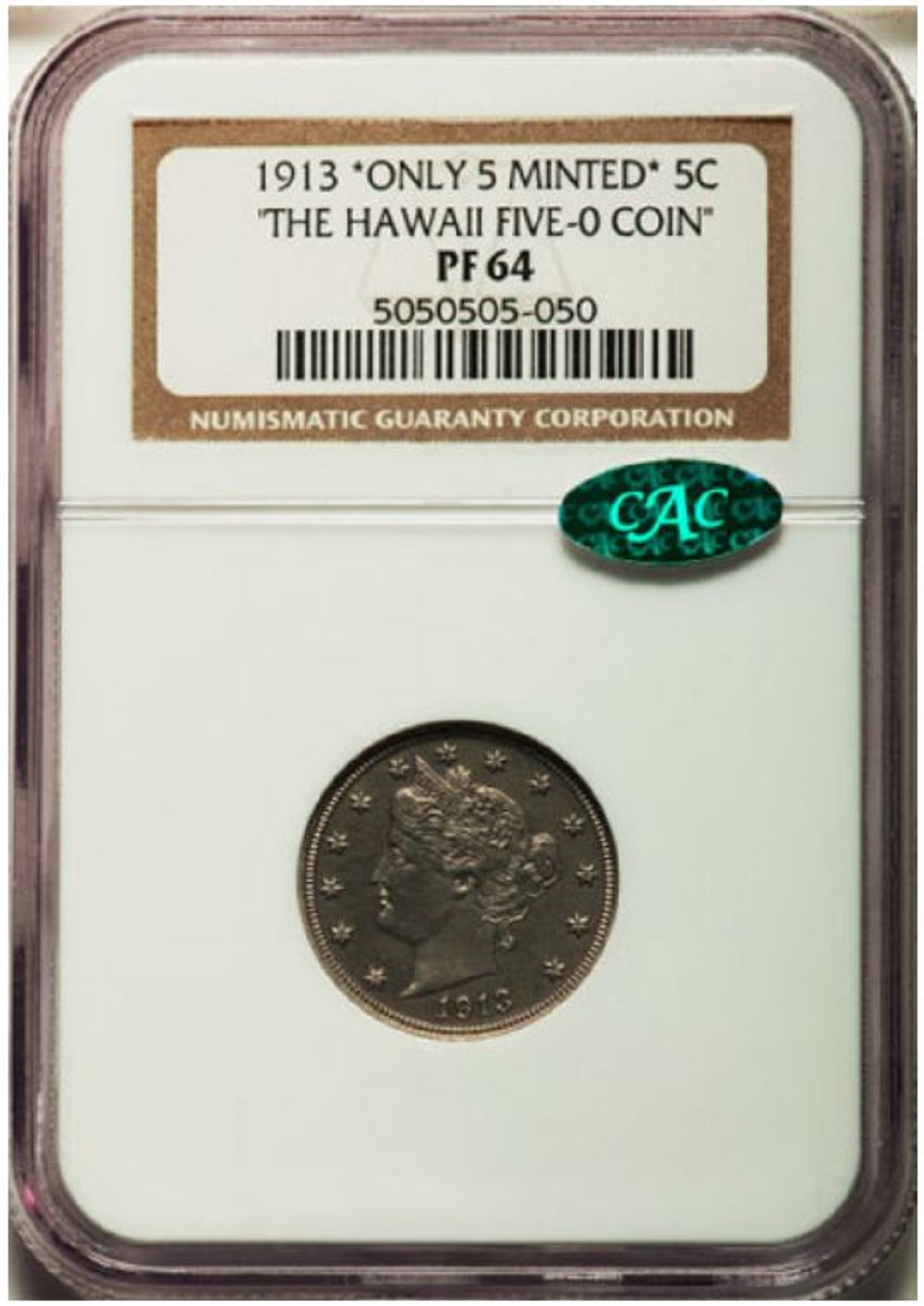 Edited by numismatic student
05/02/2018 10:52 pm
|
|
Moderator
United States
195559 Posts |
Excellent! |
|
Bedrock of the Community
United States
10065 Posts |
Quote:
Love the serial # 5050505-050. Someone had a sense of humor..  I like that slab almost as much as the nickel! Quote:
Quote:
This brings to mind the use of Greek architecture in the early U.S.
The Greek Parthenon in the Acropolis in Athens
There is an exact duplicate of the Parthenon in Nashville. Although the one in Nashville is in slightly better condition and has a copy of the statue within  The Greeks were so wanting perfection for this temple that there actually are very few straight line in the building. They understood distance will make a straight object look curved, so, for example, they made the pillars ever so slightly convex (entasis). At a distance the pillars look perfectly straight. If you know to look for this, you see it. If not, it just sort of registers in the brain as a little "off." somehow. My first view of the Parthenon was from quite a distance and, knowing what to look for, it was not hard to note the building looked "cropped into" the view. Or at least it was more "crisp" than the surroundings. Think about that for being ancient tech! Edited by Earle42
05/03/2018 1:53 pm
|
|
Bedrock of the Community
United States
11966 Posts |
An early Augustus Saint-Gaudens Sketch. Courtesy of Dartmouth College Library, Rauner Special Collections Library. 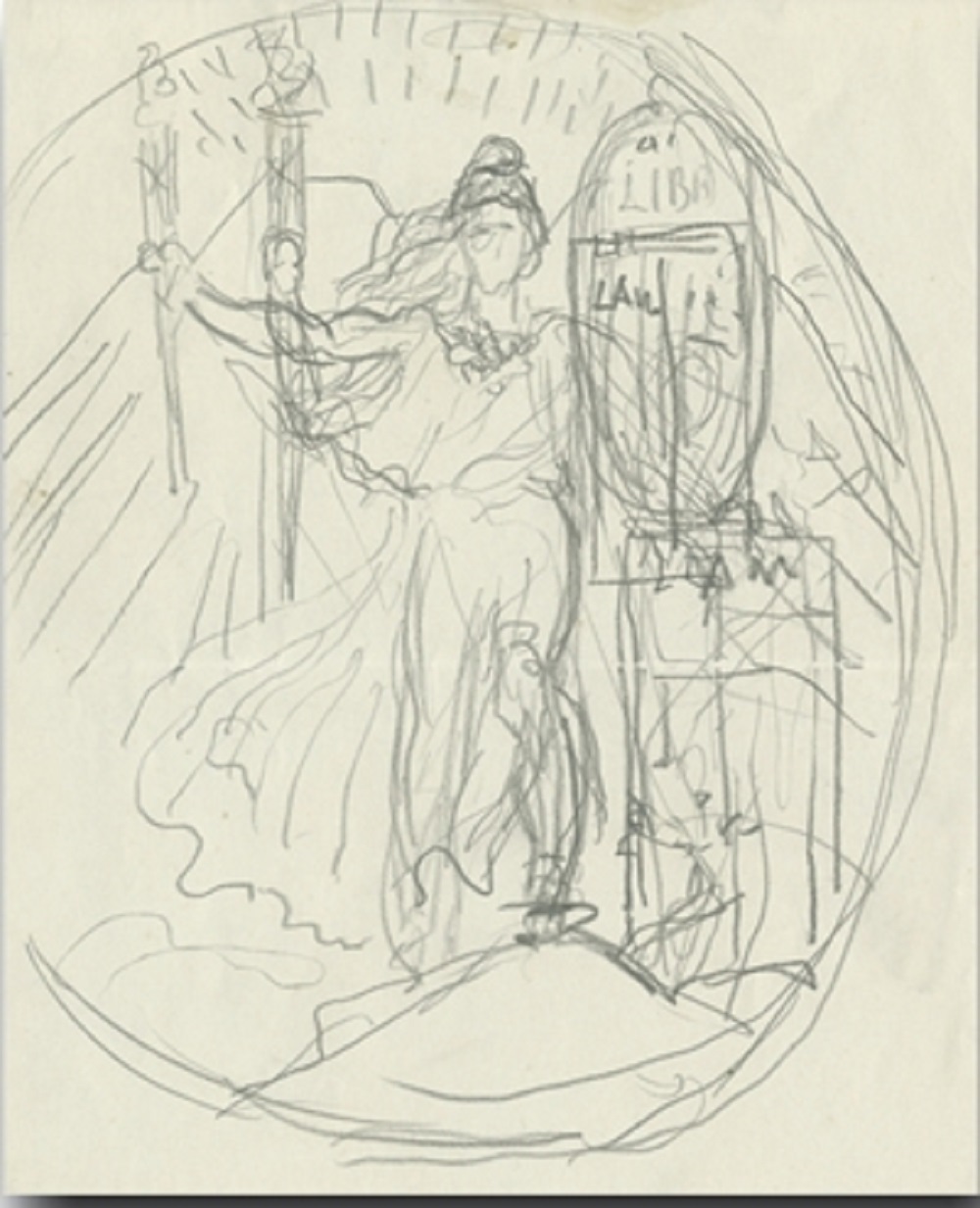 |
|
Moderator
United States
195559 Posts |
Quote:
An early Augustus Saint-Gaudens Sketch. Courtesy of Dartmouth College Library, Rauner Special Collections Library. Beautiful! |
|
Bedrock of the Community
United States
11966 Posts |
Looks like in 1883, silver dollar production, 5 years after the introduction of the Morgan dollar, was hugely profitable for the U.S. Mint. Sounds like a strong incentive for the over 600 million Morgans minted in that era. 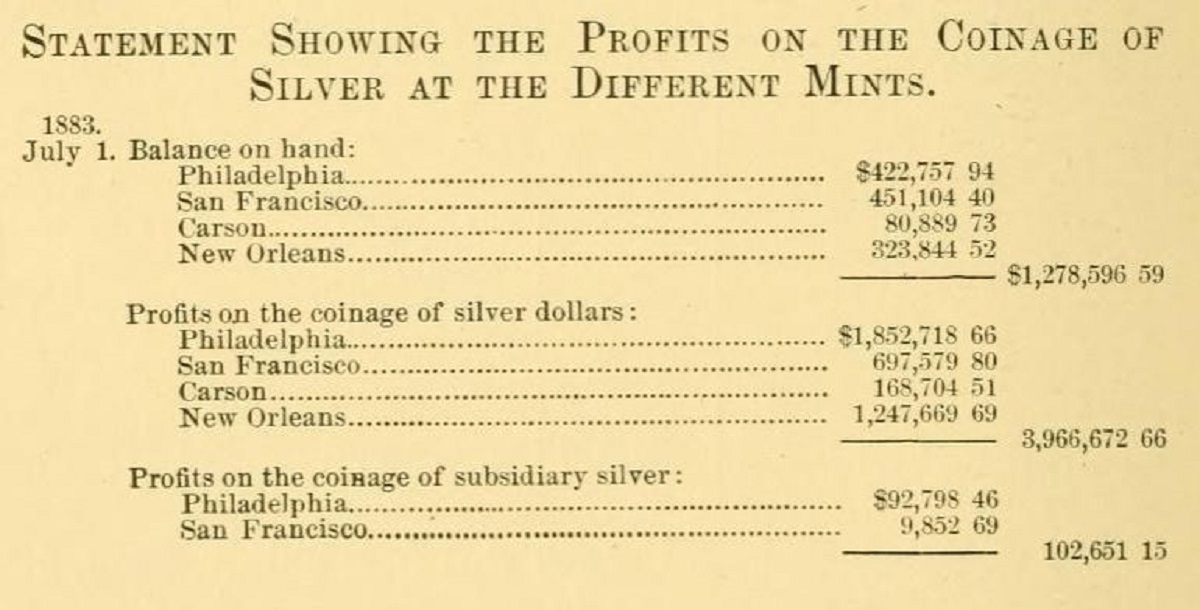 |
|
Bedrock of the Community
United States
11966 Posts |
A snapshot of the wealth of nations in 1884. Note that the U.S. is the wealthiest in aggregate even in 1884. On a per capita basis, France and Cuba are far wealtheir. France is surprising about 70 years after the Napoleonic Wars, and the disastrous reign of Louis XVI that led to the French revolution a hundred years earlier. Cuba was surprising, but illustrates again how profitable the sugar cane trade was, and the huge money that slavery supported. Slavery was abolished in Cuba on October 7, 1886. Both France and Cuba suffered from extreme distributional issues in their economies where a small proportion of land owners controlled most of the nation's wealth and commerce and most peasants in the country lived in dire poverty. 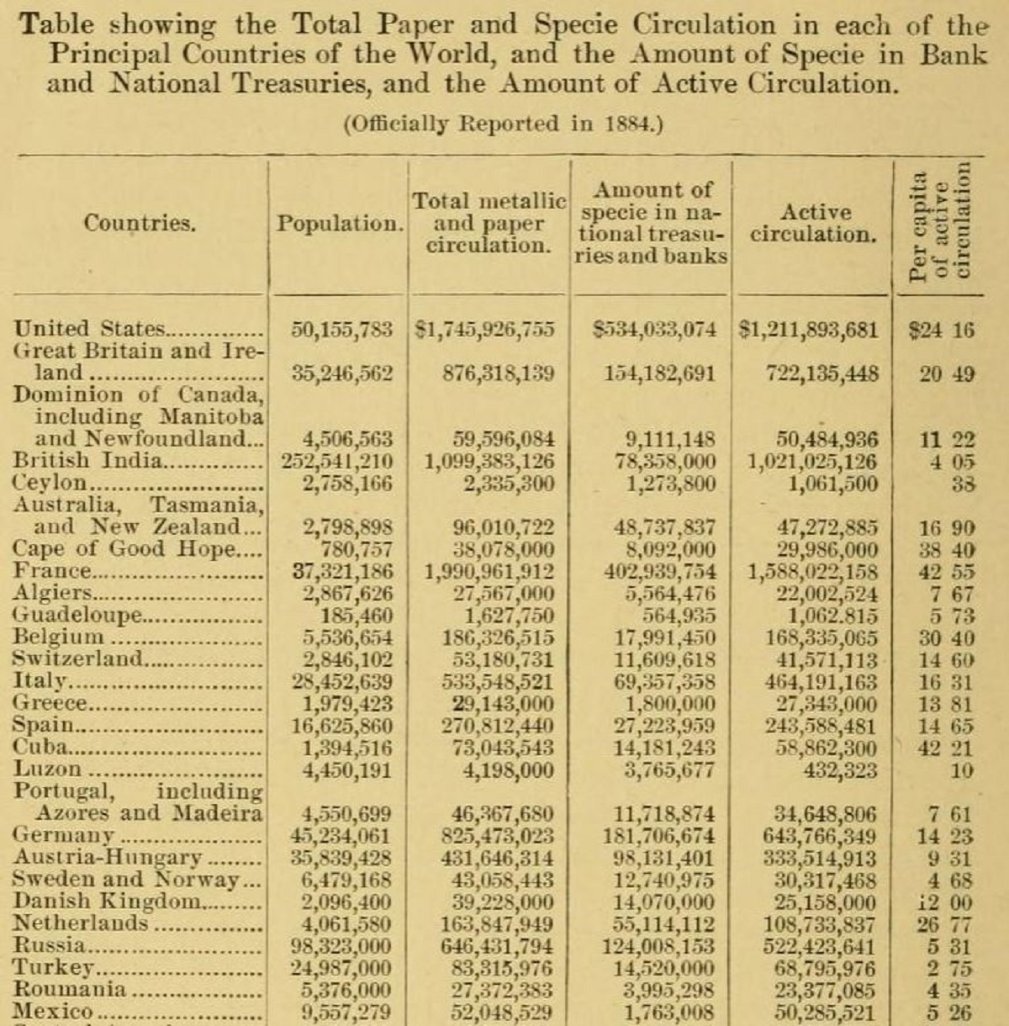 |
|
Moderator
United States
195559 Posts |
Very interesting information. |
|
Bedrock of the Community
United States
11966 Posts |
The Philadelphia Mint as of 1884 kept records of the number of dies it produced and distributed to the branch mints. One thing that stands out is that you didn't need many dies for gold coins because apparently they never wear out. In contrast, for the nickel 5 cent coins, you needed a huge number of dies because the hard metal caused dies to wear out very quickly. 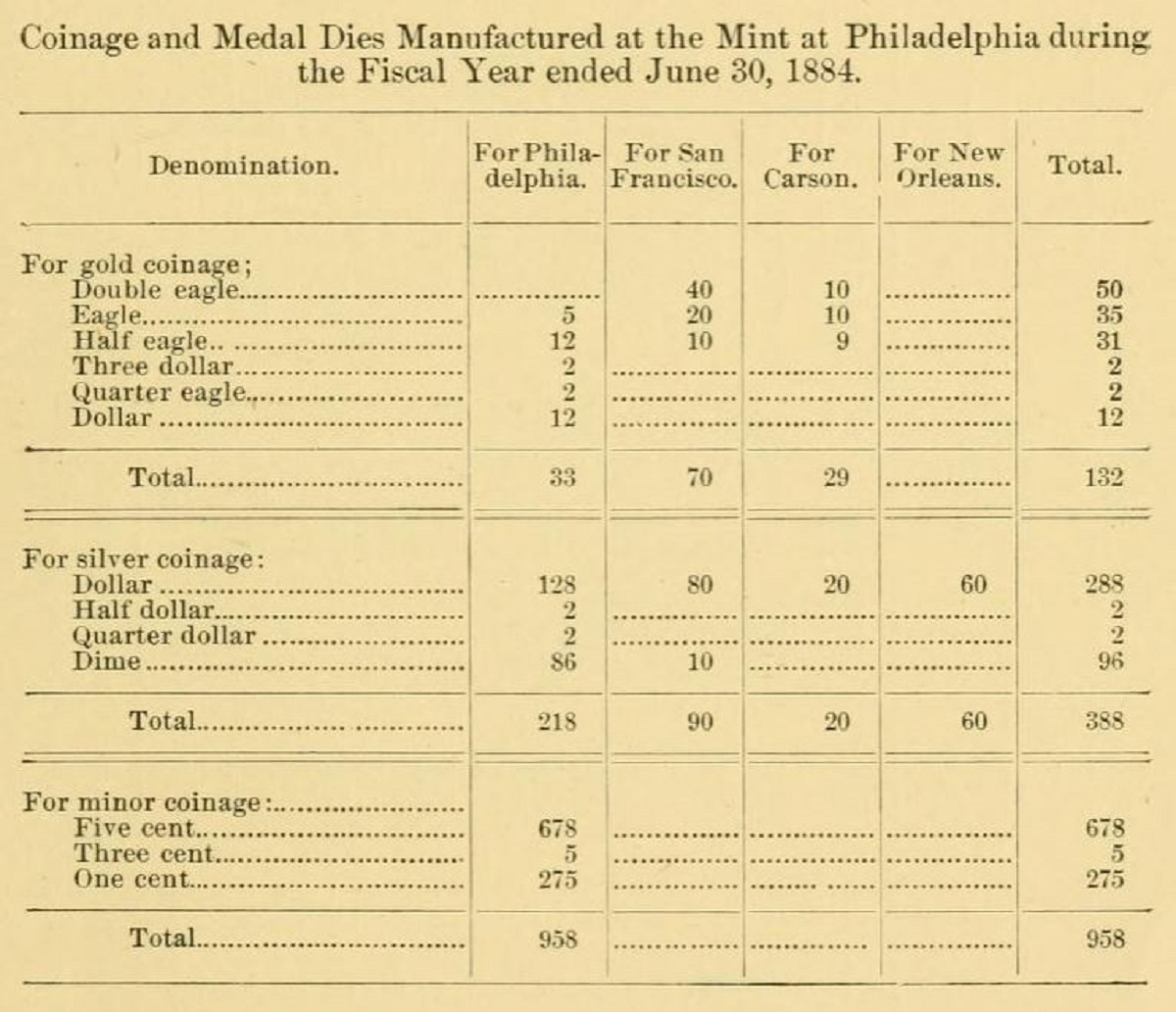 Edited by numismatic student
05/07/2018 10:20 pm
|
|
Moderator
United States
195559 Posts |
Quote:
One thing that stands out is that you didn't need many dies for gold coins because apparently they never wear out.
In contrast, for the nickel 5 cent coins, you needed a huge number of dies because the hard metal caused dies to wear out very quickly. Makes sense to me. Thank you for sharing. |
|
Bedrock of the Community
United States
11966 Posts |
Thanks for your support on this thread.
Edited by numismatic student
05/08/2018 11:58 pm
|
| |
Replies: 814 / Views: 111,851 |








 First Page
 Previous Page


 Posted 04/28/2018 08:31 am


