| Author |
 Replies: 79 / Views: 22,100 Replies: 79 / Views: 22,100 |
|
|
|
Valued Member
United States
383 Posts |
I'm not an early dollar guru, but personally, I think the coin is not authentic. Lettering looks off with "notching" at the bottom of many of the letters in LIBERTY and several in UNITED STATES OF AMERICA that's not present on the authentic example.
ET
Edited by EarlyTurban
05/24/2017 10:41 pm
|
|
Bedrock of the Community
United States
10982 Posts |
I missed last time but without top TPG (PCGS, NGC, ANACS) certification you have to assume it is not genuine. The quality of counterfeits coming out of China is scary. Last year many high dollar counterfeit coins ended up in PCGS and NGC slabs as genuine. They're that good. I believe extra precautions are now being taken but staying ahead of the game is tough. I'd send it to ANACS and find out. |
|
Bedrock of the Community
United States
17884 Posts |
Quote:
Lettering looks off with "notching" at the bottom of many of the letters in LIBERTY and several in UNITED STATES OF AMERICA that's not present on the authentic example. The "notching" at the base of the letters is the result of striking. It is known as bifurcation as is the result of the outward movement of the metal filling the far ends of the uprights of the letters first and then working back toward the base. If the force of the strike ends before the upright fills completely you get that "dimple" at the base of the upright. It is fairly common on early coins but can sometimes even be seen on coins struck today. Edited by Conder101
05/25/2017 2:34 pm
|
|
Bedrock of the Community
United States
12437 Posts |
 Bifurcation is most often seen on coins struck in an open collar press where planchet expansion is not constrained during striking. |
|
Pillar of the Community
 United States
2843 Posts |
Quote:
Lettering looks off with "notching" at the bottom of many of the letters in LIBERTY and several in UNITED STATES OF AMERICA that's not present on the authentic example. The notching IS present on genuine examples. Some others have already explained why and how. If anything- the presence of notching adds to the authenticity. |
|
Pillar of the Community
United States
4883 Posts |
Quote:
Last year many high dollar counterfeit coins ended up in PCGS and NGC slabs as genuine. They're that good. That is scary, and raises some questions. How is it that once slabbed such were identified, and the situation rectified? What liability does PCGC and NGC get saddled with under those circumstances. especially if the fake that was certified as genuine was then sold? Colligo ergo sum
|
|
Pillar of the Community
United States
3479 Posts |
It's my understanding, according to folks who went through it, is that they pay for the mistake. It's a lengthy process and there is more assurance for ANA members. On another forum, one guy became an ANA member specifically because of a PCGS mistake. PCGS mislabeled a circulated proof Seated dollar as a business strike. PCGS reholdered the coin as a proof and sent him a check for the difference in value. Edited by MikeF
05/25/2017 11:25 pm
|
|
Bedrock of the Community
United States
10982 Posts |
Quote:
What liability does PCGC and NGC get saddled with under those circumstances. especially if the fake that was certified as genuine was then sold? If the coin is still owned by the original submitter then I believe they are out of luck. At least that is what I understood. If the coin has changed hands then the new owner should be made whole by PCGS/NGC. The TPG might try to go after the original submitter to recoup expenses. The question remains: What if the original submitter bought it raw (with a return privilege) and was submitting it for authentication? They might be out their purchase price and the coin. |
|
Bedrock of the Community
United States
17884 Posts |
Quote:
How is it that once slabbed such were identified When you see the same coin with the same contact marks in multiple holders from different TPG's you can say that coins of that date and mint with those contact marks is a counterfeit. In the case of the 1798 S-158 large cent they had had to "work" on the die because there were problems with the Y in Liberty on the coin they used to create the die. When they reworked the Y they changed it into a form that was never used on the Draped bust cents and copper specialists spotted it. Recently an 1872-S half dollar showed up that specialists condemned as fake. It had a reverse die that wasn't used until 1875. It used an obverse die In an early die stage, that was used in Philadelphia in 1872 and the reverse was a late die stage that was used in San Francisco in 1875. At least a half dozen of these have been seen from both PCGS and NGC. |
|
Pillar of the Community
861 Posts |
|
|
Bedrock of the Community
United States
17884 Posts |
The NGC article makes it sound like they identified them. They didn't. The counterfeits were pointed out to them by specialists after they were already slabbed as genuine.
|
|
Valued Member
United States
115 Posts |
Grr601, you took the words right out of my mouth......
I do believe jealousy is a big contributor of said actions!
I myself am more of an optimist than a pesamist.
|
|
Valued Member
United States
97 Posts |
I should like to add something:
1. Counterfeits of this coin were not this good a decade ago. Therefore, if this coin was put into the collection prior to the 1990's it is as genuine as it looks.
2. I vomit when a poster writes "FAKE" with out giving a reason for that conclusion. No true numismatist is interested in a lame opinion that is not backed up with a reason that we can all discuss and possibly learn from. The "notching" post and the correct answer by Conder101 is an example of an informative exchange we all can learn from.
3. putting "lay lines" on an image of a genuine coin and a coin that is suspect will not be of any use t detect a "deceptive" counterfeit because they will match!
4. The post about very deceptive counterfeit dollars is true. It happened a couple of years
ago The diagnostics of the fakes were published and the TPGS covered their error. That is why I posted that a coin in an old collection that looks this good is genuine!
|
|
Bedrock of the Community
United States
17884 Posts |
Quote:
3. putting "lay lines" on an image of a genuine coin and a coin that is suspect will not be of any use t detect a "deceptive" counterfeit because they will match! You can also have a problem doing that on early coins because since each die was "hand made" and therefore different, "lay lines" on two genuine coins from different dies will not match either. I see that a lot when someone calls an early coin a fake "because it doesn't match this genuine piece" and they they post an image of a coin from a different die pair. |
|
New Member
 United States
15 Posts |
Hello Everyone I am sorry for the late reply, I was just waiting for the coin to come back in  . PCGS was taking their time Probably because of the holidays. I had spent 160$ to get this coin graded, I feel as if though I paid too much? it was sent through an authorized Dealer. 5 business days Service almost became almost 3 weeks. The Company was very nice to me & I Still think it was worth the 160 to get this Precious Coin graded. * * * * * Nice Guesses To the people who said around VF * * * * I want to Thank everyone for all the help again, and Here it is. 1795 Flowing Hair Two Leaves Hidden Star Variety B4-BB-14 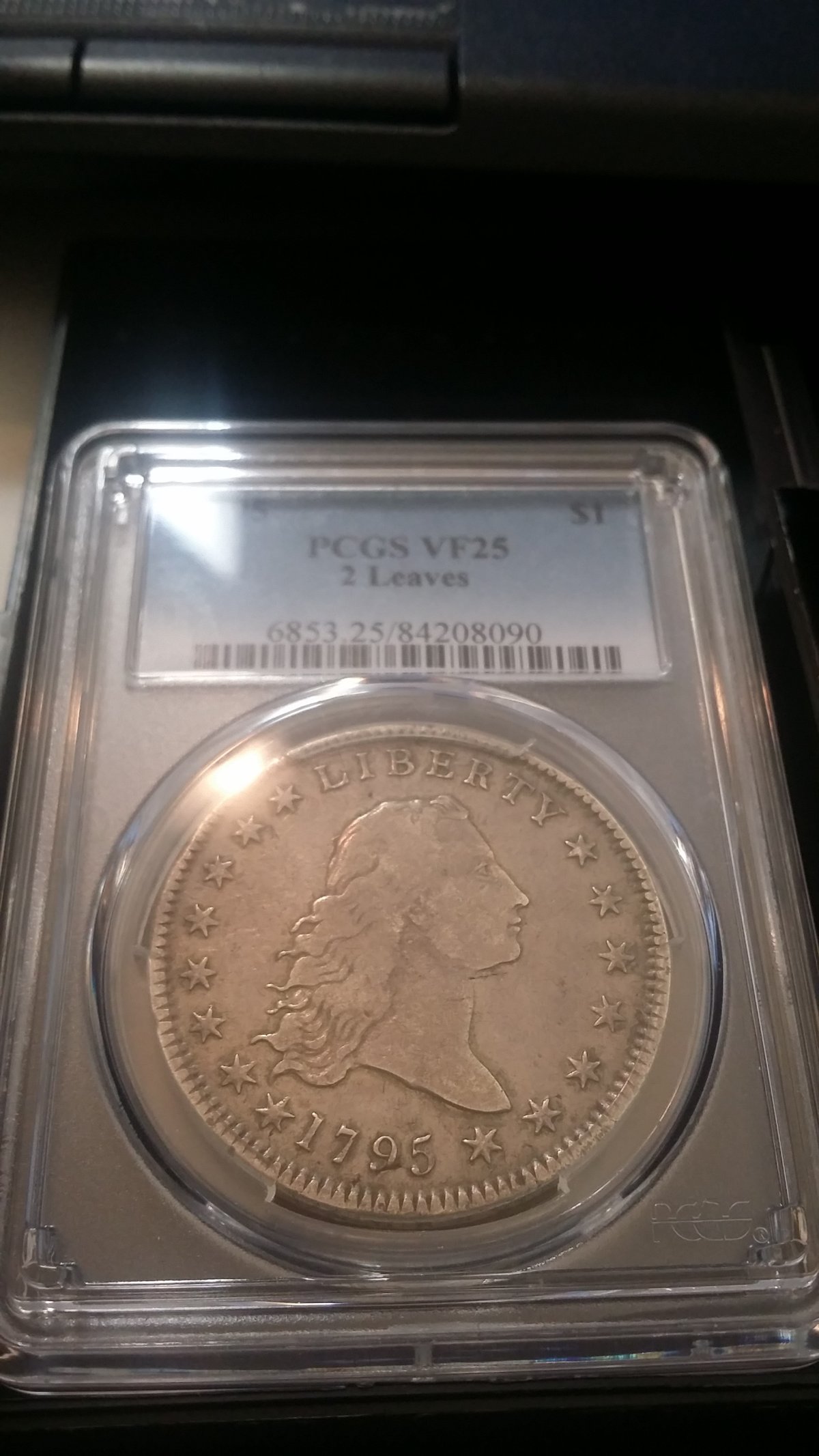 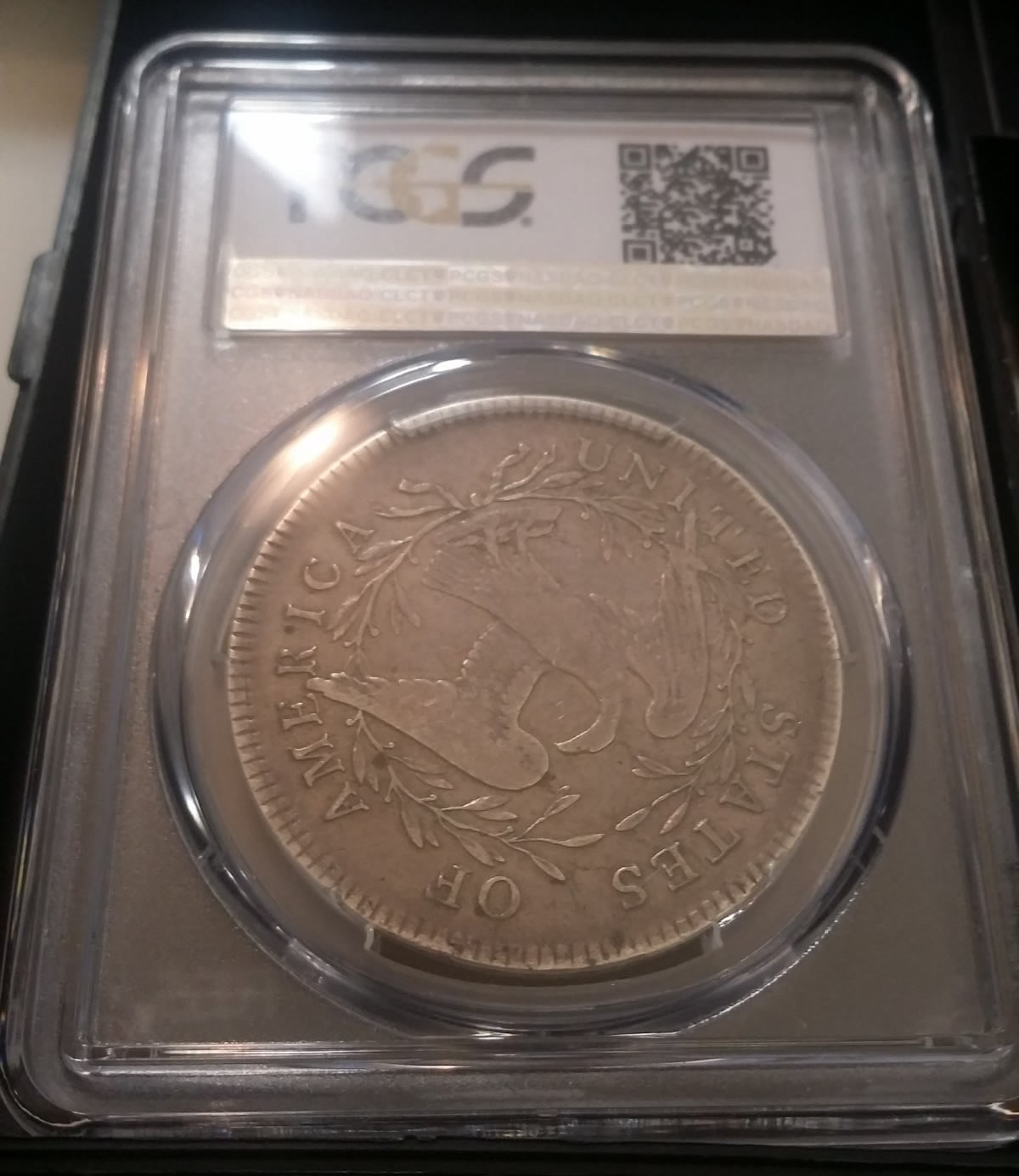 |
| |
Replies: 79 / Views: 22,100 |







 First Page
 Previous Page


 Posted 05/25/2017 12:51 am


