| Author |
 Replies: 13 / Views: 1,130 Replies: 13 / Views: 1,130 |
|
|
New Member
United States
9 Posts |
Attached are some pictures of a proof 1973 Ike with a curious (to me) impairment. I'd bought this set through ebay from a person's estate sale for a very reasonable price, but -- of course -- the Ike, which is the centerpiece I was looking to acquire, has this greenish "impact" mark on the reverse, with a circular halo. Does anyone have any information for me? Thanks in advance! 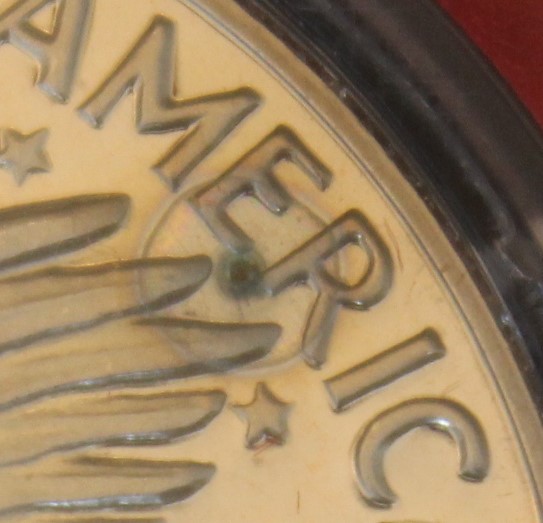 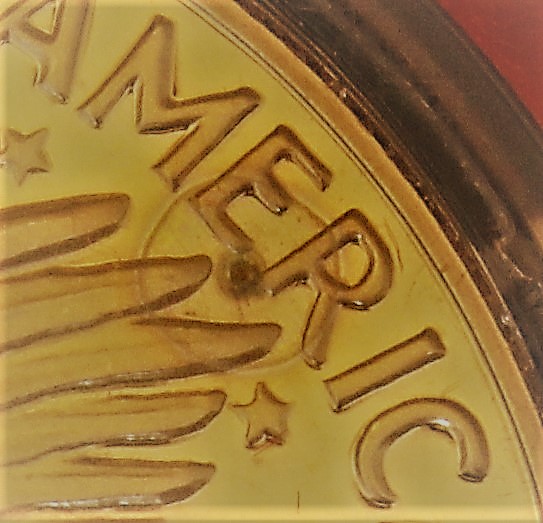 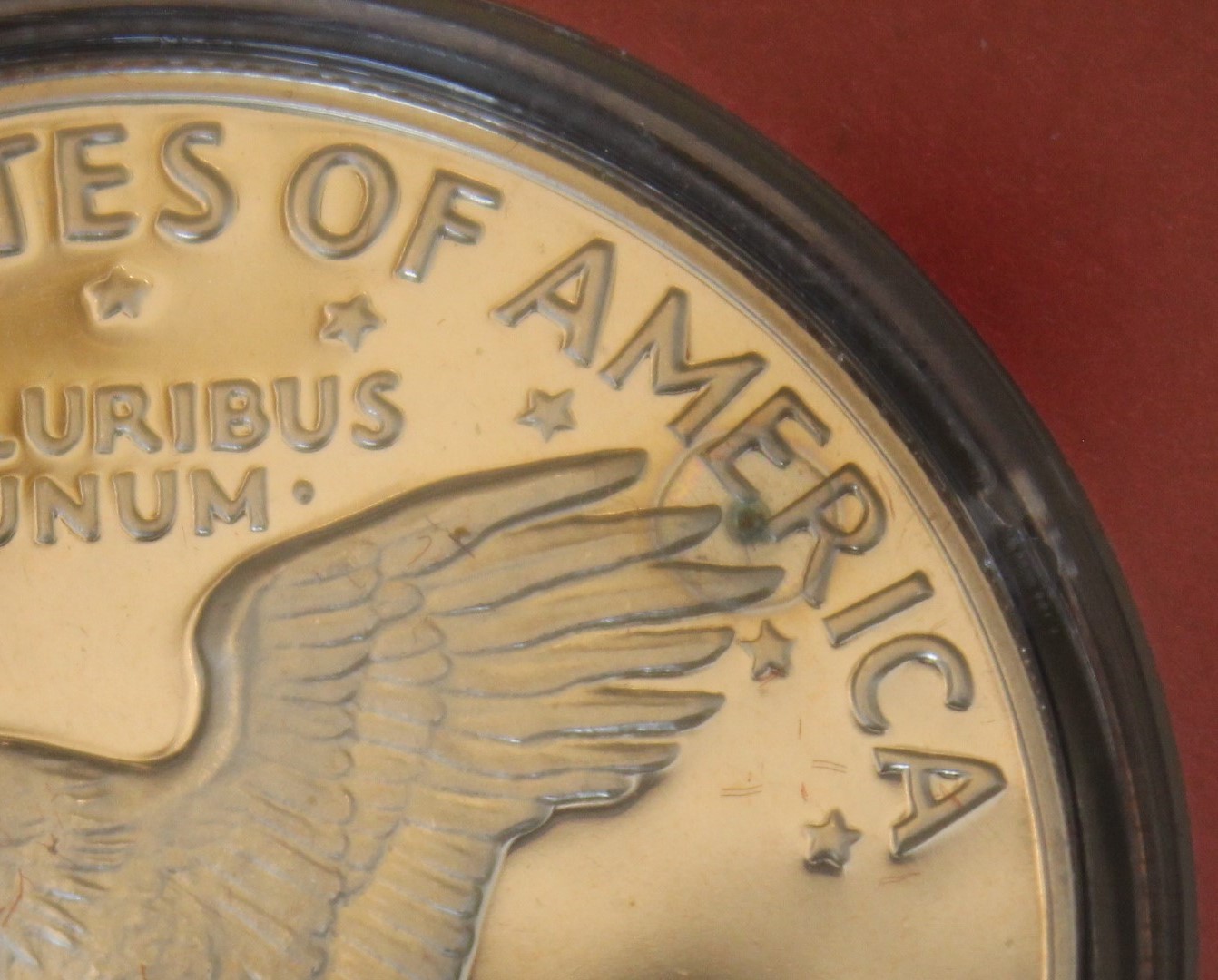 *** Moved by Staff to a more appropriate forum. *** *** Moved by Staff to a more appropriate forum. *** |
|
|
|
New Member
 United States
9 Posts |
P.S. These pictures are taken with the coin in situ -- through the plastic case. It appears as if the circular "halo" is on the coin, and not the casing. But I'm open to reinspecting this upon request. Perhaps there was some sort of "point" stress placed on the case, causing the coin below it to grow that greenish blob (copper-based, I'd guess)?
And -- can this sort of thing be safely "cleaned" or repaired with acetone, or some such?
Edited by filkambel
08/13/2017 12:53 am
|
|
Moderator
 United States
14463 Posts |
I moved your post to the appropriate section for the proper attention.   |
|
Moderator
United States
196572 Posts |
Ouch.  You might have some luck with acetone, but that is as far as I would go. |
|
New Member
United States
9 Posts |
Fuzzy317: Thanks for the move! Fast again! I'll note the proper forum for future reference. JBuck -- yes; that's what I'm thinking, but I think I'll experiment with acetone on some uninteresting coins first! The trouble is, I don't have any uninteresting proof coins with this odd imperfection! :./
|
|
Moderator
United States
196572 Posts |
You are wise to want to experiment first. However, if you do not have anything else to test, I can assure you that 100% pure acetone is safe. Just dip or soak the coin. Do not rub or pick at the spot. If acetone is going to remove it, it will remove it on its own. If not, then the damage is probably done. |
|
Pillar of the Community
United States
7734 Posts |
Probably some organic matter (most likely a drop of spit or something from a sneeze) that occured during the manufacturing or packaging process at the mint. Over the next 45 years the contamination oxidized and/or corroded the metal.
Acetone is your best bet to see if it can be mitigated. Good luck!
|
|
Rest in Peace
United States
17900 Posts |
Let us know your results after you've had a chance to use the acetone. |
|
New Member
United States
9 Posts |
Sneeze? Ew! Thanks to all who've replied thus far. Acetone (I bought some at the local hardware store) seems to at least not be a disastrous thing to contemplate. In the absence of any other advice, I'll have to practice on some other coins and work up the courage. :.)
|
|
Bedrock of the Community
United States
17884 Posts |
You can try acetone but I doubt it will help. If not, you have nothing to lose by trying a dip. The dip may remove or at least lessen the halo, but the center corrosion spot will most likely still be there. This isn't something you can "fix" just lessen the visual damage.
|
|
Moderator
United States
196572 Posts |
Quote:
I'll have to practice on some other coins and work up the courage. :.) A wise course of action. Never do anything you do not feel comfortable doing.  |
|
New Member
United States
9 Posts |
Conder101: It really does look like the "halo" is part of the impairment. I suppose the next step is to crack the case and inspect the coin directly. But I'm dashed as to what sort of damage/defect would produce that halo!
|
|
Bedrock of the Community
United States
17884 Posts |
The center spot is some kind of organic matter, As it breaks down the docomposiiton product tend to be acids and they spread out radially from the center reacting withthe metal as they go resulting in a circular "halo" around the organic matter.
|
|
New Member
United States
9 Posts |
Conder101: thanks for clearing that up. My area is probability and statistics, not coin impairment! I'm a little smarter now!
|
| |
Replies: 13 / Views: 1,130 |
|







 Posted 08/13/2017 01:09 am





