Coin Community Family of Web Sites Join Thousands of Coin, Bullion, & Money Collectors
Coin, Banknote and Medal Collectors's Online Mall Royal Canadian Mint products, Canadian, Polish, American, and world coins and banknotes. Royal Estate Auctions - $1 Coin AuctionsVancouvers #1 Coin and Paper Money Dealer Join Thousands of Coin, Bullion, & Money Collectors Specializing in Modern Numismatics 300,000 items to help build your collection!


Username:
Password:
Save Password
Forgot your Password?


This page may contain links that result in small commissions to keep this free site up and running.

Welcome Guest! Registering and/or logging in will remove the anchor (bottom) ads. It's Free!

1866 CA Jc 8 Reales PCGS Certified XF

To participate in the forum you must log in or register.
Author Previous TopicReplies: 73 / Views: 8,469Next Topic
Page: of 5
Valued Member

United States
93 Posts
 Posted 01/03/2018  3:52 pm Show Profile   Bookmark this topic Add 20021sc to your friends list Get a Link to this Message Number of Subscribers
Ok. I would appreciate any and all opinions on this coin I recently paid big money for (to me anyway). It arrived yesterday after a lengthy trip through USPS.

The link to PCGS' website concerning this particular coin is:

https://www.PCGS.com/cert/83820034

where there is also a much better picture of the coin than I can provide.

It is more than likely genuine. But..it certainly looks like it's been cleaned when viewing in person. And there are many more experienced than I on this site including but not limited to swamperbob , realeswatcher , Lucky Cuss ,etc. ..
It looks like the surface is somewhat "grainy" to me also. I know from reading forums here before that NGC has been known to make mistakes on authenticity (and PCGS too I would think on these 8 Reales).
So any concerns on authenticity or not of this coin? The holder itself also has a bad scratch right on the front directly in view of the coin. You can't see that from PCGS' pic, but was done by careless handing after slabbing naturally.
One last note: I certainly think PCGS was overly generous on the XF grade and not annotating if it was in fact cleaned.
Rest in Peace
moxking's Avatar
United States
17900 Posts
 Posted 01/03/2018  5:15 pm  Show Profile   Bookmark this reply Add moxking to your friends list Get a Link to this Reply
Grainy surfaces from rusty dies. No hint of cleaning. Once these tone and go back into circulation the halo tone effect often occurs.

Weak strike, as always, makes it appear less than EF, but I believe it still qualifies. Circulation rub is minimal. Just poor strike from old dies.
Pillar of the Community
Lucky Cuss's Avatar
United States
4883 Posts
 Posted 01/03/2018  8:29 pm  Show Profile   Bookmark this reply Add Lucky Cuss to your friends list Get a Link to this Reply
A very rare issue (PCGS population = 1 out of over 38 million coins certified!), so first congratulations on acquiring it. There'll certainly be very few others against which this specimen might be compared.

It's not unreasonable to believe that this remote mint during this period (the rule of Maximilian) had to squeeze the absolute maximum use out of its "Cap & Rays" dies. The 8 reales of this era in general are, for want of a better term, fairly "organic" with a lot of individuality owing to the often primitive (or at the very least, relatively inconsistent) conditions under which they were produced. Quality control was conceptually a very different thing in such a place and time from we might expect it to have been from our modern perspective.

As to the grade, the diagnostic I focus on is that the snake's body isn't totally obliterated where it crosses the eagle's breast {and it may not have been all the prominent to begin with in any case) so I don't have any quarrel with calling it XF.

I'd be frustrated that with a singular coin such as this, enough care wasn't exercised to prevent the holder getting gouged as you describe it being.
Colligo ergo sum
Valued Member
United States
93 Posts
 Posted 01/03/2018  11:55 pm  Show Profile   Bookmark this reply Add 20021sc to your friends list Get a Link to this Reply

@moxking . Yes, that seems the case now that you mention it. Rusty dies and a weak strike. Hopefully it's as you suggest about not being cleaned. Doesn't really look like someone took any cleaning agent to it, just a little "shinier" than I would expect. I suppose it could be called a halo tone effect, I wasn't familiar with that term. The more I look at it, the more it doesn't bother me. What does is the scratch on the holder like Lucky Cuss mentions.

@Lucky Cuss . Thanks for letting me know how rare, I really didn't know. And Thank you for the compliment, that makes me feel better about it for sure. I've been looking for a 1866 for over four months and it's the only 8 Reales from any Mexican mint I'd seen for sale that year period. And I did want a certified one because these can certainly fool me, I must admit.

The true shame does seem to be the scratches on the holder. And that is what bothers me the most, but not much I can do about it now. By far, the most obvious and annoying scratch is about 1/2 inch long between the cap and assayer's initials. When you look closer, there are quite a few shorter, smaller ones not as deep (some are even hairline small), all kind of randomly spaced. I could see the big one before I bought it (all I had to go on was pics), but the smaller ones, not until it arrived. The eagle side is not near as bad - actually ok on that side - and the worst area is for sure on the cap side right in the coin's view :(

It certainly was careless handling by a previous owner, probably the person I acquired it from. I would guess he was a ring (or watch) wearer and that's what did the damage to the holder. Something did it for sure. I will take much better care of it. The seller was hard to deal with and I'm glad I'm done with that part. I thought maybe if I tried buffing it out, but I think that would be a huge mistake and make it even more obvious and detracting to the naked eye. If it wasn't for the big scratch, most people would not notice the smaller ones. I didn't until I took a glass to it.

But at least I have one now. Just two dates to go & will have the whole one a year set from 1823 to 1897. Was not as easy as I had hoped to put together, nor as inexpensive as I would have liked it to be. And now there is always the upgrading too as some years I went for lower grades than I would have liked for cost reasons naturally. And there are a couple of years that have been more elusive than I originally thought they would be.

I'll try and post a pic of the scratch I'm talking about in the next couple of days. maybe someone knows of something that can be applied over the scratch to make it not as obvious that would not affect the holder. But I still think better to just let it be in this case. I sure don't want to make it more obvious.

Trying to look on the bright side, the coin itself I'm pretty happy with. Buy the coin, not the holder certainly is the way I'll have to look at this one.

Pillar of the Community
swamperbob's Avatar
United States
5362 Posts
 Posted 01/05/2018  3:00 pm  Show Profile   Bookmark this reply Add swamperbob to your friends list Get a Link to this Reply
I was asked to comment on this thread by a member who was concerned about this coin.


Quote:
Do you think its legit? Look at he surface of 8R. Peeling? Silver Electrodeposition or am I seeing things?


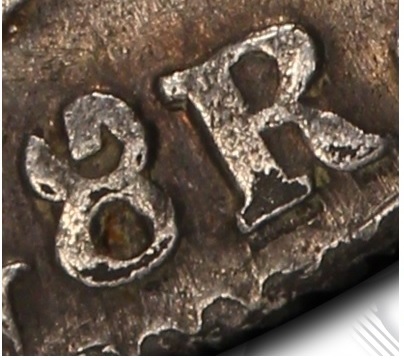
I definitely see what is being referred to:

1866-CA-Jc-8-Reales-PCGS-Certified-XF

This appearance is not isolated to the date area alone but can be seen in numerous places on the coin. There are two possibilities. The first is that the dark areas at the bases of the 8 and the R are incuse (recessed). That might point to electroplate especially if the transition to the lighter metal is sharp indicating corrosion has begun on the core layer. Second is that the dark areas are in relief (higher) than the numeral surface. That indicates dirt. From looking at the entire surface I get mixed feelings. I would ask the owner to review the areas and comment.

If the dark areas are incuse - is there a distinct change in the metal? Or is this possibly damage to the letters which toned black? If the coin were not in a plastic capsule you could test a small part of the dark area to see if silver underlays it. In holder your best bet is a binocular microscope that allows you to zoom in to 30x or higher and focus on the transition zone silver to black.

I read the rest of the comments and would like to address a couple points.


Quote:
I know from reading forums here before that NGC has been known to make mistakes on authenticity (and PCGS too I would think on these 8 Reales).


Yes most of the TPGs make errors. That is easy - human error is the cause. The rates of human error are what is critical. As you may know I do collect encapsulated counterfeits and forgeries. The encapsulation of a contemporary circulating counterfeit attests at times to the ability of counterfeiters to do their jobs well. It also indicates that even "experts" can get it wrong. Most of these are collectable and I always pay a premium for nice examples.

Encapsulation of "rare" coins that turn out to be Numismatic Forgeries made to fool collectors is much worse. There a piece of junk that is really worth melt gets sold for a lot of money. The end result is worth no more than the price the TPG will pay to recover the slab and destroy it.

Having collected counterfeits since 1960 before the TPGs existed, I have been looking for a long time. I can express my own opinion on what I have discovered.

The big three PCGS, NGC and ANACS (ranked as most dealers place them) is incorrect for examples of counterfeits encapsulated. In my experience the rank order based on numbers of encapsulated counterfeits is ANACS first (excluding the period when Mike Fahey was not there), PCGS a very close second and NGC distant third. NGC in particular for the past couple years has a much higher error rate. Based on volume - I have no way of telling. NGC likely encapsulates more of the types I am hunting for. In any event for all three the rate is extremely low, well below 1%. This year I have spotted only 6 examples of 8R counterfeits that have been encapsulated. Not bad considering the thousands of coins I have reviewed.

The fourth TPG accepted by ebay is IGC. Personally I like them because so far I have not seen a counterfeit 8R in an IGC holder. I can not place them before the other TPGs because I have not seen enough of their work. They are off to a good start.

Finally regarding this coin:

I believe the design is absolutely correct. I could find no errors after comparing it with 5 other encapsulated examples. I also believe the surface appearance is consistent with a genuine coin except for the possible electroplating issue. So if the black areas are dirt - I would vote genuine.

As to grading, that is subjective. However, if the coin is real, I would suspect that cleaning must have taken place otherwise how come the rest of the coin does not have black dirt on it?

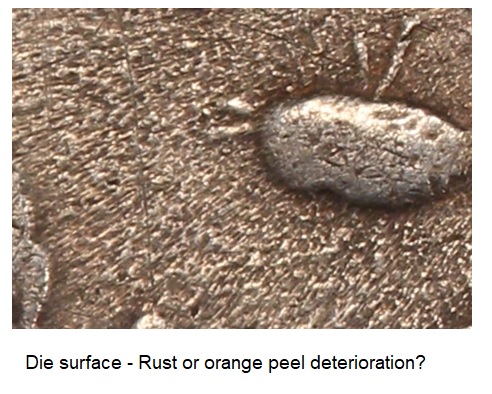
I also read in the comments that "rusty dies" were the proximate cause of the bumpy appearance of the fields. Here is the best area in my opinion to judge the rust issue:

1866-CA-Jc-8-Reales-PCGS-Certified-XF

This is taken from the PCGS file and clearly shows the radial nature of the surface features. This is classic Die Deterioration often referred to as orange peel. Did it start with a rusty surface? Could be, but you can't see rust now.

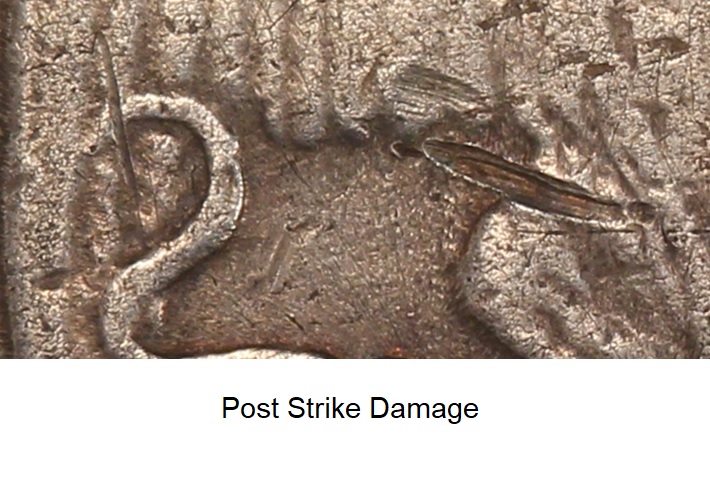
In the last picture please note two long fine scratches in the field and the circulation damage to the cactus pad. I wonder if grading at EF is correct.

Of particular concern is a point near dead center on the Eagle side.

1866-CA-Jc-8-Reales-PCGS-Certified-XF

What I see here (25X +/-) is damage from circulation - NOT bag marks from storage. This coin has too many tiny surface knocks to count as well as many surface scratches. All normal for a well circulated coin.

It does appear to be consistent with grading companies but I see it as horribly unfair when compared to coins that were net graded 10 years ago for far less damage.

I would see the coin as a strong VF but never an EF because of the relatively few original surfaces. There are some nice bright golden toned spots close to some letters, however, I attribute those to preserved surfaces that were exposed by cleaning.

Still a very rare coin one that very few collectors own.
Valued Member
United States
93 Posts
 Posted 01/05/2018  5:10 pm  Show Profile   Bookmark this reply Add 20021sc to your friends list Get a Link to this Reply

@swamperbob :

Thank you for your expert views and comments. I checked the coin out as good as I could regarding the incuse or debris thoughts and it looks to me like it's incuse and caused by corrosion in my best guess.
I used a 40x loupe in good natural lighting. It's hard to tell for sure in the holder, but looks incuse to me. It's on almost all of the lettering on the cap side and almost entirely on the bottoms of the lettering (and even the "bottom" of the cap side is worse than the top regarding these black, incuse areas). If you look at both 6s in the date, the first 6 especially shows it incuse and not dirt when I looked at it from several angles with the loupe. I would guess that the coin had some ground contact during it's life and caused this. And that would also mean a cleaning too as I first thought when I looked at the coin.

very disappointing.

A third possibility might be the dies were not correct and may have caused this? It's hard for me to tell if these incuse areas ever actually were completely filled or if they did in fact corrode into voids and then were filled with debris turning these areas black? Again, I'm guessing, but it looks like ground corrosion that caused it. I have a few 8 Reales that were buried in the ground at one time and it reminds me of those, although not as severe damage wise.

and - again, I agree 100 percent - it's definitely overgraded. Rarity being considered also, it does do an injustice to other coins to say this is an XF45 coin. This coin was made during turbulent times in Mexico, and I can imagine the Ca mint not caring much about quality that year, but this coin has seen it's share of circulation too. And if it has been in the ground, dirt, or whatever and cleaned, shame on PCGS for giving it this grade.

I paid big money for this coin. As far as this poor old boy from Virginia goes anyway. I looked long and hard for a 1866 to fill this spot in a one a year cap & ray 8 Reales set. It was the only one I saw for sale anywhere in over 4 months of searching and I'm not likely to see many more come up for sale or so it seems. And even though I'm in the 14 day window for a return & all my money back except return postage, I think I'm keeping the coin. The seller was rude and crude to put it mildly. I think even if I did return it for a full refund, there would be something come up and make it even worse.

This coin has caused me mixed feelings the more I look at it. I do think it has a general decent look to it. It is rare for sure. It does fill a pricey place in my collection. But if it has been in the "dirt", I sure am not happy with PCGS. I really have never been a fan of TPG services. This cements my thoughts on them. They are good for authenticating, but not for grading all the time.

All that said, Thank you swamperbob for your expert opinion and any other thoughts are welcome and appreciated. I would not have looked as close had you not brought up these points. And I'm glad to be finding them out now rather than later.

Pillar of the Community
colonialjohn's Avatar
United States
1757 Posts
 Posted 01/05/2018  9:19 pm  Show Profile   Bookmark this reply Add colonialjohn to your friends list Get a Link to this Reply
Well Bob some spot XRF analyses are in order for these incuse areas and if greater say than 7-8 % ... you will see in my Forgotten Book on silver electrodeposition for Cap and Rays from the writings of Napier and my conversations with you I can conclude some possible standardization's in moving forward with your Material Analysis company since I am now retired from Kearfott with limited company time on instruments - so the following: 1. The film of silvering is a fine surface film which is electrodeposited on the surface. 2. Although they can now electro-deposit over any metal surface with this post 1840 technology they appear to remain with the best host metal alloy possible as with Sheffield plating - copper host. 3. I did not confirm any trace compounds from this process as the cyanide is neutralized and water rinsed off in almost all operations. Are their low weight organic metal signatures with SEM/EDS left on the surface with these types of CCCs? Only the thin silver film is left as evidence with exposed copper areas from my brief analysis of several issues. As in this piece? I would expect most issues to be underweight? I have only scratched the surface with this technology to this era of counterfeits or post-Sheffield plate types that are silver electrodeposited as possibly is this specimen? Silver in its most oxidized state is black but can be confused with well oxidized blackish brown copper as the host - as you know.

JPL
Edited by colonialjohn
01/05/2018 9:26 pm
Valued Member
United States
93 Posts
 Posted 01/06/2018  12:54 am  Show Profile   Bookmark this reply Add 20021sc to your friends list Get a Link to this Reply
One more comment. swamperbob asked

"If the dark areas are incuse - is there a distinct change in the metal? Or is this possibly damage to the letters which toned black? If the coin were not in a plastic capsule you could test a small part of the dark area to see if silver underlays it. In holder your best bet is a binocular microscope that allows you to zoom in to 30x or higher and focus on the transition zone silver to black."

The dark areas are definitely incuse to the rest of the lettering, not dirt on the top of the lettering. I've stared at them enough w/ a 40x loupe to determine that for sure.
But there is no change in the metal I can see. The metal that would normally be there to compete the lettering is simply not there. Cavities exist in these areas and not all of the small cavities are black at their surfaces, some are the same color as the rest of the coin. There does appear to be very small, sharp, edge drops where the mostly black surfaces start. "Voids", partially incomplete lettering or "part" of the lettering is missing, and simply not there in places at particularly the bottom of the lettering and if I were to guess, I would think these areas were missing when struck, but have no way of knowing that for sure. Possibly they were ate away by corrosion, I just simply do not know why they are like that. Could worn or damaged dies have caused this?

The letters are mostly black at the surfaces of these "voids", holes, or gaps. And, again, inside the voids. Could be the silver oxidized black as Colonel John said, or simply dirt, I don't know. But the more I look, the more I suspect oxidation rather than dirt.
All I have to go on in comparisons other than what I've mentioned are pictures of other 1866 Ca 8 Reales and everything sure seems to match up exactly in those respects. All but these voids.

Pillar of the Community
colonialjohn's Avatar
United States
1757 Posts
 Posted 01/06/2018  03:17 am  Show Profile   Bookmark this reply Add colonialjohn to your friends list Get a Link to this Reply
The coin is in a TPG tomb but if RAW I would XRF these cavities obviously and see what Cu values exist and weigh the coin and compare to it a 26.5 grams standard realizing it's a little worn. The good news is once a coin is in a TPG it can be XRF'd since the plastic greatly distorts the measurements. Can't be done. So your investment is safe. Tough to say without XRF data, detailed edge views and its overall weight and coin ring test. Maybe it is just Die Deterioration as the coin appears to be struck from overused dies ... who can say now ... JPL
Pillar of the Community
swamperbob's Avatar
United States
5362 Posts
 Posted 01/06/2018  05:00 am  Show Profile   Bookmark this reply Add swamperbob to your friends list Get a Link to this Reply
20021sc So the answer is incuse. Not great news for the case that the coin is genuine. That needs some explanation but first a couple points of clarification.

I saw this coin on ebay when it was initially offered and I recorded it at the time. I was suspicious of it possibly being an electroplated fake. Of course it sold for far more than I would ever choose to pay for any encapsulated counterfeit but I wanted to watch the bidding.

This thread is one I had missed initially. I have been sick for a couple weeks after my surgery and I am just now getting back to work starting yesterday. I had missed the thread until John Lorenzo wrote to me about the coin. He is the person I quoted at the top of my initial comments. His initial impression and mine matched.

So my comments here were really due to his question.

Since John and I both saw the coin as a potential counterfeit independently, I think we need to be very clear about why. To do so I need to summarize the history of silver counterfeiting over the period prior to the 1860s, which is the earliest date at which this coin could have been produced.

This will be long, however, I will eliminate all but needed details. Too brief and confusion may result.

In antiquity a counterfeit silver coin was either struck or cast. Struck counterfeits were typically simple debased silver. Casts counterfeits were also debased silver. The products were usually boiled in an acid to improve the surface color by removing some of the surface copper.

The problem with these methods was too much silver was used. Coating techniques were developed as a result to save costs. Painting a struck or cast base metal copy was done with mixed results. They also used silver amalgam plating where powdered silver was mixed with mercury forming a paste which was applied to base metal copies. The mercury was then driven off by heating the fake leaving a coating of silver (it is like gilding but far harder to accomplish). Silver gilding was not very successful.

Finally and most successful was a discovery that a planchet of copper could be struck between two silver foil sheets producing a decent bond. The technology was first used on coins manufactured by the State but of course counterfeiters soon adopted it. This is the origin of the ancient fourees.

Not much changed in counterfeiting for centuries.

In the 1700s the newly rediscovered sciences led to new techniques. The first discovery was actually Sheffield Plating (ca 1770) mentioned by John Lorenzo. The discovery was accidental and it demonstrated that silver alloys could be melted onto copper and when the cooled ingot was worked both layers acted as if they were one metal. The two metals expanded and contracted as a unit and could be struck and bent with little fear of the copper breaking through.

This lead to experimentation with other metals but most combinations did not bond well.

When a counterfeit is made of silver over a core of base metal the materials used must be compatible. Most metals and alloys bond poorly and eventually separation along the joint is the result. Copper and silver are two metals that bond very easily one to the other. Most metals other than gold and a few alloys are not compatible with silver and as a result the surface silver tends to detach and may break away. Scientists knew this fact, but forgers initially did not. Therefore forgers often used copper alloys which often resulted in corrosion between the layers. Many of the most easily discovered contemporary counterfeits fall into this category.

Bonding the silver to copper using heat creates a metal sandwich that can be rolled out. This way a very thin silver layer over copper can be produced. This is Sheffield Plate the process introduced in the 1770s. This method dominated in the manufacture of successful forgeries for almost 6 decades. Earlier Sheffield Plates can have rather thick silver layers but over time and certainly by 1820 a plate of only 1 or 2 thousandths could be produced. The beauty of Sheffield Plate for forgery was the color perfectly matched coin silver because it was coin silver 900 to 925 fine. Sheffield Plate could pass acid surface tests, as well as tests in which the coin is rubbed on a touch stone. If a counterfeit was slightly enlarged in volume even the weight could be made correct. Even chopping did not always detect a Sheffield Plate coin with a thick silver layer because the silver flowed along with the copper. The best detection method for detection of Sheffield Plate coins was and still is Specific Gravity.

Sheffield Plate had no competition at all for counterfeiting until the arrival of German Silver. This alloy was first produced in Germany ca 1832, England ca 1835 and the US ca 1837.


As an aside, I should note the following:
A metal called Paktong or Chinese white copper was imported from China to England in colonial times. Export of the metal was illegal under Chinese law, so most of the Paktong in the west was smuggled out. As a result it was even more popular among English gentry than sterling silver. At times items made of Paktong sold for more than did sterling. Paktong is very similar to German Silver and at the present time, the alloy falls into the generic category of "german silvers". However, in the 1820s it was seen as a different metal. Costs of Paktong in England were too high for the metal to be available to counterfeiters except in very tiny amounts derived from jewelers scrap. German Silver (Capitalized to distinguish the German variety from generic alloys) is the technology discovered in Germany. Many of these metals can be isolated from Paktong based on analysis techniques developed at Whinterthur Laboratories. These tests rely on a database of trace contaminants known to be present in Chinese metals. Winterthur Labs uses the trace contaminants to authenticate Museum Level rarities. The tests are simply too expensive to be used for most counterfeit coins.

Sheffield Plate briefly survived for forgery because the color of German Silver was generally too dark after a period of time exposed to air.

Sometime not long after 1835 and certainly before 1845, some unknown counterfeiter discovered that silver would bond to German Silver almost as well as pure copper and far better than bronze or brass. This resulted in a counterfeit that has coin silver over GS leaving a more subtle color change than silver over copper. Most of the later Sheffield counterfeits use a lighter GS core. The technology is distinctive.

The next technology developed was electro-plating. This was first encountered accidentally in a lab about 1840 or 1841 as I recall. The technology was first successfully used on an industrial scale to coat metal about 1845. Riddell in his 1845 book is familiar with the new technology and indicates some of the counterfeits he discovered were most likely electroplated.

At about the same time, electrodeposition was discovered and was used to create duplicates of copper coins initially by depositing copper electrically on an impression of a coin made in fine wax-like substance. This material worked because it could be coated with a dusting of carbon to make electricity flow. The process does not generate enough heat to melt the impression so electro-typing is unlike casting. Two thin shells of copper are created. The halves are filled and soldered together. The impression developed was Museum quality but there is an edge seam that must be hidden. Depending on the fill used, electrotypes are normally the wrong density.

This means that a counterfeit produced in the 1850s or later could have been made using any of these methods and materials.

The three most likely possibilities are Sheffield Plating, Electro-plating or possibly Electro-typing. I need to do some research to see precisely when electro-plating in silver was first used but I feel safe it was done before the mid-1860's.

Now we need to address how corrosion or damage could have occurred which would produce the recessed effect seen on this coin. The bad news is that based on the pictures and the confirmation that the features are incuse, the coin is VERY UNLIKELY GENUINE.

The suggestions proposed in your last comments include post-strike damage to the coin, pre-strike die damage and corrosion due to contact with dirt in a burial of some sort. None of these suggestions are adequate to explain the appearance, which unfortunately is very familiar to anyone used to studying counterfeits.

Post-strike damage is seen today on many coins at the perimeter due to coin counters. There were no coin counters until the last quarter of the 19th century. Most mechanical means would show a drag in the direction of the cause. I cannot postulate a mechanism that could produce what I am seeing here.

Pre-strike die damage is extremely unlikely because the die would need added metal in the depressed features only. Again the mechanism needed to do that without effecting central detail escapes me.

Electroplating is normally done to a completed item. The coin was not coated with silver plate that is obvious in the pictures. It could be a planchet electroplated and then struck. The main drawback is that the features that are seen on a struck electroplated planchet are just not seen here.

Finally erosion of isolated high points by ground contact. This normally results in corrosion that is not seen on high points alone but over large portions of the surface. Placing a coin on a wet conductive flat plate might produce such damage if a current was passed through the plate but that should also involve all high point contacts not just at the perimeter.

Platings of all sorts will produce micro-currents that flow between the surface coat and the core. In silver plated objects the corrosion occurs in the base metal not the less reactive surface layers. This corrosion undermines the surface layer while leaving the surface intact. The corrosion is not seen until the silver is knocked away by pressure. This is unfortunately what I see here.

I would suggest that you contact PCGS directly and explain that you just purchased the coin but you have serious misgivings that the coin may not be genuine. Ask them to verify their initial authentication after you advise them of our comments. If they want to talk to me before you send the coin to them, I can provide my contact information, because I want to know for certain as much as you do. Any technology that could produce such a copy is dangerous and they should be professional enough to examine the situation objectively. You could do that as part of re-holdering the coin. Re-holdering of damaged slabs is a service they offer at a very small charge. Then while the coin is out of the holder, they could do the needed testing to make a scientific determination. If the coin is genuine you get it back in a new holder. If it is a fake, they will follow the chain of ownership backwards and PCGS will make good on your losses.

Pillar of the Community
United States
1962 Posts
 Posted 01/06/2018  08:28 am  Show Profile   Bookmark this reply Add realeswatcher to your friends list Get a Link to this Reply
Stupid @#$%&! tablet ate my reply... had been copying it, too, then copied an auction link to add and just then it saw fit to refresh the page for no reason... oh well.

So, abridged version: This whole thread is one of those... . Time would be better spent learning what is to be expected on Chihuahua issues of the 1850s-60s.
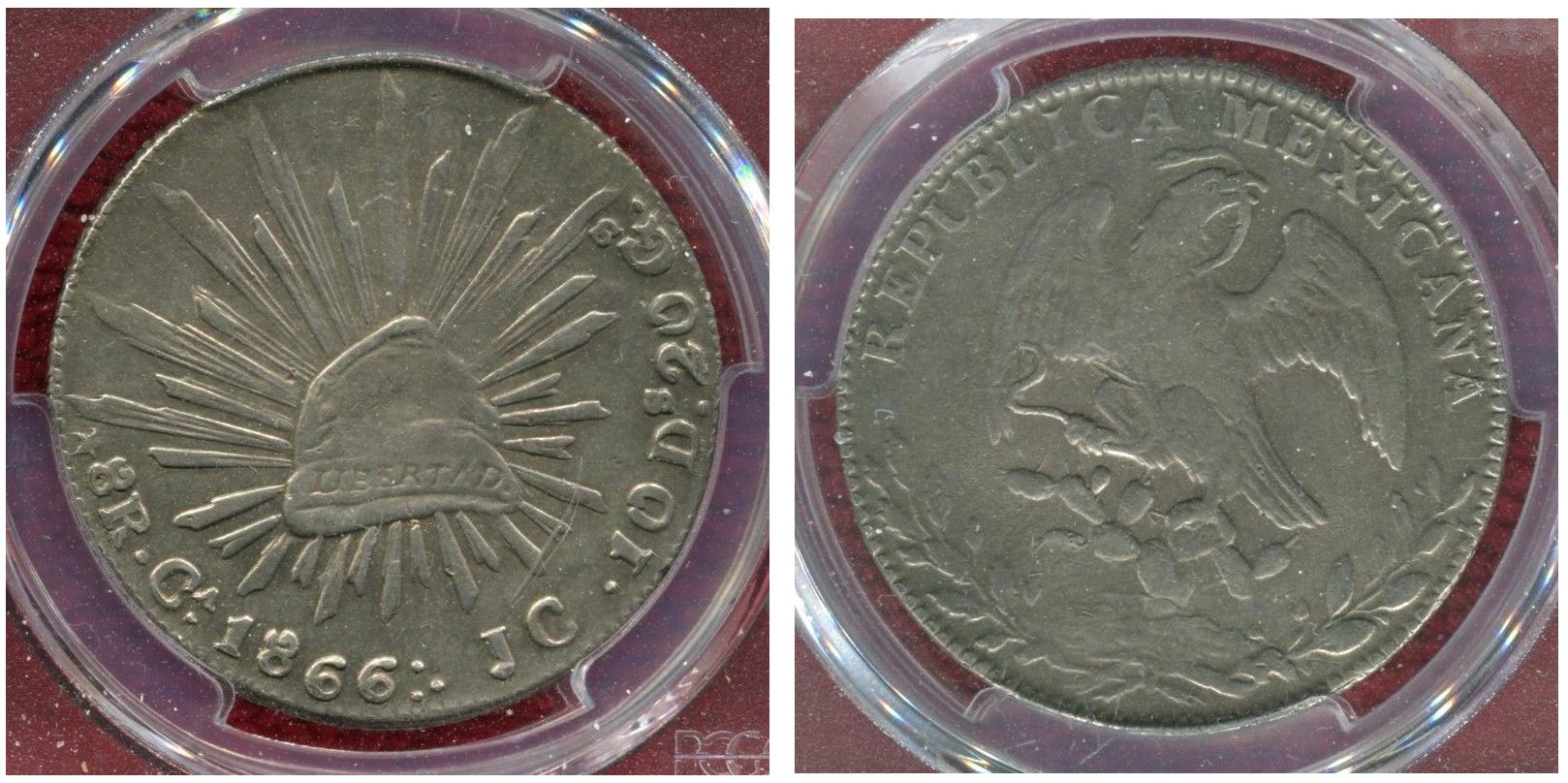
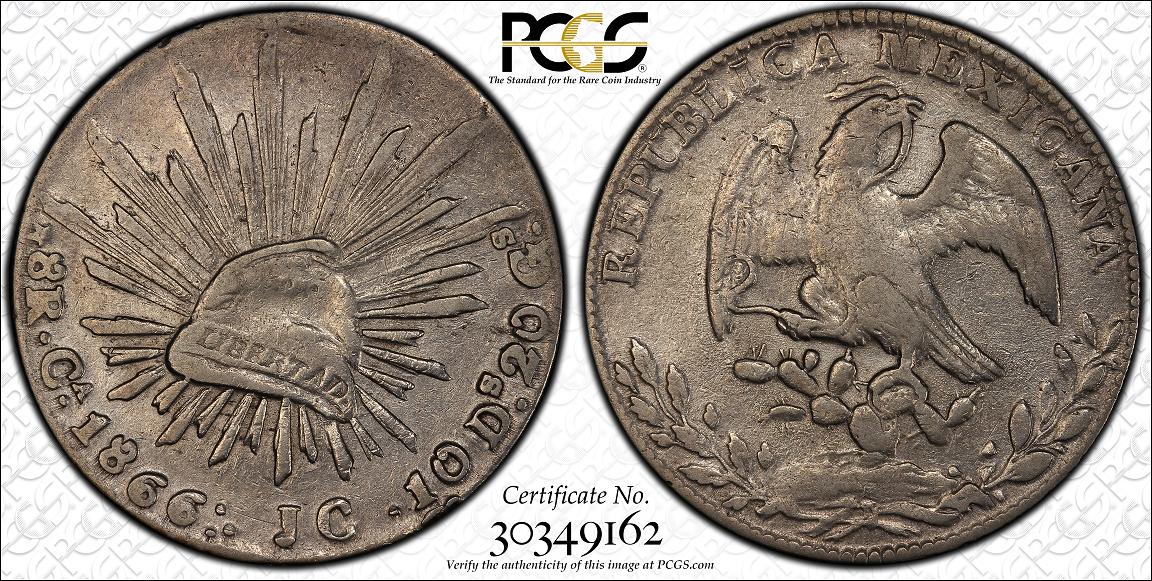
Coin looks much more normal in seller's pics in terms of surface, tone. In general, not the most aesthetic example, but not all that much wear (poor strike/dies, though).

Same dies, same pebbly reverse... everything a bit more smoothed-out, though, from addl. wear:
https://www.PCGS.com/Cert/30349162
https://coins.ha.com/itm/mexico/wor...ption-071515

Voids in legend lettering look due to strike/planchet issues. Compare reverse on this 65 (end of MEXICANA):
https://coins.ha.com/itm/mexico/wor...ption-071515

Somewhat odd-looking, scruffy as-made and as-lived (that gouge could have bagged it)... but seems within limits for this era Chihuahua.

PS - Worrying about a holder scratch on a 2K coin is OCD and silly.
Edited by realeswatcher
01/06/2018 08:35 am
Valued Member
United States
93 Posts
 Posted 01/06/2018  11:15 am  Show Profile   Bookmark this reply Add 20021sc to your friends list Get a Link to this Reply

Well, got the experts in this one, that's for sure.

Thank you swamperbob, I have thought about contacting PCGS and will try Monday morning. We'll see what they say. if you know anyone in particular I should ask to speak to, please let me know, that would help.

if the coin is a counterfeit, I sure don't want to be the one that paid $2k for it. I'd rather go with never obtaining an 1866 C & R than that happen.

I understand a lot of what swamperbob is saying and according to his last post, the coin is not genuine. I would agree, but then realeswatcher shows three other Ca examples that show very similar characteristics if not exact similarities. If you look at the last one, the 1865 Ca coin, look at not only the last letters in Americana that seem like they never were struck fully, but look at the 20s (twenty granos) on the cap side. At the top of the 2 and even the 0, there are missing parts of the numbers, just like some lettering on the coin I have. There is even a black surface starting there in spots of the incuse areas of the lettering on that 1865 coin.

I weighed the coin in it's slab and it's about 50.xx grams. What good does that do though? Well, I happen to have a very similar broken PCGS slab from where I took out a Morgan dollar once and saved all the pieces. It weighs a little over 30 grams, surprisingly heavy, but that's what just the empty, broken holder weighs including it's label even. So in rudimentary theory, the PCGS 8 reales should weigh about 56 - 57 grams encapsulated. 50 would be quite light. I really wish this coin was raw so I could do tests not only on weight, but SG. That would solve it I would think. But then it would lose it's PCGS pedigree and the high grade they assigned of XF45 also (and I might have a worthless fake with no recourse). I know these measurements of broken PCGS slabs may be meaningless, but only took a couple of minutes to do and make it more intriguing. One minute I think it's genuine, the next I have serious doubts. Not a good feeling.

And, yes, realeswatcher, the scratches on the slab are the least thing from my mind at this point. The only time they come to mind now are when I'm looking through a 40x loupe at features and they re in the line of vision. Even seeing them like that, they don't matter much at all now to me, only the authenticity of the coin. I do tend to get picky on these things, but somehow, some way, I need to know if this coin is real or not and contacting PCGS would be a good start IMHO. And I will keep the post updated on what I find.
Thank you to everyone for your valued opinions. Anymore, please feel free to speak out.

Bedrock of the Community
basebal21's Avatar
13014 Posts
 Posted 01/06/2018  12:21 pm  Show Profile   Bookmark this reply Add basebal21 to your friends list Get a Link to this Reply
realswatcher is correct, it is a mistake to apply general knowledge to every coin that was every made and if you really want to investigate it more you need to start researching the mint they came from and the time period they came from. Plenty of world issues will look fake if you have the expectation they look like a standard philly mint coin. The same happens in US coins with branch mint gold being compared to the philly versions. In this case you're talking about an 1800s coin from a branch mint of a second world country. Look into the other issues of the time, seek out Mexican coin experts, look into the history of that mint at that time ect, but it's a mistake to apply the wrong standards and expectations to it for the basis of suspicion.

I don't know that series well enough to offer an opinion, but I do know that PCGS graded it for a reason and that if you took a coin of standard quality from each of the mints of the world during that time period you would see drastic differences in quality and characteristics.
Pillar of the Community
colonialjohn's Avatar
United States
1757 Posts
 Posted 01/06/2018  4:30 pm  Show Profile   Bookmark this reply Add colonialjohn to your friends list Get a Link to this Reply
So, abridged version: This whole thread is one of those... . Time would be better spent learning what is to be expected on Chihuahua issues of the 1850s-60s.

Realeswatcher I know at this point never to argue with you but in my mind the jury is still out for me. Will look at these issues

JPL
Pillar of the Community
United States
1962 Posts
 Posted 01/06/2018  7:06 pm  Show Profile   Bookmark this reply Add realeswatcher to your friends list Get a Link to this Reply
basebal with one L -- That's true... though to be fair, Bob and John are not NEARLY rookies in terms of analysis... Bob in particular is, dare I say, is slightly familiar with Cap & Rays(!). I do think sometimes things sometimes get viewed a bit too much from a counterfeit observer's X-Files perspective...

It's sort of cheating (because in theory, understanding everything about how ANY coin could have been or was manufactured is helpful)... but I'm of the opinion, especially on World pieces where there's so much variety, that it's most beneficial to start by looking at (or at least refreshing oneself with) all the examples one can find - including nearby dates and other denoms. from the same mint - to see what they actually present as.

Anywho... for posterity and comparison, here's the seller's photos... compared to the pieces I referenced. Do note, if you search 1866 (1865, 1867, etc.) SmallYelpingDog mint 8R... you'll certainly find some more "normal" looking pieces, better strikes/surfaces, etc. However, it just takes one or a few like pieces in similar states to prove the potential veracity of a piece:

The 8R debated here:
1866-CA-Jc-8-Reales-PCGS-Certified-XF

More worn example that looks to be same dies/close die state:


1866-CA-Jc-8-Reales-PCGS-Certified-XF
Edited by realeswatcher
01/06/2018 7:15 pm
Pillar of the Community
United States
1962 Posts
 Posted 01/06/2018  7:08 pm  Show Profile   Bookmark this reply Add realeswatcher to your friends list Get a Link to this Reply
20021sc... I noticed an 1866ca (not sure which assayer) coming up in the NYINC aucs. (Heritage or Stack's, forget which)
  Previous TopicReplies: 73 / Views: 8,469Next Topic
Page: of 5

To participate in the forum you must log in or register.


Disclaimer: While a tremendous amount of effort goes into ensuring the accuracy of the information contained in this site, Coin Community assumes no liability for errors. Copyright 2005 - 2026 Coin Community Family- all rights reserved worldwide. Use of any images or content on this website without prior written permission of Coin Community or the original lender is strictly prohibited.
Contact Us  |  Advertise Here  |  Privacy Policy / Terms of Use

Coin Community Forum © 2005 - 2026 Coin Community Forums
It took 0.56 seconds to rattle this change. Forums