| Author |
 Replies: 15 / Views: 2,067 Replies: 15 / Views: 2,067 |
|
|
Valued Member
Canada
167 Posts |
|
|
|
|
Rest in Peace
10197 Posts |
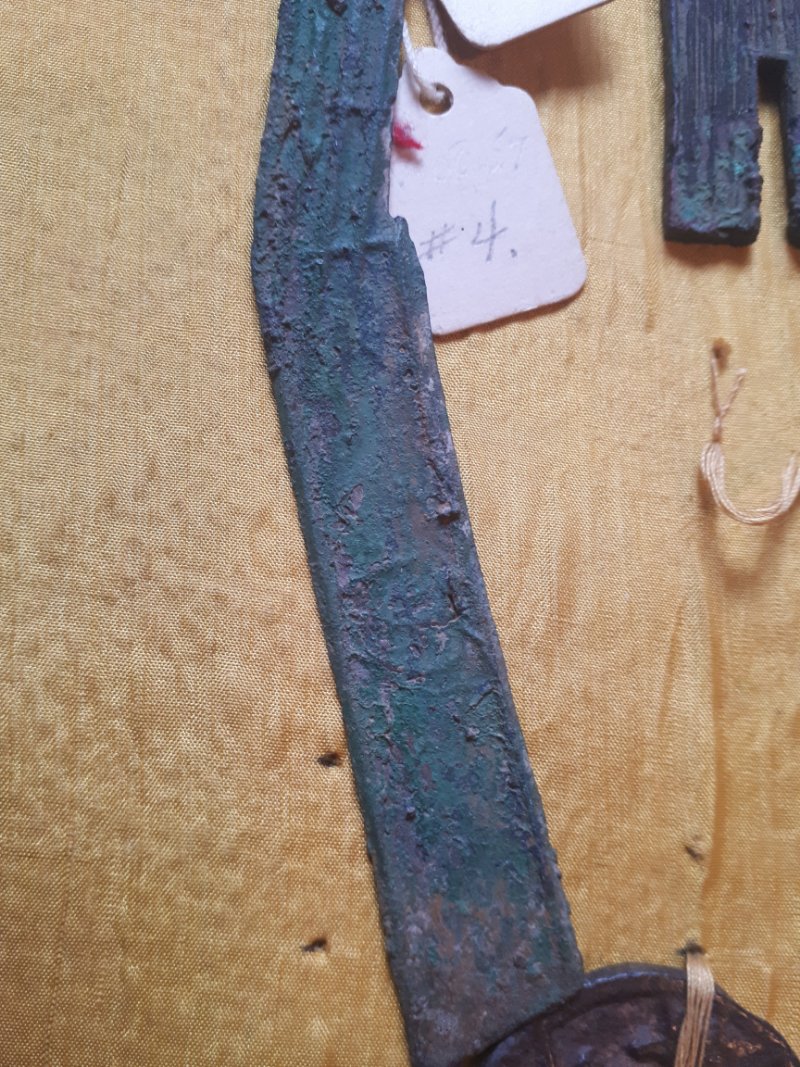
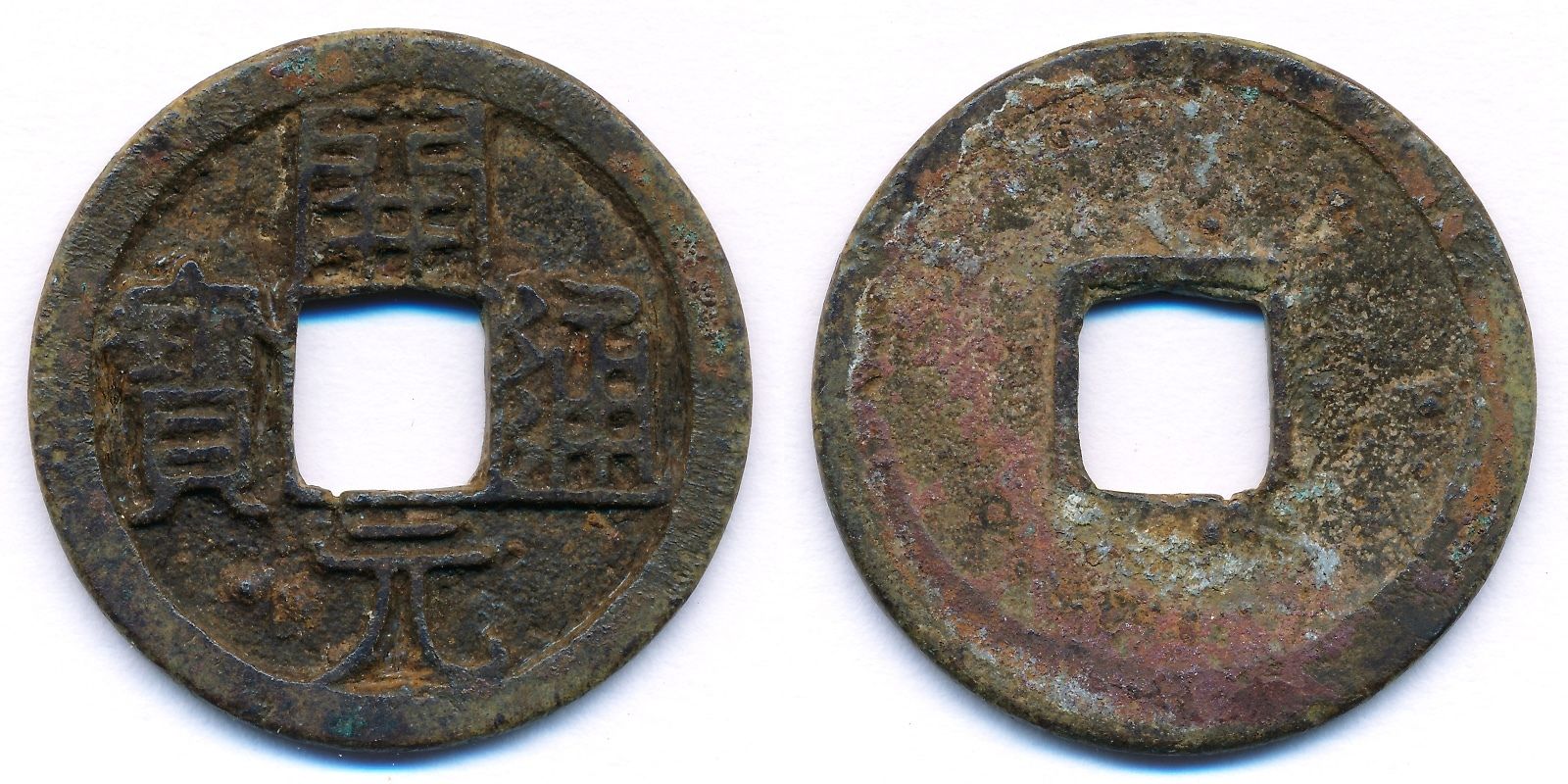
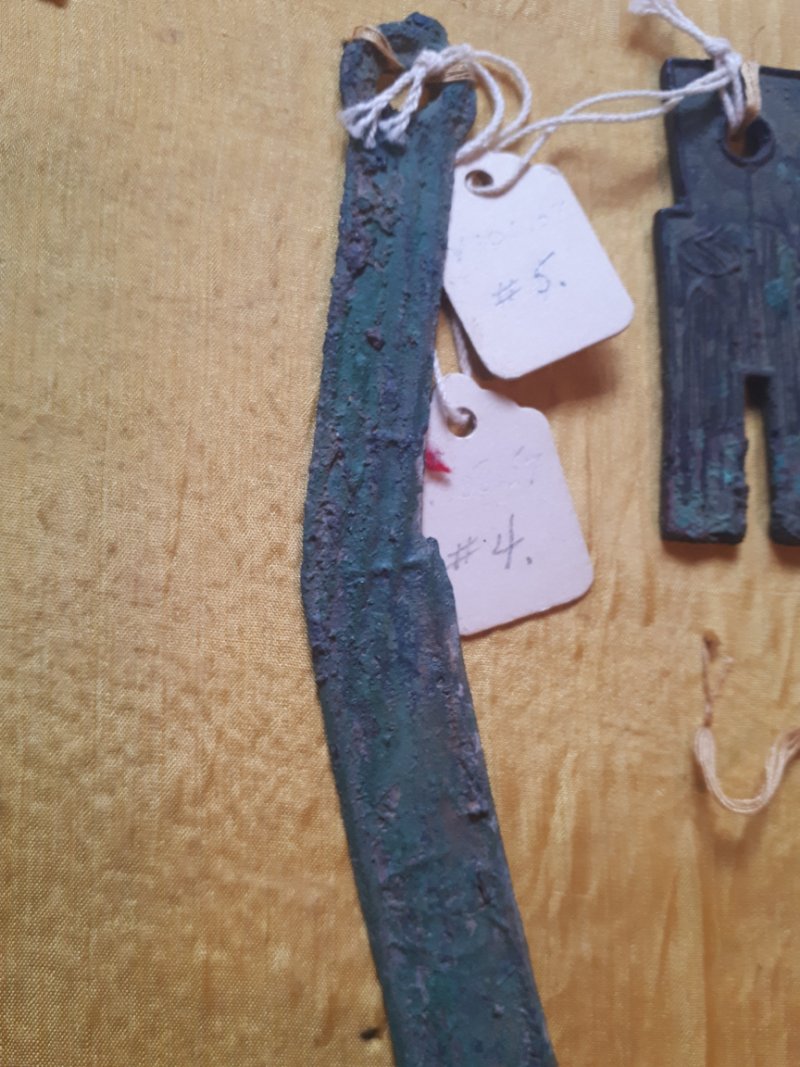
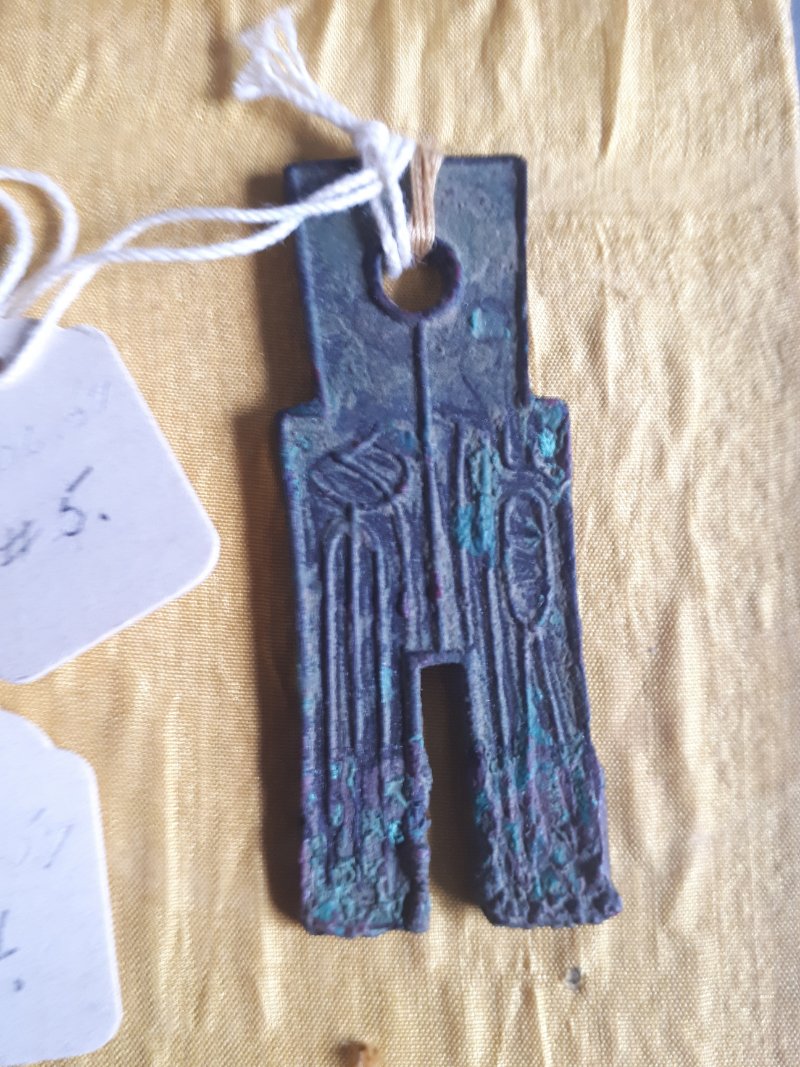
No expert but I think the spade#5 is fake, the details are too prominent, remember in a old thread about this one. The Knife, that unless you paid a bundle could well be fake. The cash(is it one coin?) looks Song, but may well be wrong.
|
|
Valued Member
 Canada
167 Posts |
Thanks for reply. I paid 200 for all 5 coins including spade and knife. I need some more expert opinion to agree if they are fakes and I can ask the dealer to refund me. Such a loser and fraud he was if he sold fakes I will report him to fake sellers. lets wait and see what others say.
|
|
Moderator
 United States
34560 Posts |
"If you climb a good tree, you get a push."
-----Ghanaian proverb
"The danger we all now face is distinguishing between what is authentic and what is performed."
-----King Adz
|
|
Valued Member
Canada
167 Posts |
Thanks Spence That was very helpful I think based on these the spade if fake because the rim and characters are thick not needle sharp as described for authentic ones. But I hope an expert in Chinese coins can verify if I am correct on my conclusion here?
I am not sure about the knife and Tang coin though I did not see any thread talk about those ones
|
|
Moderator
United States
34560 Posts |
@AIR, from your pics, it kinda looks like these all came pinned to a board in some sort of presentation box. If that is true and one is a fake, then I'm thinking you should try to return the entire group. Just sayin...
However, best to let someone who is more knowledgeable weigh in first.
"If you climb a good tree, you get a push."
-----Ghanaian proverb
"The danger we all now face is distinguishing between what is authentic and what is performed."
-----King Adz
|
|
Moderator
United States
23731 Posts |
I am not and expert on these coins but have seen enough genuine and fake examples to make and educated guess. IMO they are all fakes and you should return them. I hope you will be able to get your money back.
|
|
Valued Member
Canada
167 Posts |
Thanks guys its very helpful and I need to return these . if seller start to argue they are genuine I will refer him to the board that we reached a consensus on these. he charged me so much so high I am very mad guys sorry... I need get my money back from him.
|
|
Pillar of the Community
United States
1554 Posts |
Quote:
@AIR, from your pics, it kinda looks like these all came pinned to a board in some sort of presentation box. If that is true and one is a fake, then I'm thinking you should try to return the entire group. Just sayin... An excellent observation, Spence! The presentation box itself is a red flag imho. Whether real or fake, $200 is "full retail" plus. In 2009, I purchased a lot of 4 ming knives from a very reliable source for $36 each. Frank Robinson is currently selling the Wang Mang spades ("EF, looks too good to be real, but is genuine") for 49.50 each. That being said, the unfortunate reality is that it is no longer possible to distinguish between good fakes and genuine Chinese cast coins. The best indicator is the source, knowledgeable dealers with long track records. Scott Semans has long been regarded as a leading expert in Chinese coins. Read his take here: https://www.coincoin.com/I054.htmEdited by Kushanshah
08/13/2018 10:32 pm
|
|
Valued Member
Canada
167 Posts |
Thanks Kushanshah for the link. It seems Scott put emphasis on the provenance of coins. I actually bought these set of coin from the dealer ONLY and ONLY because he said it is coming from an old collection and I thought (Now I know I was wrong) that coming from old collection means almost no chance to be fake. I found exact same coins with same board sold at CNG Please see below link: https://cNGCoins.com/Coin.aspx?CoinID=206042 |
|
Pillar of the Community
United States
1554 Posts |
You have interesting provenance. I don't see any reason to worry. The coins are not rare and were not likely to have been faked in 1945. The full board as shown by CNG is not the sort of mass-produced souvenir set that I was thinking of. Martin Armstrong/ Princeton Economics is a crazy story unto itself.
Edited by Kushanshah
08/14/2018 12:42 am
|
|
Valued Member
Canada
167 Posts |
Thanks Kushanshah I know the provenance seems good but I am worried it could be old fake (Scott Serman article also mentions that old collections have often crude fakes too ) Please check below link of fake Wang Mang. It says the ones with thicker character is fake and authentic ones should have thin and sharp characters. Mine seems thicker lines and characters. http://www.forumancientcoins.com/fa...&cat=0&pos=0 |
|
Pillar of the Community
United States
1554 Posts |
It could be. I do see your point on the spade. I sold my Chinese collection seven or eight years ago. Curiously, I sold it to a Chinese national who sent the coins back to China. He said his friends in China are so afraid of fakes, they will only buy Chinese coins from overseas!
CNG are not expert in this area and their vetting of group lots in general is lackadaisical (in my opinion). The set probably dates to the 30s or earlier. An 80-year-old fake with fascinating provenance is probably more valuable than an unprovenanced genuine coin. It's a shame the collection was broken up.
Edited by Kushanshah
08/14/2018 01:04 am
|
|
Valued Member
Canada
167 Posts |
Hi Guys I found this coin in scott invesntory and he is very honorable and trusted so the item should be authentic . Note that the character is thick and not thin on this wang mang coin which makes me believe that the theory that says thick character on wang mang means fake is not correct. not sure who created this theory from the first place but we should be very careful not to create rumors about things like this without proof. if you really say things like this refer to a scholarly research or book reference that backs up your theory. This types of theory makes inexperienced collectors like myself to wrongly assume their authentic coins are fake. Please be a little more considerate to other fellow collectors. https://coincoin.com/XC/XCH9.30A.j.jpg |
|
Valued Member
Netherlands
91 Posts |
Dear Arash, As someone who almost exclusively collects cast spades, knives and other ancient Chinese coinage, that lurks here (yet does not post as often as he would like), I'd like to put in my 2 cents. Don't worry about these coins. Please. First of all the provenance. That board has an amazing history and can indeed be dated back to 1945. It was first sold via CNG (who have or did have someone who checks their Chinese stuff), later broken apart, the most valuable coins (mainly the Qi-knife) removed and sold separately. Afterwards, this was done once again, now only a handful of relatively common coins remaining. At this point, you acquired this board. How awesome is that? You mention that you are afraid of older fakes. On the one hand, that is a valid fear because they definitely exist. Even on the complete board as it sold via CNG, three fakes are included; the Liang Zi directly under your knife, the big Qin Ban Liang in the middle and possibly the unidentified coin under your spade (I would want to see that one up close before I condemn it). Those are all fakes. But easily identifiable ones at that. Both patina and style are way off and characteristic for fakes of this period. Most if not all fakes from this period are relatively easy to spot. It's the modern ones, where patina, calligraphy and style are near perfect, that you should be fearing. I don't completely agree with Scott Semans that fakes are indistinguishable from genuine cast Chinese coins nowadays (at least in my area of early spades & knives, there is a case to be made that it, sadly, is true for later cash), but it is getting harder and harder. Your Huobu is completely genuine. As for the thinness of the characters, this has simply been misinterpreted by some people. Thin and sharp are not the same. Check out one of the topics that Spence linked to concerning the authentication of this type of huobu. Does this answer your question? On your specimen, the way it was cleaned certainly doesn't help. The earthen deposits were removed from the surfaces, but left intact closer to the character, giving them a thicker appearance. The Ming knife is also authentic without a doubt. That patina is excellent and even though modern attempts have gotten close, it was unfakeable in 1945. Stylistically it checks out. Sometimes it is difficult to explain exactly why something is authentic or not, but this has an 'organic crustiness' to it that remains near impossible to fake. How would I know? Well, I recently acquired this lot: 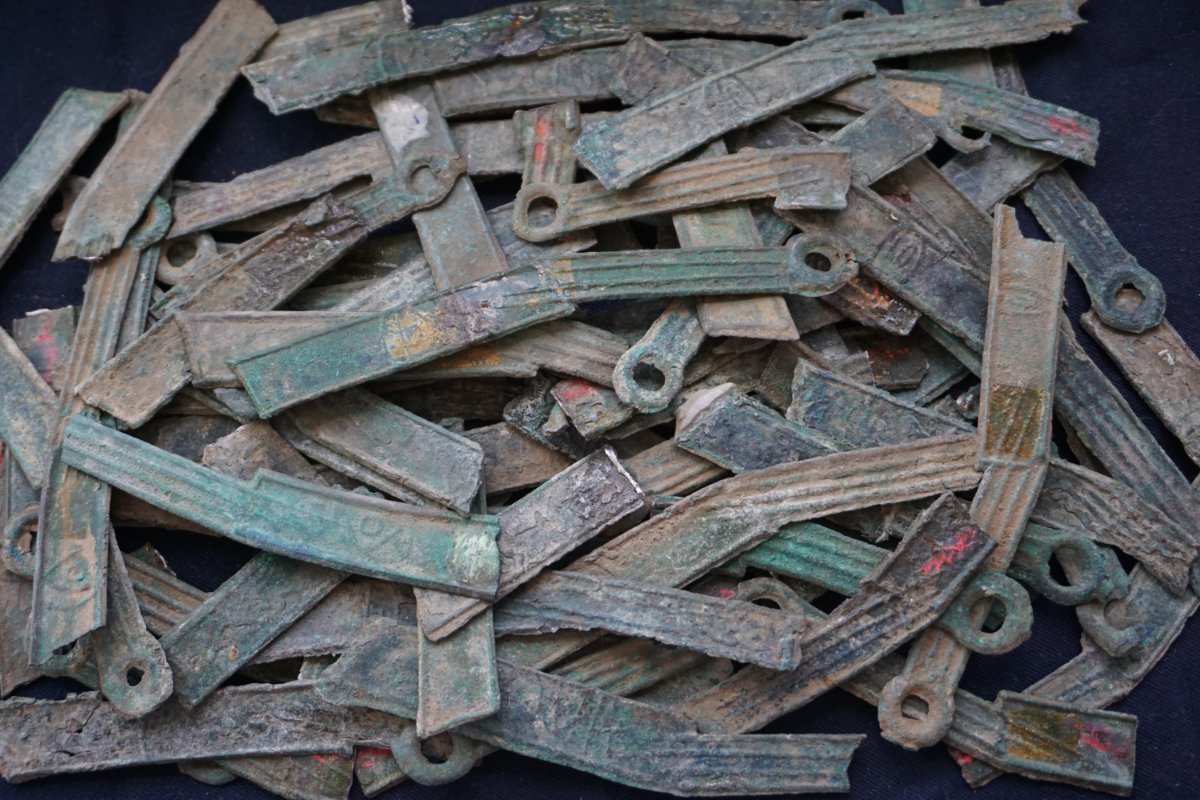 I am a little less knowledgeable on Tang dynasty coins, but given the transfer patina, as well as the calligraphy and commonness of the coin, it can't be anything but genuine. If you have any other question concerning the authentication of ancient Chinese coins, I would be more than glad to have a look at them for you personally. But please don't flood the forum with them ;). Kind regards, Mika |
|
Valued Member
Canada
167 Posts |
Dear Mika
Thanks so much for very detail explanation and confirming that the theory of the thickness of character is a myth :)
I actually decided to return the coins as I just simply uncomfortable on collecting Chinese coins at least for now. It is as you and many said, is plagued with many good fakes. I just better stick to the silver roman and persian coins which is my main collection is . But in future if I decided to buy a new Chinese coin I will for sure ask your opinion before spend money to make sure it is a safe buy and I really appreciate your help Mika.
Best Wishes
Arash
|
| |
Replies: 15 / Views: 2,067 |
|











 Posted 08/13/2018 8:08 pm


