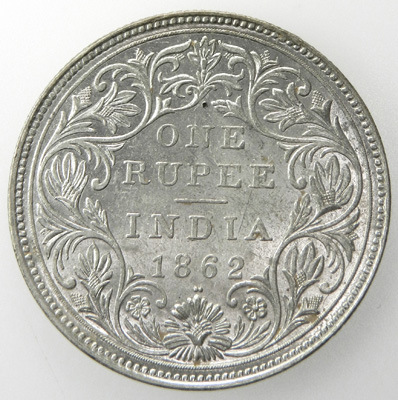
1862 1 Rupee..The reverse dot varieties..Why the dots?
This explanation was released by the Bombay mint in 1893 in the Bombay Times of India-
Quote:
" The Mint adopted the plan of adding dots to its dies in order to indicate the exact year of minting in between 1862-1874. "
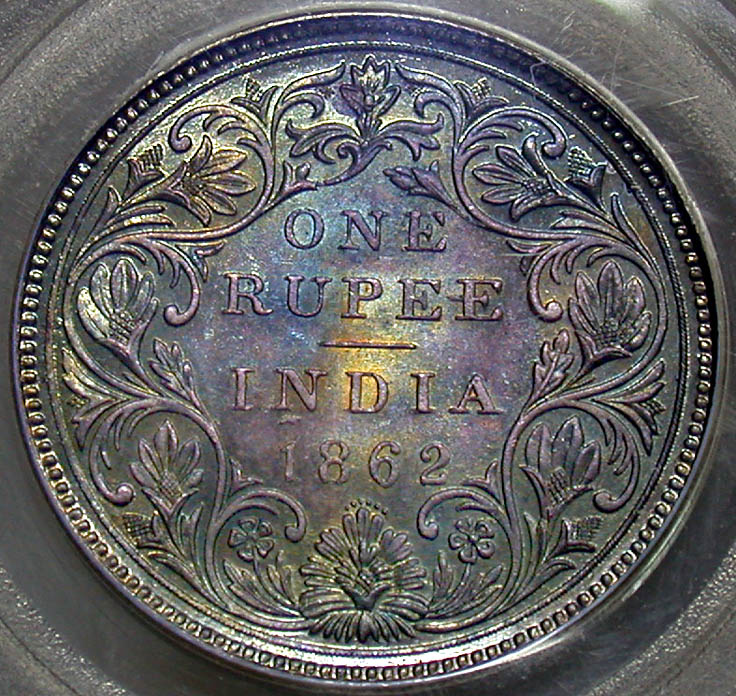
From 1862-1873/4 all coins were dated as 1862 and basically the mintage year was signified annually by adding a dot... 1 dot above the bottom flower indicated it was struck in 1863..4 dots indicated 1866 etc..Or so you would think!...
Why did they do this?! All the other denominations did not adopt this dating system on the 1862 series...And why was this system only officially announced nearly 20 years later!....
These coins were highly detailed yet the dots seem to have been created by an 8 year old with a Dremel, a diamond bit and no sense of symmetry!There seems to have been some confusion as to where the dots should be placed in the first couple of years and then it becomes a bit more plausible(the 1 year = 1 dot statement) until the last 2 years when the dot placement becomes disorderly again...
The referencing format for these coins are as follows..eg B/II 2/4 = Bust B/Reverse II 2 top dots/4 bottom dots.
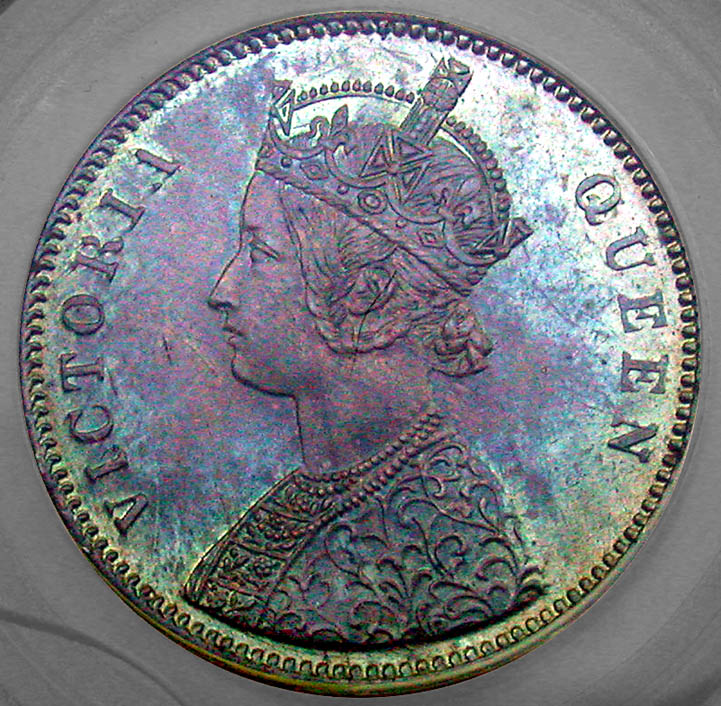
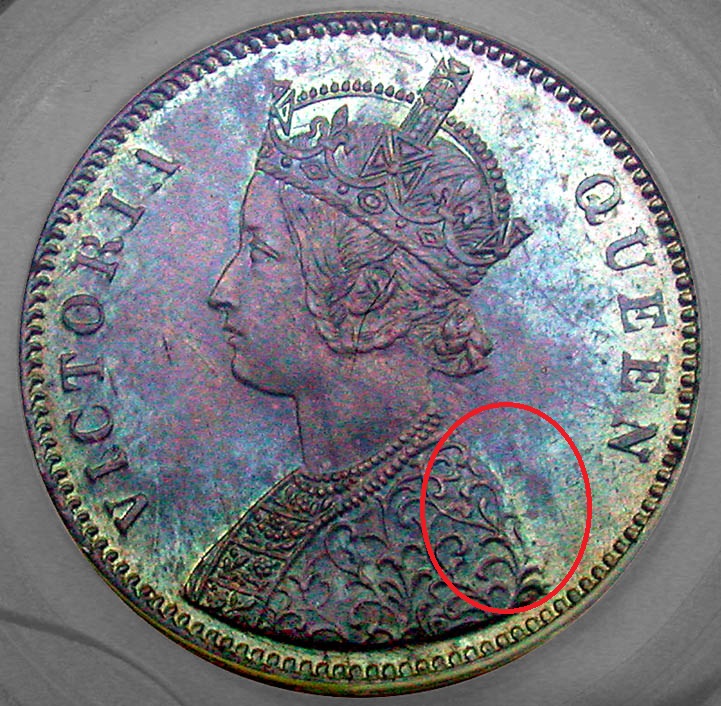
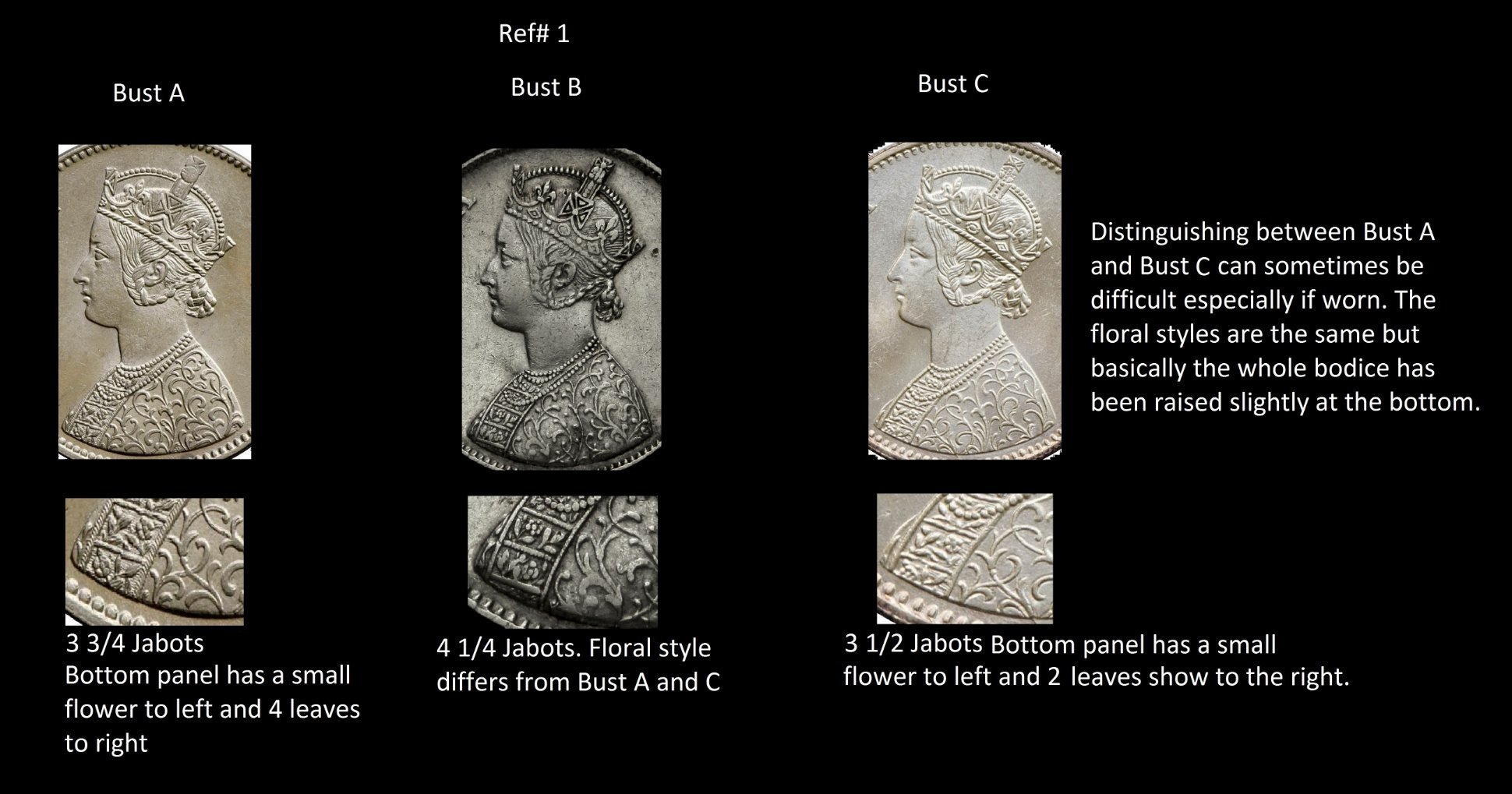
First here are the 3 basic bust types used,these are the same as the non dot varieties posted before See Ref# 1..
Note there is another very rare bust type which I'll present in the next post..
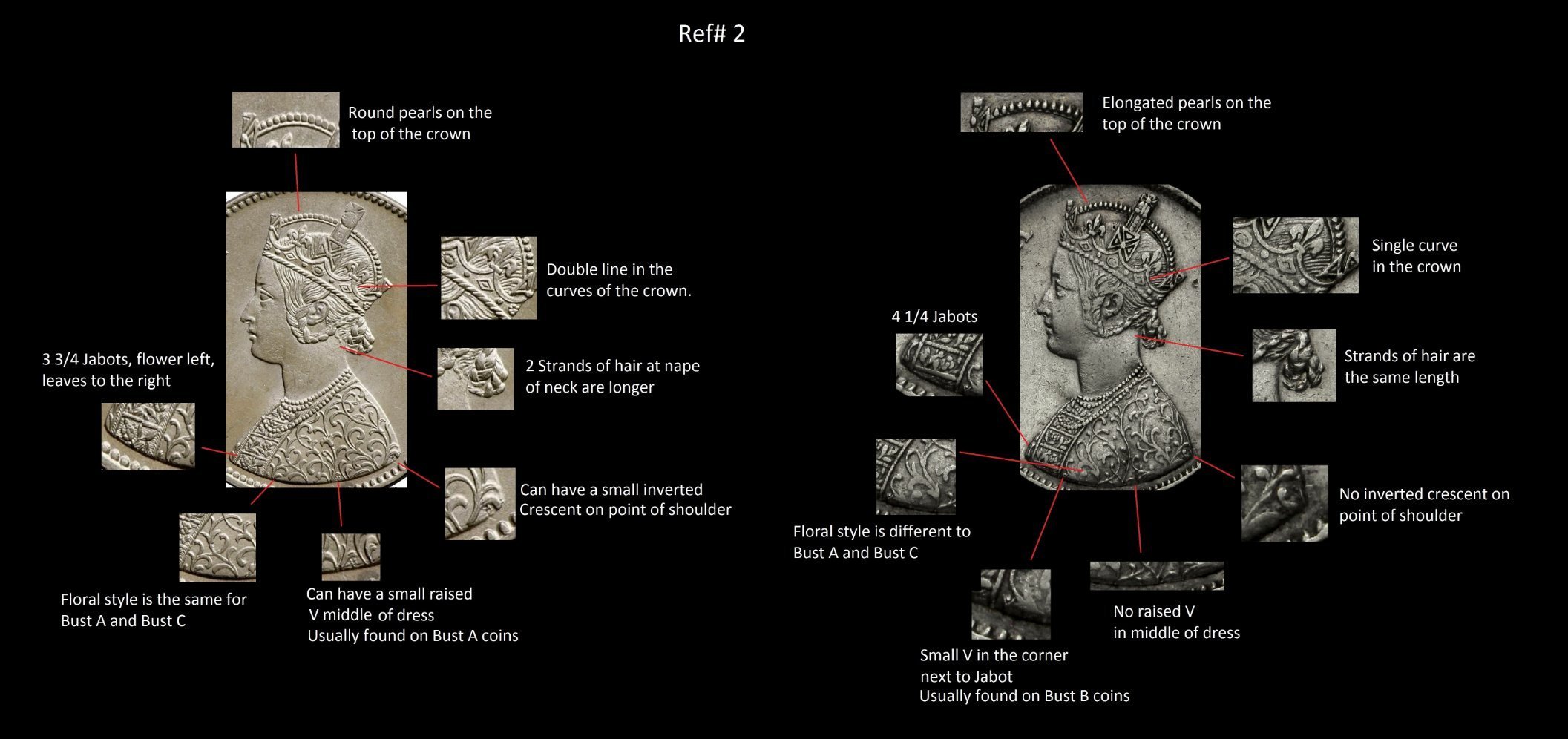
Variations of the basic Bust..Please note these variations are not necessarily akin to a particular Bust type..See Ref#2
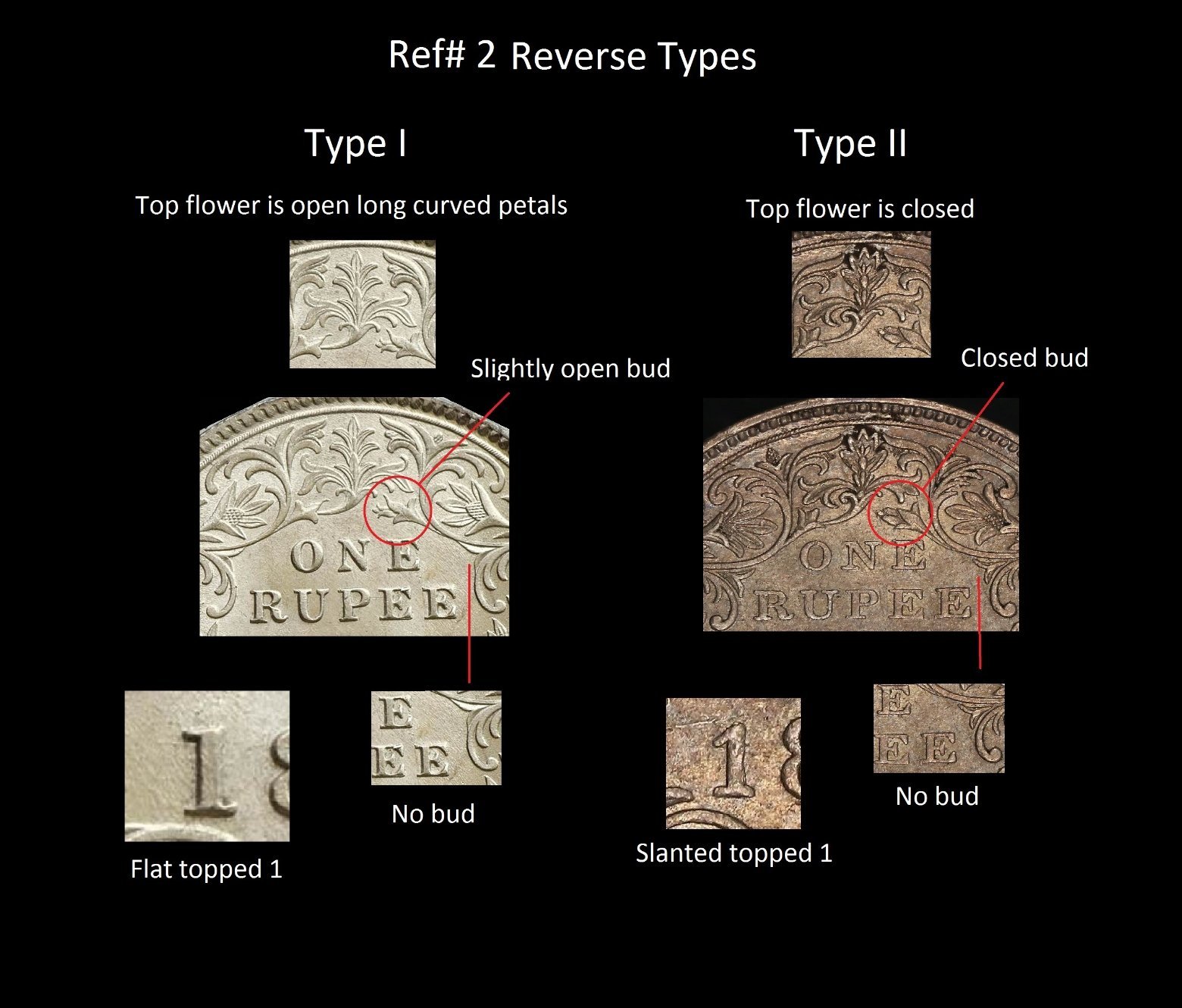
Only 2 types of reverse were used on the dot varieties see below..
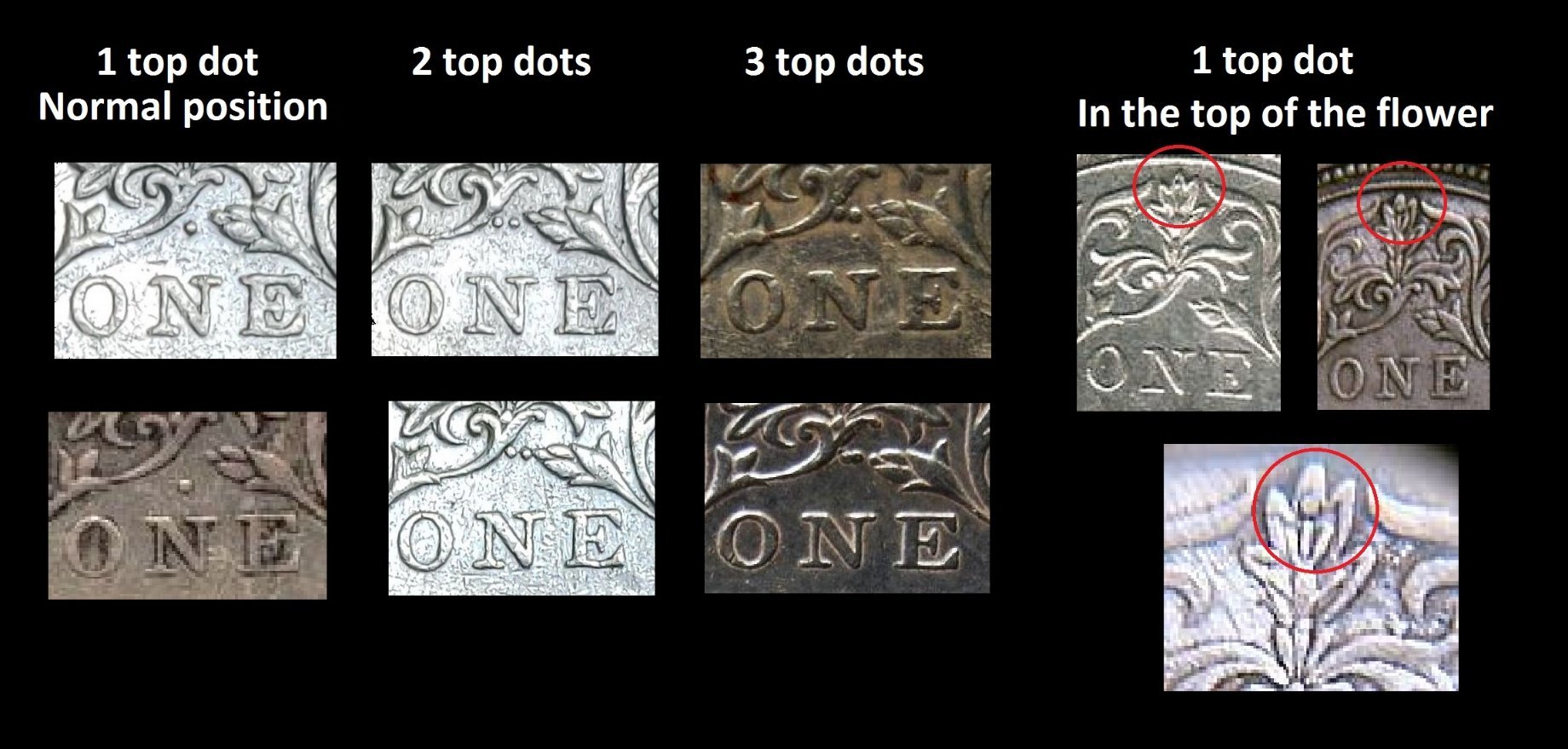
The reverse top dot positions are as below..As you can see with both the 3 dot types one of the dots is very small this is usually referenced as micro dots..I am personally sceptical about this...Is this a 3 dot type or a 2 dot type with a control mark? Maybe to indicate the run-over into the next year?Just a thought...
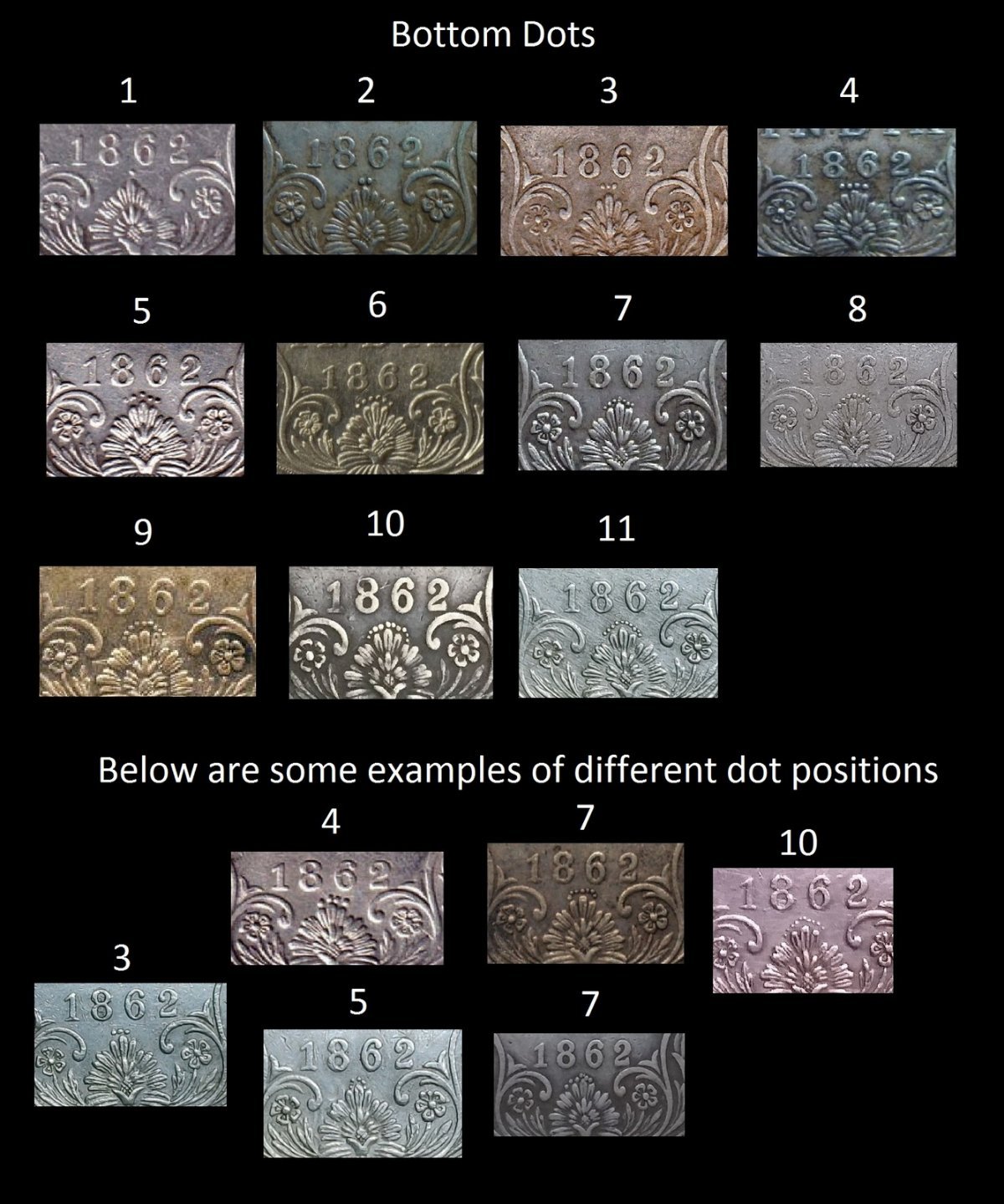
The reverse bottom dot positions are as below..Again micro dots are visible on some..
Checklist..
1863..A/II 0/1..B/II 1/0
1864..A/II 0/2..AII/ 2/0..B/II 2/0..B/II 3/0
1865..B/II 0-3..B/II 2/3
1866..A/I 0/4...A/II 0/4..B/I 0/4...B/II 0/4..A/II 2/4..B/II 2/4
1867..A/II 0/5
1868..A/II 0/6..B/II 0/6
1869..A/II 0/7..B/II 0/7
1870..A/II 0/8
1871..A/II 0/9
1872..A/II 0/10..A/II 1/7(top dot normal position)..A/II 1/7(top dot in top flower).
1873..A/I 0/11...A/II 1/1..A/II 1/10(top dot normal position)..A/II 1/10(top dot in top flower).
1874..A/II 0/12..A/I 1/2..A/II 1/2..C/I 1/2..C/II 1/2..A/I 1/11
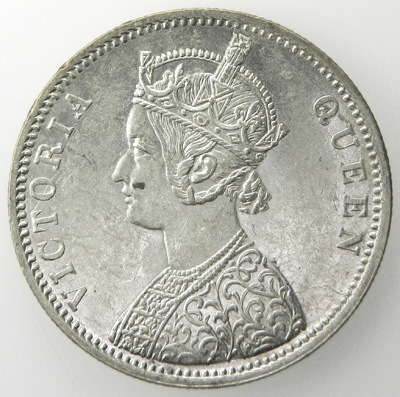
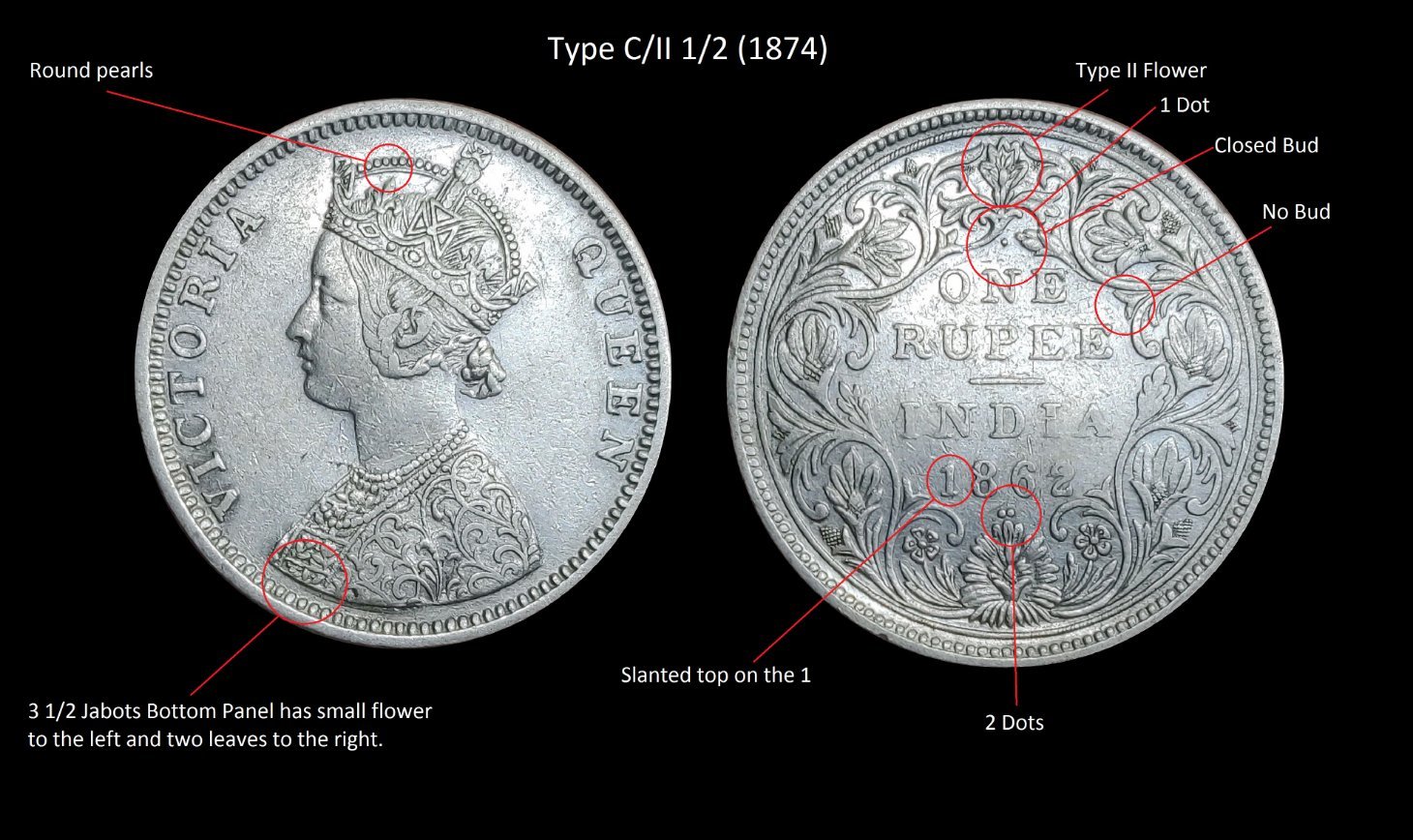
Here is an example coin randomly taken from
ebay..
As you can possibly tell I am a bit sceptical about the initial statement from the Bombay Mint..There are a lot of different suggestions from various collectors regarding the dot formations and their purpose (I have my own)..I would be interested in hearing other peoples opinions...
In the next post I am going to present a challange to all you viewers with 3 examples that hopefully you will be able to attribute...They will all be standard types...Lets see if you can...... Paul







 First Page
 Previous Page


 Posted 11/12/2018 4:07 pm