| Author |
 Replies: 7,432 / Views: 408,190 Replies: 7,432 / Views: 408,190 |
|
|
|
Moderator
  United States
196100 Posts |
Quote:I shouldn't think so. I have 5 tankas coming and I'll be posting a 1395 example tomorrow if I get a chance. With some luck we might be into the 1380's in a week or so time unless something unforeseen happens.  Outstanding!  |
|
Pillar of the Community
Australia
2583 Posts |
Today I have this 1395 (AH 797) Bahmani AR tanka Muhammad Shah II - GG# BH051 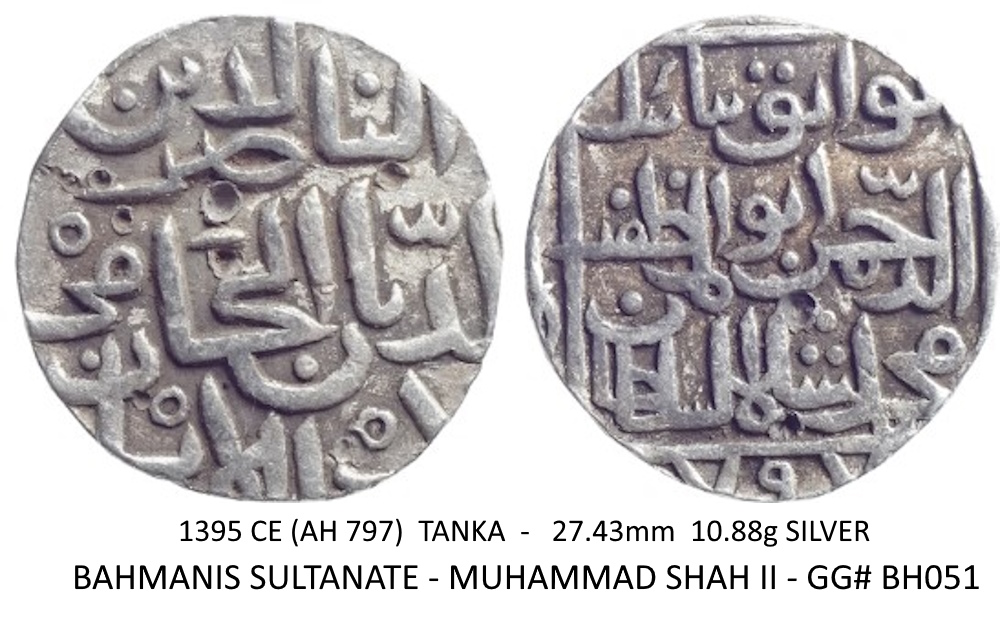 The Ox moves slowly, but the Earth is patient.
|
|
Moderator
United States
196100 Posts |
Wonderful! I believe we have enough evidence to support your receiving these coins eventually, so I am going to advance the title with an asterisk in the record book until you have coins in hand and have share your own photos as in the past.  |
|
Pillar of the Community
Australia
2583 Posts |
Sounds fair.
Onwards!
The Ox moves slowly, but the Earth is patient.
|
|
Moderator
United States
196100 Posts |
Quote:
Onwards!   |
|
Pillar of the Community
Australia
2583 Posts |
For 1394 I have, surprise....another Bahmani AR tanka AH 796  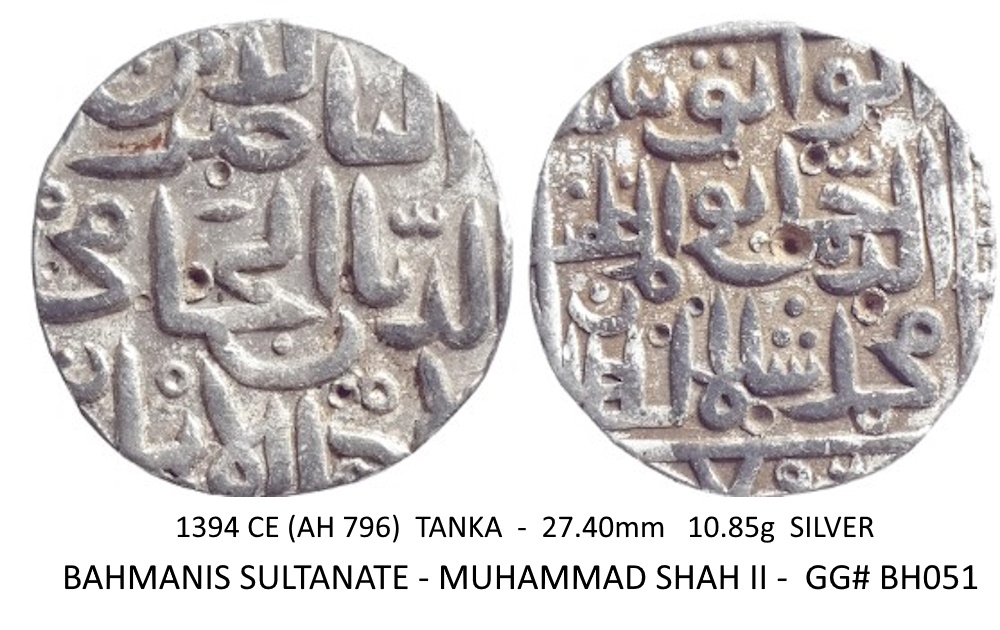 From tomorrow, I think we need tdziemia to play the 1393 card? The Ox moves slowly, but the Earth is patient.
|
|
Moderator
United States
196100 Posts |
Quote:
For 1394 I have, surprise....another Bahmani AR tanka AH 796 We will take what we can get!  Quote:
From tomorrow, I think we need tdziemia to play the 1393 card? Hopefully. Another weekend is upon us, so I will not be here to change the title. As I said last time, feel free to keep moving back if you have them! 1393CE/AH795 tomorrow and 1392CE/AH794 on Sunday. |
|
Pillar of the Community
Australia
2583 Posts |
The Ox moves slowly, but the Earth is patient.
|
|
Pillar of the Community
 United States
8056 Posts |
This well-worn undated 1/4 groot of the County of Holland (van der Chijs Vol. 6, VIII.16) was struck in an "emission of 1393." Count Albrecht was authorizing new types every two years more-or-less (there were emissions of 1391, 1393, 1395). I think in the 5th edition we discussed daing by emission and agreed to accept them, but maybe with ttkoo's great collection that's not even needed. 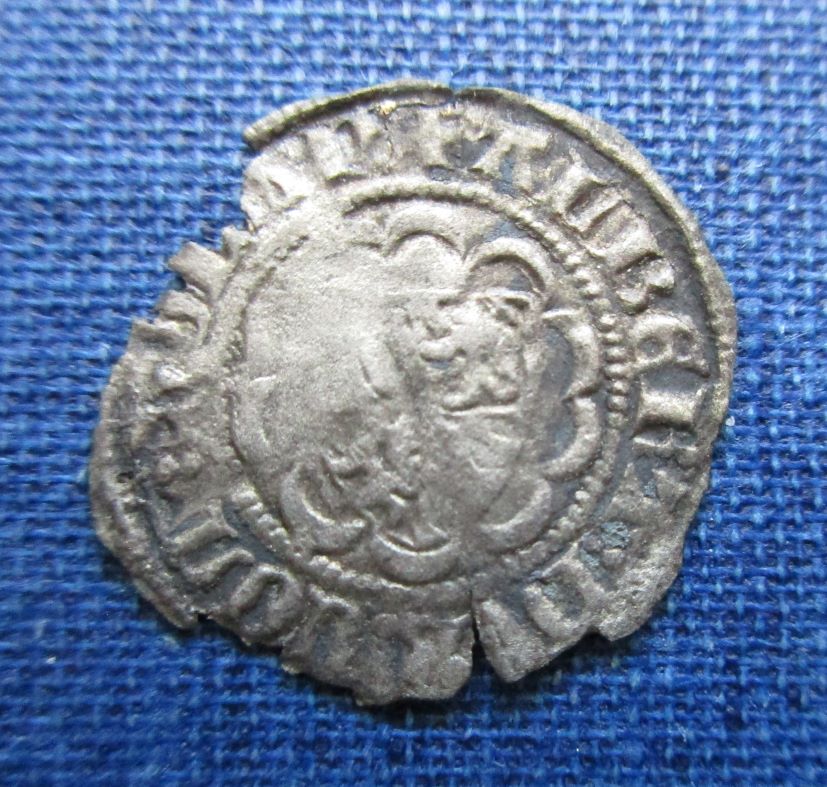 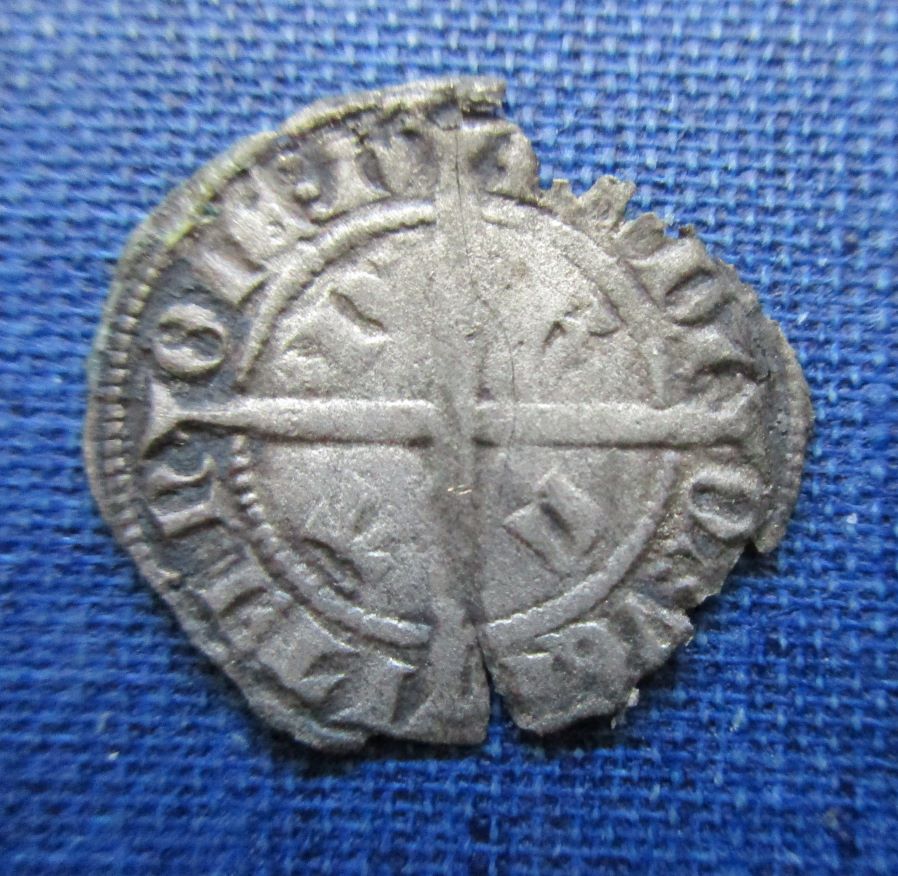 Obverse: Bavaria-Palatinate arms. ALBERT:DVX:COm:HOLAn' Reverse: Cross with h L A D in corners Edited by tdziemia
05/04/2024 11:58 am
|
|
Pillar of the Community
Australia
2583 Posts |
Quote:
This well-worn undated 1/4 groot of the County of Holland (van der Chijs Vol. 6, VIII.16) To my mind, this and all of the others like it are remarkable coins, well travelled, and passing through many hands over the past six centuries. They ooze character and are a treat for the senses. Quote:
Count Albrecht was authorizing new types every two years more-or-less (there were emissions of 1391, 1393, 1395). I think in the 5th edition we discussed da(t)ing by emission and agreed to accept them, but maybe with ttkoo's great collection that's not even needed. To make it seem that I wasn't skating on thin ice, let's say that discussions with the Minister of Domestic Finance concerning recent possible coin acquisitions by myself concluded that since the years 1393 and 1391 (which were considerable more expensive than the other years) were already covered by these emission coins, I would delay buying those two, and any other 'gaps' preceding 1390 until later in this year and next, to assist our budgetary requirements. The Ox moves slowly, but the Earth is patient.
|
|
Pillar of the Community
United States
8056 Posts |
You could probably be negotiating global trade deals with those negotiating skills  |
|
Pillar of the Community
Australia
2583 Posts |
Quote:
You could probably be negotiating global trade deals with those negotiating skills   The Ox moves slowly, but the Earth is patient.
|
|
Pillar of the Community
Australia
2583 Posts |
In keeping with the Deccan theme, today I post this 1392 CE (AH 794)Bahmani AR tanka GG# BH51 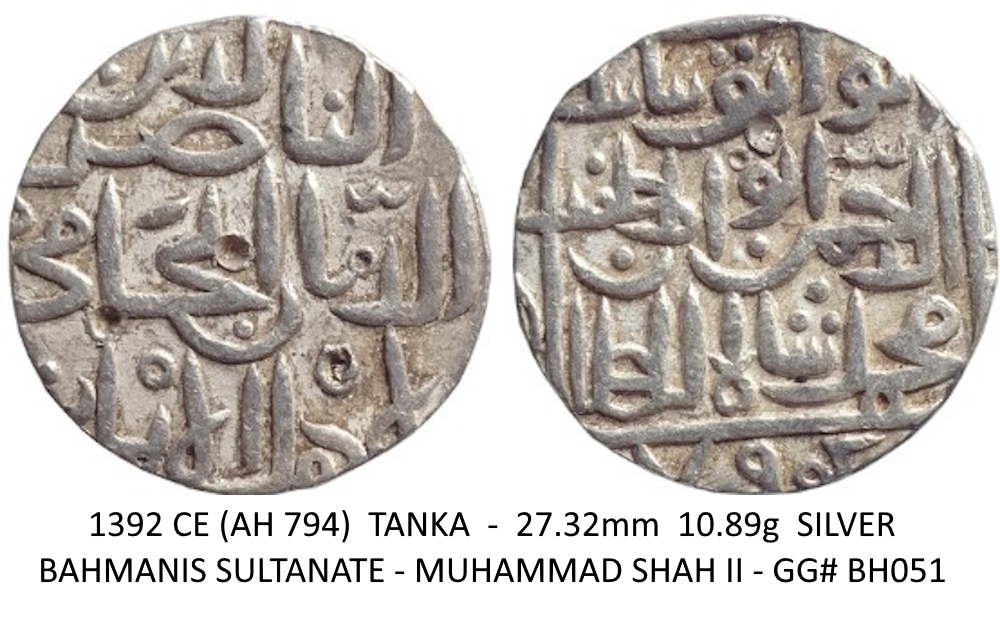 The Ox moves slowly, but the Earth is patient.
Edited by ttkoo
05/05/2024 04:07 am
|
|
Pillar of the Community
Russian Federation
5186 Posts |
Quote:
This well-worn undated 1/4 groot of the County of Holland (van der Chijs Vol. 6, VIII.16) was struck in an "emission of 1393." Count Albrecht was authorizing new types every two years more-or-less (there were emissions of 1391, 1393, 1395). I think in the 5th edition we discussed daing by emission and agreed to accept them, but maybe with ttkoo's great collection that's not even needed. Which mint is that? Apparently for the full groot in the 1393 emission there are two varieties (without and with rose in field), the former of which is datable to 1393 specifically and the latter seems to have been issued continuously into 1395. I couldn't find anything relevant one way or another about the 1/4 groot, though. Here's the possibly-relevant citation from "Het Hollandse muntwezen onder het huis Wittelsbach", H.E. van Gelder, 1959, in Google translation from Dutch... Quote:
1393—1399. — However, a reaction soon set in. Even before the conflict with Dordrecht was settled, a currency ordinance was drawn up on May 15, 1393 with the cooperation of all other cities, as a result of which the system of 1388 was restored. The rates of the coins were, with the exception of a few minor corrections, restored to the level established in 1388; at the same time new coins were introduced: a shield of 40 majors and a silver major, both equal in intrinsic value to the corresponding pieces of 1388. The light major of the previous period was set at 2/3 new major: in accounts from the immediately following years A distinction is made several times between heavy and light money, which have a ratio of 3:2. As a badge of the new arrangement, the coins bore, as expressly stated in the publication, a striking rose in the field. It appears that coins of this type were already produced some time before the ordinance of May 15, but without the rose in the field [9] and issued at a considerably higher nominal value.
In the course of 1394, a reconciliation was achieved between the fiercely opposed parties, as a result of which good relations between Dordrecht and the duke were restored. The Dutch currency will therefore return to Dordrecht fairly soon. However, the minting of the new heavy money was probably not very extensive, mainly because profitable processing of better coins minted elsewhere was not possible, now that the level of the Dutch and Flemish coins was once again the same. The treasury accounts again show a slight increase in the price of gold coins in 1394 and 1395 of approximately 5%, which must have made minting completely impossible.
In this situation, the duke would have easily agreed to give up the exploitation of the mint entirely in return for an annual payment. On June 13, 1395, an agreement was reached with the cities [10], in which, on the one hand, the rates of 1388 and 1393 were restored, and on the other hand, the duke promised to stop coining, and therefore also to refrain from new profitable coinage of weakened coins, against a fixed fee of 6,000 Dordrecht guilders per year, to be paid by the joint cities of Holland and Zeeland. He was therefore assured of a fixed amount of income to replace the varying income from the coinage; the amount was certainly not insignificant: 637 1/2 pounds, little less than the 700 pounds that the mint had yielded during the very large minting of guilders in the eighties. The cities could consider themselves protected against manipulations with the currency by a levy paid equally to all owners, which constituted a particularly incalculable tax with very variable pressure. (I fixed a few obvious typose in the OCR and reformatted the footnotes; if you're interested I can provide the original Dutch version of the translated text.) Google translation is funky sometimes ("groot" rendered as "major", for starters...) and in any case I don't see anything about the 1/4 groot in particular, but I get the impression that most of the coins involved would have been minted throughout the two years (and a bit) between the 1393 and 1395 emissions. There is apparently a distinction between van der Chijs VIII.15 and VIII.16 but I wasn't able to figure out what it was or whether it was at all relevant. I tried to read the catalog in question but it's really confusing and keeps extensively quoting 14th century decrees in the original Middle Dutch (and it's hard enough to deal with normal Dutch). Edited by january1may
05/05/2024 11:21 am
|
|
Pillar of the Community
United States
8056 Posts |
Quote:
There is apparently a distinction between van der Chijs VIII.15 and VIII.16 but I wasn't able to figure out what it was or whether it was at all relevant. As best I can tell from zooming in on the figures in plate VIII, it is a minor legend variant: in VIII.15 the obverse legend ends with hOLAN' and in VIII.16 it is hOLAnD. I will see if I can make out anything more in Van der Chijs.... As you say, if the ordinance was dated mid-May, it's likely the type was struck in 1393, but who knows for how long after. The scarcity of the 1390s Holland coins (except some of the groots) might suggest short production runs. Or maybe just that the coins had to be turned in when the next re-coinage took place. Added: As for the mint, as best I can tell from translating Van der Chijs at top of p. 236, he says that due to the disagreemnt between the Duke and the city of Dordrecht on executing the 1393 ordonnance, the mint was moved to Gertruidenberg, but probably not for more than a few years citing a document of the aldermen of Dordrecht dating from 1400. Presumably it means this coin was struck there along with the groots, though I can;t understand why none of the auction listings for this coin give the mint as Geertruidenberg Edited by tdziemia
05/05/2024 7:39 pm
|
| |
Replies: 7,432 / Views: 408,190 |






 First Page
 Previous Page


 Posted 05/02/2024 12:55 am





