| Author |
 Replies: 256 / Views: 27,583 Replies: 256 / Views: 27,583 |
|
|
|
Pillar of the Community
  United States
8056 Posts |
|
|
Moderator
 United States
34562 Posts |
To compliment @pep's and @tdz's 1500 AD Batzens of Salzburg, here is my own (featuring St. Rupert): 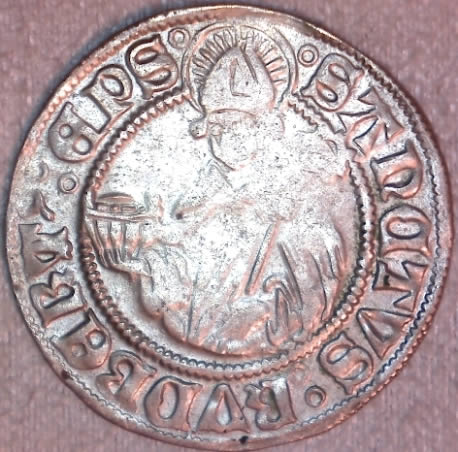 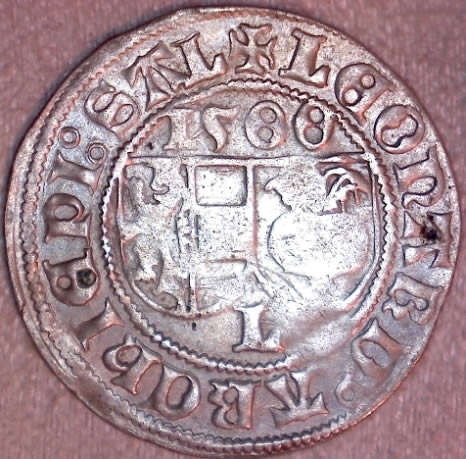 "If you climb a good tree, you get a push."
-----Ghanaian proverb
"The danger we all now face is distinguishing between what is authentic and what is performed."
-----King Adz
|
|
Pillar of the Community
United States
8056 Posts |
And I'll complement @spence's medieval St. Matthew with this baroque rendering on a Papal States piastra of 1678 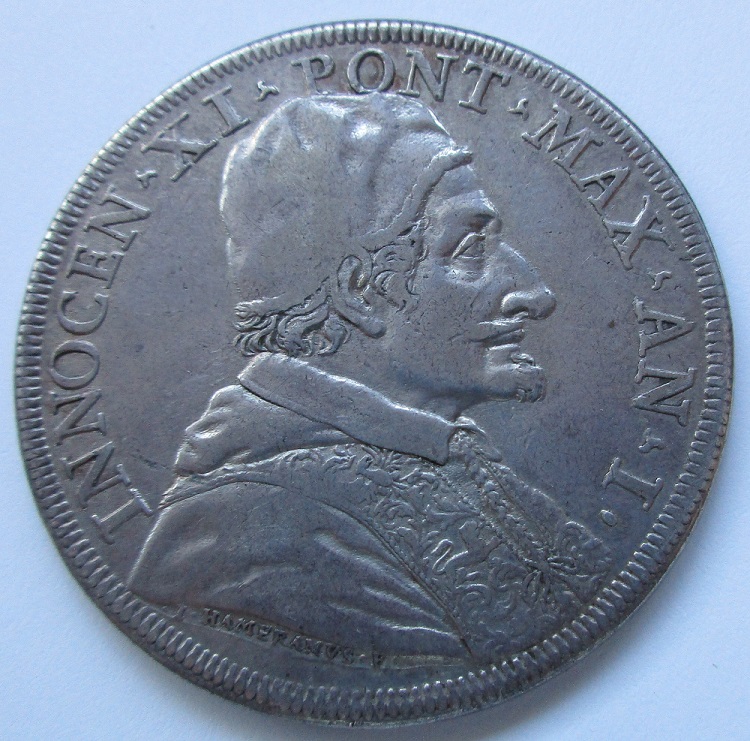 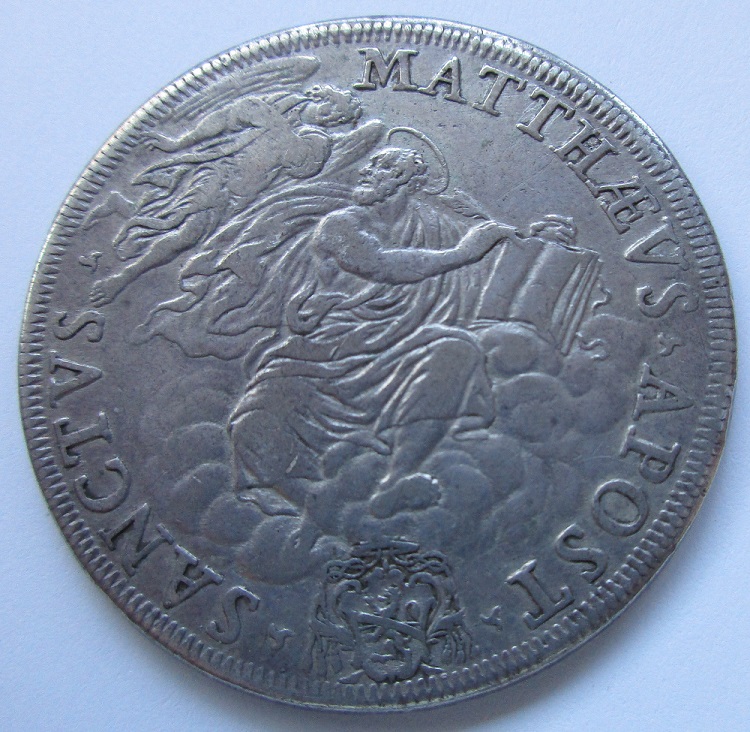 |
|
Pillar of the Community
United States
9395 Posts |
St George -- Russian Empire -- 15 kopeks, 1913: 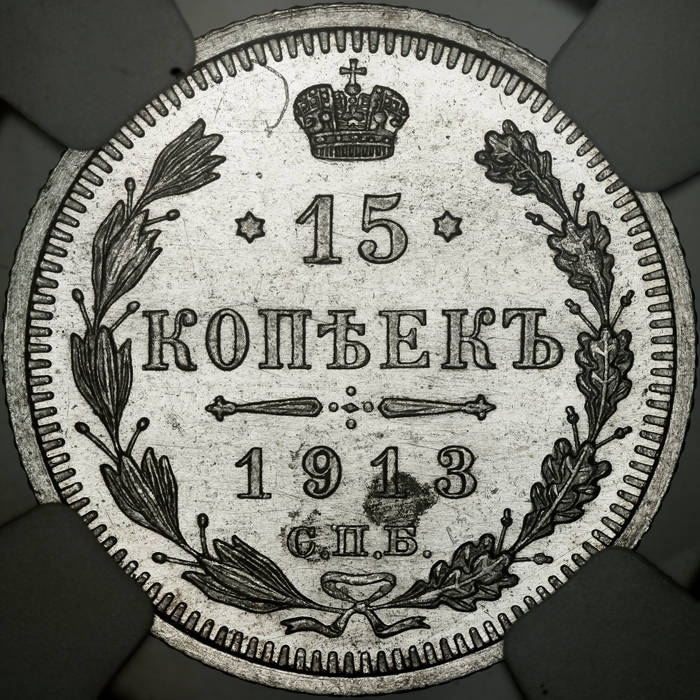 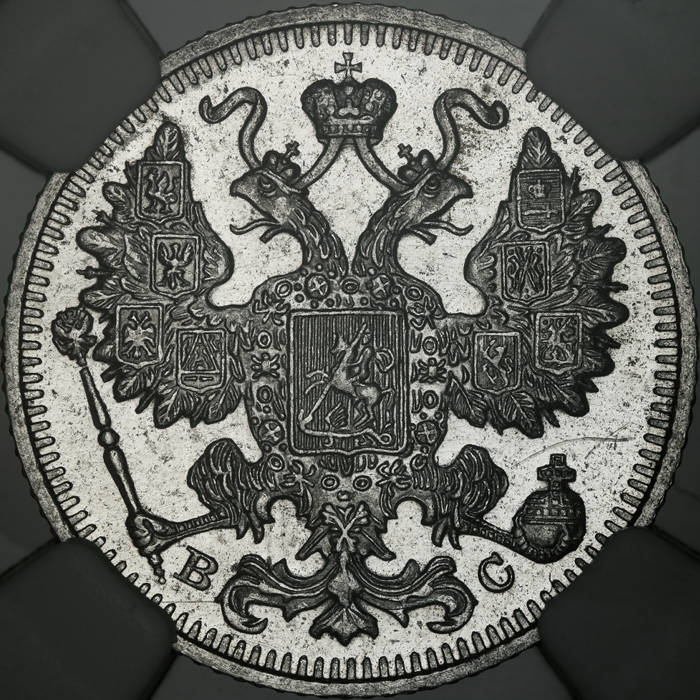 |
|
Pillar of the Community
United States
9395 Posts |
Russian Empire -- 10 rubles, 1899: 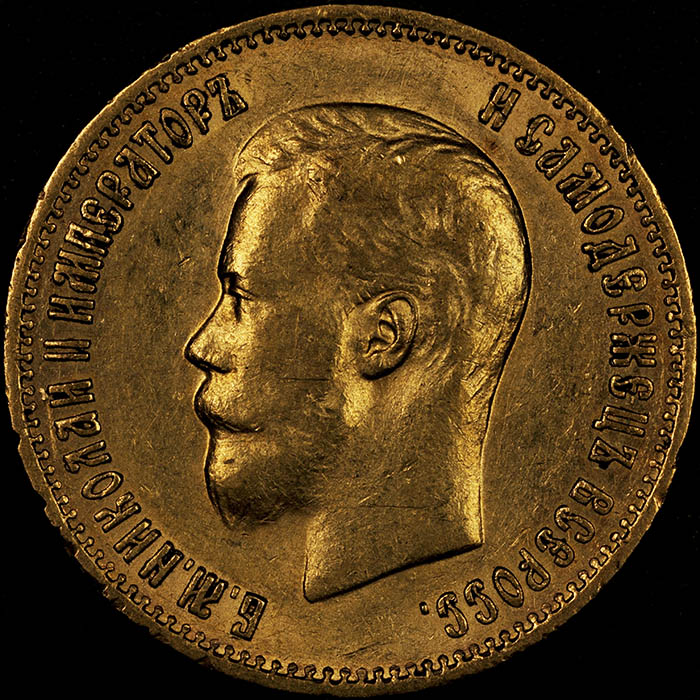 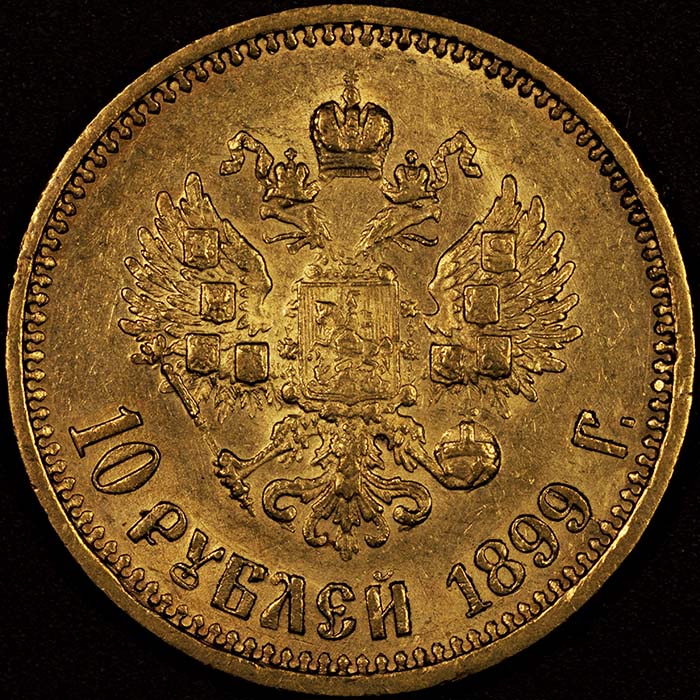 |
|
Pillar of the Community
United States
8056 Posts |
Gold is great, but that 15 kopek coin is pretty incredible, and beautifully photogaphed (as always). I'm going to build on the eastern European theme (Cyril & Methodius from Slovakia and St George from Russia) with this undated Poland medieval denar (1146-57)with St. Adalbert reverse (or maybe it's his relics?) 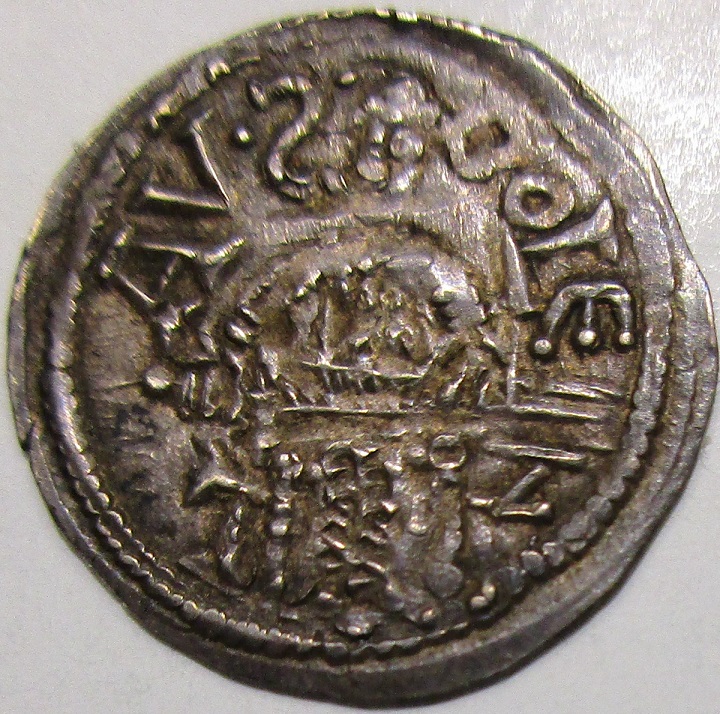 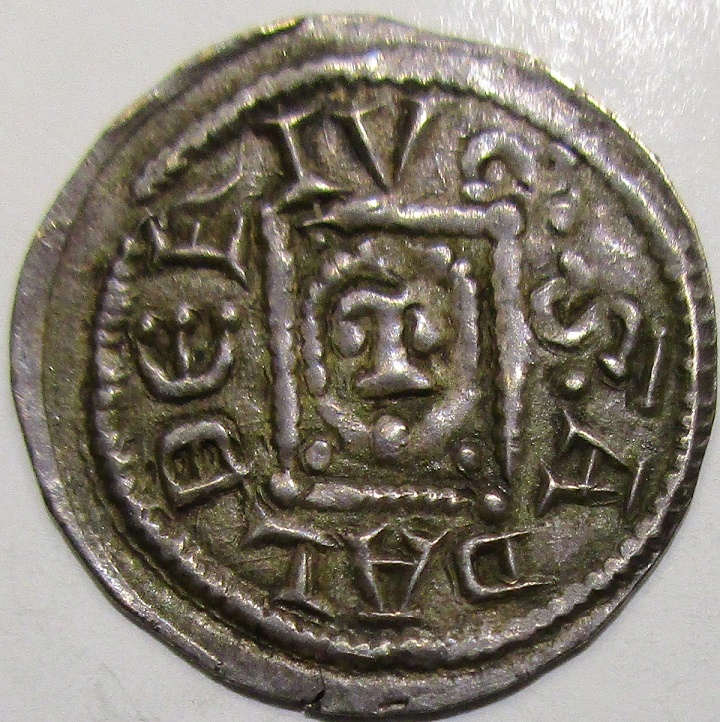 Edited by tdziemia
04/02/2020 2:10 pm
|
|
Moderator
United States
34562 Posts |
Quote:
or maybe it's his relics? At first I thought it was just a letter T inside a circle. According to Frynas, it is a "head facing within a square". "If you climb a good tree, you get a push."
-----Ghanaian proverb
"The danger we all now face is distinguishing between what is authentic and what is performed."
-----King Adz
|
|
Pillar of the Community
United States
8056 Posts |
It's not clear at all to me which is the correct interpretation. I see this often described as just "head inside a square frame," but a couple of the Polish auction houses are more specific about this being an image of Adalbert, or even a reliquary containing his head (for reasons I don't want to imagine, the saint's skull is still separate from the other bits). Here is a description from an October 2018 auction at Damian Marciniak, (Auction 6, lot 486 https://www.numisbids.com/n.php?lot...lot&sid=2791The oldest type of Boleslaw Krzywousty denarius, which began its coinage by placing its patron Saint Adalbert on the reverse. As Stanislaw Suchodolski explains, this choice was a manifestation that it was the saint himself who sanctioned the seizure of power.
Obverse: prince on the throne, straight ahead, with a sword in his lap. In the rim:
BOLEZ-LAVS.
Reverse: a square reliquary with a head. In the rim:
S. ADALBERTVS.
. Edited by tdziemia
04/02/2020 7:29 pm
|
|
Pillar of the Community
United States
8056 Posts |
Another Salzburg coins, but with a twist... This commemorative 1/2 thaler of 1682 does NOT have ST. Rupert, but shows five saints whose relics are in Salzbug cathedral: St. Martin of Tours, shown in his bishop's garb instead of on a horse, and with a goose (because that's what is served on his feast day) St. Vincent who we saw previously on a coin of Berne, and the early martyrs St. Hermes, and Sts. Chrysanthus and Daria. 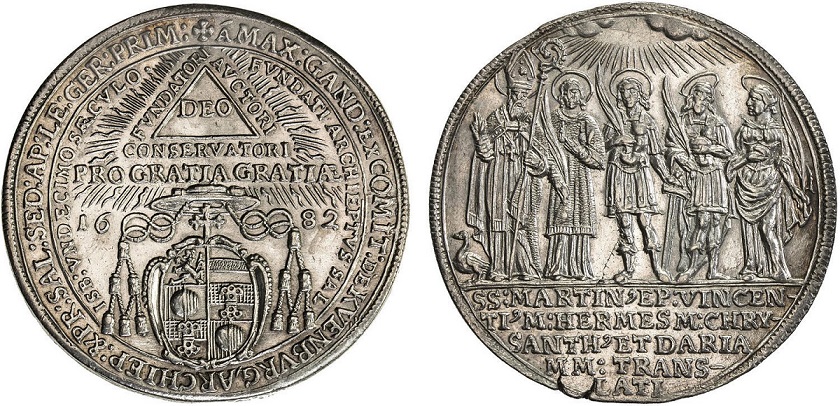 |
|
Pillar of the Community
United States
9395 Posts |
St George, again: Russian Empire -- 50 kopeks, 1913:   |
|
Pillar of the Community
United States
9395 Posts |
Russian Empire -- 15 rubles, 1897: 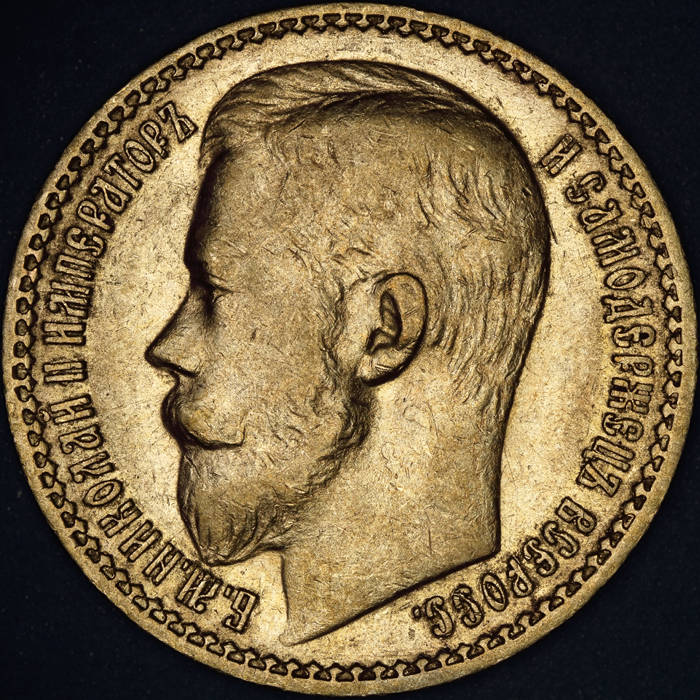 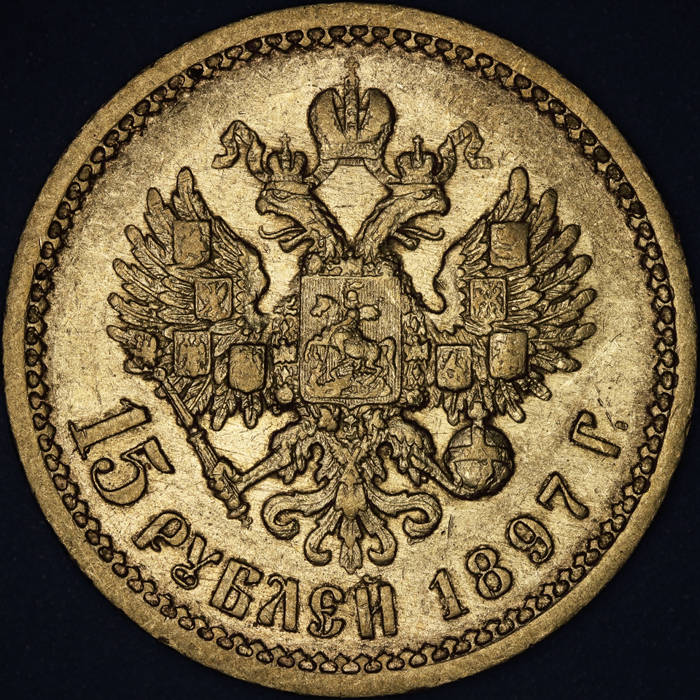 |
|
Moderator
United States
34562 Posts |
Great coins so far today. Here is a so-called Square Pfennig from the Swiss Canton of Solothurn featuring St. Ursus. This bracteate is from the late 13th Century and unsurprisingly has the inscription VRSVS (more interesting to me is that the letter Ss are sideways). 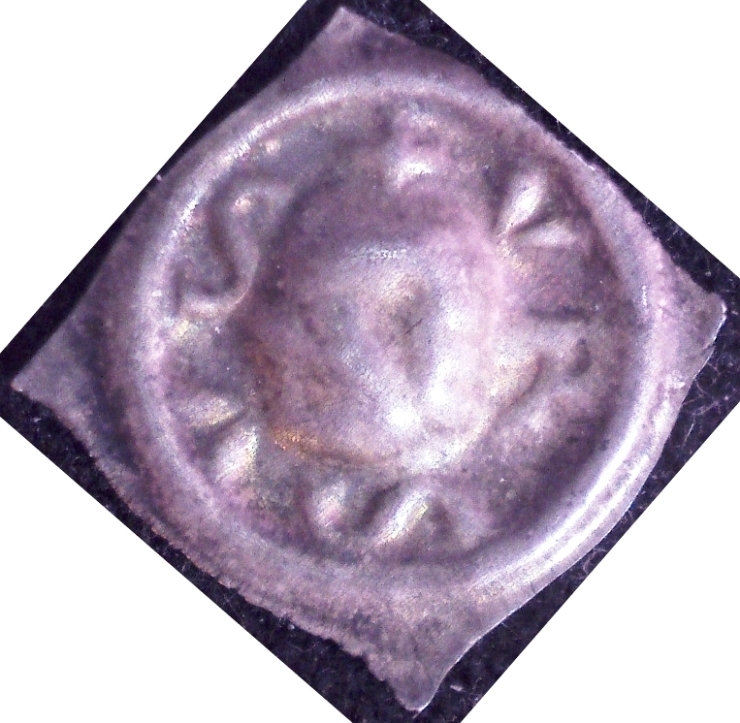 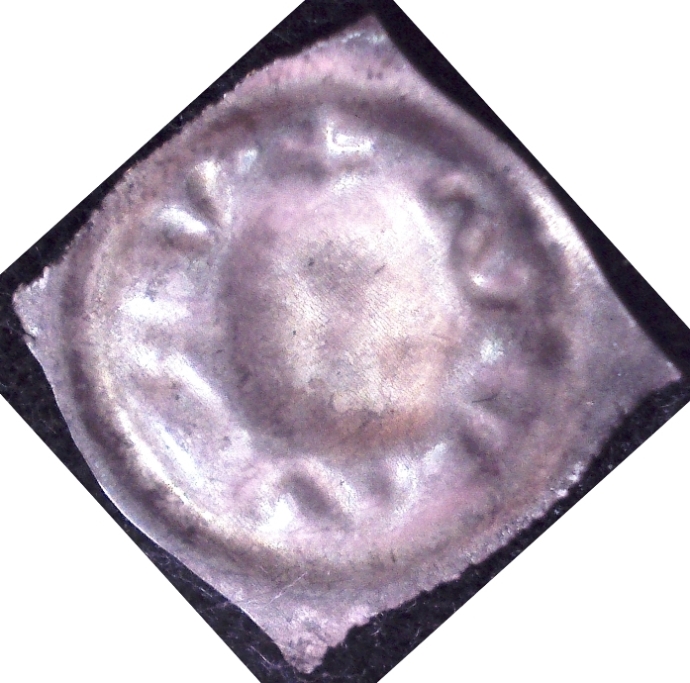 "If you climb a good tree, you get a push."
-----Ghanaian proverb
"The danger we all now face is distinguishing between what is authentic and what is performed."
-----King Adz
|
|
Pillar of the Community
Russian Federation
5186 Posts |
Lots of Russian Saint George coins here, but all of them show him in the middle of the eagle. Here's Saint George by himself, without a surrounding eagle, on a mildly scarce 1 kopek coin from 1728... 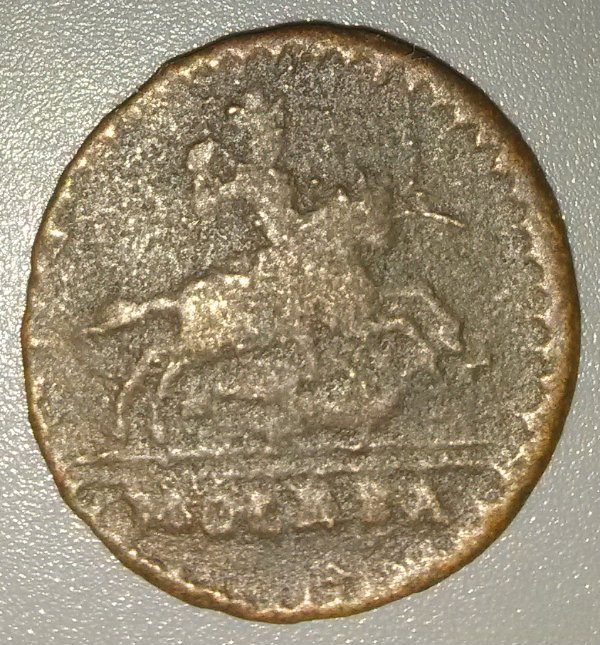 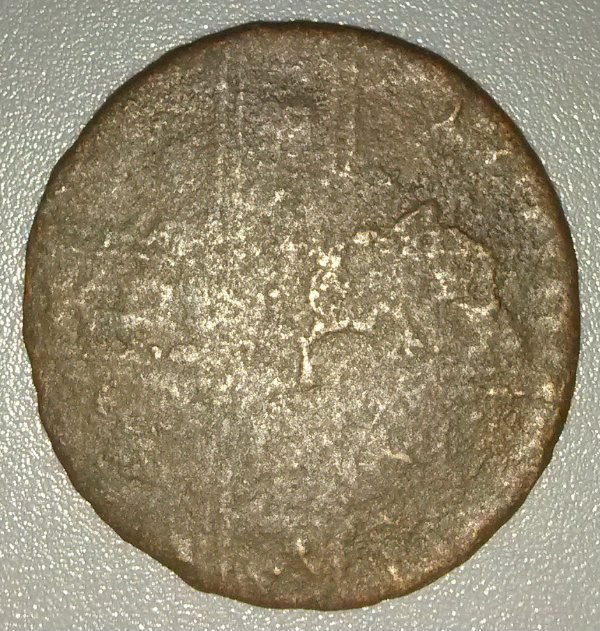 (I apologize both for the coin quality, and for the photo quality.) There's a bunch of other saint coins I could have posted previously (and probably a few more that I could have posted later), but none of them photographed, alas. One type (well, series) I really want to have, but (yet) don't: a 15th century Saint George coin from the Grand Duchy of Moscow, before it became Russia. (At some point they switched from a recognizable Saint George to a generic horseman.) There's a bunch of those types, but most examples I've seen were far past my budget, and, IIRC, none of the (three or four) 15th century Russian silvers that I did acquire were of this series. I'm also tempted to post some contemporary portrait coins of eventually-sainted Roman rulers, like Helena... don't think that would be eligible? Don't have any already photographed, anyway. |
|
Pillar of the Community
United States
8056 Posts |
This continues to be a great week, with lots of interesting contributions. Quote:
At some point they switched from a recognizable Saint George to a generic horseman. Thanks for this lesson on these images in Russian coinage @jan1may Quote:
I'm also tempted to post some contemporary portrait coins of eventually-sainted Roman rulers, like Helena... don't think that would be eligible? The rules are pretty loose here, as we see for my post of the maybe-StAdalbert-coin from Poland. I would really like to see the coin you mention. @spence, thanks for the nice medieval Swiss canton saints of St. Veit and Solothurn this week. |
|
Pillar of the Community
Russian Federation
5186 Posts |
Quote:
Thanks for this lesson on these images in Russian coinage @jan1may An incorrect lesson though - apparently the generic dragon-less horsemen were just a normal feature of Muscovite/Russian coins, while the Saint George scene was a relatively brief mid-15th century innovation. ( Here's one on Numista; catalogs apparently tend to describe those types with wordings along the lines of "horse rider spearing snake", so it might not necessarily be a depiction of Saint George, though if it isn't it looks darn similar.) By the late 15th century the horsemen aren't even holding spears; in 1535, the spears return for the new larger denomination (and stay there until the end of the series in the late 1710s), but the dragon never appears on the hammered silver again. |
| |
Replies: 256 / Views: 27,583 |






 First Page
 Previous Page


 Posted 04/02/2020 04:49 am


