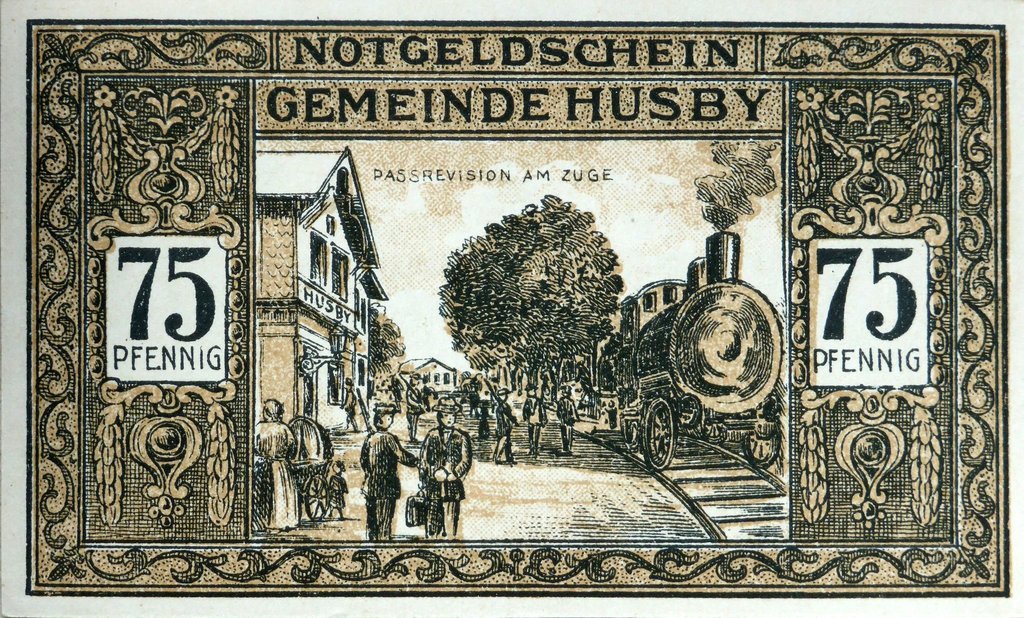
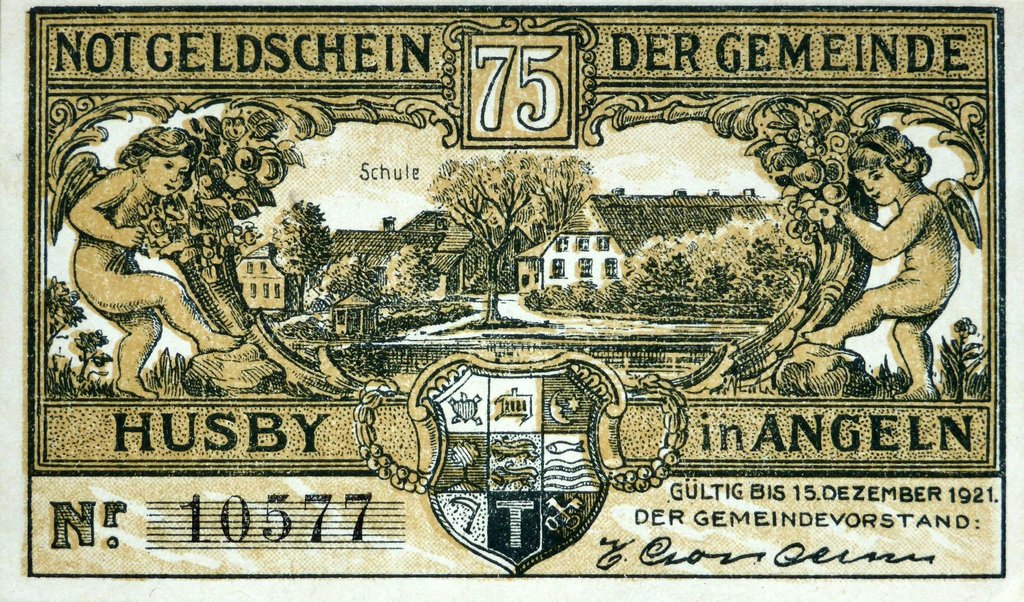
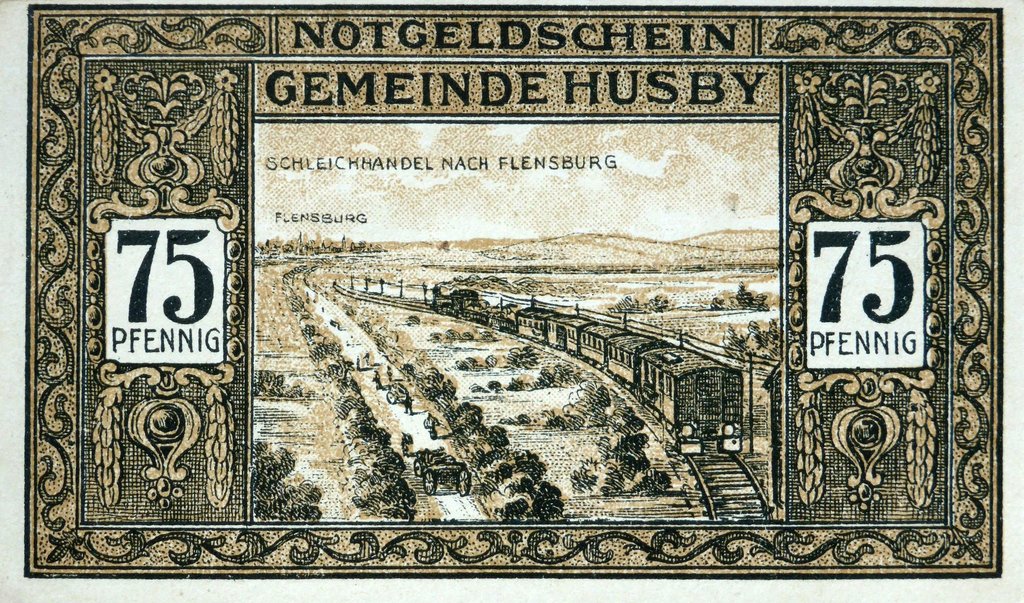
Another train on a notgeld note from Husby, a small city in the north of Schleswig-Holstein from the time of the referendum in 1921. After the end of World War I, people in this part of Germany had to vote whether they wanted to belong to Denmark or to Germany. This referendum was supervised by Great Britain, France, Norway, and Sweden. The emergency notes were used as propaganda by both sides. A very interesting collecting area if you are interested in history. I am almost complete with my collection of this subject.
That's a great one, Caietan, and some cool history. I don't know about others but I'd love to hear more about the referendum.
I always knew my European geography needed help... I had to consult a map to see where Germany and Denmark share a border. You lean somthing every day.
Quote: The emergency notes were used as propaganda by both sides
A very interesting emergency note, Caietan! Was this note propaganda for voting for Denmark or Germany? I can't figure out how to interpret "Smuggling to Flensburg," as it says above the train.
@erafjel The note I posted has been printed 1921 after the referendum took place. So this one is not a good example. But it is sort of anti Danish propaganda. There was a lot of anger after the referendum on the German side because they had lost territory. (Incidentally, Denmark was not a war party in World War I. In this respect, the loss of territory was particularly incomprehensible to many.)
The note criticizes the smuggling that took place across the then already existing new border from (rich) Denmark into ailing Germany (Flensburg stayed German). The goods from Denmark were sold overpriced on German territory.
The note posted below e.g. is mocking the annoying passport controls that take place at the new border. ----- But maybe it's something typically German: We need to complain about something, otherwise we won't be happy.
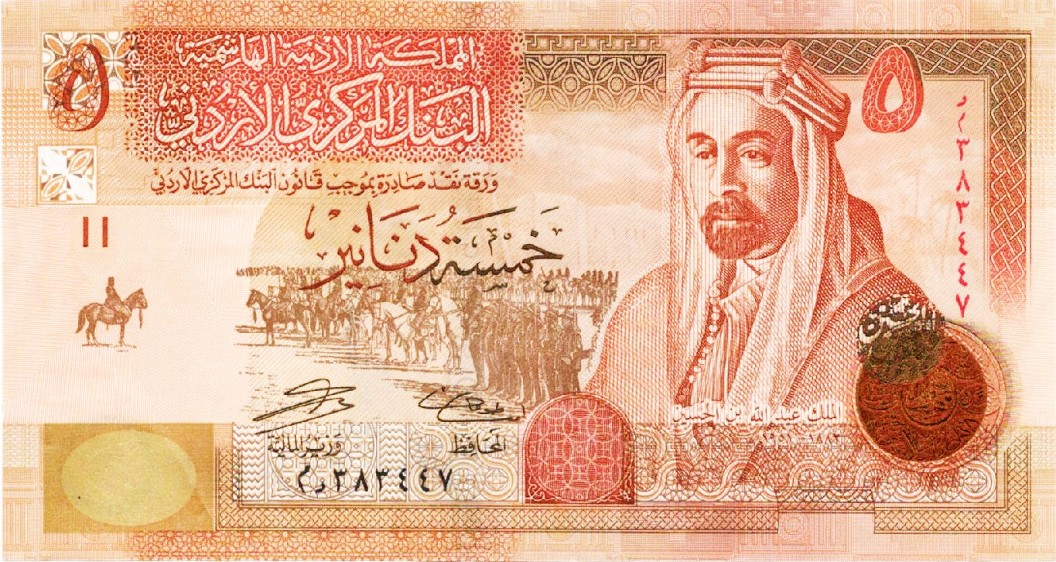
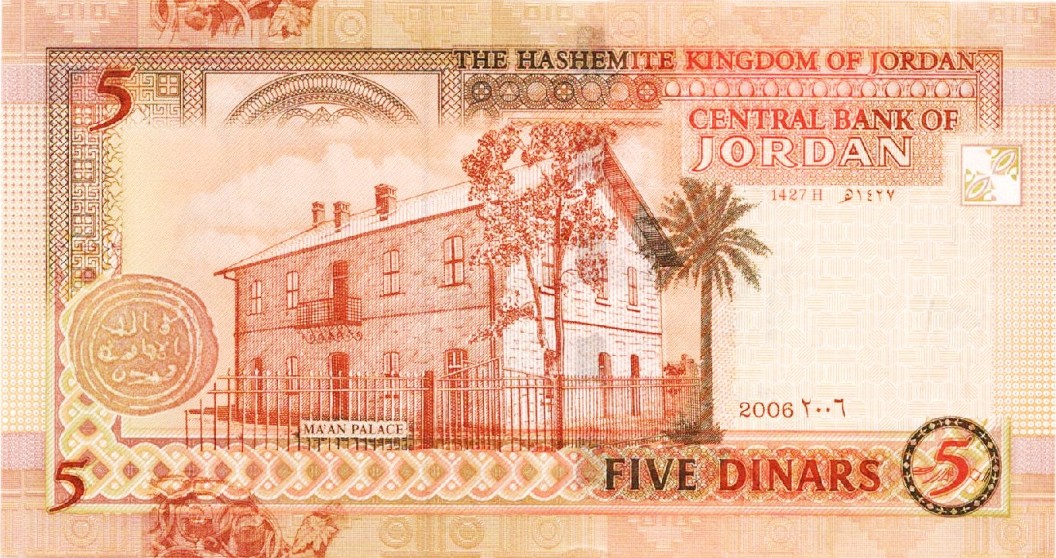
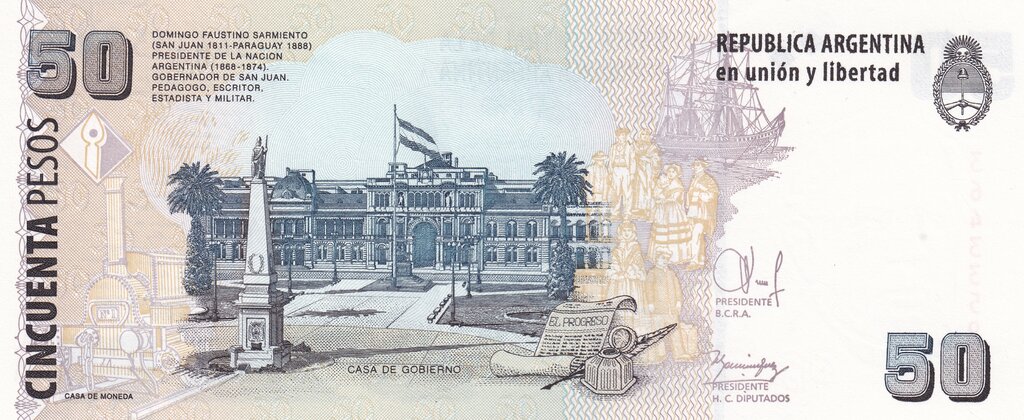
Not actually a train, but this Jordanian 5-dinar note shows Ma'an Palace, which doesn't look especially palatial. The reason is that it was built as a railroad station! The Hedjaz Railroad is famous for being monumentally unsuccessful. It was built to the wrong gauge, never reached its intended destination and was largely blown up and destroyed only a decade after its completion.
The line was originally intended to link Damascus with Mecca, and was heavily promoted by the Ottoman Empire at the start of the 20th century. It reached Medina in 1906 and never got any further. It adopted a very strange gauge of 3 feet 5.5 inches. It's said that this was because the gangers laying the track placed the spikes in the wrong holes in the prefabricated steel cross-ties. The strange gauge made supplying locomotives and rolling-stock very problematic, as it had to be built specially for the line.
Lawrence of Arabia's nomadic Bedouin friends blew up much of the southern part of the line during World War I, and it never re-opened. Today the Jordanian section of the railroad remains in use for freight (mostly phosphate trains to the port of Aqaba), and occasional special steam trains have been operated for tourists.
Following the overthrow of the Ottoman Empire, the future King Abdullah (on the obverse of the note) and his followers traveled by train by Damascus to Ma'an in 1918 and took over the train station building, using it as the provisional headquarters of the new Hashemite Kingdom of Jordan. Ever since it has been called 'Ma'an Palace'.
Interesting write up on the 5 Dinar from Jordan 'NumisRob.' It was nice of you to give us a bit of background info on the short-lived failures of the Hedjaz Railroad. Its interesting how the railroad station ended up becoming the provisional HQ & eventually the 'Ma'an Palace."
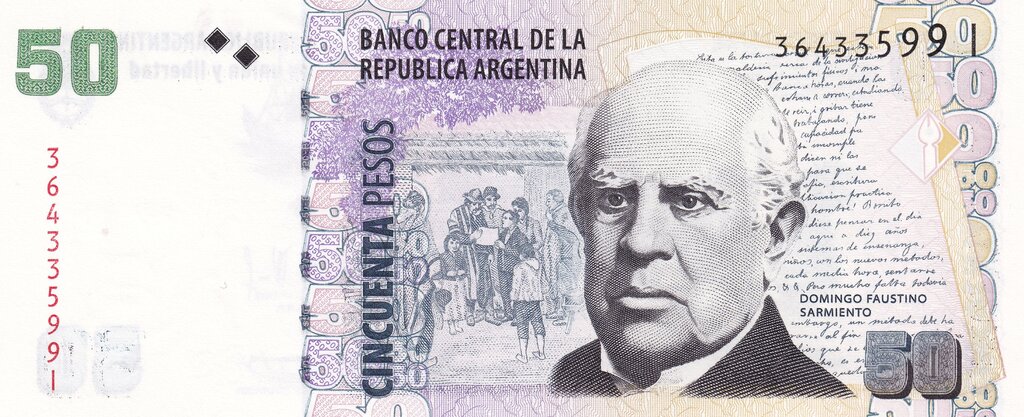
I discovered a recently purchased banknote has some an interesting historical scene on the back. I'm looking into it and will share tomorrow (what I find).
In the meantime, I found this Youtuber just released a video, "Trains on banknotes" (some of which are on this post & yet many that have not):
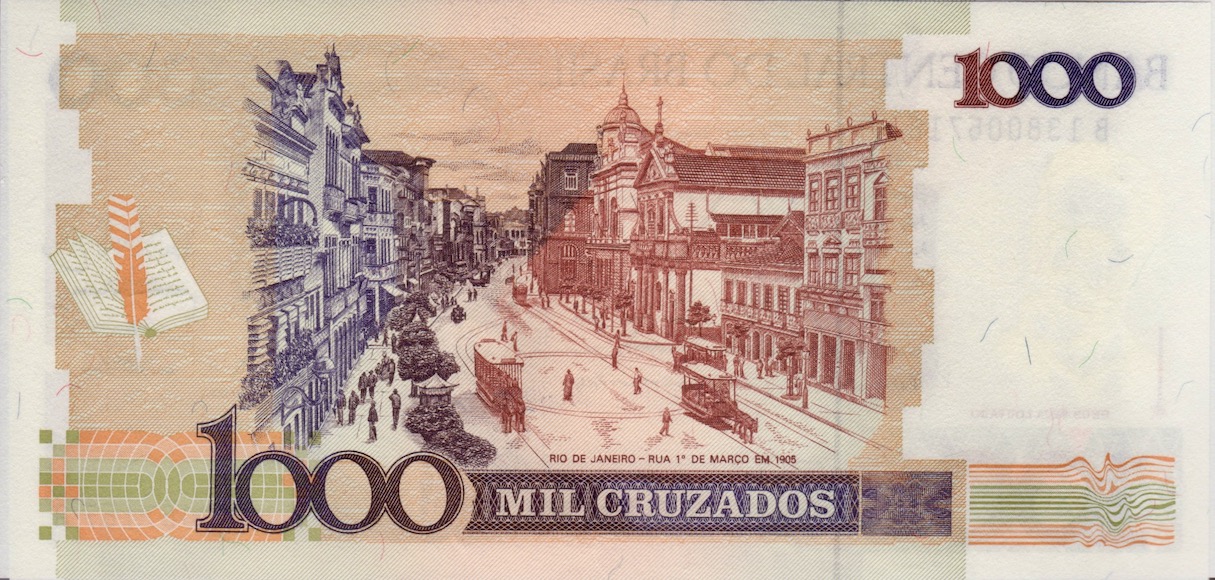
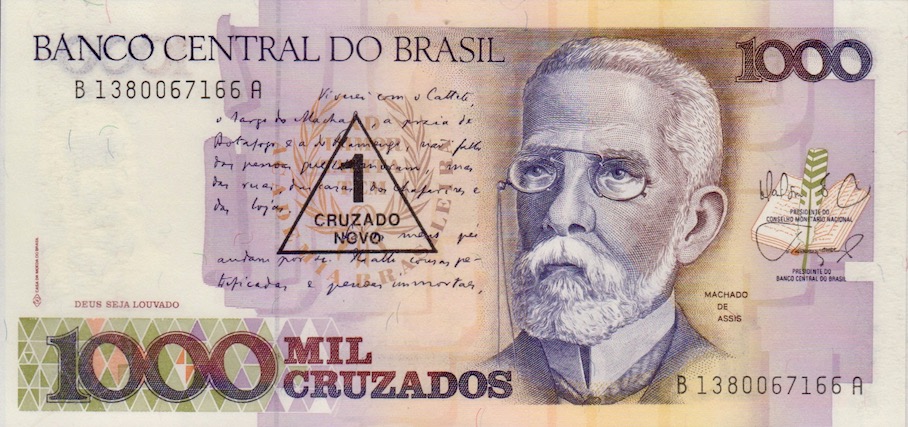
Here's one with a horse pulled trolly (early streetcar) from Brazil. This is the main street area of Rio De Janeiro. I believe that the inscription refers to the city centre where all the action of author Machado do Assis set most of his novels. This newly overprinted 1 Cruzado Nuevo (over a 1000 Cruzados) marks the beginning of a long period of hyperinflation for Brazil. The note could be had for pennies but now runs about $1 - $2 USD ( a billion of the 1000 Cruzados were printed while this one is about a 1/4 billion notes).
I really had no idea there were so many banknotes from all over the world depicting trains! A motif completely neglected by the Swedish Riksbank, I am sorry to say.
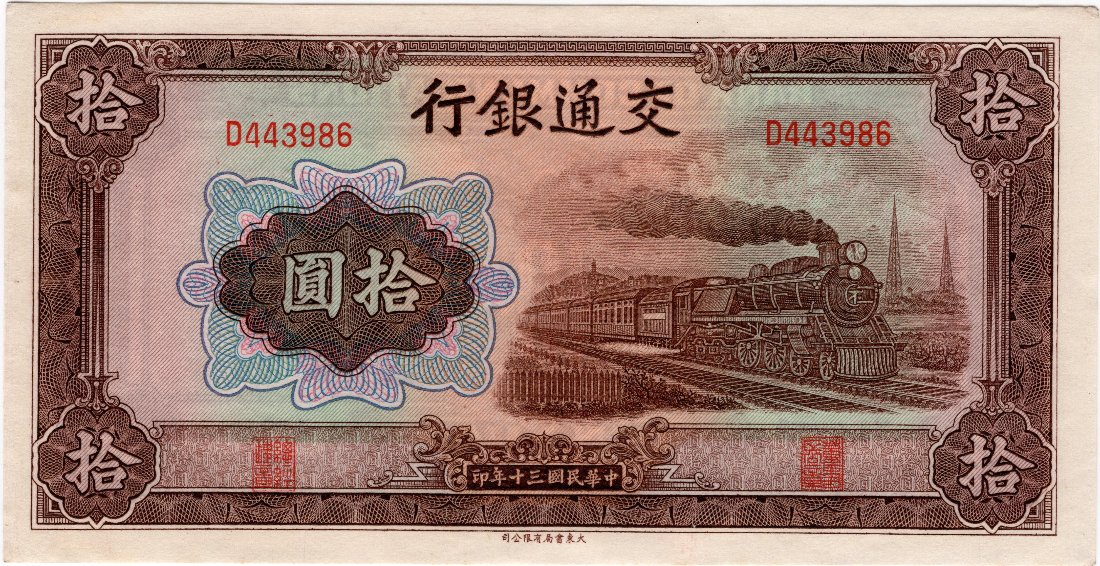
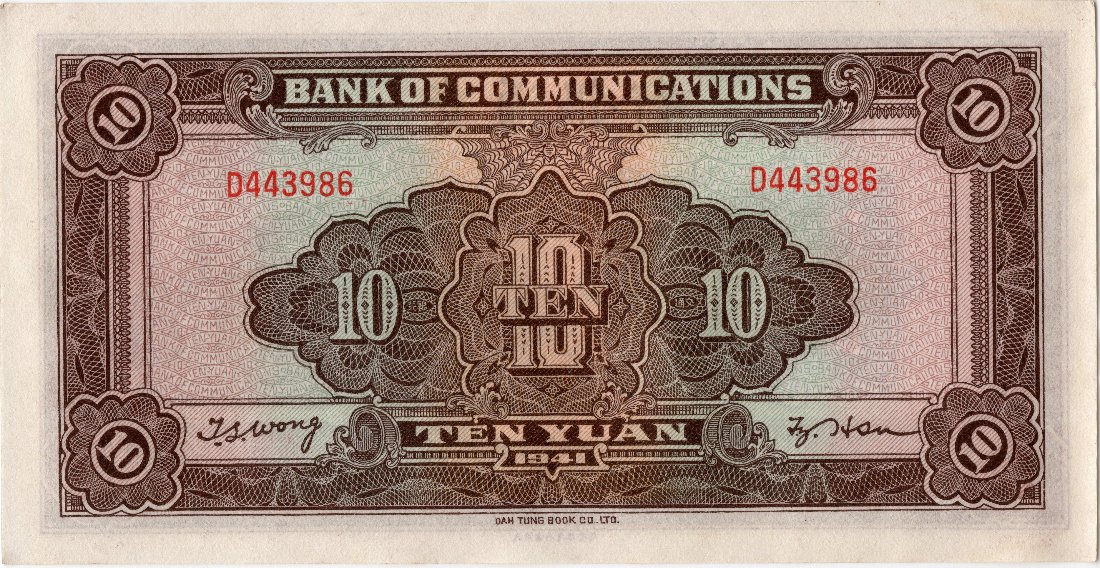
Anyhow, those Chinese Bank of Communications banknotes give me no rest, so I have started to acquire some of them . Here is one that has not shown up before in this thread:
China Bank of Communications, 10 yuan, 1941. Emitted in Japanese controlled areas.
I am not convinced the locomotive has a real prototype. The wheel arrangement looks a bit odd ...
Quote: not sure whether ABNC really tried to depict actual Chinese locomotives, they might as well be typical American locomotives of the time
The pictures on the 1914 series do indeed seem to be based on photographs of American trains and scenes, after doing some more googling on the subject.
Disclaimer: While a tremendous amount of effort goes into ensuring the accuracy of the information contained in this site, Coin Community assumes no liability for errors. Copyright 2005 - 2026 Coin Community Family- all rights reserved worldwide. Use of any images or content on this website without prior written permission of Coin Community or the original lender is strictly prohibited. Contact Us | Advertise Here | Privacy Policy / Terms of Use






 First Page
 Previous Page




 Posted 06/03/2021 9:29 pm