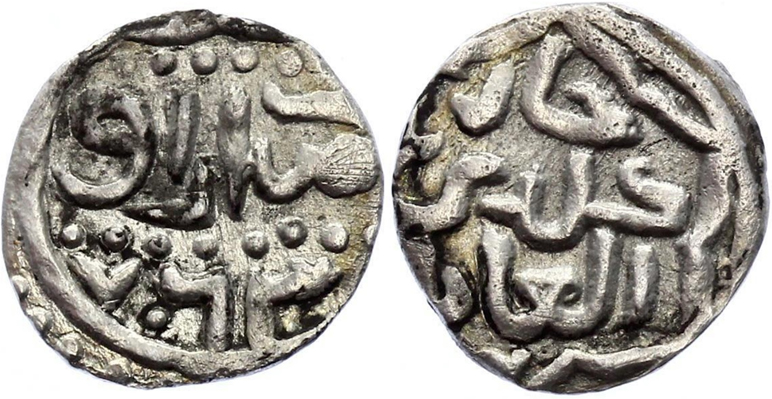
@JohnConduitt and @Grinya, those "leopard coins" are fascinating! A wonderful soldino from @Spence, a lovely marchesino from @tdziemia - and more, but I will stop there.
My piece today is interesting in more than one way (which is the reason I have it as my avatar). Firstly, it is the
original French franc, the first coin to be called by that name. Secondly, there is an
unusual momentum in the design for a French medieval royal coin, where kings usually sit still holding their regalia. And thirdly, it was minted as
ransom for a king, to pay off the English for releasing the French king from his capture after the Battle of Poitiers. (I could add fourth, it is beautiful, but so are many French coins

.)
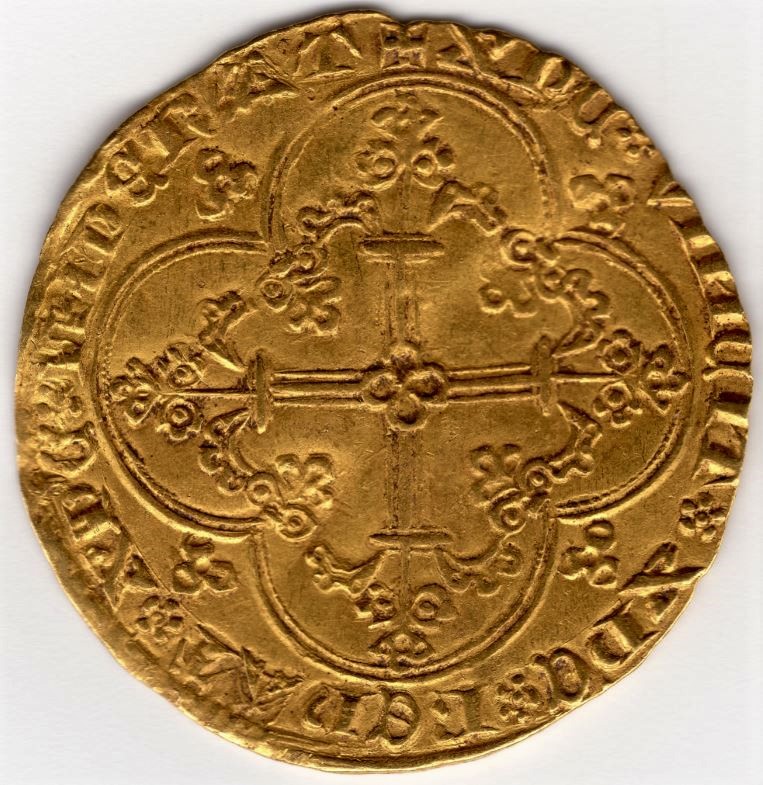
France 1361-64, franc "à cheval," John II. 1.000 gold, 3.83 g, 27 mm. Duplessy 294, Lafaurie 297.
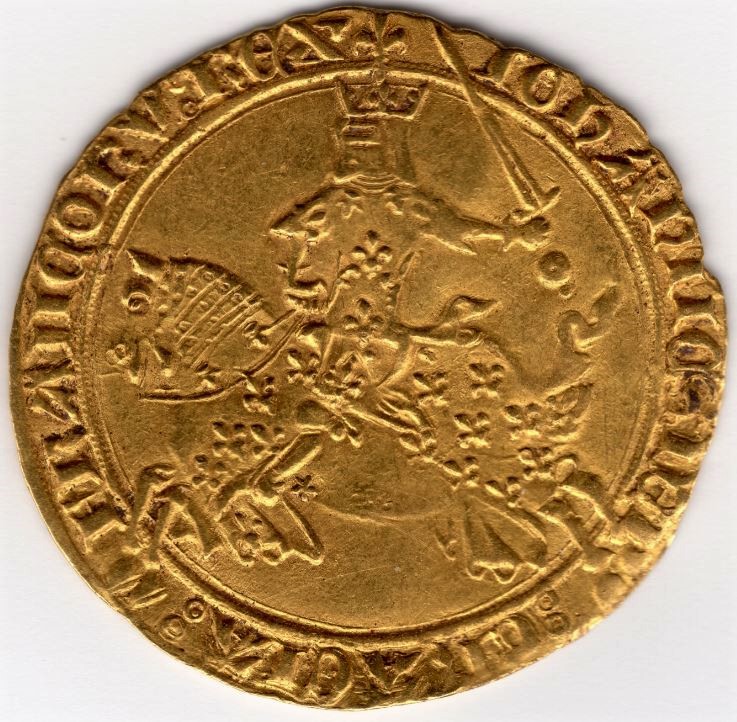
Obv: John II in full armor and sword drawn, charging his horse; its caparison covered with fleurs-de-lys.
Inscription: IOHANNES DEI GRACIA FRANCORVm REX (John by Grace of God King of the Franks).
Rev: Floriated cross in a quadrilobe.
Inscription: XPC VINCIT XPC REgNAT XPC IMPERAT (Christ conquers, Christ reigns, Christ commands).
John II, king of France since 1350, had to fight both the English in the Hundred Years War and the Black Death that ravaged Europe. Neither went particularly well. The English were victorious at the battle of Poitiers in 1356, so victorious that their commander, Edward the Black Prince, managed to capture king John, despite his personal guard of more than a hundred knights (a bunch of whom were identically dressed as the king to confuse the enemy).
John was eventually taken to England, where he was treated well and lived in comfort but of course with restricted freedom. Back in France, his son Charles took the role as regent, but the many years of war and plague (and the less than satisfying outcome of the war) had led to discontent among both public and nobility. Charles had a hard time leading the country and had to fight opposition and even rebellion from the nobility. The English, being aware of the weak position of the French, didn't make it easy for king John to negotiate a peace treaty that would be acceptable at home. It took several turns and an intervention by the Pope before a treaty was finalized, and it didn't come cheap for the French: A third of western France ceded to the English and a ransom for the king of
3 million ecus. That meant more than 11 metric tons of gold - truly a king's ransom!
It was now 1360 and luckily for king John, the English apparently considered him a gentleman who would stand by his word, as he was allowed to go home to France after a downpayment of 400,000 ecus. That the terms included exchanging him for another hostage consisting of numerous French noblemen, including John's son Louis, helped I suppose.
Already on his way to Paris, on Dec 5, did king John issue the decrees for the minting of the rest of the ransom. There it was specified that the coins should be of a new type, a
franc d'or ("gold franc") with a value of 1 livre tournois and of which there should go two on an English Noble. Drawings of the coin's two sides were also provided - the king had apparently planned in detail what the coinage for his ransom should look like. The design with the king on his war horse, ready for battle, must have seemed a bit provocative to the English. (The name
franc à cheval - "franc on horseback" - was a later nickname.)
The French had thought they would be able to mint the remaining 2,600,000 ecus in four years, but despite additional taxes, funds were lacking and payments fell behind. In 1363 his son Louis, who was one of the exchange hostages in England, got tired of his release being repeatedly delayed due to the missing payments, and managed to escape. King John, keen to live up to the honor that chivalry demanded, then voluntarily returned to England as hostage, where he died from illness in 1364.
Minting of the franc à cheval commenced in February 1361 (which was still 1360 by the church calendar used at the time) and continued until the king's death in 1364. How many that were actually minted is not known (as far as I know).






 First Page
 Previous Page




 Posted 12/19/2021 10:51 am


 .
. . Perhaps it is Ivan's namesake saint instead?
 ). But that means I don't have the coins in hand yet.