| Author |
 Replies: 1,279 / Views: 80,017 Replies: 1,279 / Views: 80,017 |
|
|
|
Pillar of the Community
United Kingdom
725 Posts |
Quote:
And that penny by King John is interesting; it names Henry, referring to his father I guess, and I understand no English coins were issued in John's name despite him reigning for 17 years - why was that? An immobilisation? Yes, some sort of immobilisation, although the designs did change a small amount. They're 'Henry' for Henry II, Richard I, John and Henry III (who later distinguished his long cross coins by adding a regnal number). It seems to have been to carry forward the success of the coinage and of Henry II as an Angevin king, although Richard I had continental coins in his name. Edited by JohnConduitt
04/13/2022 6:33 pm
|
|
Moderator
  United States
34472 Posts |
Here is a Pfennig from the Austrian City State of Salzburg. It was minted at Freisach between 1216 and 1220 AD. The obv legend is EBERHA RDS EPS while the rev legend is FRISACH. I have attributed it as Probst 18, Luschin 19, and CNA Ca20a. 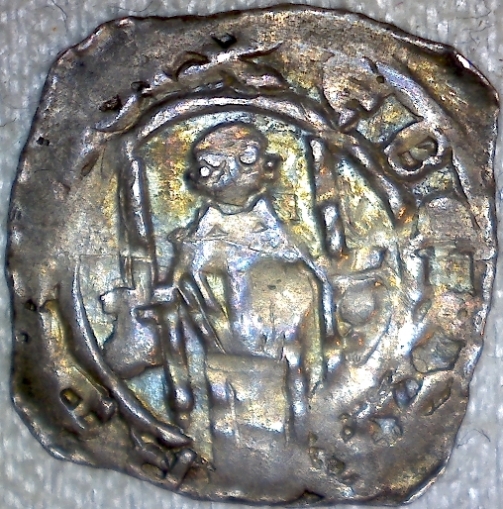 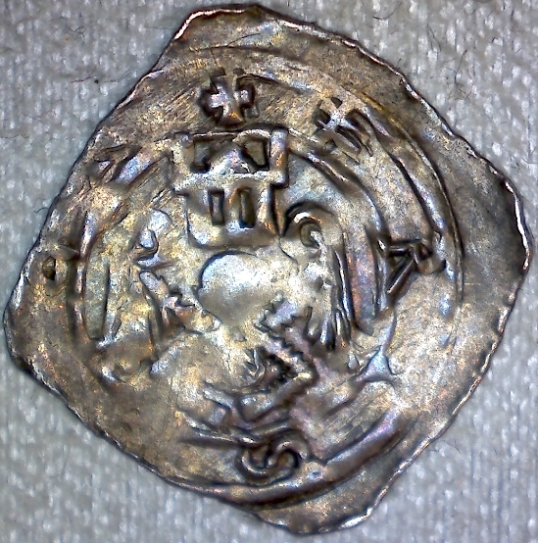 "If you climb a good tree, you get a push."
-----Ghanaian proverb
"The danger we all now face is distinguishing between what is authentic and what is performed."
-----King Adz
|
|
Moderator
United States
34472 Posts |
Here is a Pfennig minted at Nuernberg for the Holy Roman Empire. It can dated to between 1210 and 1225 AD and I have attributed it as Bohnhoff 2017 and Erlang 39. The designs are a bit stylized, but there is a lion/wolf on the obv and two lions plus an eagle on the rev. 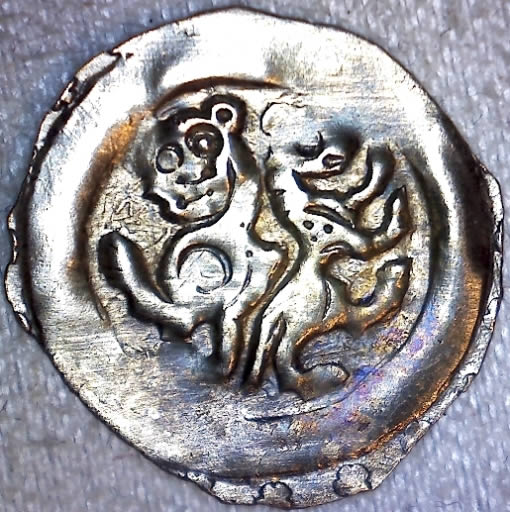 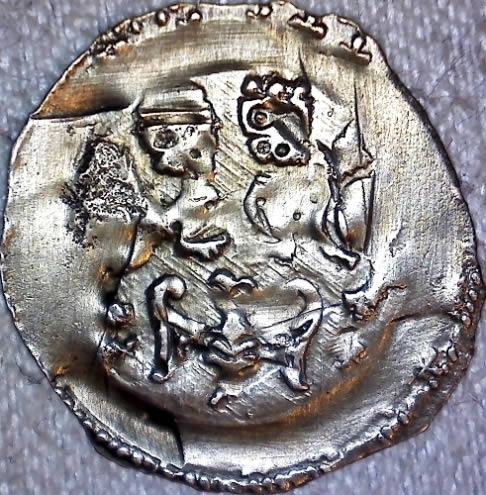 "If you climb a good tree, you get a push."
-----Ghanaian proverb
"The danger we all now face is distinguishing between what is authentic and what is performed."
-----King Adz
|
|
Moderator
United States
34472 Posts |
Here is my last one for this decade: a Denaro from the Italian City State of Verona that can be dated to the range 1218 to 1250 AD. The obv legend is a bit degraded, but reads something like F CI I CI S (with the S retrograde) while the rev legend is a bit more clear at VE RO N A. I have attributed it as Biaggi 2970. 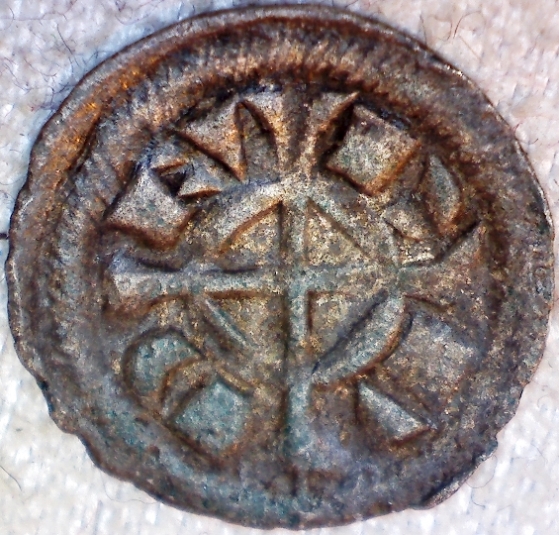 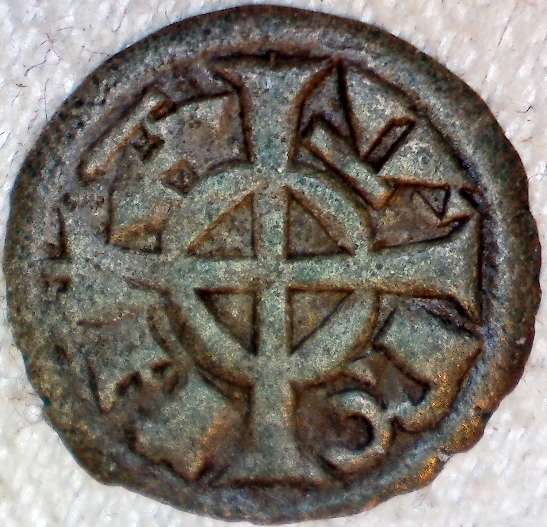 "If you climb a good tree, you get a push."
-----Ghanaian proverb
"The danger we all now face is distinguishing between what is authentic and what is performed."
-----King Adz
|
|
Pillar of the Community
 United States
7979 Posts |
I was curious about that odd obverse legend and pulled up CNI, which lists 12 varieties for this coin  . Sure enough, yours comes up early. Starting from 10:00 in your photo, CNI calls it F^ IC I^ IC (letters C retrograde, and where I have ^ it is a downward pointing wedge). So ... CNI Vol. VI, p.236, 2 if you want to add another reference. |
|
Moderator
United States
34472 Posts |
Ok thx @tdz for the additional attribution!
"If you climb a good tree, you get a push."
-----Ghanaian proverb
"The danger we all now face is distinguishing between what is authentic and what is performed."
-----King Adz
|
|
Moderator
United States
34472 Posts |
Let's have a last call on the decade of the 1210s so please post any remaining coins you have for this decade. Starting tomorrow am we will drop back to the decade of the 1200s.
"If you climb a good tree, you get a push."
-----Ghanaian proverb
"The danger we all now face is distinguishing between what is authentic and what is performed."
-----King Adz
|
|
Pillar of the Community
Spain
2752 Posts |
1200's... Dharmasoka deva AD 1208-1209 Seated king, SRI DHA RMMA SI KA DE VA in Brahmi in two vertical lines in the left field / King standing, small altar in the left field, various dots and decorations in fields, 20mm, Mitchiner NIS 842 - 844 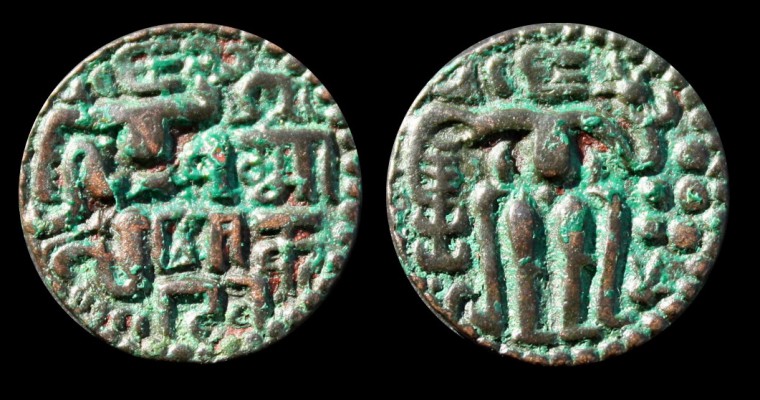 Sahassa Malla AD 1200 to 1202 Seated king, SRIMA SAHASA MALLA in Brahmi in two vertical lines in the left field / King standing, small altar in the left field, various dots and decorations in fields. 21mm, 4.24 grams. Mitchiner NIS 840-841. SKU 35682 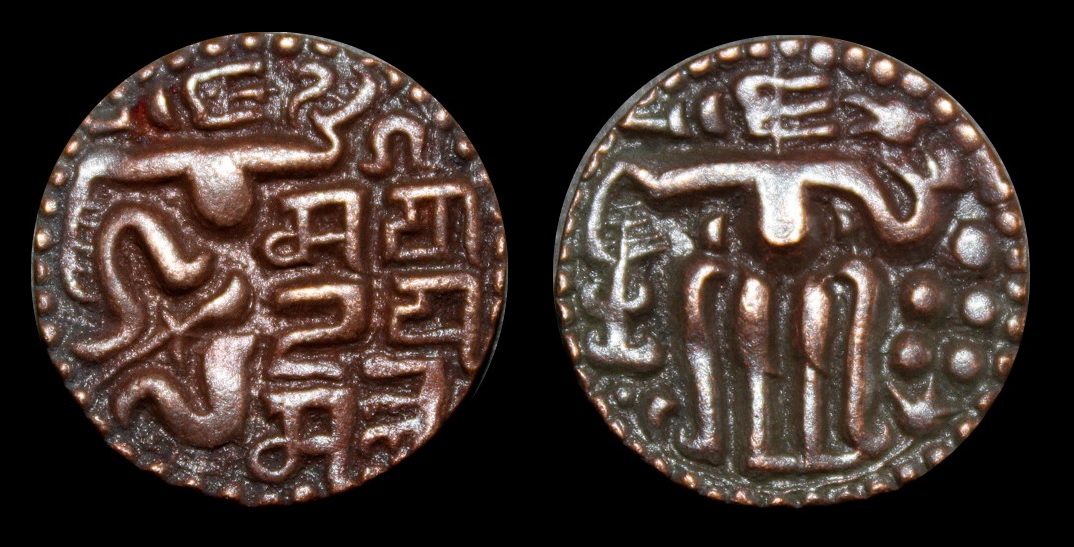 |
|
Pillar of the Community
United States
7979 Posts |
Wow! Nice to see some of your coins @Palouche! Mine has a VERY broad and somewhat uncertain date range, attributed by Italian auction houses (and CNI) as circa 1200 - 1344, but I also see some other ranges cited. Ferrara, Republic, denaro (Biagg 741, Numista #300741). Immobilized type in name of Emperor Frederick I (predecessor of the Frederick on @spence's Verona coin from the last decade). Frederick granted Ferrara the right to coin in the late 1100s, but the date when this right was first exercised is not known. 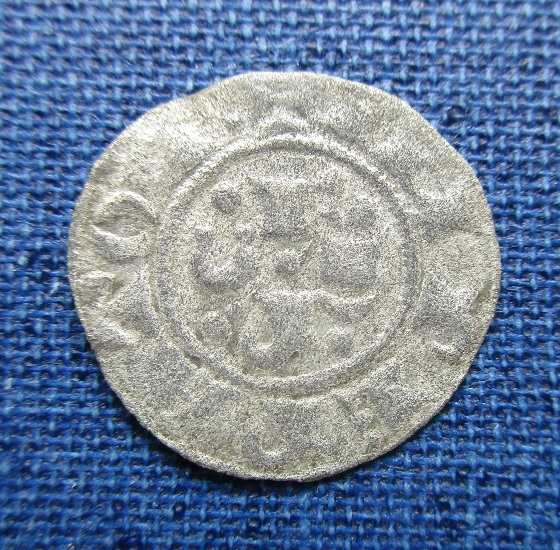 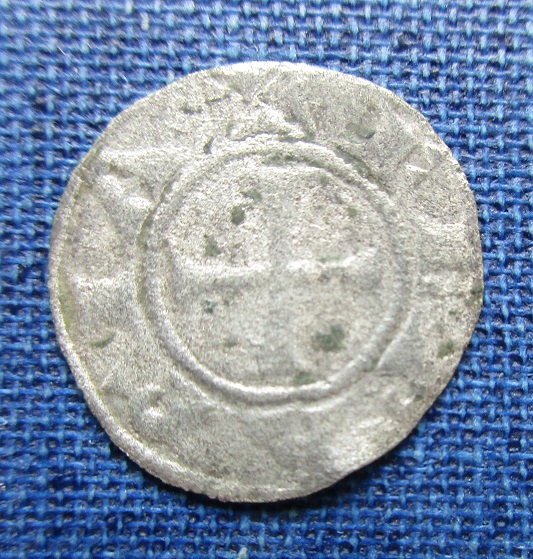 Obv: F.D.R.C. arranged in form of a cross. +INPERATOR. Rev: Cross. +FERARIA Edited by tdziemia
04/18/2022 09:18 am
|
|
Moderator
United States
34472 Posts |
Yes good to see a couple Octopus Men posted as they will officially move this thread back when we are ready. I'll find mine to post as well. For now, I have here a Pfennig from the Austrian Bishopric of Salzburg that dates to between 1200 and 1246 AD. The obv legend is EBERHARDVS while the rev legend is FRI...SACH. I have attributed it as Bonhoff 2134, Probst 18, and CNA I: Ca14. 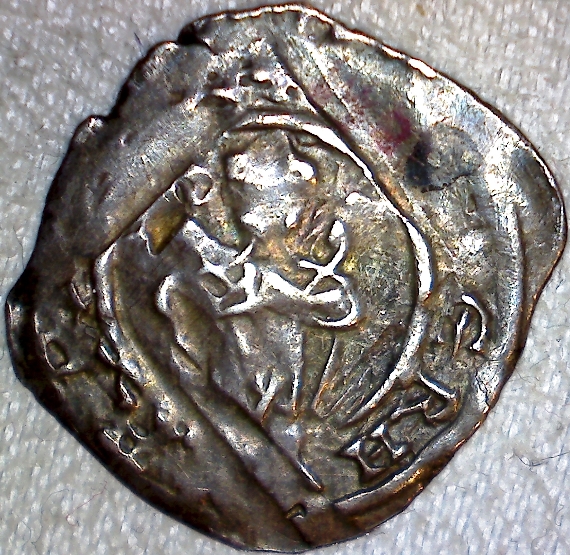 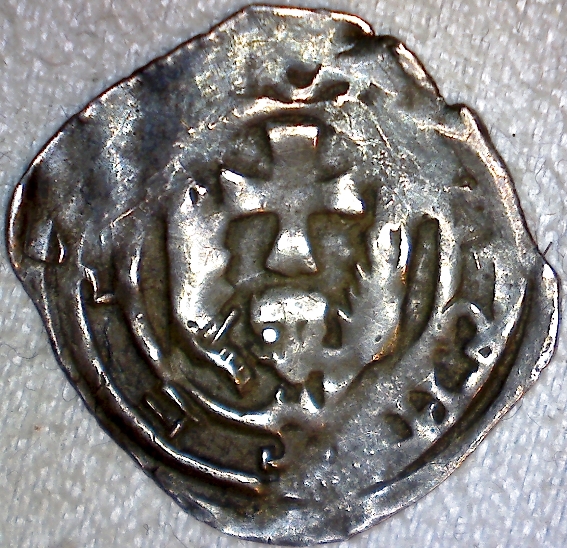 "If you climb a good tree, you get a push."
-----Ghanaian proverb
"The danger we all now face is distinguishing between what is authentic and what is performed."
-----King Adz
|
|
Moderator
United States
34472 Posts |
This Denar from the French Bishopric of Valence was also struck over a pretty broad time range (1200 to 1298 AD). It was minted in St. Apollinaire and has a obv inscription of +VRBS VALENTIAI and rev inscription of S APOLLINA RS. I have attributed it as Duplessy II-2255 and Roberts 4782. 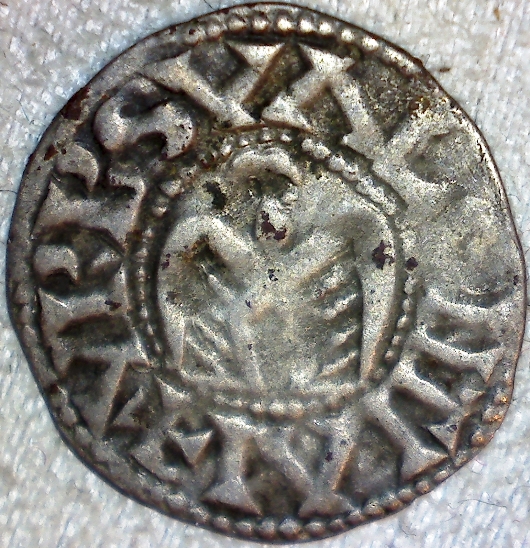 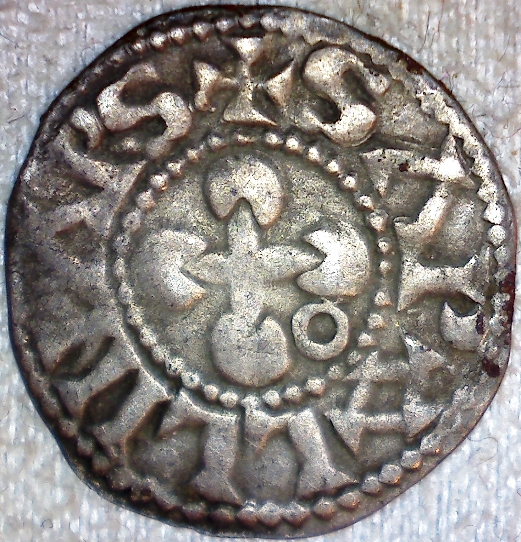 "If you climb a good tree, you get a push."
-----Ghanaian proverb
"The danger we all now face is distinguishing between what is authentic and what is performed."
-----King Adz
|
|
Valued Member
Hong Kong
176 Posts |
These nicely hammered French or English coins were quite a contrast with the Austrian pfennigs in the same time period. Was there a reason why the Austrian coins appear to be cruder?
|
|
Pillar of the Community
United States
7979 Posts |
Interesting question ... I've always just assumed it was a matter of the skills available (die-making in particular). Curious to see others' thoughts. We do know that Friesach was pumping out vast quantities of silver pfennigs at this time, so maybe there was just an emphasis on speed over quality.
That Valence coin is really nice. Never seen one before. And an opportunity for "attribution confusion" because inscriptions related to Saint Apollinaire also figure on coins of Ravenna.
It's an unusual cross, and the letter O is pretty creative (formed from a diamond and four wedges!)
Edited by tdziemia
04/19/2022 08:11 am
|
|
Pillar of the Community
Sweden
2124 Posts |
Fascinating coins, @Palouche! Nice Valence denier, @Spence, I still have to get my hands on one of those. Meanwhile, another denier that fits well with the broad time range theme we seem to have at the moment: Archbishopric of Lyon, denier, ca 1200-1260. Silver, 1.14 g, 18 mm. Duplessy 2540, Roberts 4032. 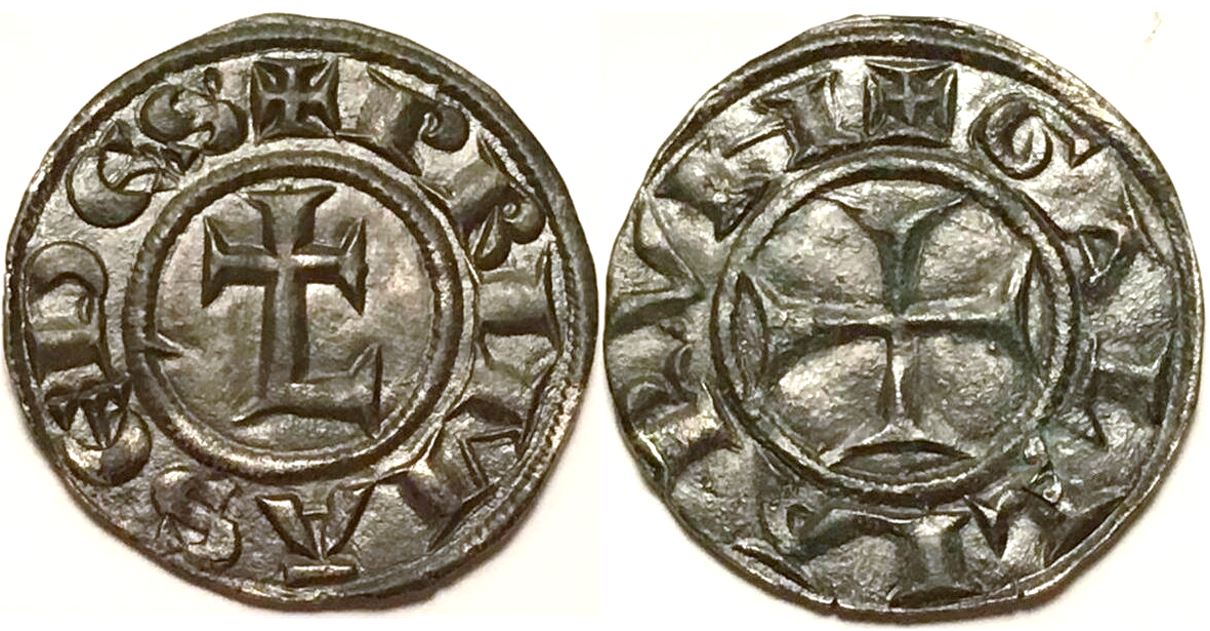 Obv: Crucifix shaped L, symbolizing the Archbishopric of Lyon. Inscription: PRIMA SEDES (First See). Rev: Cross. Inscription: GALLIARVM (of Gaul). The inscriptions on the two sides should be read together, as Prima Sedes Galliarum, that is, First See of Gaul (or Principal See of Gaul). This inscription was used on the feudal/archbishoprical coins of Lyon from the end of the 11th century until 1375. The proud motto has its origin in Notitia Galliarum, the 4th century Roman registry of the cities of Gaul, where Lyon (Lugdunum) is denoted as the metropolis ("mother city") of Gaul. In fact, Lyon got its first bishop already in the 2nd century and was an important bishopric throughout Roman and Medieval times. In 1079 Pope Gregory VII confirmed the Archbishop's of Lyon status as Primate of the Gauls, meaning he had authority over all bishops of France. Feudal minting ceased in the 14th century but Lyon is still today an Archdiocese, with an impressive 1900 year track record. The Lyonnaise deniers had a good reputation and were referred to as deniers forts, "strong deniers," as their silver content was supreme to most other deniers around at the time (sometimes they were even referred to as "double deniers"). The dating of these coins is tricky. The design with the crucifix L was in use at least 1150-1365, with some variation and different ornamentations. Different sources date the variety I show here differently; some place it a bit later in time, to 1230-50. I prefer to stay with the more conservative wider range 1200-1260 (used by Duplessy). |
|
Moderator
United States
34472 Posts |
Quote:
Was there a reason why the Austrian coins appear to be cruder? Could be die-making skills, but don't completely discount the poorer condition of my coins—heavier circulation wear and porosity likely from burial. Oddly enough, I accidentally bought two of the Valence Deniers a couple years back. @era, that Lyonese Denier is gorgeous! "If you climb a good tree, you get a push."
-----Ghanaian proverb
"The danger we all now face is distinguishing between what is authentic and what is performed."
-----King Adz
|
| |
Replies: 1,279 / Views: 80,017 |








 First Page
 Previous Page


 Posted 04/13/2022 8:50 pm


