Coin Community Family of Web Sites Join Thousands of Coin, Bullion, & Money Collectors
Vancouvers #1 Coin and Paper Money Dealer Specializing in Modern Numismatics 300,000 items to help build your collection! Royal Canadian Mint products, Canadian, Polish, American, and world coins and banknotes. Join Thousands of Coin, Bullion, & Money Collectors Royal Estate Auctions - $1 Coin AuctionsCoin, Banknote and Medal Collectors's Online Mall


Username:
Password:
Save Password
Forgot your Password?


This page may contain links that result in small commissions to keep this free site up and running.

Welcome Guest! Registering and/or logging in will remove the anchor (bottom) ads. It's Free!

Walking Back In Time From 1600 To Antiquity By Decades (V3.0)

To participate in the forum you must log in or register.
Author Previous TopicReplies: 1,279 / Views: 80,009Next Topic
Page: of 86
Valued Member
Wandering Circle's Avatar
Hong Kong
176 Posts
 Posted 04/19/2022  11:28 am  Show Profile   Bookmark this reply Add Wandering Circle to your friends list Get a Link to this Reply
I see. The Wiener pfennigs do make for an interesting quirk amongst the medieval European coinage.

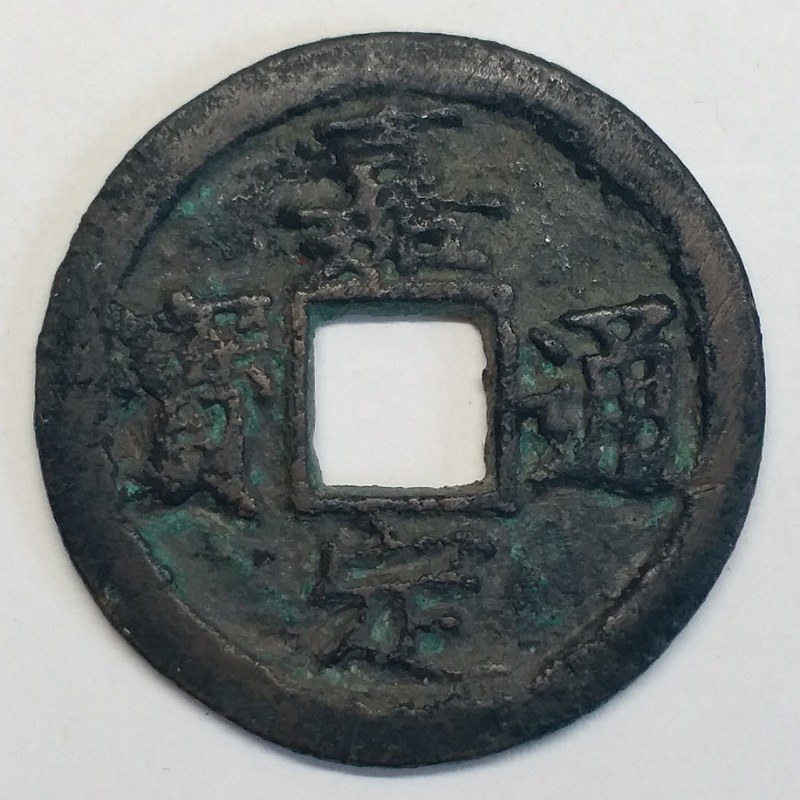
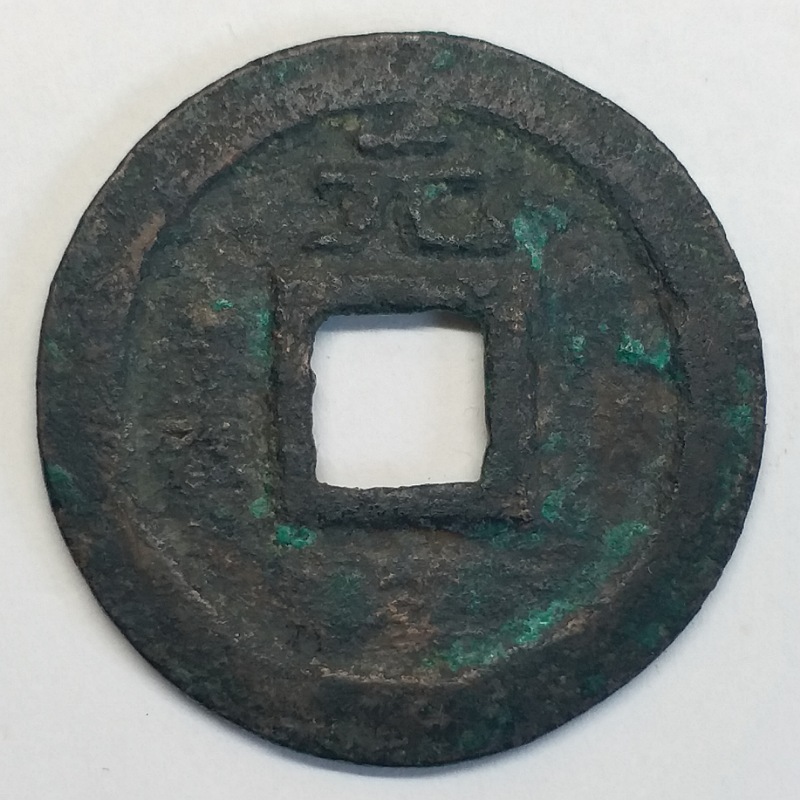
On the other spectrum, here is another cash coin from the Southern Song dynasty. A 2 cash Jiading Tongbao from 1208. The "Yuán" inscription on the reverse, meaning "the first", represent the 1st year of the Jiading era (1208) under Emperor Ningzong.

Walking-Back-In-Time-From-1600-To-Antiquity-By-Decades-V3.0 Walking-Back-In-Time-From-1600-To-Antiquity-By-Decades-V3.0
Pillar of the Community
United States
1186 Posts
 Posted 04/19/2022  12:54 pm  Show Profile   Bookmark this reply Add EddieDiz to your friends list Get a Link to this Reply
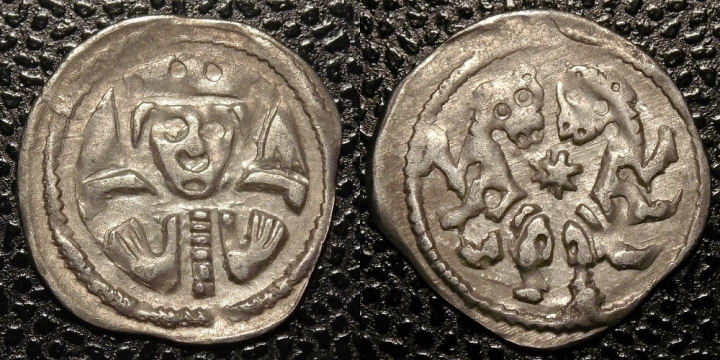
Here is a 1205-1235 Hungarian Denar under King Andreas II;Huszar 269,Unger 162.

Walking-Back-In-Time-From-1600-To-Antiquity-By-Decades-V3.0
Pillar of the Community
JohnConduitt's Avatar
United Kingdom
725 Posts
 Posted 04/19/2022  4:16 pm  Show Profile   Bookmark this reply Add JohnConduitt to your friends list Get a Link to this Reply
Lots of interesting coins this decade. Do cash coins often have a reverse inscription?

I don't think English coins were consistent at this time. In the 1100s they were generally terrible. Coin quality had a lot to do with who was fighting who, what resources they had and how quickly they needed the money.

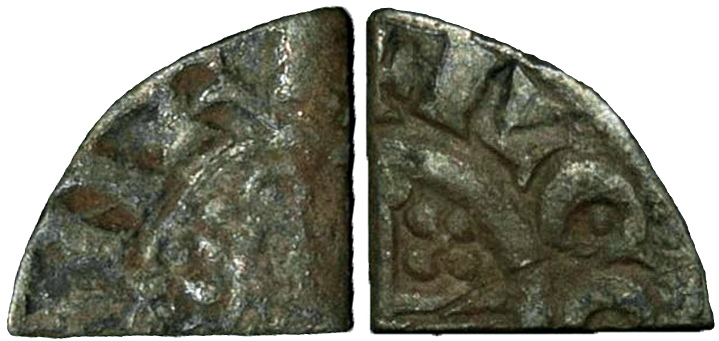
I will limp into (and out of) this decade with another from John. It's unusual for a cut farthing in that you can (just about) work out the mint and moneyer, who happens to be the same one who made my other John.

John Class 5b2 Short Cross Cut Farthing, 1205-1207
Walking-Back-In-Time-From-1600-To-Antiquity-By-Decades-V3.0
London. Silver, 9mm, 0.3g. Facing bust with sceptre; (H)ENRI(CUS REX). Short voided cross, quatrefoils; +ILGE(R.ON.LVNDE) (moneyer Ilger of London) (S 1351).

Valued Member
Wandering Circle's Avatar
Hong Kong
176 Posts
 Posted 04/19/2022  7:48 pm  Show Profile   Bookmark this reply Add Wandering Circle to your friends list Get a Link to this Reply

Quote:
Do cash coins often have a reverse inscription?


Depending on the era, they would periodically have these reverse styles to indicate the mint authorities or years but blank reverses were much more common until the Qing dynasty introduced a standard reverse inscription system. Although, pretty much only the Southern Song coins between 1180s and 1270s would consistently have mint years on them.
Edited by Wandering Circle
04/19/2022 7:52 pm
Moderator
Learn More...
Spence's Avatar
United States
34472 Posts
 Posted 04/19/2022  7:52 pm  Show Profile   Bookmark this reply Add Spence to your friends list Get a Link to this Reply
@john, yikes a quarter-farthing—now that is small change. Any thoughts on its buying power at the start of the 13th Century?
"If you climb a good tree, you get a push."
-----Ghanaian proverb

"The danger we all now face is distinguishing between what is authentic and what is performed."
-----King Adz
Pillar of the Community
JohnConduitt's Avatar
United Kingdom
725 Posts
 Posted 04/20/2022  02:04 am  Show Profile   Bookmark this reply Add JohnConduitt to your friends list Get a Link to this Reply

Quote:
yikes a quarter-farthing

Sorry, it's a cut penny that's worth a farthing. Farthings weren't established until Edward I. Still, at the time a farthing was still quite a lot. You could buy a kilo of wheat with this, enough to feed an adult for a day. They would definitely have used quarter farthings if they wouldn't have been microscopic.
Pillar of the Community
Russian Federation
5185 Posts
 Posted 04/20/2022  10:17 am  Show Profile   Bookmark this reply Add january1may to your friends list Get a Link to this Reply

Quote:
They would definitely have used quarter farthings if they wouldn't have been microscopic.
I do recall seeing a cut piece of a farthing posted on CCF a year or two ago, but I don't think I'd be able to find the thread.

It's weird how so many European countries in this period (and within several centuries on each side of it for that matter) would rather issue teensy tiny silver coins, and cut them if needed, than bother with copper/bronze denominations. Was there a prejudice against copper coins? If so, why?
Valued Member
Grinya's Avatar
251 Posts
 Posted 04/20/2022  3:00 pm  Show Profile   Bookmark this reply Add Grinya to your friends list Get a Link to this Reply
@EddieDiz, quite a nice and unusual design of the denar:)
Pillar of the Community
JohnConduitt's Avatar
United Kingdom
725 Posts
 Posted 04/20/2022  4:37 pm  Show Profile   Bookmark this reply Add JohnConduitt to your friends list Get a Link to this Reply

Quote:
It's weird how so many European countries in this period (and within several centuries on each side of it for that matter) would rather issue teensy tiny silver coins, and cut them if needed, than bother with copper/bronze denominations. Was there a prejudice against copper coins? If so, why?

Actually this problem existed throughout history until the metal value of a coin was decoupled from its face value. In Britain, this happened in George III's reign when they adopted the gold standard (and didn't link the value of silver to it).

There were many problems to overcome with both silver and copper. The Romans, Tudors and Georgians all struggled. Depending on the value of the metal, silver coins might have to be impossibly small for small change (think of Henry VIII farthings), while bronze had to be impossibly big (think of George III cartwheels). The copper was too difficult and costly to make at the right size, and if you made the coins smaller (as with James I farthings) you caused inflation and huge numbers of counterfeits (as in George III's early reign). Obviously, making silver too big was just encouraging people to hoard or melt it down.

Then if the relative value of gold, silver and copper changed, you'd get hoarding, counterfeiting, melting down etc of each one depending which was worth what.

So finally, gold was made the only 'standard' and everything was convertible into gold at face value, so you could make coins cheaply and it no longer mattered what the metal value was. The reason they didn't do that earlier was because the technology for preventing counterfeits hadn't caught up until developments with the Charles I farthings and the machinery at Boulton's Birmingham mint. Plus no-one trusted coins that weren't worth their value in metal until a banking system had been developed that allowed people to trust in a 'theoretical' account value, which by then had come about via the Dutch and British East India Companies and the use of banknotes. Even then, it took until the 1900s to finally stop adding silver to the alloy.
Edited by JohnConduitt
04/20/2022 4:50 pm
Valued Member
Wandering Circle's Avatar
Hong Kong
176 Posts
 Posted 04/21/2022  10:25 am  Show Profile   Bookmark this reply Add Wandering Circle to your friends list Get a Link to this Reply
It's interesting that the East Asian countries in this time period would approach this problem differently. Before the influx of Spanish silver, precious metals for coins were scarce and the low-value bronze cash coins became the official currency. So 1 cash coin could only be able to exchange for about 0.04g of silver.
Pillar of the Community
Learn More...
erafjel's Avatar
Sweden
2124 Posts
 Posted 04/21/2022  11:59 am  Show Profile   Bookmark this reply Add erafjel to your friends list Get a Link to this Reply

Quote:
It's weird how so many European countries in this period ... would rather issue teensy tiny silver coins, and cut them if needed, than bother with copper/bronze denominations. Was there a prejudice against copper coins? If so, why?

Yes, why? There were certainly precedents, for instance India, China and Rome all had a rich and long lasting copper/bronze coinage. Closer and more contemporary there was Byzantium. So technically and socially definitely possible.

So why did Western Europe quit using copper/bronze coins soon after the fall of the Western Roman Empire in 476 and didn't pick it up again until the 15th century? It is a good question. I am leaning towards @january1may's thought about prejudice as the main reason, a prejudice that took centuries to fully overcome. There is an element of (a certain amount of) impracticality too, but not enough to by itself justify the lack of copper coins, I think.

So, if you have the stamina to read through my thoughts on the subject, here goes.

Let's look at the situation in France, Italy (i.e., Italian city states) and England. With a common origin in the Carolingian livre-sous-denier/lira-soldo-denaro/pound-shilling-penny system, the common denier, denaro and penny coins were valued about the same up until the 13th-14th century or so. And a penny or denier was not small change at that time, as demonstrated by them being cut into four farthings and by the presence of ½ deniers (obols) and 1/4 denari (quartaroli). That these small coins had a significant value was perhaps one reason to stick to the idea that they should have an intrinsic value. From the original 1.7 g of (almost) pure silver specified by Charlemagne (well, he expressed it as 1/240th of a Carolingian pound), by around 1200 it was down to 0.7-1.4 g of more or less good silver.

Assuming that intrinsic value would be realized in copper, how much would a "King John copper penny" weigh? The price ratio between silver and copper has been amazingly steady around 100 for at least the last 1000 years or so - with spurious ups and downs of course as supply, mostly of silver, has varied (spot price ratio at time of writing is 85, in 14th century Byzantium it was about 110). So roughly 100 times heavier, which for the 1.4 g King John silver penny (with perhaps 90 % fineness?) that @JohnConduitt showed a decade back would yield a sturdy piece of about 125 g (4.4 oz)! The farthing would come out at a more acceptable 31 g (just a bit more than a Roman sestertius, a common and apparently acceptably sized coin).

So from a practical point of view, it just might work for the smallest denominations, if we hold on to the idea of the necessity of intrinsic value. But in the minds of people around 1200, maybe copper was regarded as a metal for utilities like tools and church bells, not as bullion, and therefor simply not suited for coins? Prejudice, in other words!

Moving forward in time, we can make the observation that while the English pound retains a relatively stable value over the centuries, the French livre and Italian lira undergo a steady debasement and decline in value. Towards the end of the 15th century, an English sovereign (1 £) was worth 8-9 French livres or 20-25 Italian lire. A severe lack of silver in the 1400s led to deniers and denari containing only diminutive amounts of silver mixed with copper, and in the early 1470s the first pure copper coins appeared in Naples and Venice. The Neapolitan copper cavallo weighed 2 g and had about the same value as a denaro, which was fairly close to its intrinsic copper value at the time. For the devalued lira, using copper and keeping the intrinsic value worked in the 1470s, for small change. So prejudice overcome to some extent, but we still want the coins to be worth their value!

France followed a 100 years later, in 1577 with the first denier tournois in pure copper, with a weight of 1.7 g. An accurate weight for 1 denier's worth of copper would have been about 4.5 g. Thus the principle of maintained intrinsic value had by the 1570s been abandoned by the state and by the people (again, for small change, anything worth more than 2 deniers would still contain a bit of silver for nearly 100 more years). No more prejudice against copper!

In England (and here John and others know better than me, so any corrections are welcome), farthing and ½ penny copper tokens with weight far less than prescribed by any intrinsic value appeared in the early 1600s. The Royal Mint wouldn't have any of those continental inventions, but in 1672 they began minting copper farthings and ½ pennies, weighing about 5.5 g respectively 11 g, which was a little less than a completely intrinsic value weight. That seems to have been the principle of The Royal Mint until 1797, when the "cartwheel" penny and two pence coins were minted, with their impressive 28.3 g respectively 56.7 g (1 oz resp. 2 oz) weights, representing the true intrinsic value of the copper. The drawback of a strong pound ...! That may have been the last occurence of copper coins with a true intrinsic value. Meanwhile, through all of the 18th century, low weight copper tokens abounded. So here we have a different situation than in France; while the state stuck to the intrinsic value principle, the people were happy using tokens. But maybe we shouldn't call The Royal Mint prejudiced, but rather principled?

A long text, I hope you found it rewarding in some sense, if you have made it all the way here! (And I haven't even mentioned Swedish 17th century plate money, the largest of which were copper plates weighing 19 kg, or 42 lbs!)

Now I will shut up until I have a coin to show (I think).
Pillar of the Community
JohnConduitt's Avatar
United Kingdom
725 Posts
 Posted 04/21/2022  4:13 pm  Show Profile   Bookmark this reply Add JohnConduitt to your friends list Get a Link to this Reply

Quote:
India, China and Rome all had a rich and long lasting copper/bronze coinage

I'm not so sure the Romans had such luck with bronze. They were always fighting inflation, counterfeits and debasement. During the 200s (and it seems most of the Roman era) the currency was a disaster and most bronze issues were actually debased silver (or counterfeit). By the late 300s, bronze had been replaced by silver, not to return until James I.


Quote:
But in the minds of people around 1200, maybe copper was regarded as a metal for utilities like tools and church bells, not as bullion, and therefor simply not suited for coins? Prejudice, in other words!

Let's not forget the economic system in the medieval period. If I was an agricultural labourer in 1200, I lived on an estate where my home came with my job and my food was provided by my employer (possibly as part of my own output). I probably had no need for money at all. Indeed, coinage in Italy developed from people trading lumps of bronze like bullion, often in the form of tools.


Quote:
but we still want the coins to be worth their value!

I don't think we can appreciate how important this was. In Henry III's time, the upholding of the silver % made sterling the major international currency and hugely boosted trade, since foreign traders would accept it rather than demand barter in unknown goods. This remained the case during the industrial revolution. For private individuals this was also crucial, since the authorities were known to steal your wealth through periodic debasements.


Quote:
In England farthing and ½ penny copper tokens with weight far less than prescribed by any intrinsic value appeared in the early 1600s. The Royal Mint wouldn't have any of those continental inventions, but in 1672 they began minting copper farthings and ½ pennies, weighing about 5.5 g respectively 11 g, which was a little less than a completely intrinsic value weight

Yes these experiments were the root of the paralysis at The Royal Mint in producing small change. Copper tokens worth less than face value encouraged counterfeiters and fuelled inflation, and no sooner did The Royal Mint produce coins at the proper weight (to sure up the economy) than they were melted down to make more counterfeits.

Quote:
But maybe we shouldn't call The Royal Mint prejudiced, but rather principled?

I can entirely understand their predicament. It seems historians these days are very quick (lazy?) to blame them for a problem that existed throughout the history of coinage and was actually solved during the reign of George III, not caused by them. Trading in a 'virtual' currency (i.e. not worth its value in metal) seems to be like asking everyone today to convert their wealth to Bitcoin. There's no way I'm doing that until I'm confident I won't lose it all tomorrow.
Edited by JohnConduitt
04/21/2022 4:22 pm
Moderator
Learn More...
Spence's Avatar
United States
34472 Posts
 Posted 04/21/2022  6:49 pm  Show Profile   Bookmark this reply Add Spence to your friends list Get a Link to this Reply
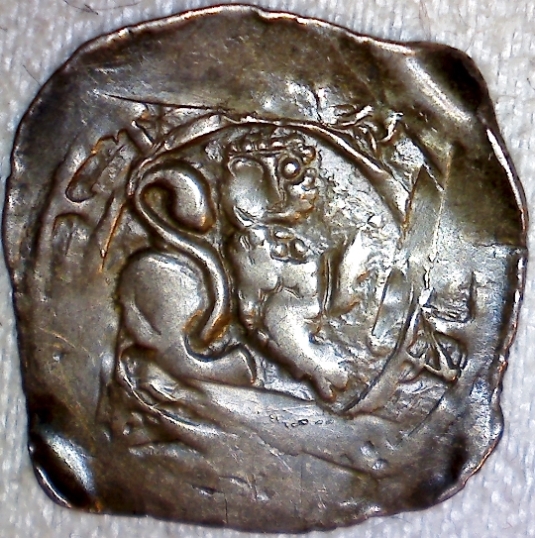
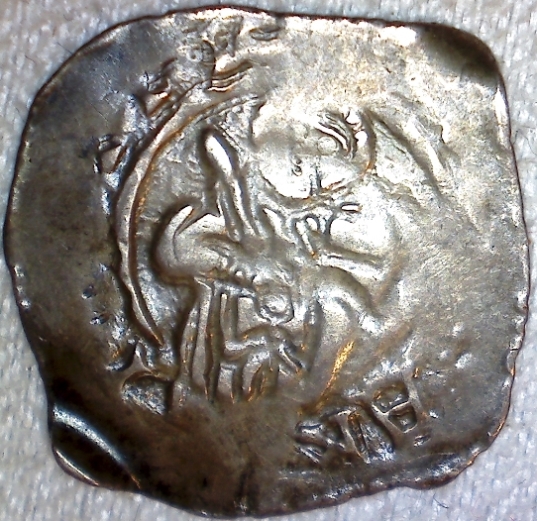
A really great discussion here in the middle of this thread! Nice work and thx for contributing to our knowledge! While I can't improve on what has been said, I've got a little more to post for this decade.

This Pfennig was issued by the Austrian Duchy of Carinthia. It was minted at St. Veit between 1202 and 1256 AD under the authority of Bernhard II. I have attributed it as Luschin 189 and CNA CB11.

Walking-Back-In-Time-From-1600-To-Antiquity-By-Decades-V3.0


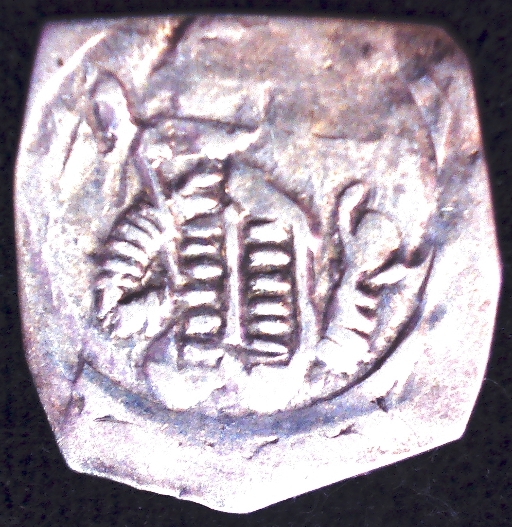
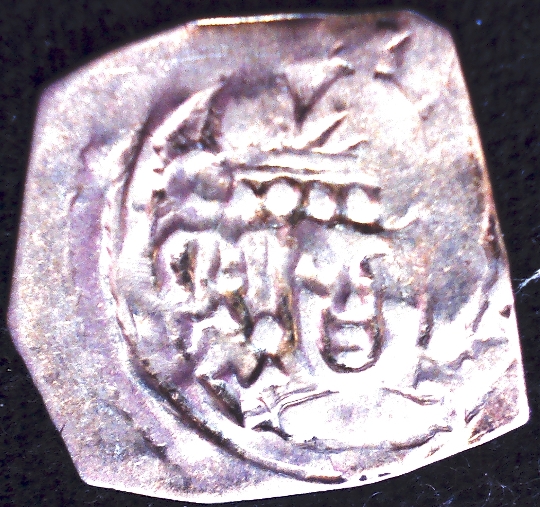
Here is another Carinthian Pfennig issued by Bernhard II. It was minted at St. Veit between 1202 and 1256 AD. The obv legend is DVX CARINTHIE while the rev legend is SANT VEIT (retrograde). I have attributed it as Luschin 199 and CNA CB12a.

Walking-Back-In-Time-From-1600-To-Antiquity-By-Decades-V3.0
"If you climb a good tree, you get a push."
-----Ghanaian proverb

"The danger we all now face is distinguishing between what is authentic and what is performed."
-----King Adz
Pillar of the Community
Learn More...
tdziemia's Avatar
United States
7979 Posts
 Posted 04/22/2022  08:45 am  Show Profile   Bookmark this reply Add tdziemia to your friends list Get a Link to this Reply
@erafjel, thanks for leading this discussion. Very informative.''

It helps to explain why there were Low Countries coins (mites and 2 mites) in the late 14th - 15th century which had amounts of silver still specified, but well below 10%! (so, of course they look like copper coins).

For southern Italy, perhaps we have the smallest gap in use of copper? I think the Kingdom of Sicily produced copper/bronze coins in the Byzantine tradition until nearly 1200, then as you point out, there are copper coins again in
a more "Western" style starting in the 15th century. But an unusual set of circumstances/influences down there for sure.
Edited by tdziemia
04/22/2022 08:46 am
Moderator
Learn More...
Spence's Avatar
United States
34472 Posts
 Posted 04/24/2022  7:51 pm  Show Profile   Bookmark this reply Add Spence to your friends list Get a Link to this Reply
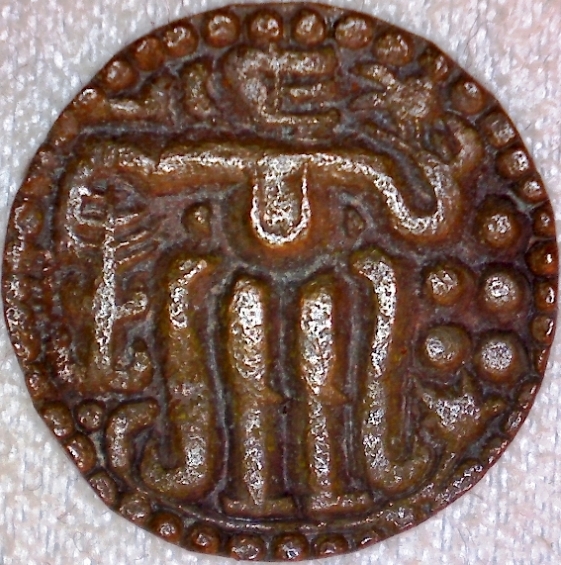
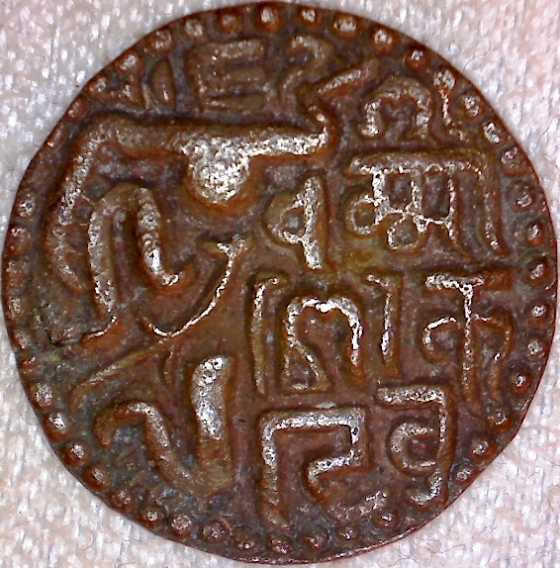
Here is my so-called Octopus Man, a Massa from Ceylon. It was issued under the authority of Dharmasoka Deva and was minted between 1208 and 1209 AD. It is attributed as Mitchiner 842-844.

Walking-Back-In-Time-From-1600-To-Antiquity-By-Decades-V3.0
"If you climb a good tree, you get a push."
-----Ghanaian proverb

"The danger we all now face is distinguishing between what is authentic and what is performed."
-----King Adz
  Previous TopicReplies: 1,279 / Views: 80,009Next Topic
Page: of 86

To participate in the forum you must log in or register.


Disclaimer: While a tremendous amount of effort goes into ensuring the accuracy of the information contained in this site, Coin Community assumes no liability for errors. Copyright 2005 - 2026 Coin Community Family- all rights reserved worldwide. Use of any images or content on this website without prior written permission of Coin Community or the original lender is strictly prohibited.
Contact Us  |  Advertise Here  |  Privacy Policy / Terms of Use

Coin Community Forum © 2005 - 2026 Coin Community Forums
It took 0.43 seconds to rattle this change. Forums