The 1936-dated coins of the classic US commemorative coin era are absolutely the most abundant. A collector looking to acquire one of each design type and mint mark with a "1936" date needs to purchase 31 coins - 34 if you include the US-Philippines three-coin set for the launch of the Philippines Commonwealth. (As I would!)
In similar fashion, 1995 and 1996 represent the peak years for the modern US commemorative coin program. In 1995, 12 different coin types were released; in 1996, 11 types were issued. These numbers double when their availability in proof and uncirculated versions is considered. Looking just at the coins for the two-year Atlanta Olympics commemorative program, a collector seeking one of each 1995 and 1996 design, in proof and uncirculated, would need to acquire 32 coins. If all the various packaging options are considered for the Atlanta Olympics coins, the number jumps from 32 to over 50! The Atlanta Olympics program was/is a completist's nightmare! (I enjoy collecting packaging variations that offer educational content differences, but even I have no interest in "one of everything" from the Atlanta Olympics program as many options are just various two- or four-coin combinations that offer nothing different!)
But the Atlanta Olympics program was not the only US commemorative coin program being produced by the US Mint at the time.
In May 1995, the US Mint released the Special Olympics World Games Silver Dollar coins. Collectors initially had four ways to purchase the coin: as an individual proof with standard packaging ($37), as an individual proof in capsule only ($35), as an individual uncirculated coin in standard packaging ($32) and as an uncirculated coin in capsule only ($31). The Mint at this time was experimenting with offering collectors packaging alternatives as a way to create lower cost options for them; one way was to sell coins without a presentation case - just inserted into a generic piece of protective cardboard. The cost differential was minor, however, and the option didn't prove popular; it was ultimately dropped (though capsule-only purchases remained an option for bulk buyers).
In addition to the single-coin options, the Special Olympics proof silver dollar was also made available via a two-piece set that included a proof 1995 clad
Kennedy half dollar as the second coin - the
Kennedy Set. The
Set was not included in the initial offerings, but was added to the Mint's lineup later in 1995 when the Mint released its annual "Gift Collection" catalog in November.
There was nothing different about either of the coins in the
Set vs. the other regular proof versions of the coins produced by the Mint in 1995 (i.e., the individual Special Olympics proof dollar or the
Kennedy half dollar included in the Mint's annual Proof Set).
Two things made the Set a little different: 1) the
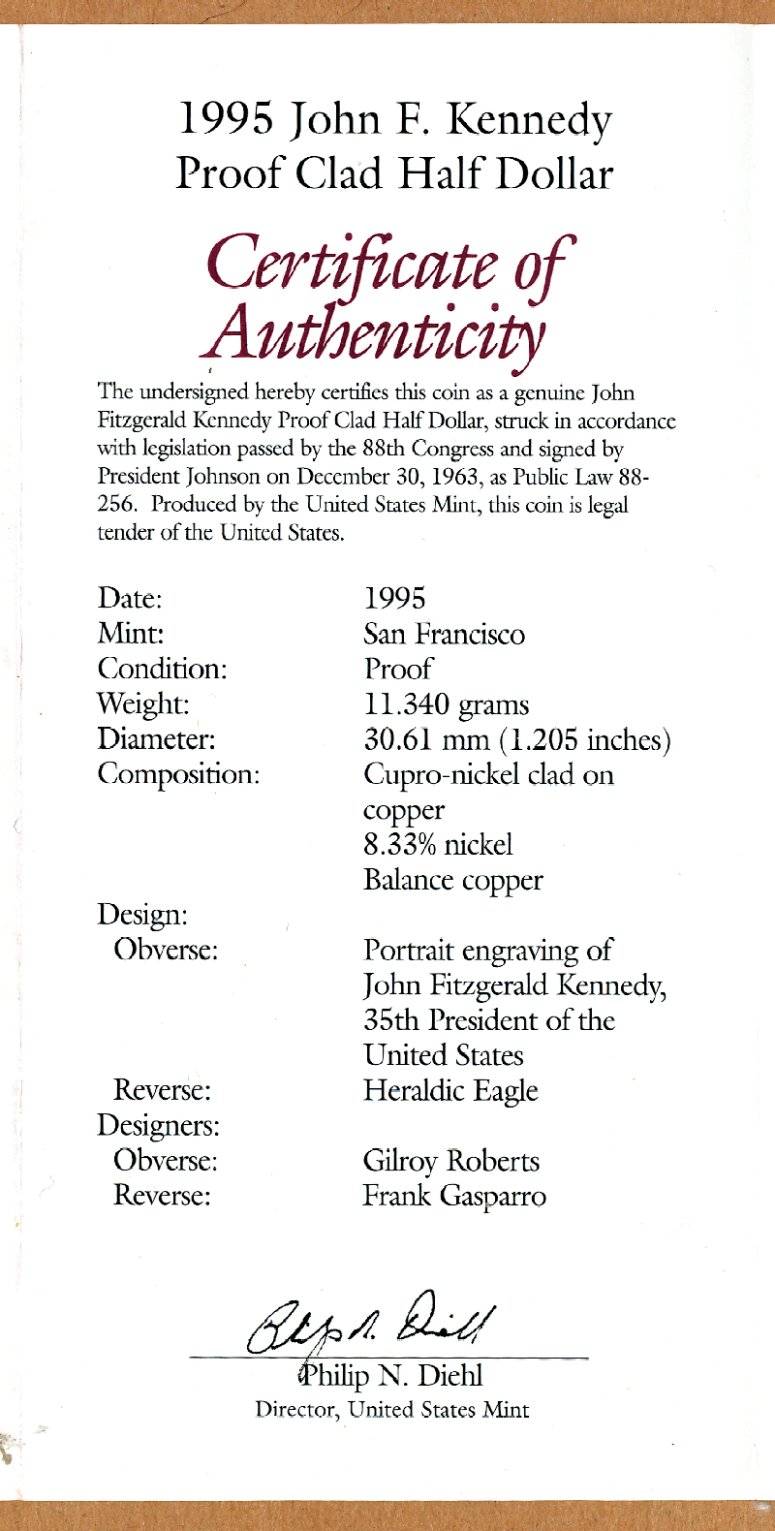
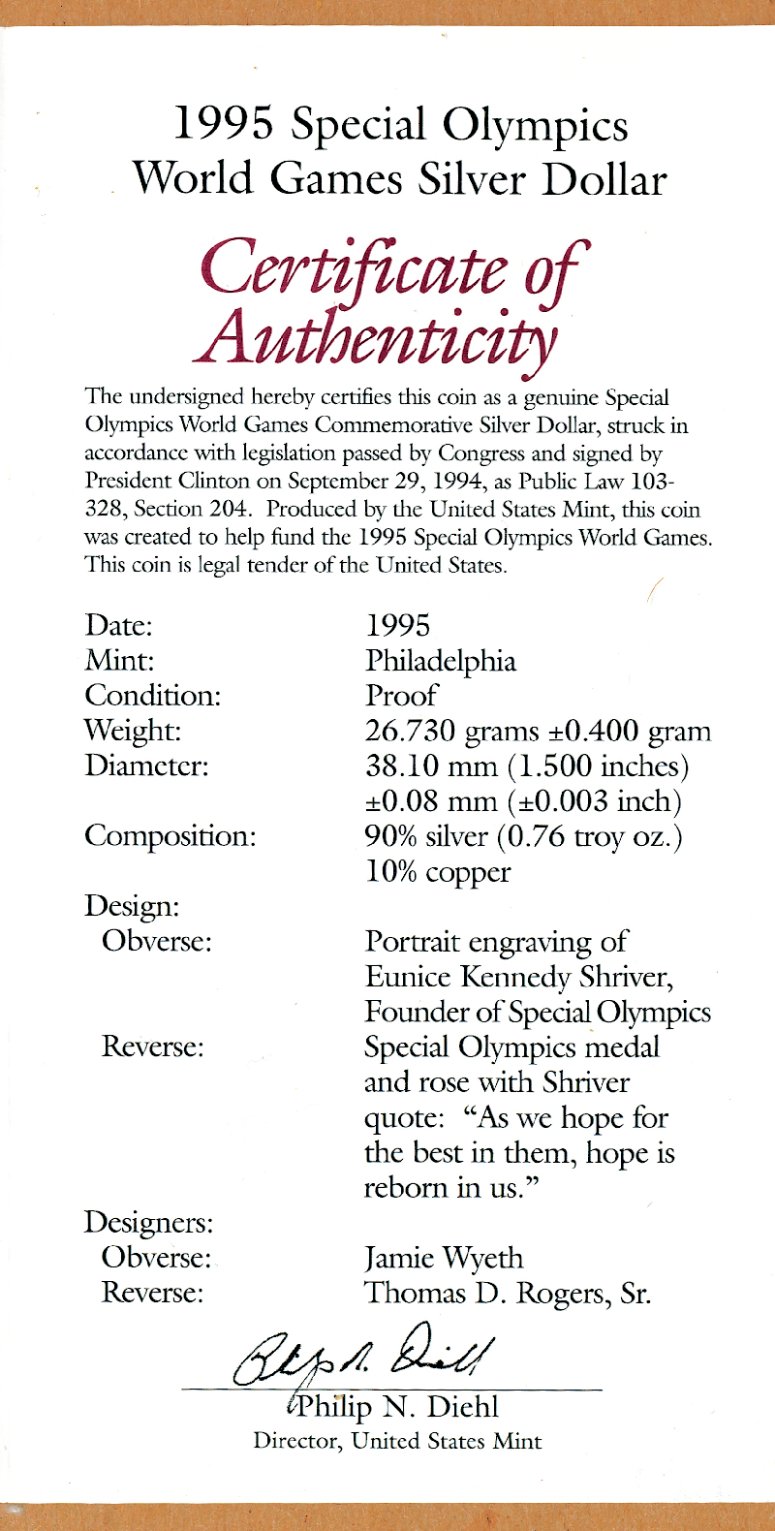
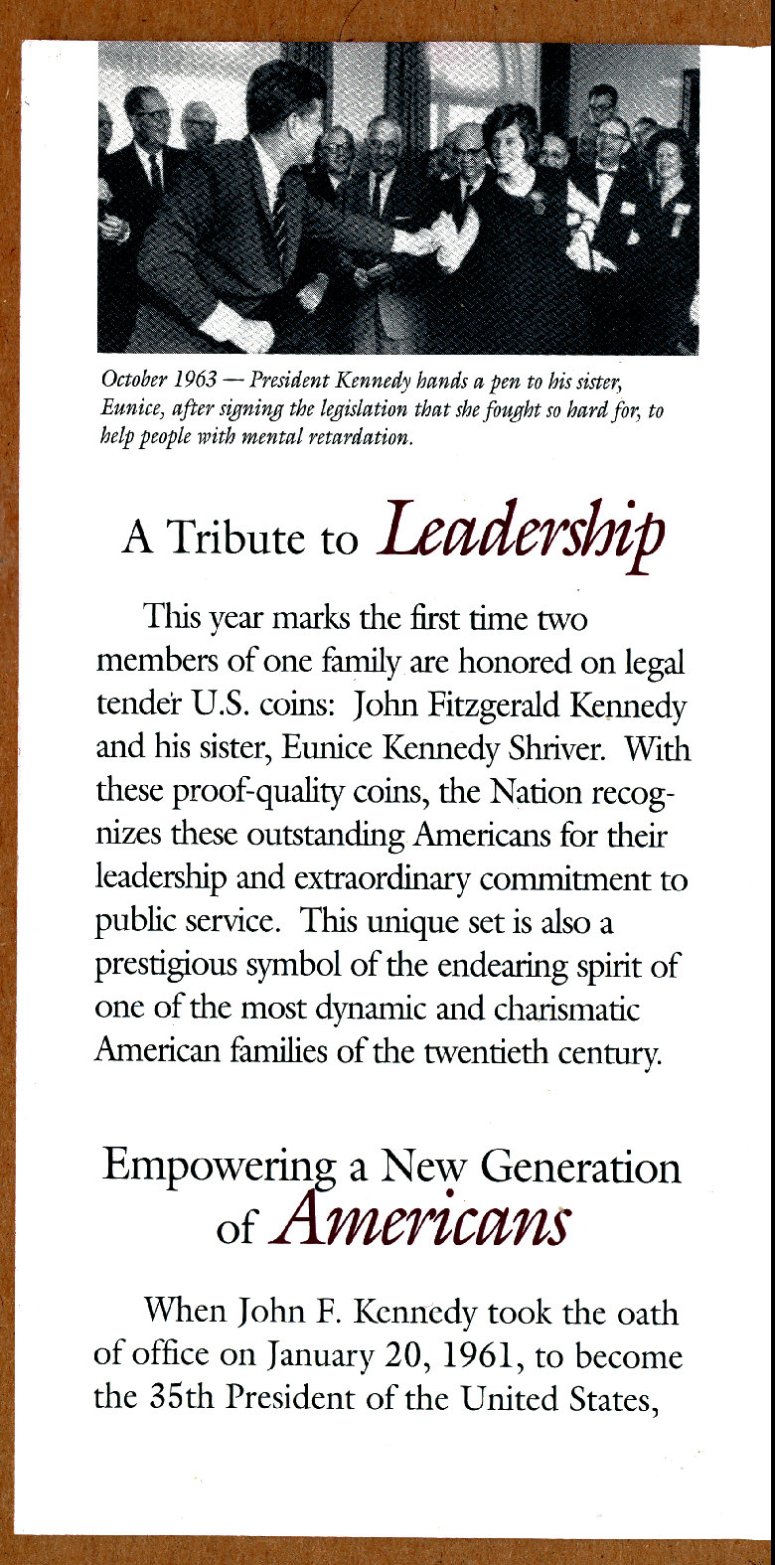
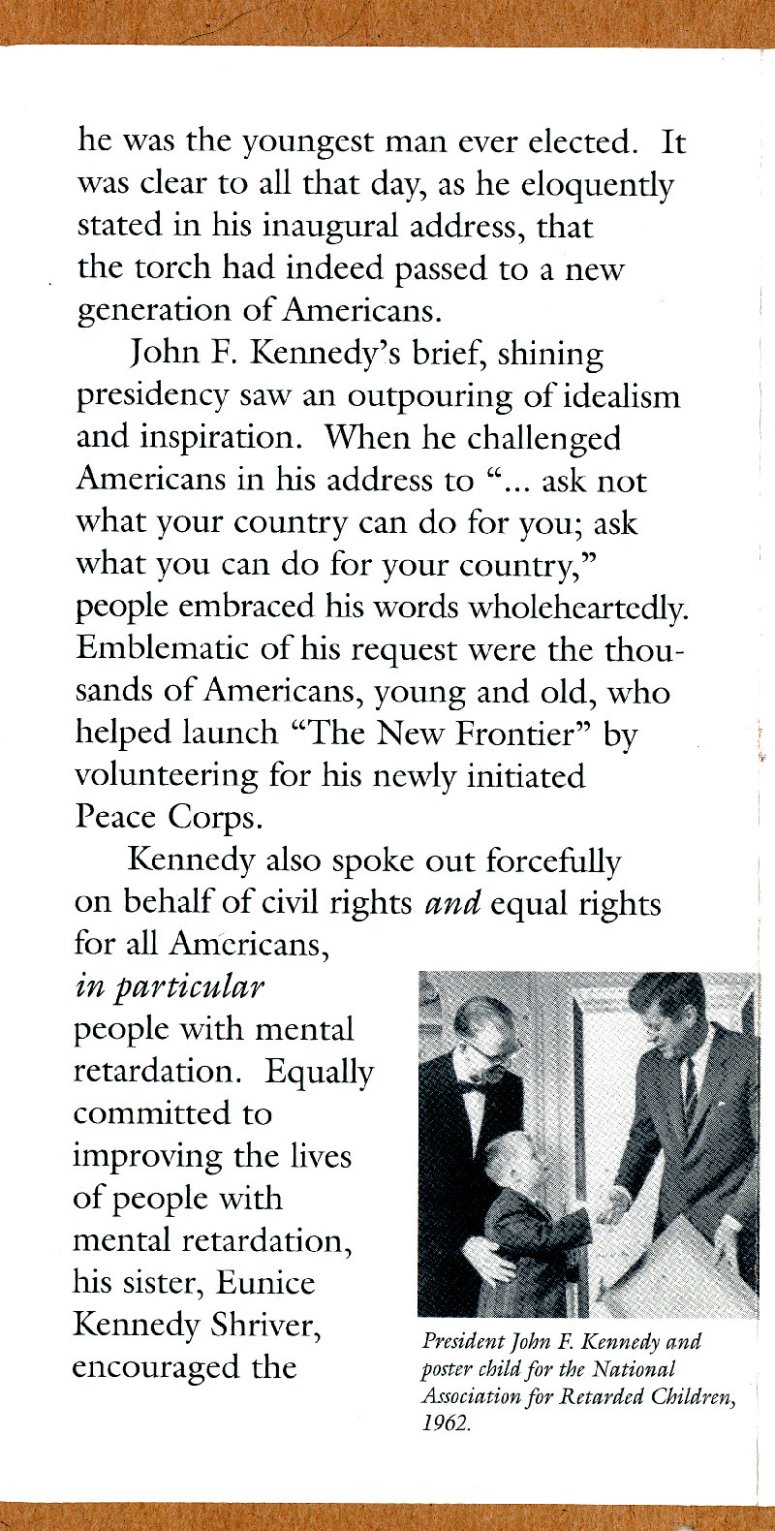
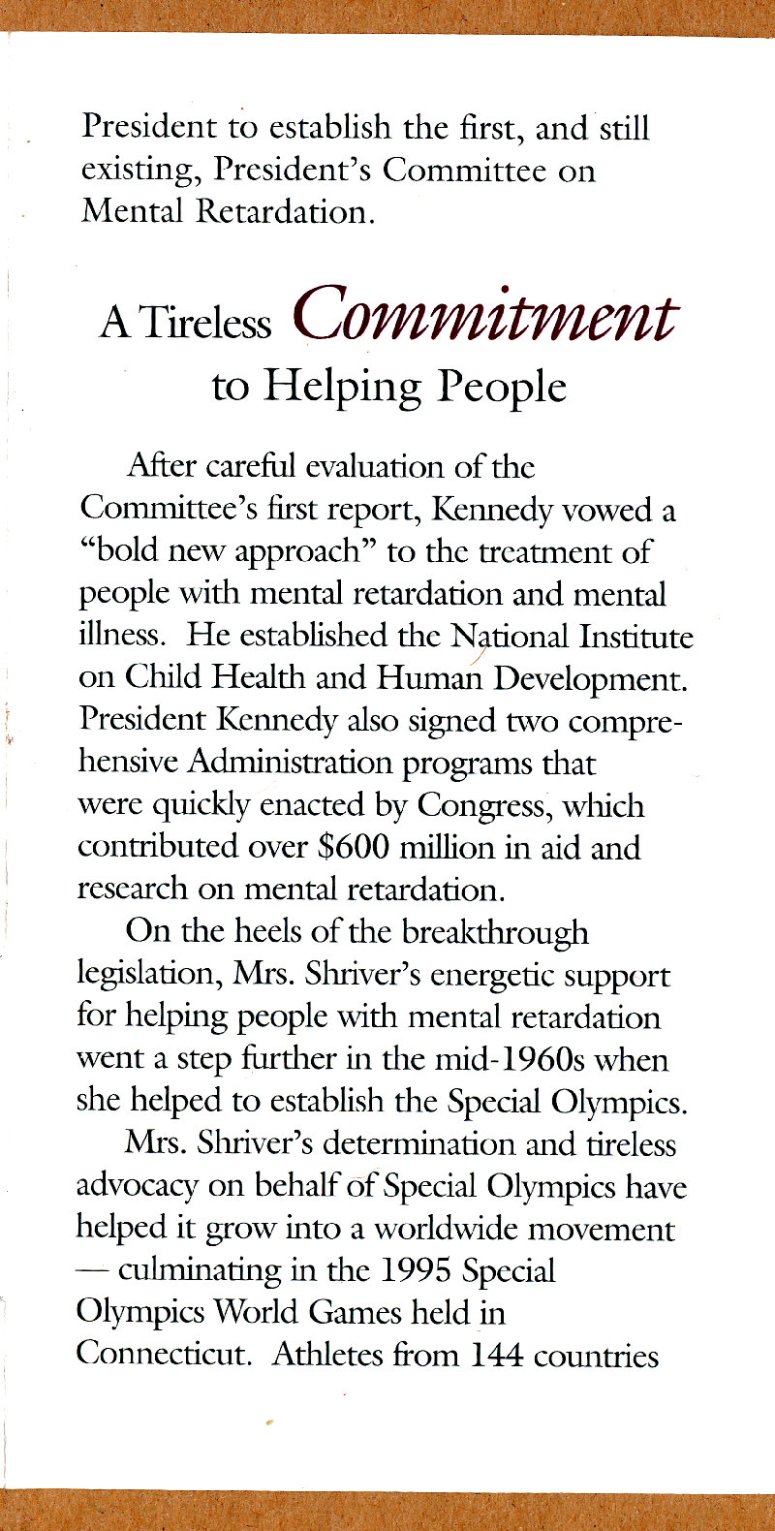
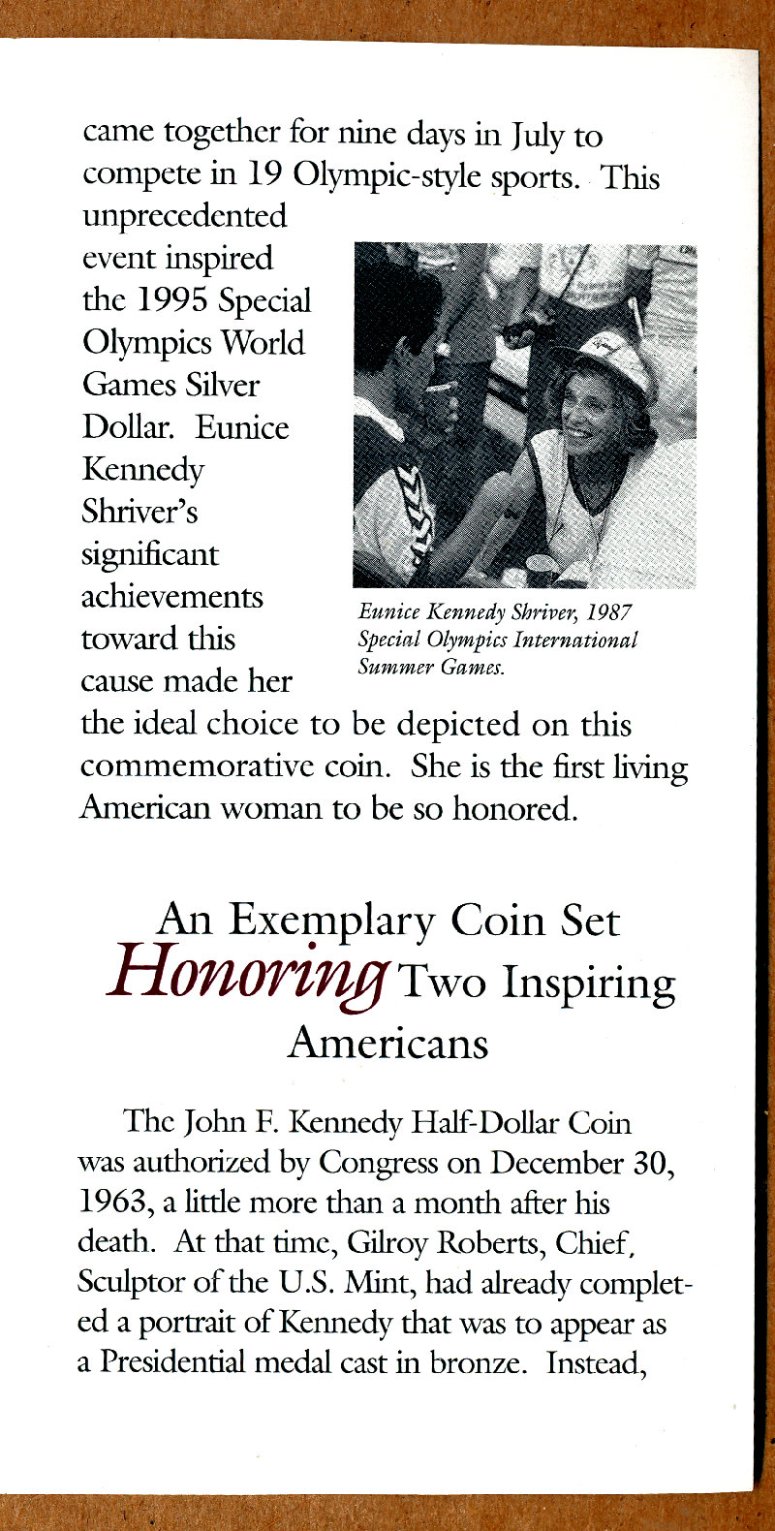
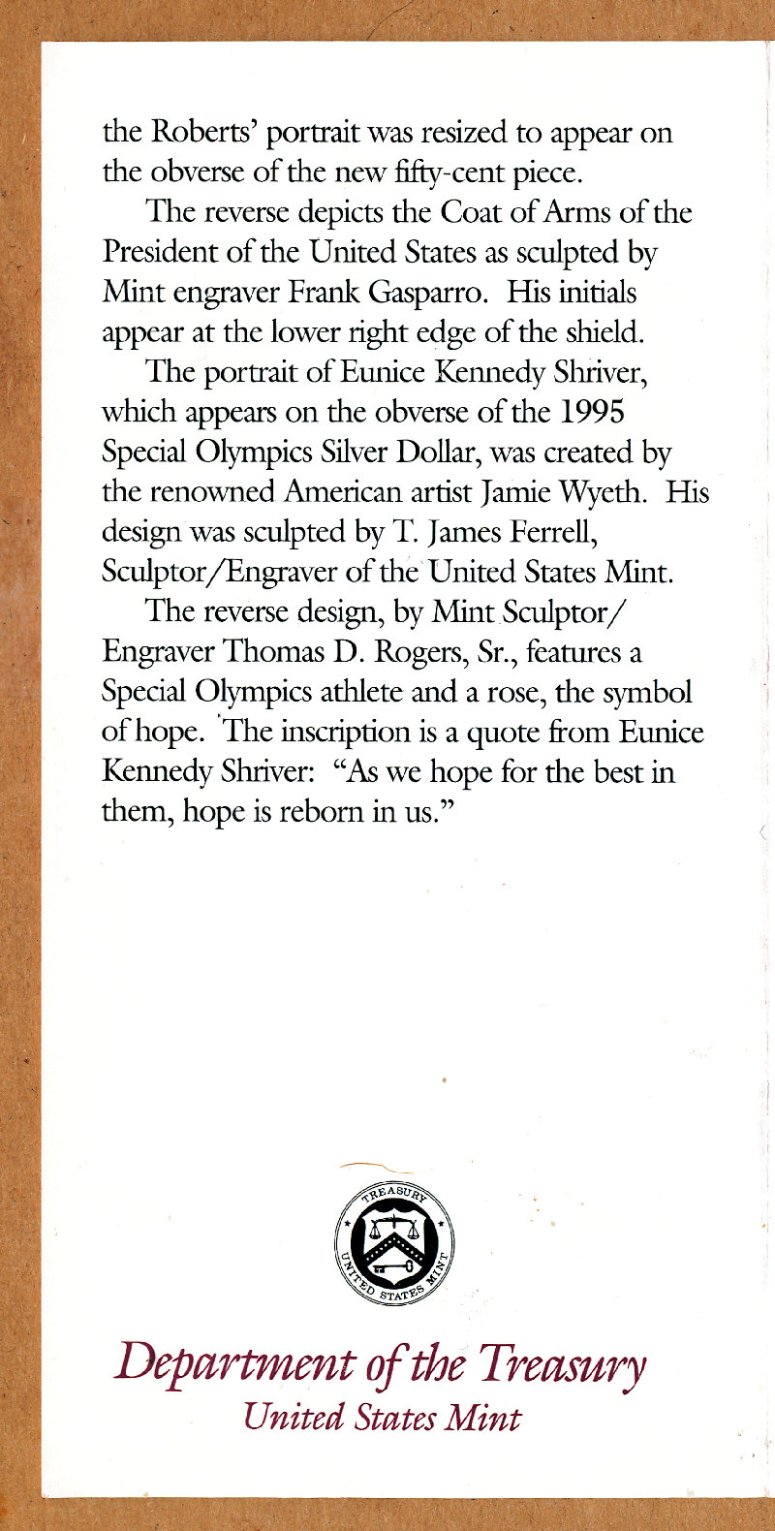
Kennedy half dollar came in an individual capsule vs. inside a proof set lens (a minor selling point, at best), and 2) the Mint created a small leaflet that briefly presented biographical information about John F. Kennedy and Eunice Kennedy Shriver that is included in the Set. (I've included scans of the leaflet's panels below.)
The
Kennedy Set did not prove to be a popular option among collectors, as just 2,887 were sold. IMO, the
Set's low sales can likely be attributed to a) its late-in-the-calendar-year arrival as a purchase option, and b} the minimal advertising employed for the
Set. For example, the Mint ran two full-page ads in the American Numismatic Association's (ANA's)
The Numismatist magazine for the Special Olympics coins, but neither (due to timing) listed the
Kennedy Set as an option, only the standalone proof and uncirculated coins were featured. Of course, the fact that there wasn't anything unique about either of the coins in the two-piece set, also likely contributed to the disinterest.
Its aestehtics aside, the Special Olympics silver dollar is noteworthy as it marks the first time a legal tender coin was issued by any nation to celebrate the achievements of people with mental disabilities/challenges. Of far lesser significance, the
Kennedy Set was the first time US legal tender coins featuring family members were paired together in a set by the US Mint; the Mint would repeat the exercise in 1998 with the special JFK-RFK set issued as part of the Robert F. Kennedy commemorative silver dollar program; the set included a matte finish JFK half dollar that was unique to the set.
The silver dollar's obverse design presents a portrait of Eunice Kennedy Shriver, founder of the Special Olympics. created by Jamie Wyeth; the design was engraved by
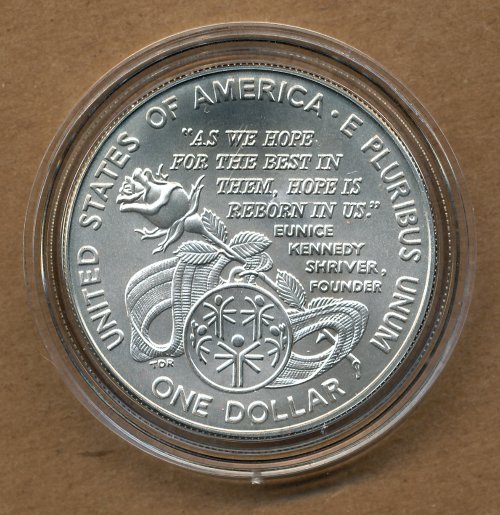
T. James Ferrell. The reverse design is a collage of the Special Olympics Medal, a rose and a quote from Shriver: "As we hope for the best in them, hope is reborn in us." The design and engraving is the work of
Thomas D. Rogers, Sr.
The
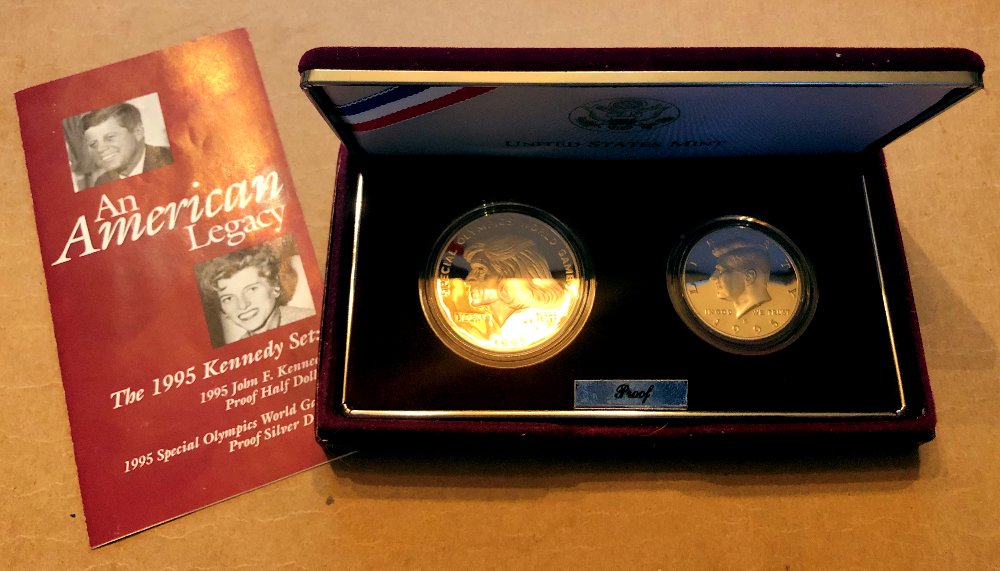
Kennedy Set was packaged in a maroon clamshell case (think Atlanta Olympics two-coin sets) in a box labelled "The 1995 Kennedy Set."
1995 Special Olympics Silver Dollar - Uncirculated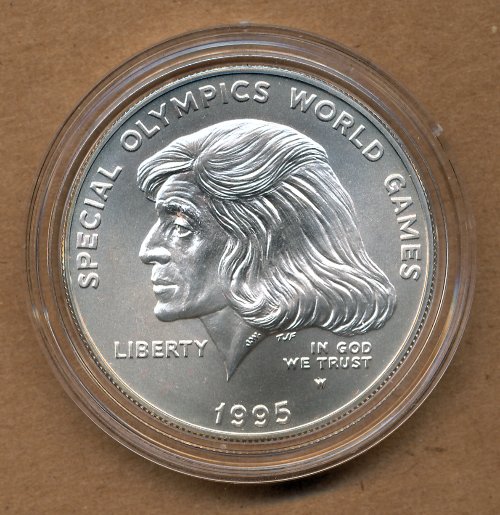
 Two-Piece Kennedy Set Presentation Case
 Kennedy Set Leaflet Panels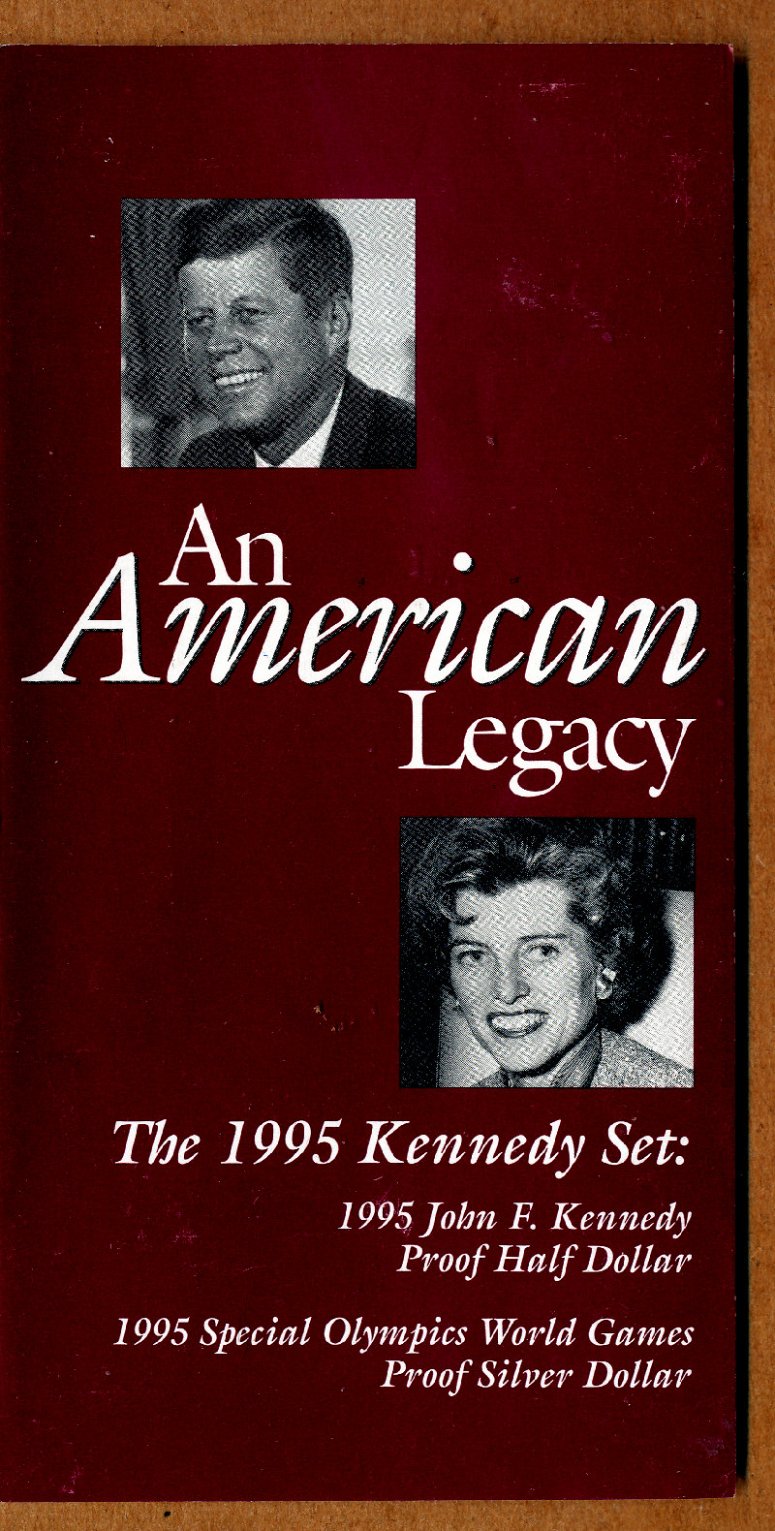
For the thoughts of Jamie Wyeth regarding the Kennedy portrait used on the Special Olympics silver dollar, check out:
-
A Modern Artist's Story




 Posted 10/27/2021 2:10 pm





