| Author |
 Replies: 77 / Views: 7,253 Replies: 77 / Views: 7,253 |
|
|
|
Valued Member
United Kingdom
150 Posts |
@currencyden This is very interesting! The Central Bank of Ireland archives has a newspaper cutting on the incident. The then Irish banknote issuing authority, Currency Commission Ireland, was quite concerned about the possibility of Irish banknotes being in danger of damage, loss or destruction by German action, as they were printed in England and shipped to Ireland during the war. A special marking was added th the Irish notes to guard against the problem. The Currency Commission kept the war situation under constant review, as evidenced by a small newspaper cutting retained from The Observer, dated Sunday 20 April 1941, which notes: Turks Lose Banknotes "'Because of what is described as "an accident" in the Piraeus to a ship carrying new Turkish bank notes and coins from England, the Central Bank of Turkey announces that such notes and coins are now invalid. A large quantity of the notes and coins were "dispersed", it was stated.'—B.U.P." The ship carrying the banknotes, SS City of Roubaix, happened to be in Piraeus Harbour in Greece on 6 April 1941, the day of the German invasion, and was bombed, allegedly by accident, in a German air raid on the port which was targeting nearby vessels. Very interesting that your 50 K note is from that shipment. I would be interested in a transcript of your talk, or a video of it if you made one. Quote:
Here's my Turkey P1331 50 Kurus note. It has a center fold and edge dings. Obviously saw commerce - ILLEGALLY!
I'm giving a talk on this & all salvaged notes at the OCCC (Oklahoma City Coin Club).
From my notes:
In 1941 the SS City of Roubaix was sunk by German warplanes. Actually a conflagration of fires burned all night in the harbor of Piraeus and the nearby Clan Fraser fire traveled to the Roubaix, which eventually blew up. It was in route from Rangoon, Burma to Liverpool, England. The cargo included bales of complete Turkey 50 Kurus notes (P133a) (40,000,000 notes) printed by Bradbury Wilkinson Co. and 100 Lirasi notes (P137) printed by Thomas De La Rue. Many of the 50 Kurus notes floated to nearby Greek islands, where they made instant millionaires out of several Greek locals. Although the entire shipment was invalidated, many of the notes were successfully used in trade. The rest of the 50 Kurus bank notes were returned to Turkey.
|
|
Bedrock of the Community
United Kingdom
18946 Posts |
Fascinating story about those 50 kurus notes! There is a story behind this grotty Brazilian note too: 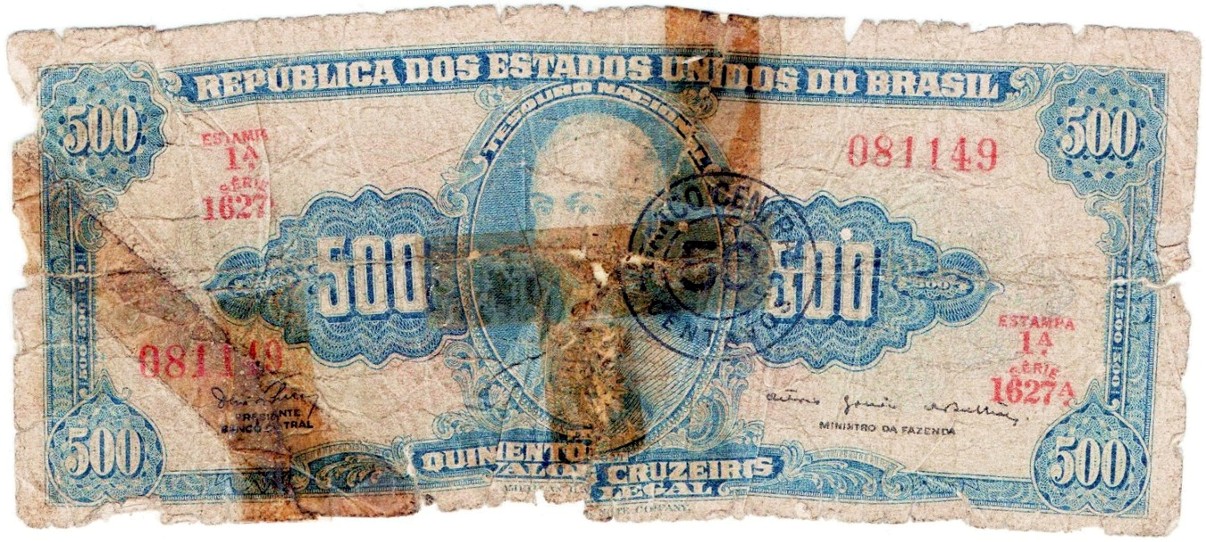 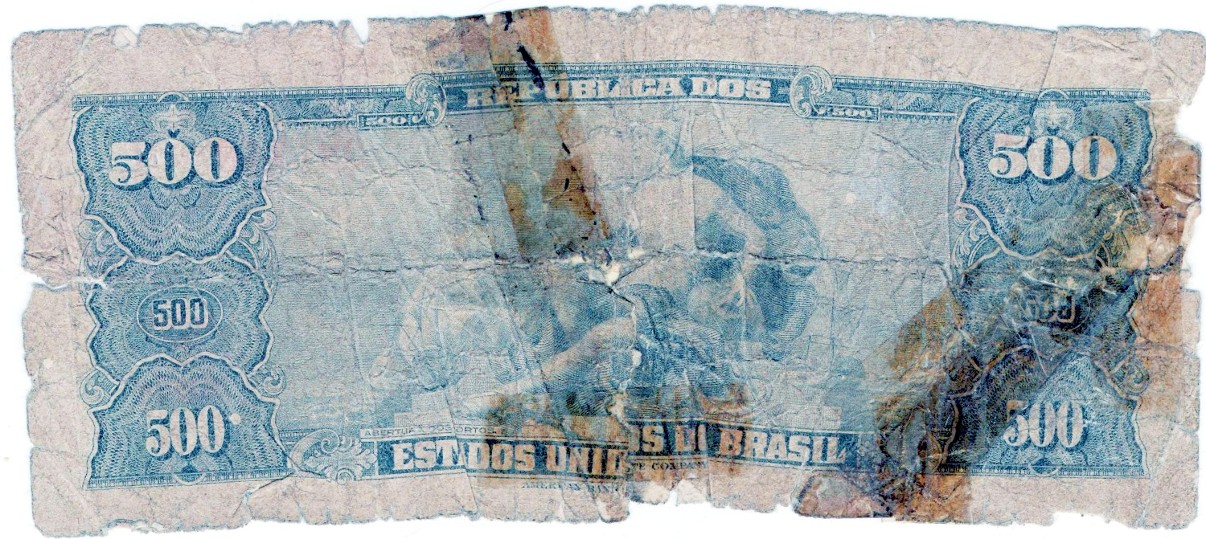 This note was circulating in Brazil at the time of one of that country's periods of high inflation. In 1967 the old Cruziero was replaced by a new Cruziero worth 1,000 old Cruzieros. This note bears a stamp with its new face value of 50 centavos. But how did it get in such awful condition? I imagine it received a lot of circulation in the late 1960s. But bizarrely I found it in my schoolhouse in England in the 1970s. I was in the queue for lunch when I noticed something that looked like a banknote stuffed into a crack in the wall. I pulled it out and it's been in my collection ever since... |
|
Pillar of the Community
United States
2854 Posts |
Wow, @NumisRob!  I think that note wins the hardest-working workhorse! I wonder how a note that worn ended up in England.  1943 Dutch East Indies 1 Gulden (P-111) 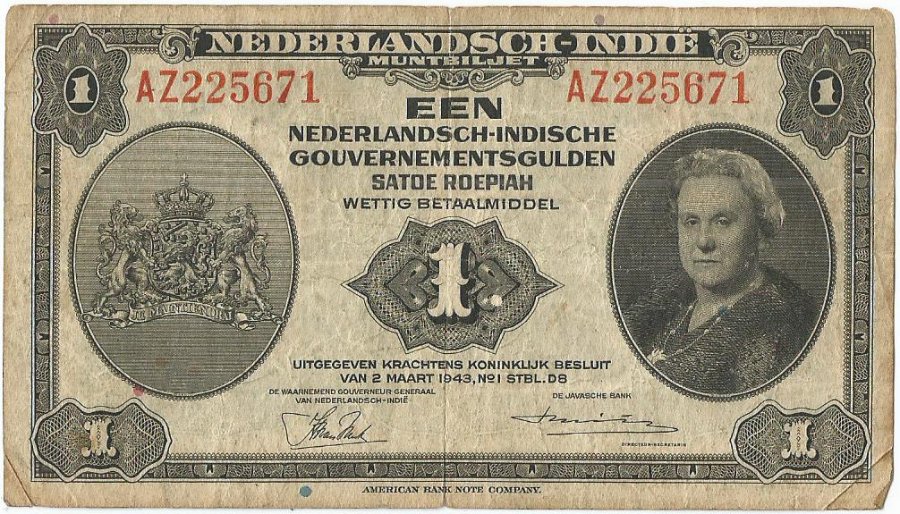 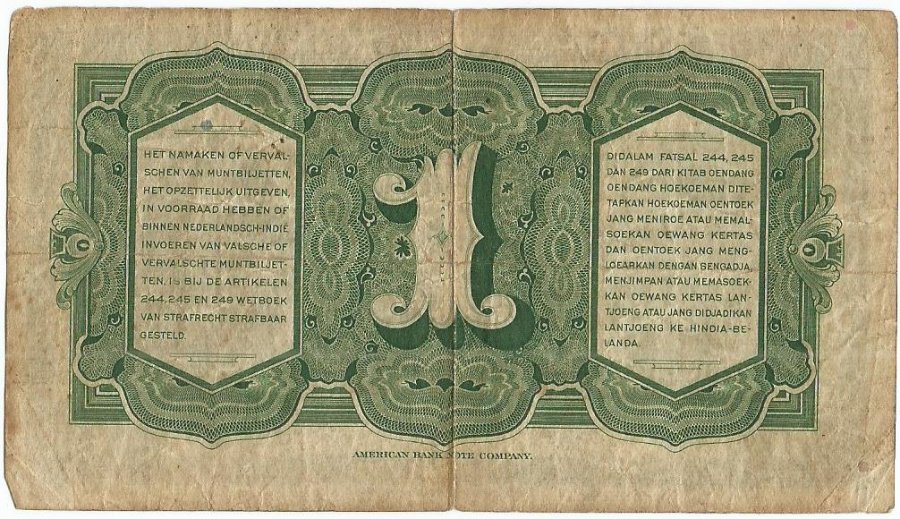 Edited by CollegeBarbers
11/25/2021 10:09 am
|
|
New Member
Germany
28 Posts |
This is a real ugly note. I don't know why I have bought this one recently: Brazil, 2 Milreis, P 11, No Date but issued around 1900 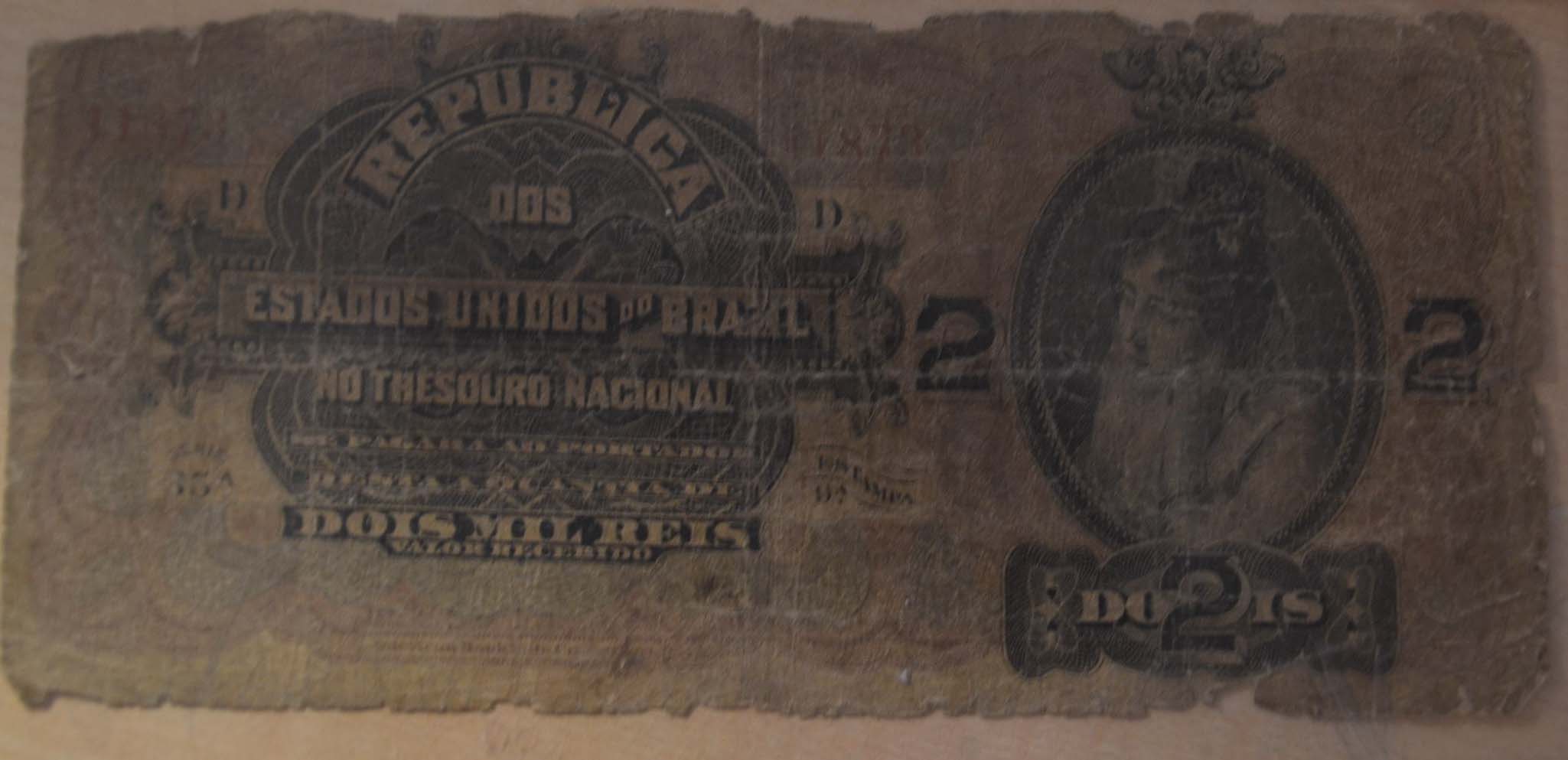 |
|
Pillar of the Community
United States
2854 Posts |
That's a fantastic example of a workhorse, @Dispargum!  And  to the CCF! 1985 Italy 5,000 Lire (P-111b) 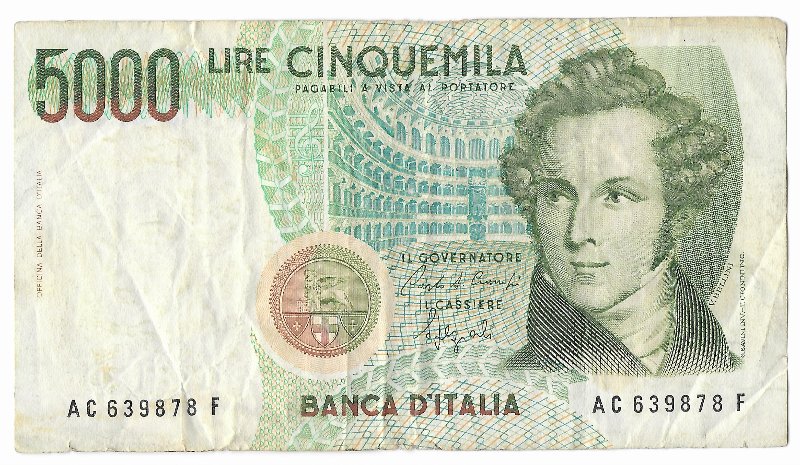 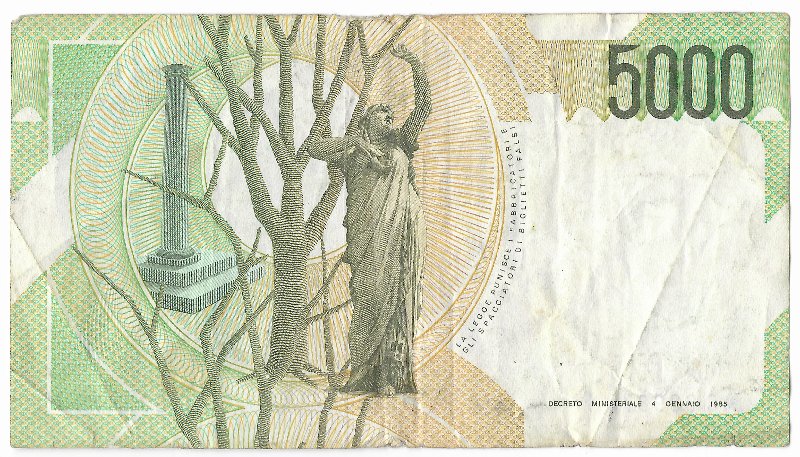 |
|
Bedrock of the Community
United Kingdom
18946 Posts |
1990 5 Rupees from Sri Lanka (with vertical design on reverse): 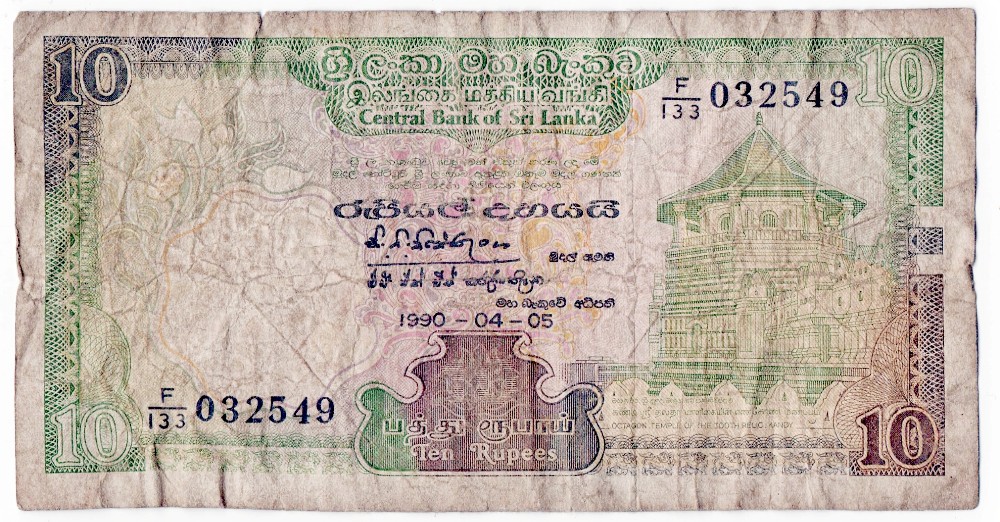 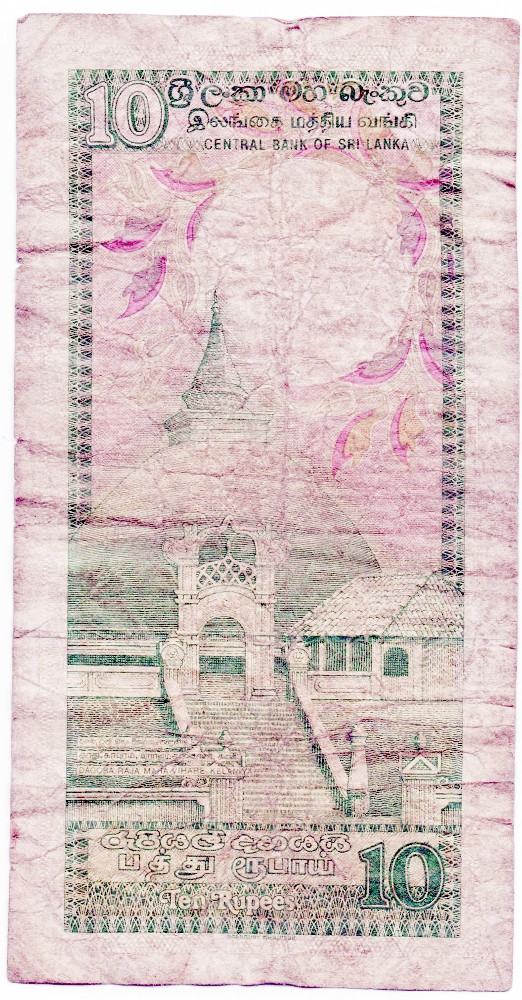 |
|
Moderator
 United States
196490 Posts |
Nice examples! |
|
Pillar of the Community
Canada
2646 Posts |
Quote:
1990 5 Rupees from Sri Lanka (with vertical design on reverse): -Nice example 'NumisRob' but it looks more like a 10 Rupee to me. I posted this 1952 Five Rupees workhorse on CCF in September. Although in pretty rough shape, I did a quick search on the bay (before buying) & found it to be not as bad as I thought (most of the ones listed were in worse wear). Must have been a real workhorse for Ceylon (former Sri Lanka) as higher grades are very dear & tough to obtain. 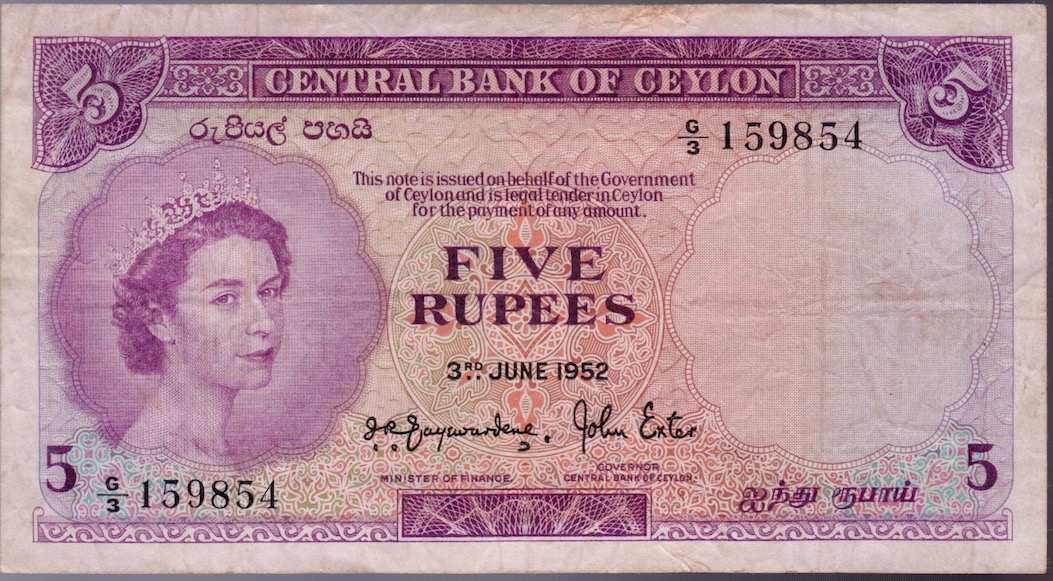 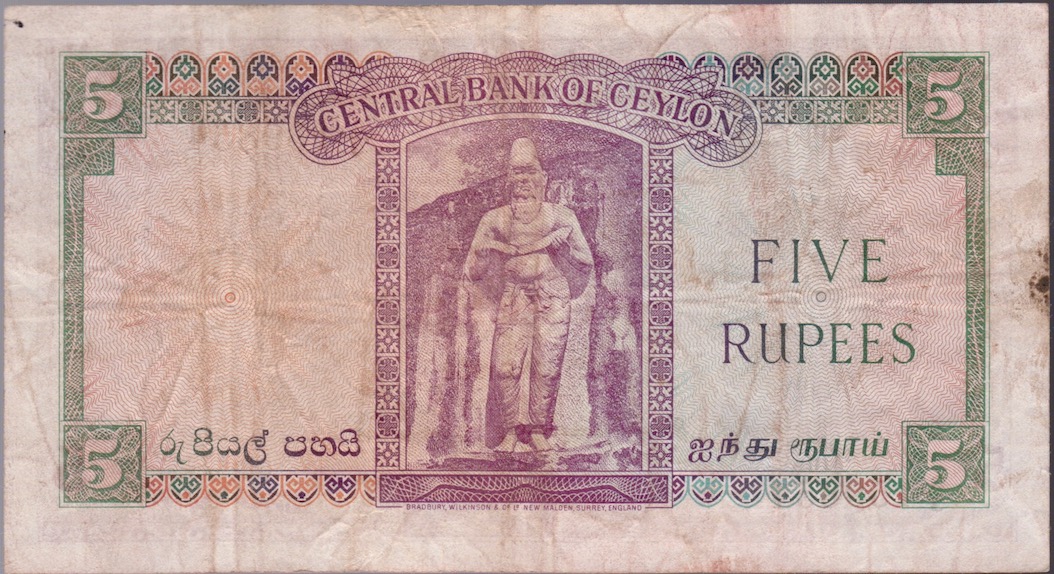 |
|
Pillar of the Community
United States
2854 Posts |
Nice Sri Lankan notes! Series 1969B USA $1 Federal Reserve Note (F-1905B) 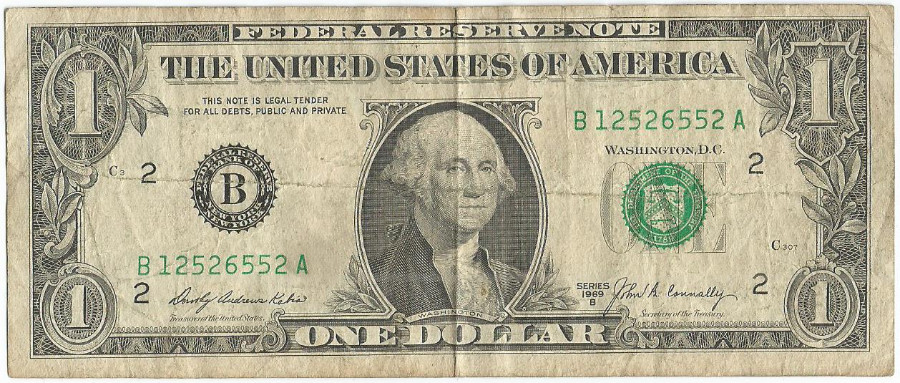 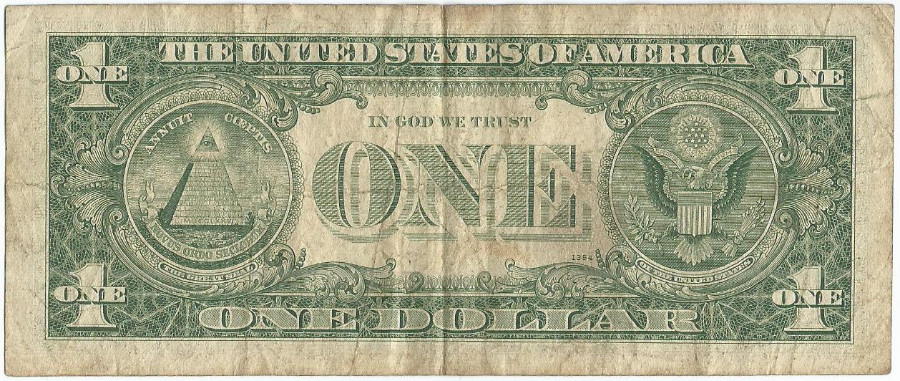 |
|
Pillar of the Community
4628 Posts |
Orac, love the £50 - thats a big value note. Ireland in 1950, you must have been rich to have one of those. New Zealand only printed a total of 250k £50 notes between 1940 and 1966! yet some 250 million £1! These Fijian fractional notes got very well used and they are amongst the better ones. 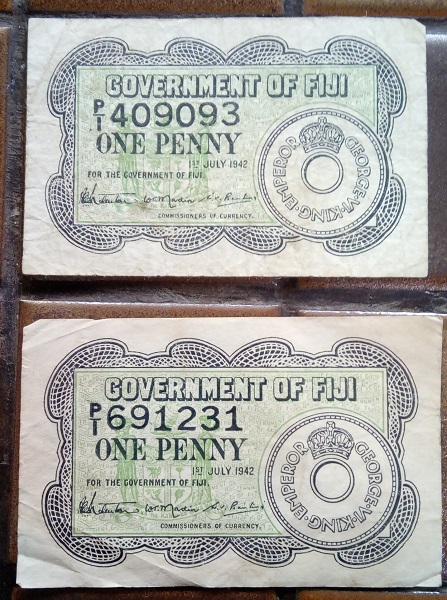 No limits on how many could be used, imagine spending £50 of them at once! 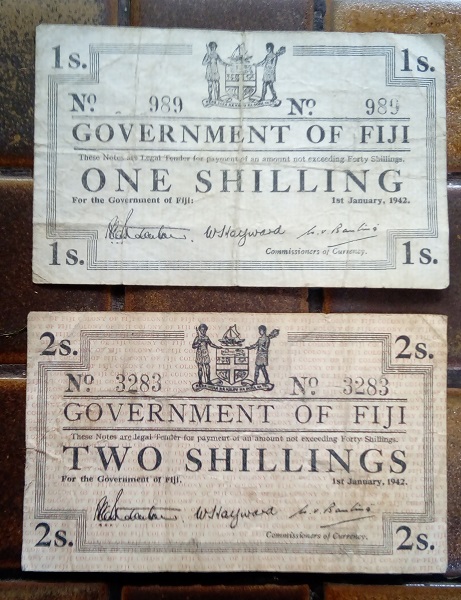 Rare at any condition the 2 bob, but it got a work out! 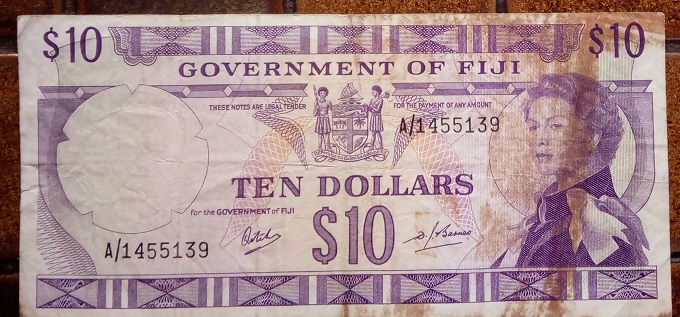 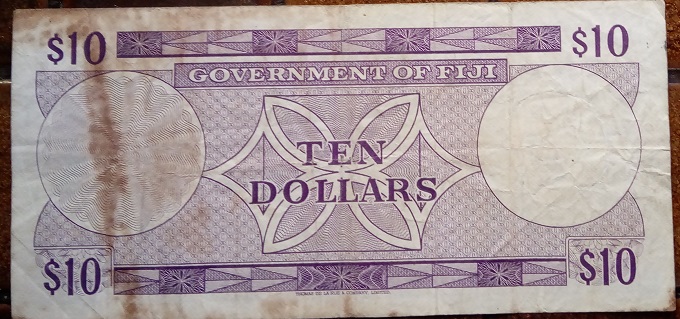 Tropical places like Fiji ensured even high value notes got a work out. The $10 was a scarce note in 1969 and the 2nd highest face value of 6 notes. |
|
Moderator
United States
196490 Posts |
Impressive examples! Quote:
Series 1969B USA $1 Federal Reserve Note (F-1905B)  |
|
Pillar of the Community
Canada
2646 Posts |
How about this Irish Ploughman £1 (P-8a from 1933)? Not in too bad shape & actually features a couple of work horses  (farmer excluded): 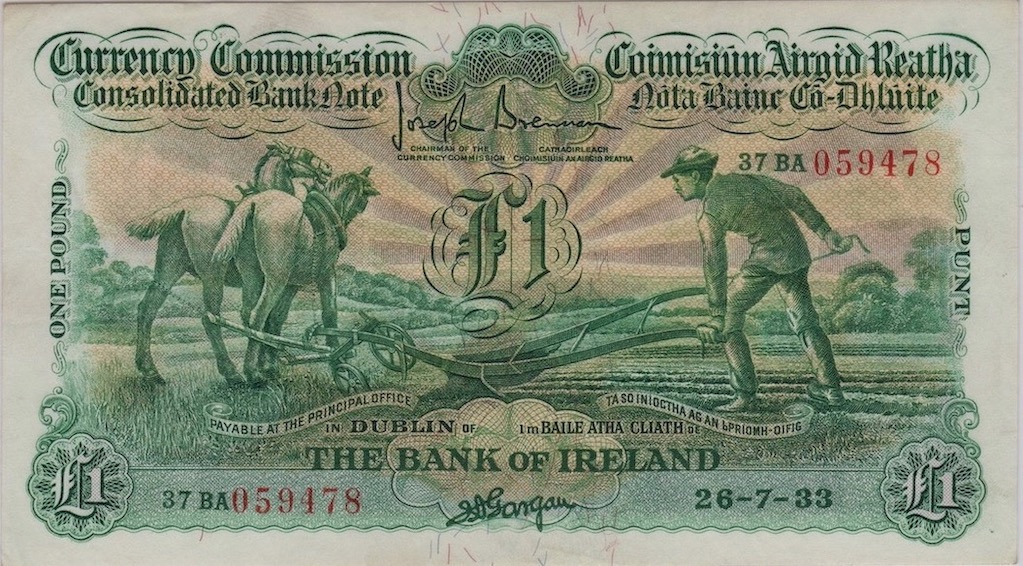 |
|
Moderator
United States
196490 Posts |
Quote:
Not in too bad shape & actually features a couple of work horses Well played! |
|
Valued Member
United Kingdom
150 Posts |
My 'work horses' - the lowest grade note in my Ploughmans 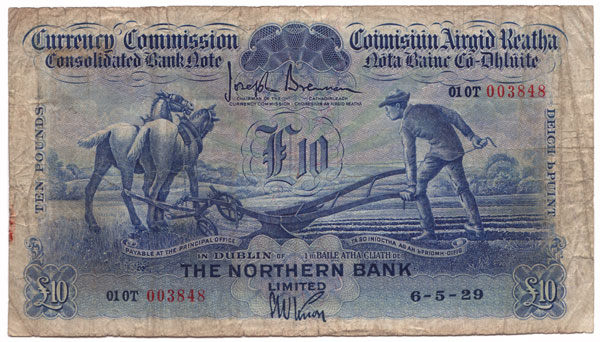 |
|
Moderator
United States
196490 Posts |
Quote:
My 'work horses' - the lowest grade note in my Ploughmans Excellent! |
| |
Replies: 77 / Views: 7,253 |








 First Page
 Previous Page


 Posted 11/25/2021 04:56 am


