| Author |
 Replies: 114 / Views: 9,521 Replies: 114 / Views: 9,521 |
|
|
|
Valued Member
 United States
108 Posts |
|
|
Moderator
 United States
54297 Posts |
Is this specific alloy is "impossible to achieve", then the Chinese couldn't do it either.
I am leaning towards an inaccurate XRF reading.
Show your financial support of the Coin Community Family (click here)See my topic on Mexican Numismatic Medals (click here) |
|
Valued Member
United States
108 Posts |
Something else we haven't ruled out is an amalgam.
Prior to 1909 Tungsten powder was mixed with other agents to make filaments for light bulbs. After extruding the amalgam filaments, the other agents were melted off, leaving only the Tungsten.
I guess the question then is, could 8% Tungsten powder (by mass, much less by volume) be mixed with a Copper/Aluminum alloy and be stamped into a cent?
Something else of note: Buffalo Copper and Brass Rolling Mills in Tonawanda (near Buffalo), NY was supposedly making planchets for the Philly mint at this time, and Niagara Falls, NY was already a hotbed of chemical research, due to abundant power supplied by the 1895 Westinghouse hydroelectric power project. Niagara Falls, NY is 15 minutes from Tonawanda (by car, not on horseback.)
I sent an e-mail to two chemists I know, asking if they know anything about what properties of a Copper/Aluminum/Tungsten, etc. amalgam would be like, as far as looks and workability for a coin planchet.
|
|
Valued Member
United States
108 Posts |
By amalgam, I mean, mix up an alloy of Copper/Aluminum/Zinc/Tin, sprinkle in 4%-5% of very finely ground Tungsten (by volume), and make an ingot. Roll out the ingot, stamp the planchets, and send them off to Philly. The experimental planchets chew up some dies, so on to the next alloy.
GE was sponsoring the Tungsten powder/filament research in 1905,in Schenectady, NY and also sponsored the hydroelectric power project in Niagara Falls, NY in 1895. The research loop was pretty small back then.
This is at least a possibility, until someone proves otherwise.
As for Chinese fakes, I was heavily into Morgans about 15 years ago and some poorly made CC's were showing un on e-bay. I had looked at so many Morgans that the fakes were easy to spot. In particular, one UNC 1889-CC sold for $3,000, despite being worth $10,000, and I flagged it, and had the sale ended. Some poor guy saved himself $3,000. At that time the fakes were very easy to spot, if indeed you had looked at enough Morgans.
|
|
Valued Member
United States
108 Posts |
Several weeks from now I am going to have the PCGS-holdered VDB scanned, and also a PCGS-holdered 1909-s VDB that is in a recent holder as well. We will be able to test both the original scan, and also the effect of a PCGS holder on an XRF scan.
I would be able to do this sooner, but there was a major cyber attack on the brass industry, and things will be a bit askew for a while. I have looked around for someone else with an XRF gun, but have not found any willing participants.
I will hold off on taking the VDB out of the PCGS holder.
Edited by philoponus6
11/12/2022 12:54 pm
|
|
Pillar of the Community
Canada
6244 Posts |
@Philo Yes the tungsten could be use in coins. In fact the metal is ductile. Been the most harder metal on the earth do not mean out of ductility. To day you can buy W in bars, coils, wire. The cost is somewhere to 20K a lb. I like when you say amalgam, which it is an term use most in dentistry, pharma and chemistry.
About the Chinese use of the W for coins: I discovered in 1986 an 1982 fake gold Canadian coin which has anomaly just on two observe letters and the rest is perfect. The metal Cu, W, Zn, Sn. IMHO the XRF must not be perform in slabs.
|
|
Valued Member
United States
108 Posts |
Surprise, surprise! Buffalo Tungsten sells Tungsten powders, which are used to make various alloys, including Copper Tungsten. According to one chemist I contacted, sintering is the method used for manufacturing Tungsten alloys, amalgams, or whatever - the same sintering that was used beginning in 1905 by William Coolidge at GE in Schenectady, and much earlier when making Tungsten Steel.
In the sintering process, Tungsten never enters the liquid state.
My other chemist friend is an organic chemist at CMU and said he knows nothing about metallurgy.
On e-bay a gold plated 1909 VDB can be bought for a buy-it-now of $15. I doubt these are faked.
My chemist friend also said the XRF would pass right through the plastic with little effect, although if C,H and O show up, it would be the plastic. If it were a weak signal, then the plastic may weaken it further and there might be a problem.
Edited by philoponus6
11/12/2022 6:47 pm
|
|
Bedrock of the Community
United States
94367 Posts |
This is getting over my head.
|
|
Valued Member
United States
108 Posts |
Summary:
1) The coin could have been made in 1909 just as easily as it could today.
2) We have no reason yet to doubt the original XRF scan.
I sent an e-mail to Buffalo Tungsten, asking if they have an XRF device and would be willing to give a second opinion.
|
|
Valued Member
United States
108 Posts |
Coinfrog,
In one of the earlier posts it was noted that the melting point of Tungsten was higher than the boiling point of all the other metals allegedly in the coin. Thus, it would be impossible to just melt them together. Why? The other metals would evaporate before Tungsten was melted.
But, the current method of making Tungsten Copper, or Tungsten whatever, does not require melting Tungsten. Tungsten powder is used, and never melted.
Tungsten Copper is quite common, and is made all the time without melting Tungsten.
|
|
Pillar of the Community
Canada
6244 Posts |
Before to show something here, I will answer to the method to combine W and Cu. The W is melt and then is add the rest. the solidification temperature will not drop under the limits and so could be achieve. Is need pressure. If you put just powder which do not melt, the alloy will be very fragile to any forces. The alloys are done by ionic interconnections. Anyways the reading of the XRF is bizarre for me. Now I say I will analyze the photo you provide us. I didn't see the reverse, but I analyze the Observe and compare with the coin from PCGS. I had no problem to access the database and then to made your photo more rideable as your camera took. My conclusion: NOT THE SAME COIN. Here I will put the both coins photo. Are many discrepancies which can't occur in any circumstances on two different cameras if same coin. The posted coin: 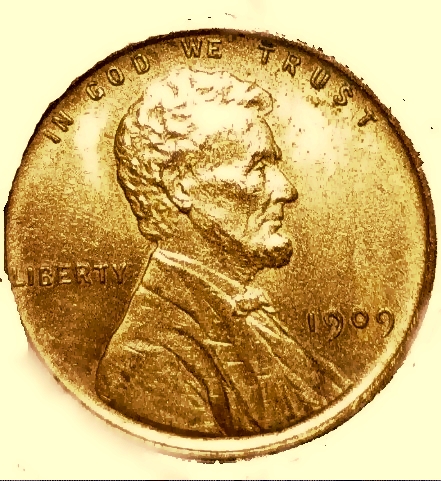 PCGS original photo 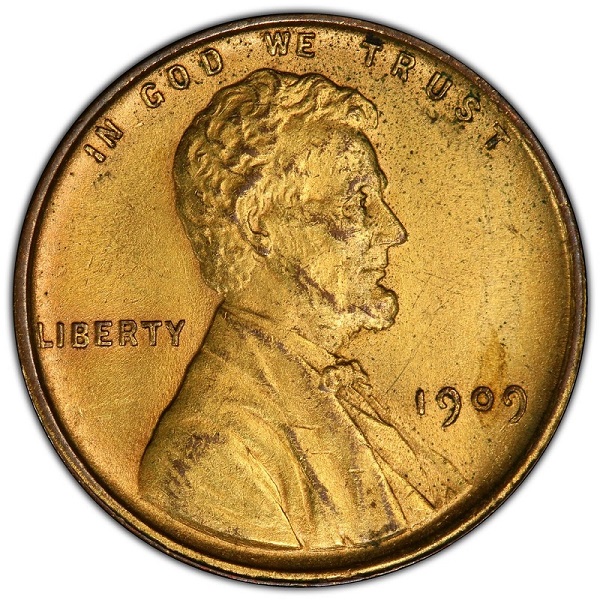 I let everybody to discern at theirs discretion. Will be interesting to see the slab also as per PCGS. Thanks, post close for me. Edited by silviosi
11/12/2022 9:00 pm
|
|
Valued Member
United States
108 Posts |
Same coin. If anyone wants to meet me in a public place anywhere in Western New York I will bring my coin and log into my PCGS account. I have nothing to hide.
|
|
Valued Member
United States
108 Posts |
The sintering process today is no doubt more advanced than what was available over 100 years ago, but they did make Tungsten Steel in the 1800's, after all. Using only 4-5% Tungsten by volume may well have have been a mint experiment.
The contemporary sintering process involves a Tungsten alloy that is 50%-90% Tungsten by weight, and that is a whole different ball game than having only 8% by weight, which is what the XRF indicated.
|
|
Valued Member
United States
108 Posts |
1855 - Tungsten Steel made in Austria.
1900 - Tungsten Steel exhibited at World's Fair.
|
|
Valued Member
United States
108 Posts |
From a gentleman at Buffalo Tungsten:
Unfortunately, we do not have an XRF in our lab to analyze your coin, so I am not sure that we can help you.
I would mention that when tungsten oxidizes, it turns brown, blue and then yellow and seeing how old the coin is, it would be a good chance that the tungsten has oxidized and produced that yellow coloration.
|
| |
Replies: 114 / Views: 9,521 |






 First Page
 Previous Page


 Posted 11/12/2022 07:23 am


