In my recent post about the 1999 Yellowstone National Park 125th Anniversary Silver Dollar (
1999 Yellowstone National Park), I referenced an unsuccessful multi-coin bill introduced by Representative Norman Mineta (D-CA) in June 1995. In that bill was included a proposal for $10 Gold coins (Eagles) to be struck "In commemoration of the bicentennial of United States gold coinage."
In 1795, the US Mint produced its first circulation gold coins, a small number of Gold Half Eagles and Gold Eagles with the Capped Bust, Turban Head design - 8,707 Gold Half Eagles and 5,583 Gold Eagles. So, 1995 represented the 200th anniversary of the coinage.
1795 Capped Bust, Turban Head Gold Eagle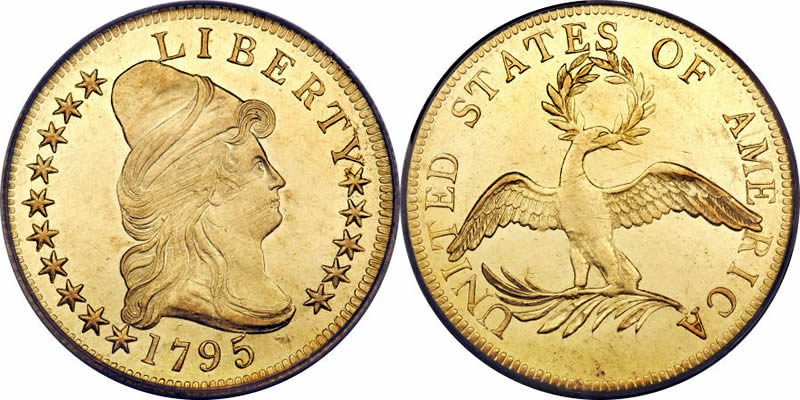 (Image Credit: Heritage Auctions, https://www.ha.com.)
The proposed 1995 Gold $10 coins were to have an authorized maximum mintage of 25,000 with a design "emblematic of the bicentennial of United States gold coinage." (I wonder if the designs would have replicated the 1795 designs?) Striking of the coins was to be limited to the 1995 calendar year - the gold coins' bicentennial year.
No sponsor for the coins was indicated, and no discussion of surcharges was included in the bill. This suggests that either the bill's language, as published, was erroneously incomplete or that the coin was intended to financially benefit the US Mint/Treasury vs. a private-sector organization and was (possibly) to be sold "at cost" by the Mint. Also, no size or composition specifications were stated.
In my Yellowstone post, I also mentioned the multi-coin bill introduced by Senator Daniel Patrick Moynihan (D-NY) during the same Congress. Moynihan's 1995 bill also called for bicentennial gold coins, but its language was even less comprehensive than Mineta's, leaving the Secretary of the Treasury to determine all specifications. Of note, the language of Moynihan's bill designated that the coins were to recognize the "Bicentennial of the United States" - with no reference to the country's first gold coins. Considering the US Bicentennial was roughly 20 years earlier, this error of omission is somewhat surprising/confusing.
Neither of the bills progressed in Congress. And, as the gold coin did not have a private sponsor to lobby on its behalf, it was not included in the 1996 multi-coin bill introduced by Alphonse D'Amato that eventually was authorized and signed into law.
So, an opportunity to recreate a classic design used on a coin that is out of reach (financially) to most collectors was lost. Too bad.
For other of my posts about commemorative coins and medals, including other What If? stories from the classic and modern eras of US commemorative coins, see:
Commems Collection.








 Posted 11/10/2023 10:55 am


 I would have made one of these coins part of my collection as well.


