| Author |
 Replies: 1,026 / Views: 34,787 Replies: 1,026 / Views: 34,787 |
|
|
|
Pillar of the Community
 United States
7953 Posts |
Looking at the copious numbers of those Valence deniers that come up at auctions or on MA-shops, I am wondering why a bishop had such a gigantic mint?. I was also confused about Saint Apollinaris named on the Valence coin, and learned that it was a different Saint Apollinaris than the one of Ravenna Italy (to whom a famous church there was dedicated). The figure on the Arezzo coin is San Donato, patron saint of that city. We have a chain of pizzerias in Ohio called Donato's. I wonder if he's also the patron saint of pizza makers?  Edited by tdziemia
07/17/2024 07:13 am
|
|
Bedrock of the Community
United States
74533 Posts |
More nice additions.  Errers and Varietys.
|
|
Pillar of the Community
United States
7953 Posts |
I am in Sicily again with another denaro of Frederick II, Messina mint, dated to 1242 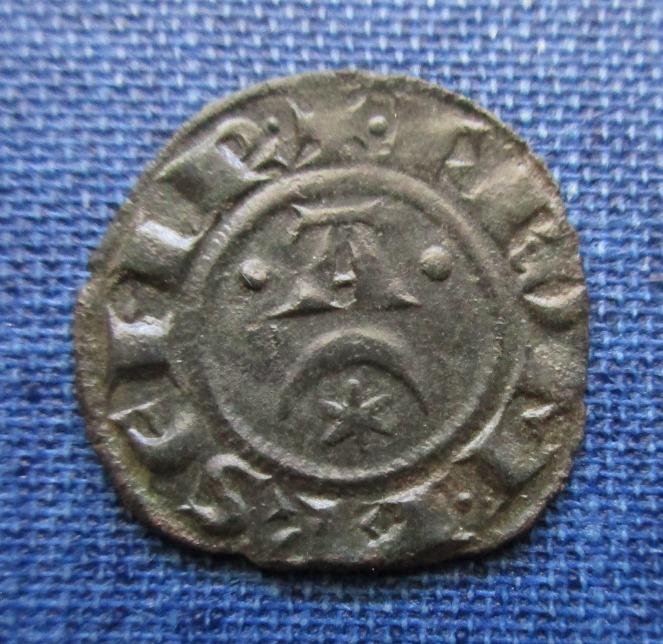 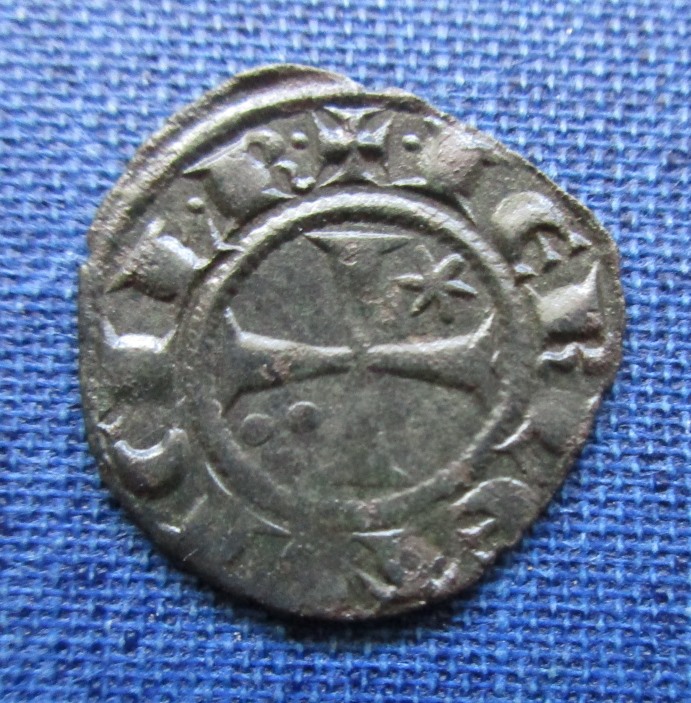 Obverse: F ROM IP SEMP A (letter A in center; Frederick ever exalted E,peror of the Rmans...) Reverse: IERL ET SICIL R (... King of Jerusalem and Sicily). As mentioned upthread in my note to spence, Grierson and Travaini in MEC 14 changed some of the previous mint attributions in Spahr (the previous authoritative reference for Sicily written in 1976) based on analyses of their frequency in hoards found in various places in southern Italy. |
|
Moderator
 United States
96800 Posts |
very nice additions Spence and tdz!!
|
|
Moderator
United States
34423 Posts |
@tdz, I'm not sure about St. Donato and pizzas, but I do note that their official brand promise seems pretty saintly: Quote:
To serve the best pizza and make your day a little better. Here is a Pfenning dating to between 1202 and 1256 AD from the Austrian Duchy of Carinthia. It was minted at St Veit on behalf of Bernhard II. These Pfennige seem to have been minted in large numbers and with many designs so we should see more of them on this thread soon. 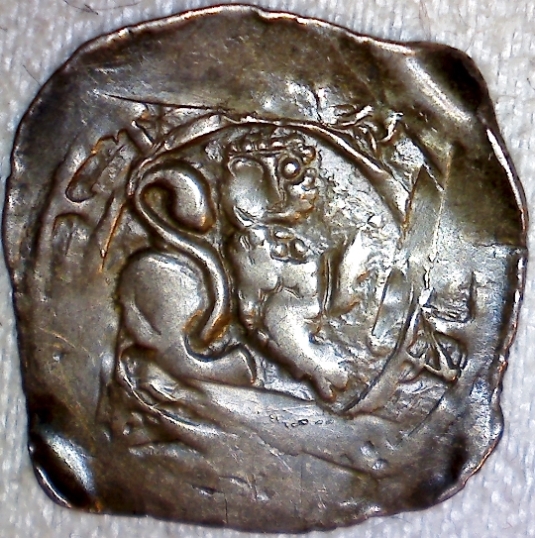 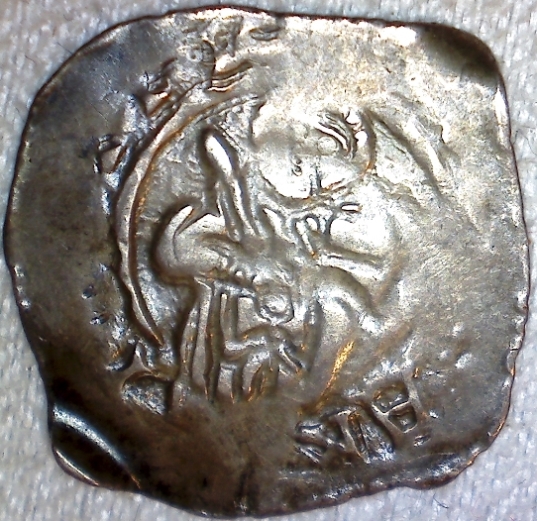 "If you climb a good tree, you get a push."
-----Ghanaian proverb
"The danger we all now face is distinguishing between what is authentic and what is performed."
-----King Adz
|
|
Moderator
United States
188952 Posts |
Wonderful examples! |
|
Pillar of the Community
 Sweden
2124 Posts |
Quote:
another denaro of Frederick II, Messina mint, dated to 1242 Beautiful! Stars and a crescent moon, did Frederick have an interest in astronomy?  Quote:
Here is a Pfenning dating to between 1202 and 1256 AD from the Austrian Duchy of Carinthia. - - - These Pfennige seem to have been minted in large numbers and with many designs so we should see more of them on this thread soon. Very nice lion on that one! Looking forward to see more of them! Quote:
Looking at the copious numbers of those Valence deniers that come up at auctions or on MA-shops, I am wondering why a bishop had such a gigantic mint? I think the Valence deniers had a good reputation and were used over a much larger area than Valence itself, so there was a demand for a large output. I found one source saying they were among the deniers used by Crusaders, so that would have created an extra demand, from time to time. That same source called the figure a "stylized angel", I also found descriptions like "winged creature", so I am not so sure any longer about that being an eagle. (Yeah, I did some research yesterday.  ) Btw, looking closely at the crosses of those MA-Shops deniers, I think the term "Pacman cross" may be appropriate for some . . . |
|
Pillar of the Community
United States
7953 Posts |
Quote:
Beautiful! Stars and a crescent moon, did Frederick have an interest in astronomy? I don't know  . But the island of Sicily was part of an Islamic kingdom until around 1060, and the south of Italy was Byzantine until about the same time, so maybe just a continuation of symbols from those cultures/coinages? Quote:
I think the term "Pacman cross" may be appropriate for some . . . I also noticed that with a lot of wear they just look like a large pellet at the end of the cross ... I think the one spence posted is unusual for the definition (fresh dies?), and for the less round shape of the objects at the end of the cross. And on use by crusaders, yes, I saw a lot of these at auctions I usually think of as specializing in the eastern Mediterranean, so that makes sense. Lots of medieval history spilling out on this thread! Edited by tdziemia
07/17/2024 11:58 am
|
|
Moderator
United States
188952 Posts |
Quote:Lots of medieval history spilling out on this thread! And it is appreciated.  |
|
Bedrock of the Community
United States
74533 Posts |
Nice additions, tdziemia, and Spence! Errers and Varietys.
|
|
Moderator
United States
96800 Posts |
Nice one Spence - and Lots of valuable information about these coins is just great.
|
|
Moderator
United States
34423 Posts |
Great comments all--glad this thread is stimulating some discussions. Here is another Carinthian Pfennig from that same time period: 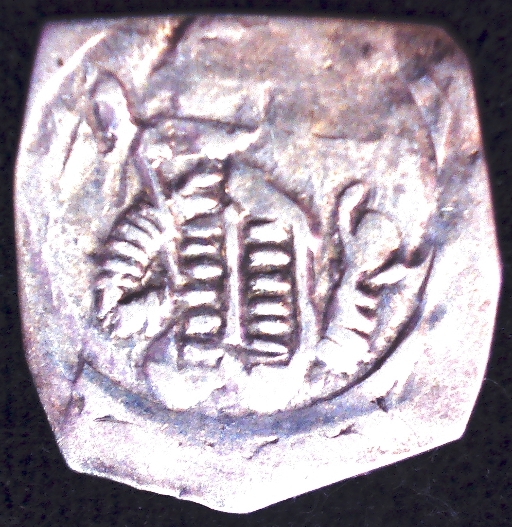 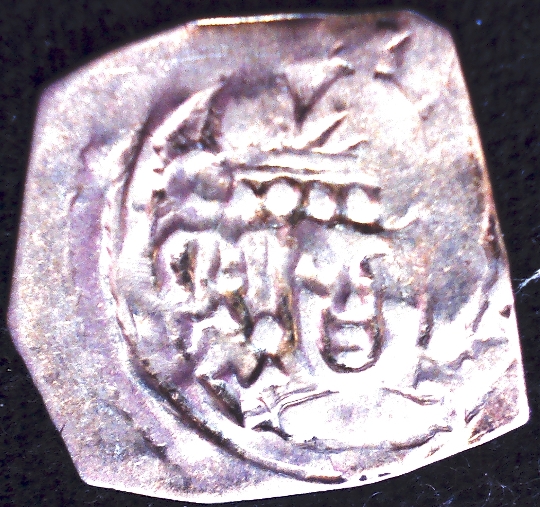 "If you climb a good tree, you get a push."
-----Ghanaian proverb
"The danger we all now face is distinguishing between what is authentic and what is performed."
-----King Adz
|
|
Bedrock of the Community
United States
74533 Posts |
Very nice, Spence. Errers and Varietys.
|
|
Moderator
United States
96800 Posts |
wow, Spence! keep 'em comin' |
|
Pillar of the Community
United States
7953 Posts |
Either a nice rendering of armor on such a tiny coin, or quite a sixpack that guy has . My last from Frederick II of Sicily, Brindisi mint, around 1248. At this point the silver content is down to 0.065, what would be called billon noir (black billon) in France or the Low Countries. Nice letterform for the R in the legends, with the front leg curled upward: 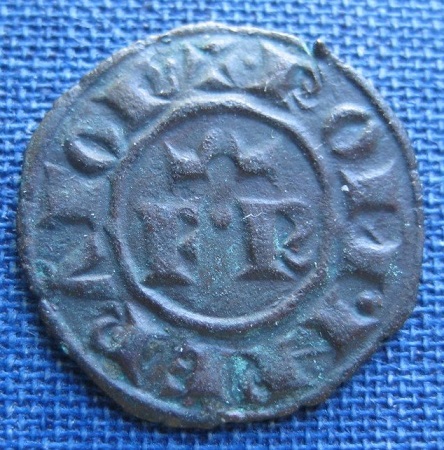 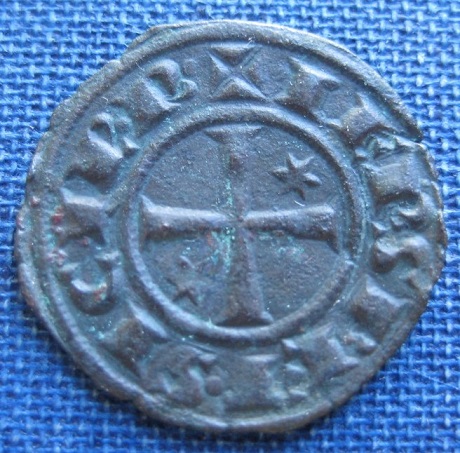 Obverse: FR (center) + ROM INPERATOR (Frederick, Roman Emperor...) Reverse: IERSL ET SICIL R (King of Jerusalem and Sicily) Edited by tdziemia
07/18/2024 07:58 am
|
| |
Replies: 1,026 / Views: 34,787 |







 First Page
 Previous Page


 Posted 07/16/2024 11:30 pm





