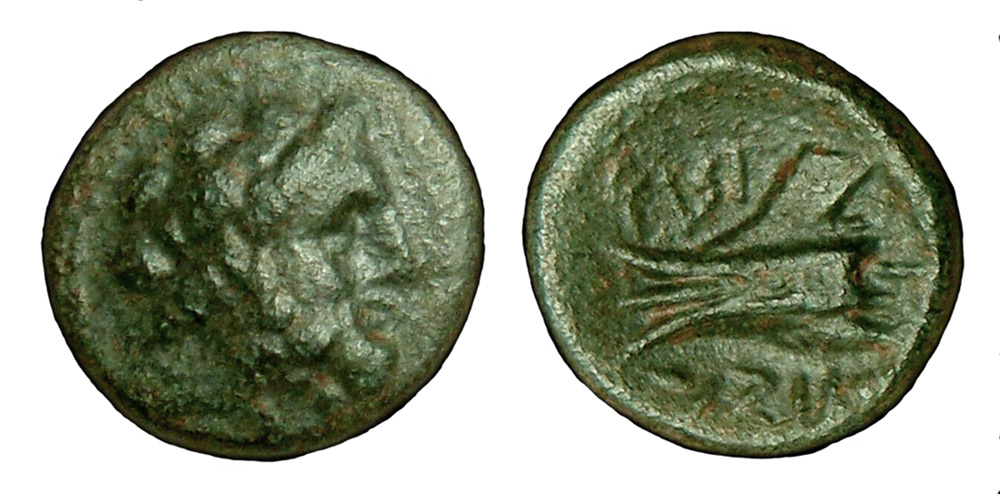
I do find the depiction of galleys and galley parts on coins to be very interesting, and this is the first time I've bought a coin featuring the prow and the stern of a galley on either side of the coin. From Phaselis in Lycia, the obverse features the prow of a galley and on the reverse the stern.
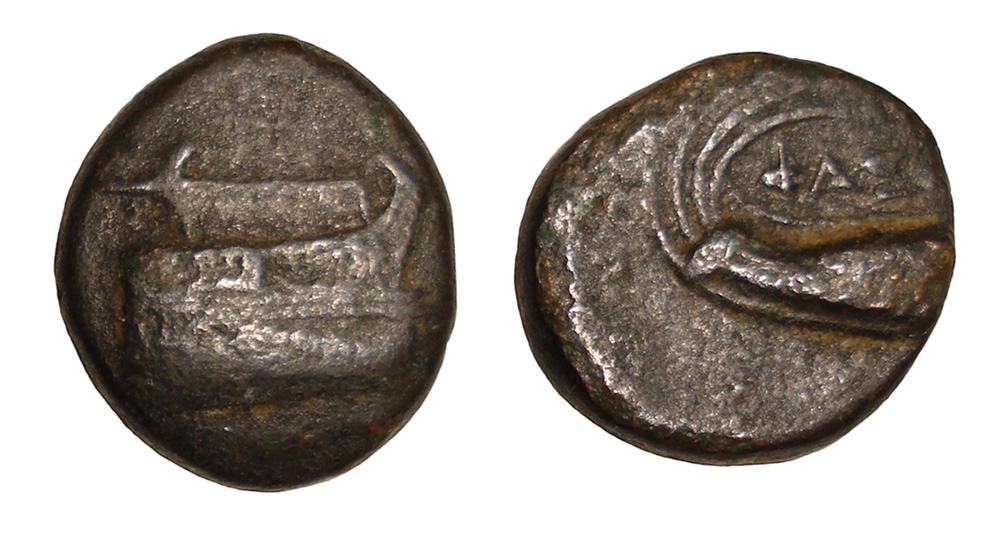
Lycia, Phaselis. 3rd Century BC. Obverse: Prow of galley right. Reverse: Stern of galley. Reverse inscription: ΦAΣ[H] above. Bronze. Diameter: 16 mm. Weight: 4.00gr.
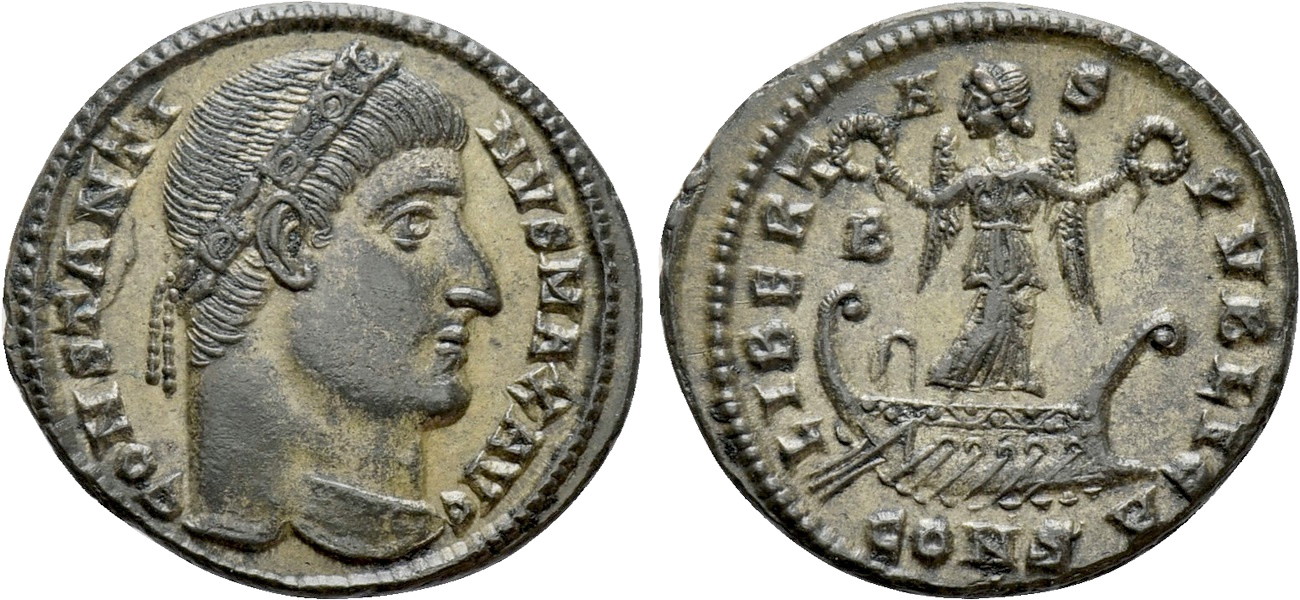
Attempting to show a galley in full on a coin must have been difficult for the engraver, as can be seen on the Postumus coin below.
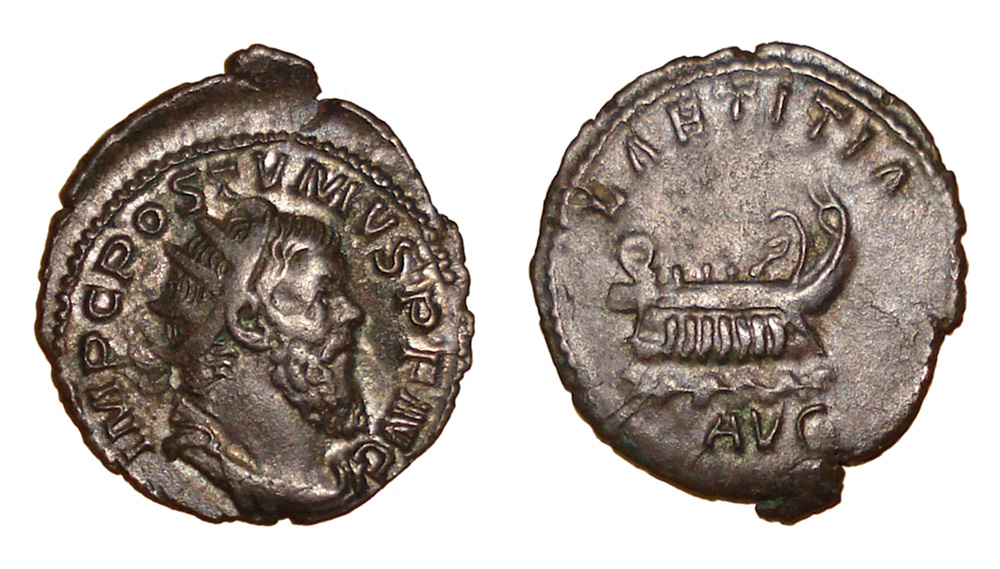
It was impossible to show a galley in true perspective, as the real number of rowers would not fit onto such a small flan, so the galley is shown out of scale.
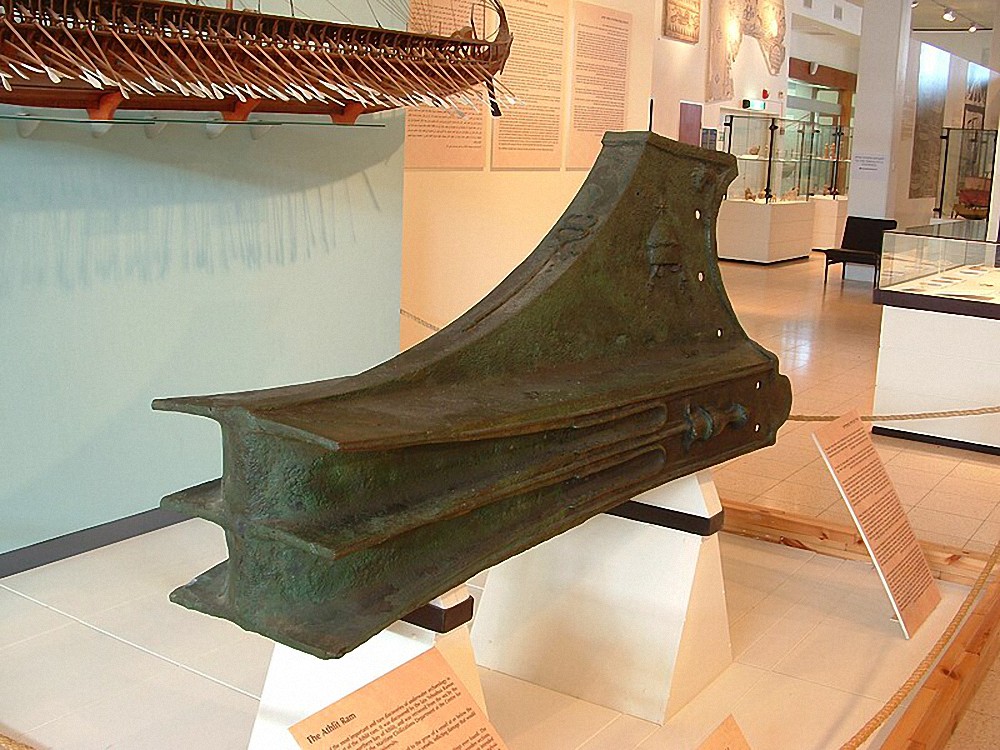
A human powered galley did have an impressive turn of speed, and was extremely manoeuvrable. On the trials of the replica of the Greek trireme Olympias, she could turn around in twice her own length, (something that modern ships find difficult unless they are fitted with thrusters or dynamic positioning) and reach speeds of around 9 knots. That was with an untrained crew of volunteers, so a properly trained crew would have been able to achieve much more. The galleys were extremely successful vessels and commanded the seas for around four centuries. The later addition of sails gave the galleys a much wider range.
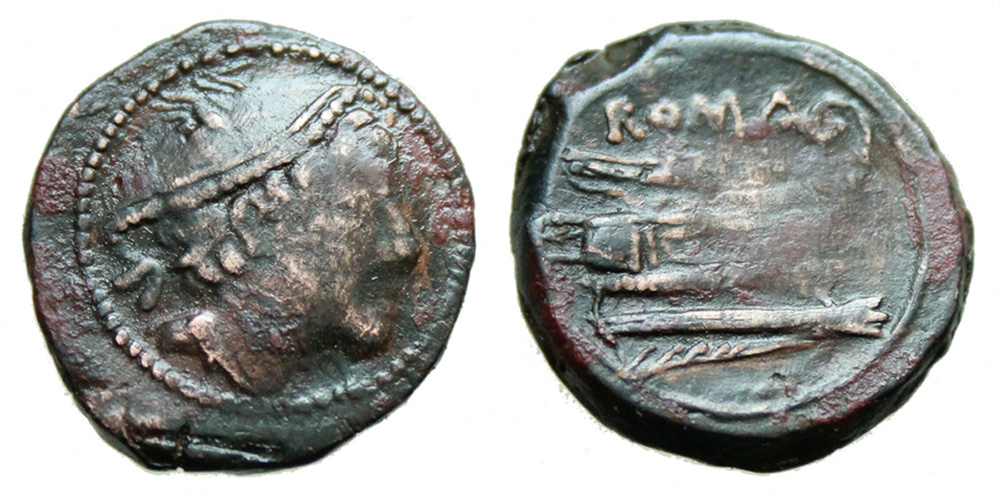
Many of the coins of the time showed the prow with a three-pointed ram, as featured on the reverse of this coin from the Uncia Sicilian mint below. Though the prow area is somewhat worn, the triple pointed representation of the ram is clearly seen - a warning not to mess with their vessels?
The Phoenicians cut to the chase and featured the ram on many of their coins, not bothering to show the prow at all, as the reverse of this coin from Arados date-year 110 shows.
A clear warning not to tangle with Phoenician war galleys?
When galleys gave way to sailing ships the ram eventually disappeared. To avoid being dragged down with the opponent that had been rammed, it was necessary for the vessel to go astern very quickly. It was something that sailing ships, that depended on the wind, could not achieve.
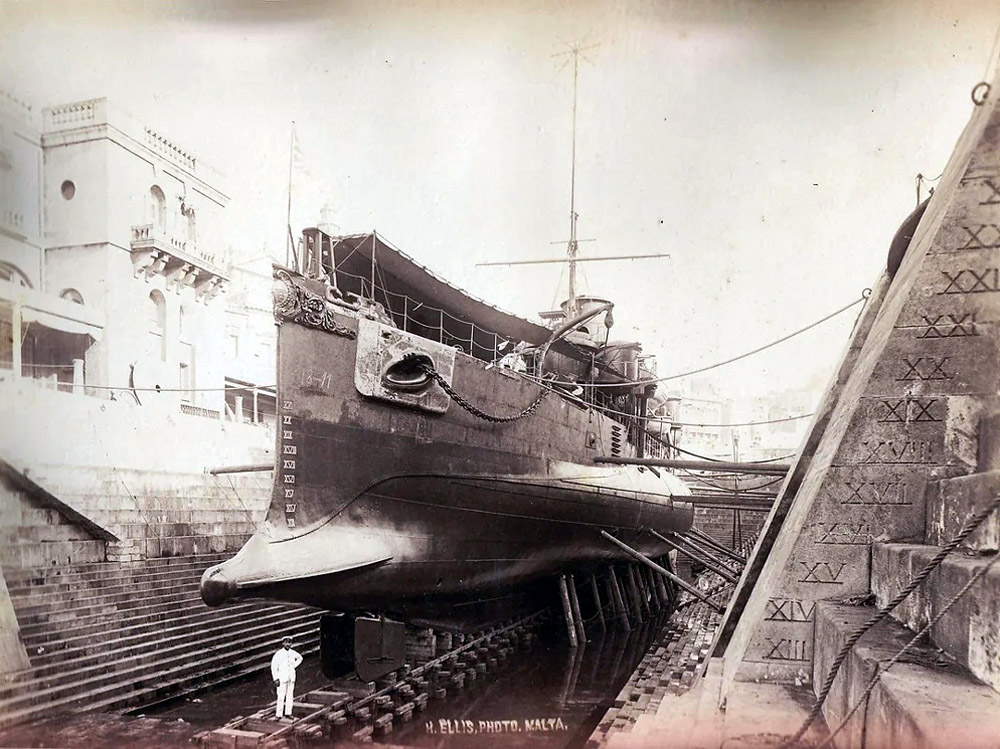
With the advent of steam powered ships, some warships were fitted with ram bows, but they were not a great success. More warships were lost through accidents than were lost through hostile situations. Modern weaponry also meant that most battles were fought at a distance rather than close quarters. One unique warship for the Royal Navy was HMS Polyphemus. She was launched in 1881, completed in 1882 and had a torpedo ram bow. After only eighteen years' service she was decommissioned in 1900 and sold to breakers in 1903. Interestingly her ram bow had an unexpected major effect on her performance, similar to the bulbous bow on a modern ship.
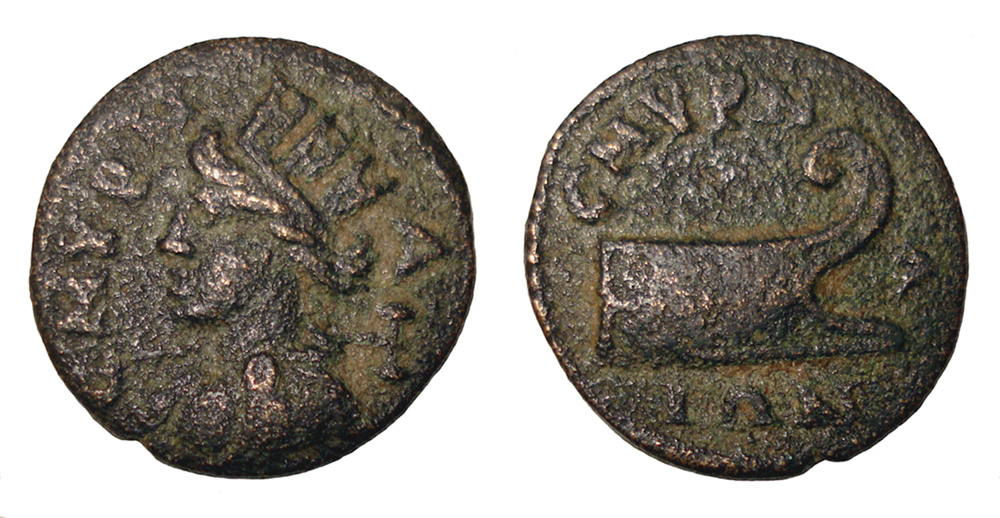
This coin from Smyrna in Ionia features a rounded ram bow closely resembling the bulbous bow on modern ships.
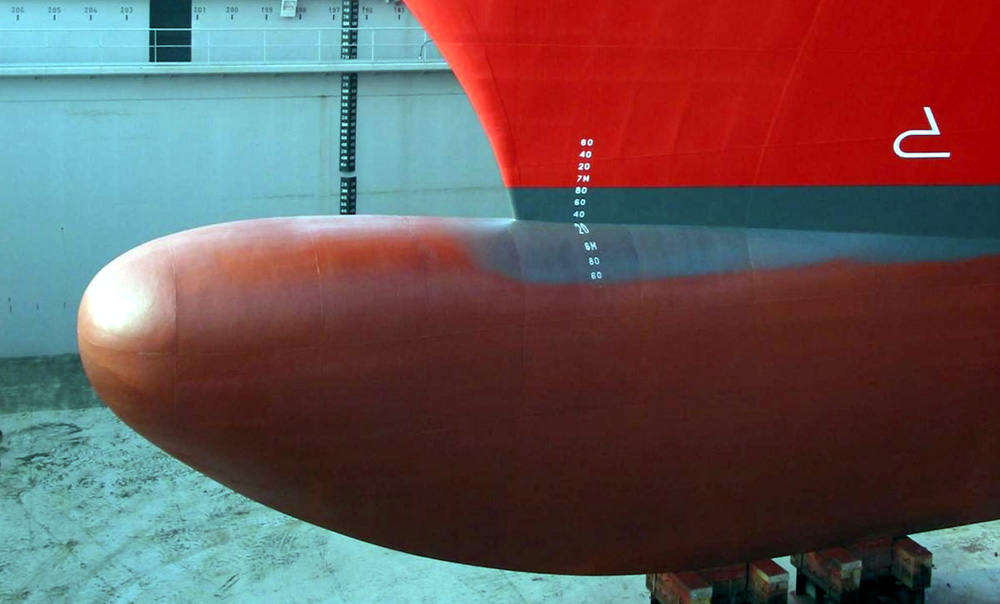
The modern bulbous bow causes a destructive interference of the bow waves, minimising the bow wave and thus greatly reducing the wetted surface area. This has the effect of lowering the "drag" on the hull which lessens the amount of power necessary to maintain the speed, which in turn gives a slight saving in fuel consumption. The economic advantage is clear over a period of time.
Maybe the shipbuilders of ancient Smyrna knew that the ram bow could have more than one use?










 Posted 06/21/2024 1:40 pm




 Thanks for posting it.