|
This page may contain links that result in small commissions to keep this free site up and running.

Welcome Guest! Registering and/or logging in will remove the anchor (bottom) ads. It's Free!
To participate in the forum you must log in or register. | Author |
 Replies: 6 / Views: 323 Replies: 6 / Views: 323 |
|
|
Valued Member
United States
249 Posts |
|
|
|
|
Pillar of the Community
 United States
957 Posts |
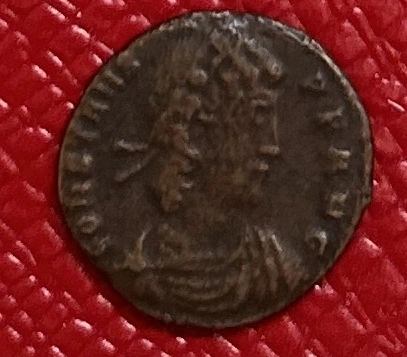
Constans
A.D. 337- 350
CONSTANS P F AVG; draped and cuirassed bust right, wearing rosette diadem.
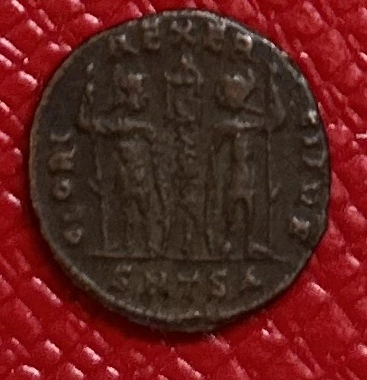
GLORIA EXERCITVS; Two soldiers helmeted, stg. facing one another, reversed spear in outer hands, inner hands on shields resting on the ground; between them one standard.
in ex. SMTSA
RIC VIII Thessalonica 57
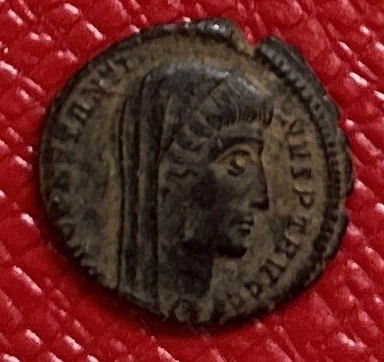
Constantine I
Posthumous issue
A.D. 347-348
Obv: DV CONSTANTINVS PT AVGG - Veiled head right
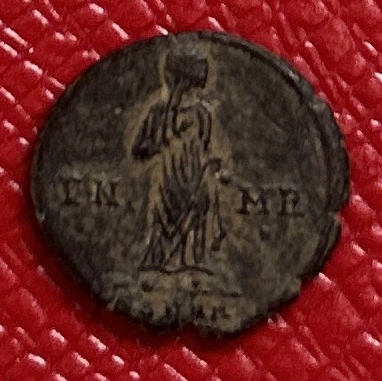
Rev: VN MR [(VENERANDAE MEMORIAE In honor of venerated memory] Emperor veiled, standing right.
in ex. CONSH
RIC VIII Constantinople 68
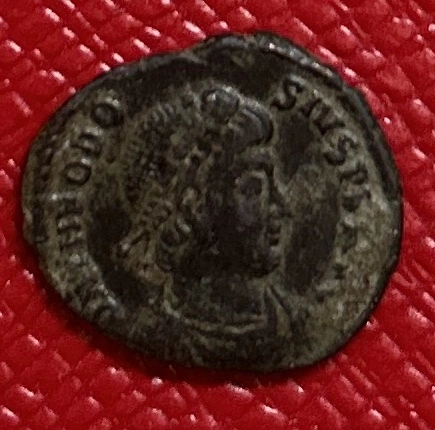
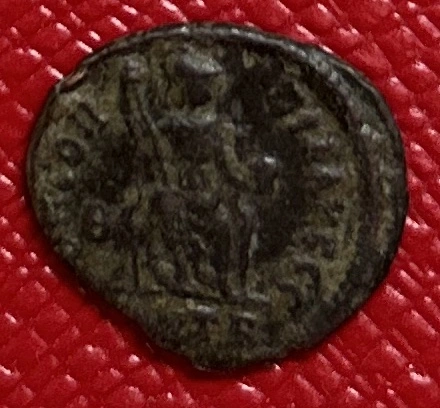
Theodosius I
A.D. 378- 383
DN THEODO-SIVS PF AVG; rosette diademed, draped and cuirassed bust right
CONCORDIA AVGGG; Constantinopolis, seated facing with head right, holding globe & reversed spear; theta in left field.
In ex. ANTB
RIC IX Antioch 47d
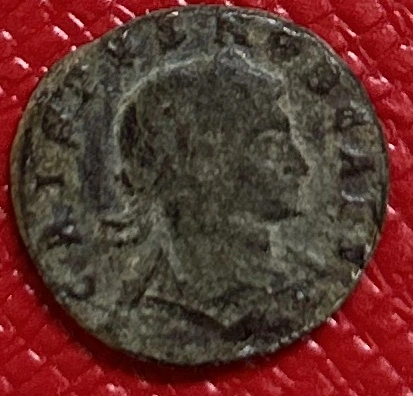
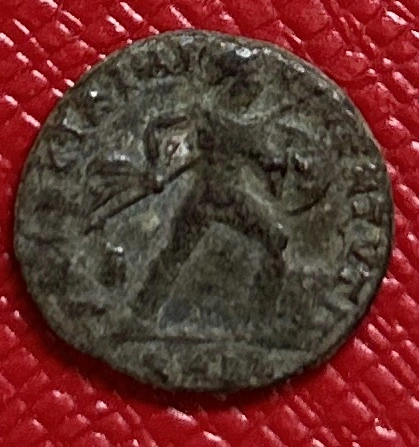
Crispus
A.D. 316- 317
CRISPVS NOB CAES, Laureate draped and cuirassed seen from the rear.
PRINCIPIA IVVENTVTIS, Mars, naked except for helmet and boots, advancing right, holding spear and shield, chlamys flying behind, R-S across fields.
In ex. SARL
RIC VII Arles 129
|
|
Moderator
United States
194491 Posts |
Well done!  |
|
Valued Member
 United States
249 Posts |
Amazing!  |
|
Moderator
Australia
16961 Posts |
Quote:
#2 The bust on this coin has long hair. Could this be a woman? While the portrait does indeed, to us, look like a woman with long straight hair, nobody in ancient Rome would have thought that. Wearing long straight hair simply wasn't a fashion for them. Women - especially upper-class women out in public or in a formal setting (like a coinage portrait) would have their hair all done up fancy, and the fancier, the better. A wealthy woman flaunted her wealth by having a hairstyle so elaborate and ornate that only a whole team of slaves/servants and hours of spare time could make it look that way. In the Roman state religion, the (male) priests wore veils like this. Wearing the veil signified a link to the divine. Roman emperors were also the High Priest (pontifex maximus) of the state religion, and the emperor would have donned a veil like this for the traditional rituals performed by the high priest, though a living emperor was almost never shown on the coins this way. Posthumous portraits, on the other hand, signified the divine destiny of the deceased - especially for emperors that were deified (declared to be gods). Constantine, despite being a confessing Christian and having been baptised just before his death, was deified by the Roman Senate in AD 337. Constantius II was the last Roman emperor to be deified, in AD 361. Emperor Gratian resigned from the high priesthood in AD 382 and the Roman priesthood itself was formally abolished by Theodosius I after he formally converted the Empire to Christianity. Much later, during the Renaissance, the Popes of Rome took the title of "pontifex maximus" for themselves. Don't say "infinitely" when you mean "very"; otherwise, you'll have no word left when you want to talk about something really infinite. - C. S. Lewis
|
|
Moderator
Australia
16961 Posts |
Quote:
#4 I kind of fancy the reverse to be a gladiator, but I'm sure it's not. While gladiators are what many people think of when they think about "life in ancient Rome", actual gladiators very very rarely appeared on coins. This depiction of Mars is somewhat gladiator-like, as he's not wearing much armour (or anything else), but gladiators had very specific tools, armour, and weapons, depending on their roles, with each role specifically designed to have certain strengths and weaknesses. Romans hated "even" contests, preferring asymmetric combat where each gladiator had different aims and objectives needed to win. Most gladiators didn't wear armour, as the whole point of these Games were public displays of blood and full armour would have hidden that from view. For example, the retiarius had no armour at all and ranged primary weapons - a trident and a net. The murmillo ont he other hand had military-style sword and shield, but no armour apart from a helmet that severely restricted their vision. For coins depicting actual gladiators, you need to go further back in time than these coins derive from, and they are usually shown in combat with each other, rather than standalone figures. This Roman Republic denarius is usually described as "two gladiators", and shows a typical gladiatorial asymmetric battle: one combatant has a whip and dagger, the other a sword; both have shields. Don't say "infinitely" when you mean "very"; otherwise, you'll have no word left when you want to talk about something really infinite. - C. S. Lewis
|
|
Valued Member
United States
249 Posts |
@Sap
Thank you for clarifying #2 and #4. Its great to learn more than just a little bit about these emperors.
|
| |
Replies: 6 / Views: 323 |
|
To participate in the forum you must log in or register.
Disclaimer: While a tremendous amount of effort goes into ensuring the accuracy of the information contained in this site, Coin Community assumes no liability for errors. Copyright 2005 - 2026 Coin Community Family- all rights reserved worldwide. Use of any images or content on this website without prior written permission of Coin Community or the original lender is strictly prohibited.
Contact Us | Advertise Here | Privacy Policy / Terms of Use
|
| Coin Community Forum |
© 2005 - 2026 Coin Community Forums |
| It took 0.25 seconds to rattle this change. |
 |
|
| |
| |








 Posted 05/06/2026 5:04 pm


