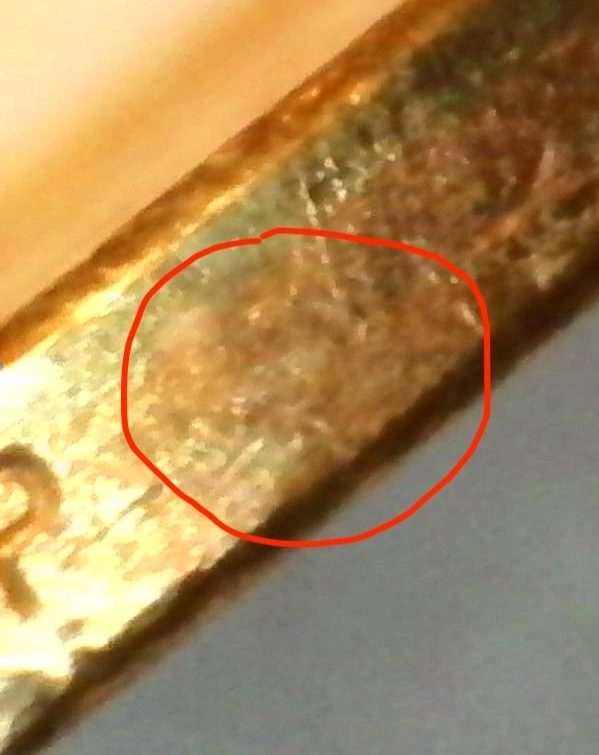
edges.both instances are incused lettering, yours may be an extra letter but hard to tell from the image provided.
Quote:True Dropped Letter Errors:A true dropped letter occurs when a piece of type (a letter or number) falls out of the canceling die, lands on the stamp, and is struck by the machine.
Appearance: The letter is usually incuse (sunken) or sometimes raised, appearing as a crisp, clear impression of a character.Orientation: The dropped letter can appear in any orientation—upside down, sideways, or perfectly aligned—because it fell randomly.Isolated: Usually, it is a single, isolated character or a small, coherent set of characters (a "dropped filling") that fell as a block.Depth: It has a consistent, sharp depth because it was created by a single striking force.
Extra Letters" (Jammed/Dirty Machines)Extra letters are typically caused by dirt, metal dust, or old ink ("grease") filling the die recess, which then falls out and lands on the paper Appearance: The extra letter is often shallow, blurry, or "ghostly" compared to the intended lettering. It may appear as a "mirror image" or a "shadow" next to a normal letter.Orientation: Often aligned with the existing, correct lettering because it came from the same machine.Repetition: These can sometimes be found in multiple places if the machine continues to produce them.Machine Doubling: If the letter is perfectly doubled, with the secondary letter being flat, shelflike, and shiny, it is usually
Machine Doubling (machine damage), not a true error, caused by the die shifting or bouncingDropped letter errors on
Presidential dollars are rare, specialized coin errors where grease or metal shavings clog the edge-lettering die, causing a letter (often from "TRUST" or "PRESIDENT") to fall out and be impressed onto the edge of the coin. While "missing edge lettering" is common, true dropped letters are rare and collectible, such as the
2009-P James K. Polk dollar example .









 Posted 05/07/2026 11:02 am


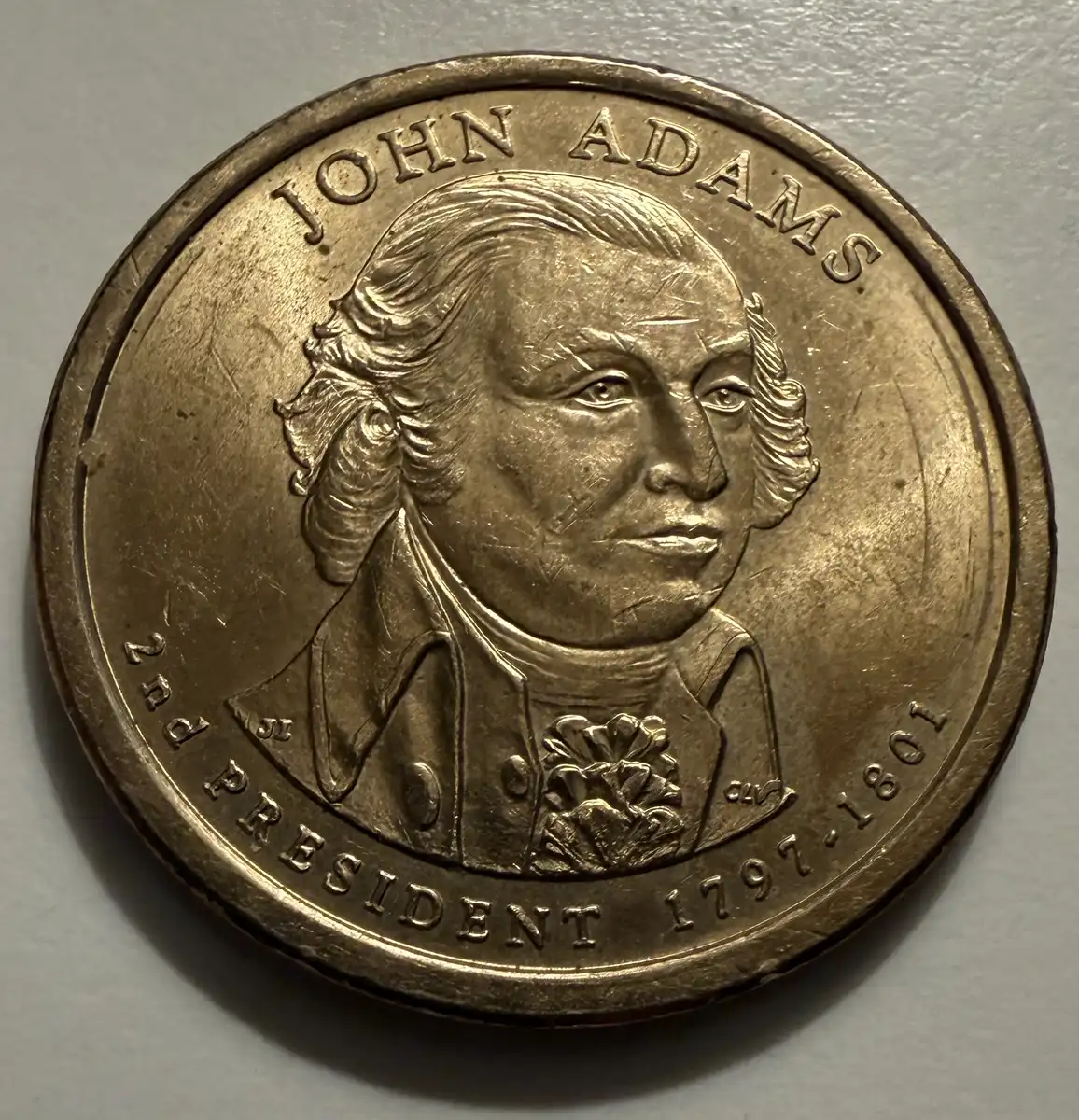
 To CCF! Looks like a well placed hit to me. I'm not seeing any letters or numbers.





