I posted this guy in the topic opener, but the image was partial since I made it with my microscope and it wouldn't completely fit in the field. I think it deserves a full post.
This 5 ouncer is Running Antelope, the Silver Chief. He has his own Wikipedia page:
https://en.wikipedia.org/wiki/Running_AntelopeQuote:
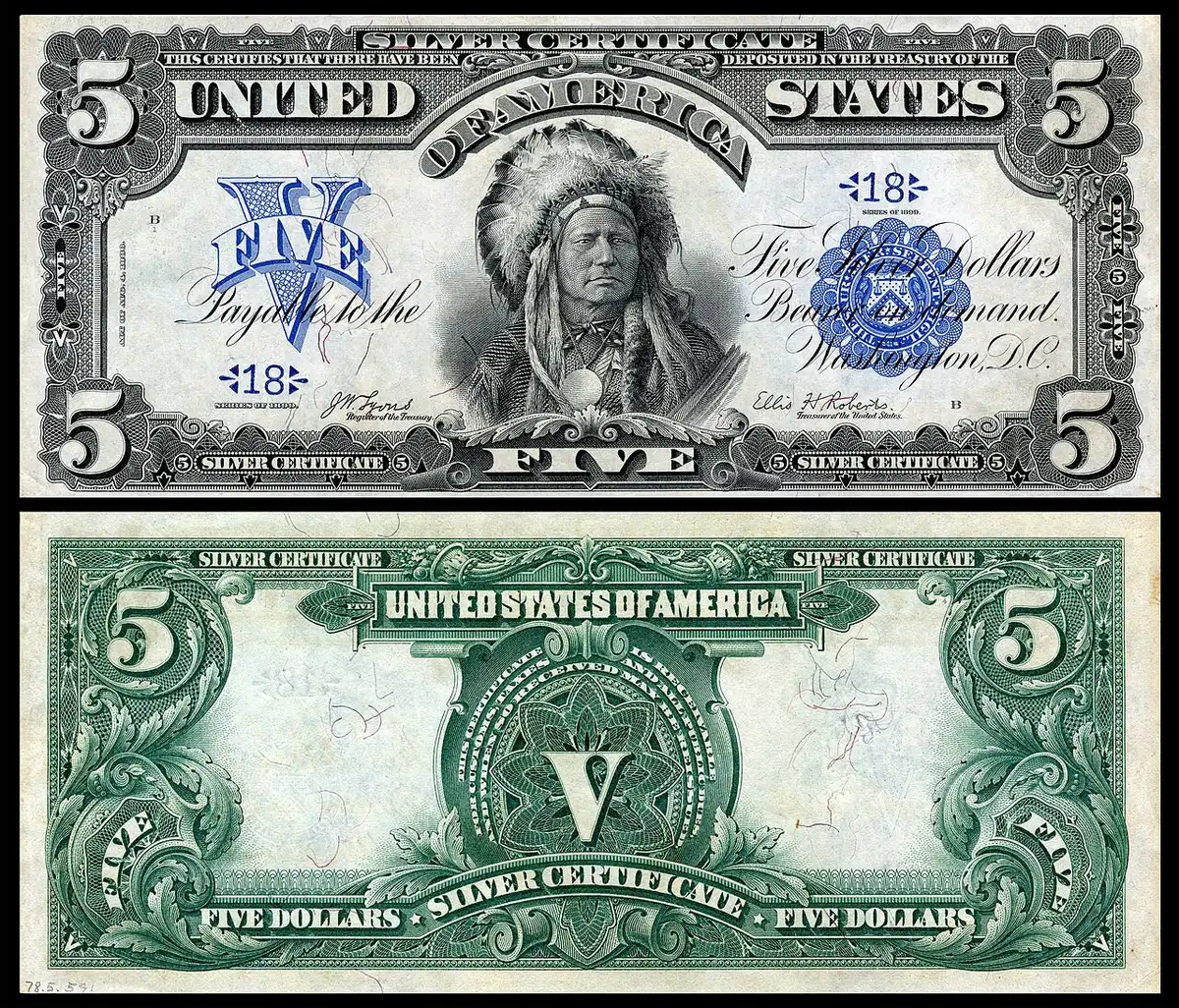
He is the only Native American depicted on U.S. paper money, but the picture caused ill will as the Series 1899 $5 Silver Certificate pictured Running Antelope as a chief wearing a Pawnee head dress as the original Sioux head dress was too tall for the engraving.
This round was originally supplied on a blue cardboard with a plastic bubble pack. The reverse was not visible unless removed from that packaging. I removed mine years ago, because the packaging was in such bad condition that I didn't consider it to be collectable. I placed it in a capsule where it has been since. And as you can see from the photos, the capsule has not escaped the ravages of time. But the round is fine.
The reverse is heavily toned, but doesn't look bad. You'd have to tell me what color the toning is, since I'm deficient in that department.
You might find more information with a web search for "5 ounce running antelope silver chief", but I haven't found a date range for its production, though I did find it probably isn't limited to a single year, and probably earlier than 1982. I don't know who produced them, either.
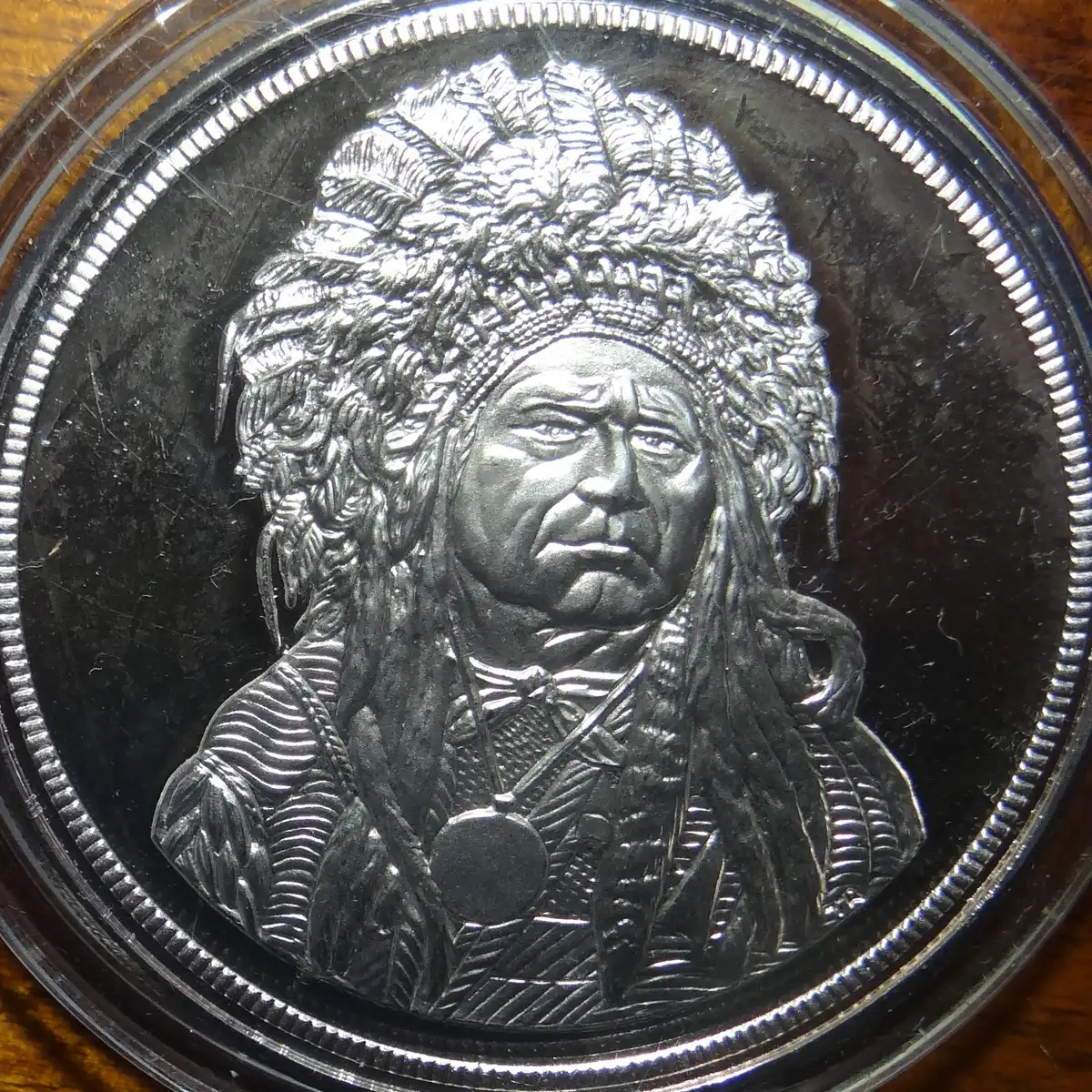
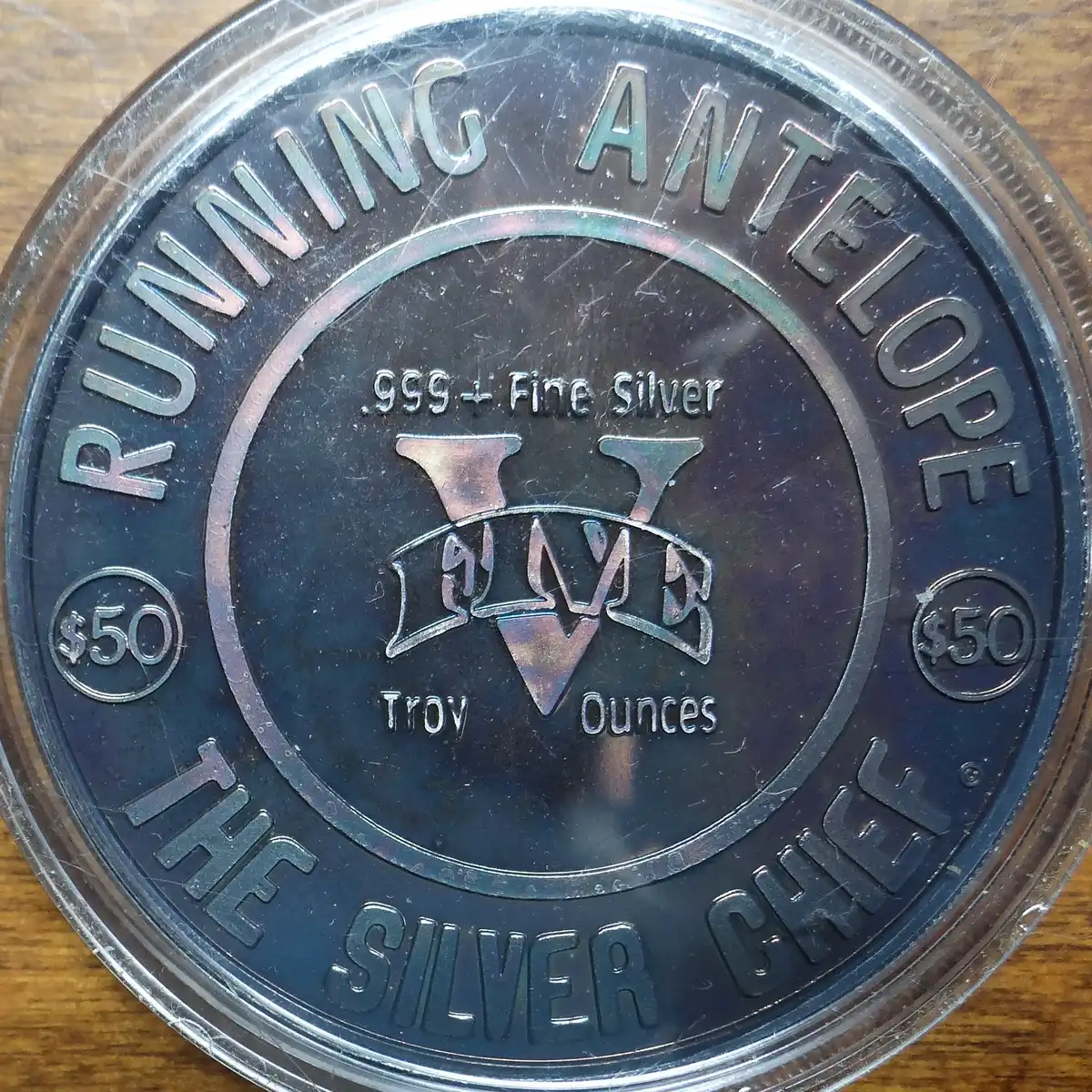
The only connection I know of between Running Antelope and silver is the fact that his image appeared on the US 1899 series $5 silver certificate (infamously with the wrong headdress), making him the "Silver Chief".
EDIT: I found this, a copy of the round's COA. IIRC, this was printed on the reverse of the blue cardboard that originally contained the round. And, apparently it was produced by the Chattanooga Coin Company. And the COA is dated November 6, 1985.
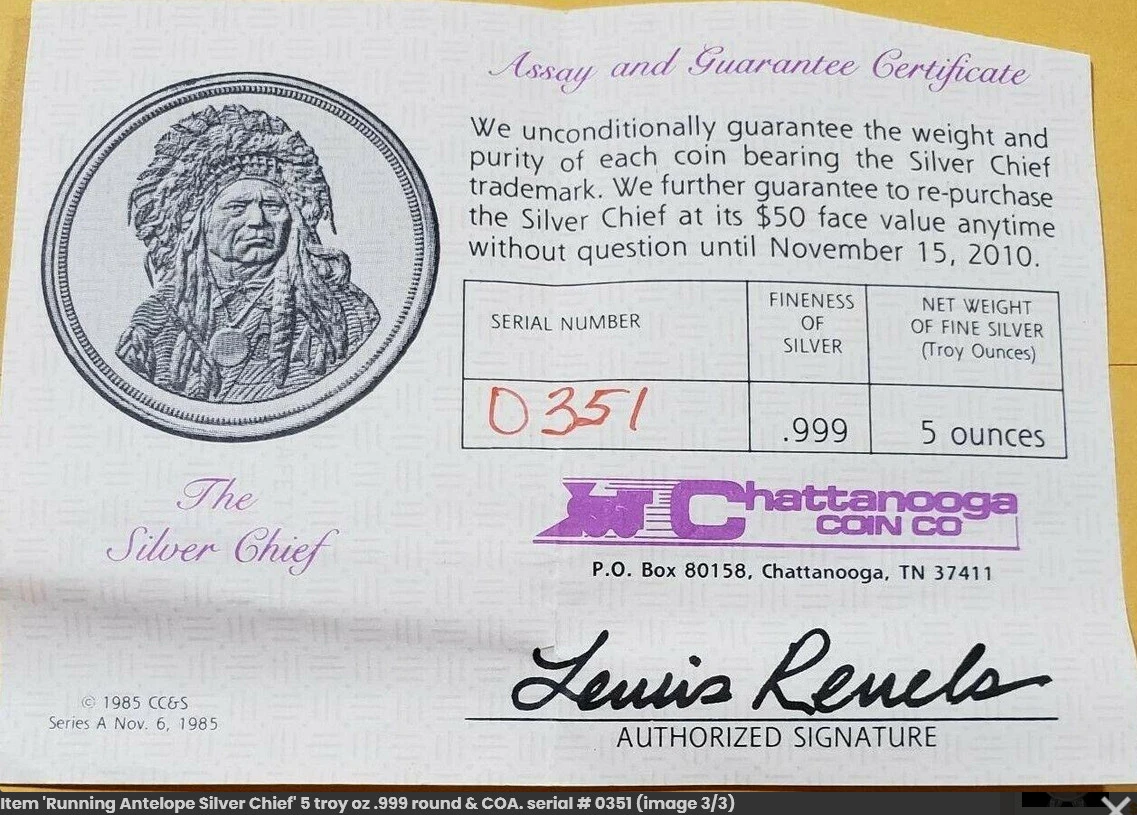
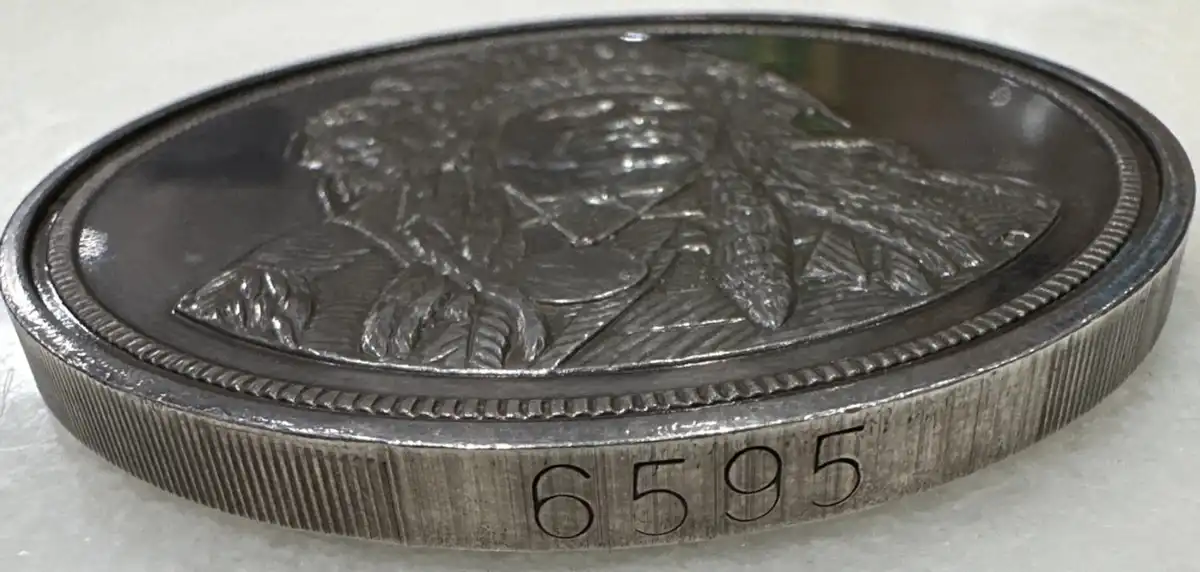
The Serial Number on my example is 0292. It is stamped on the edge. Here's an example currently offered on
ebay with a serial number of 6595, so I reckon mine is fairly early.








 First Page




 Posted 05/11/2026 7:41 pm