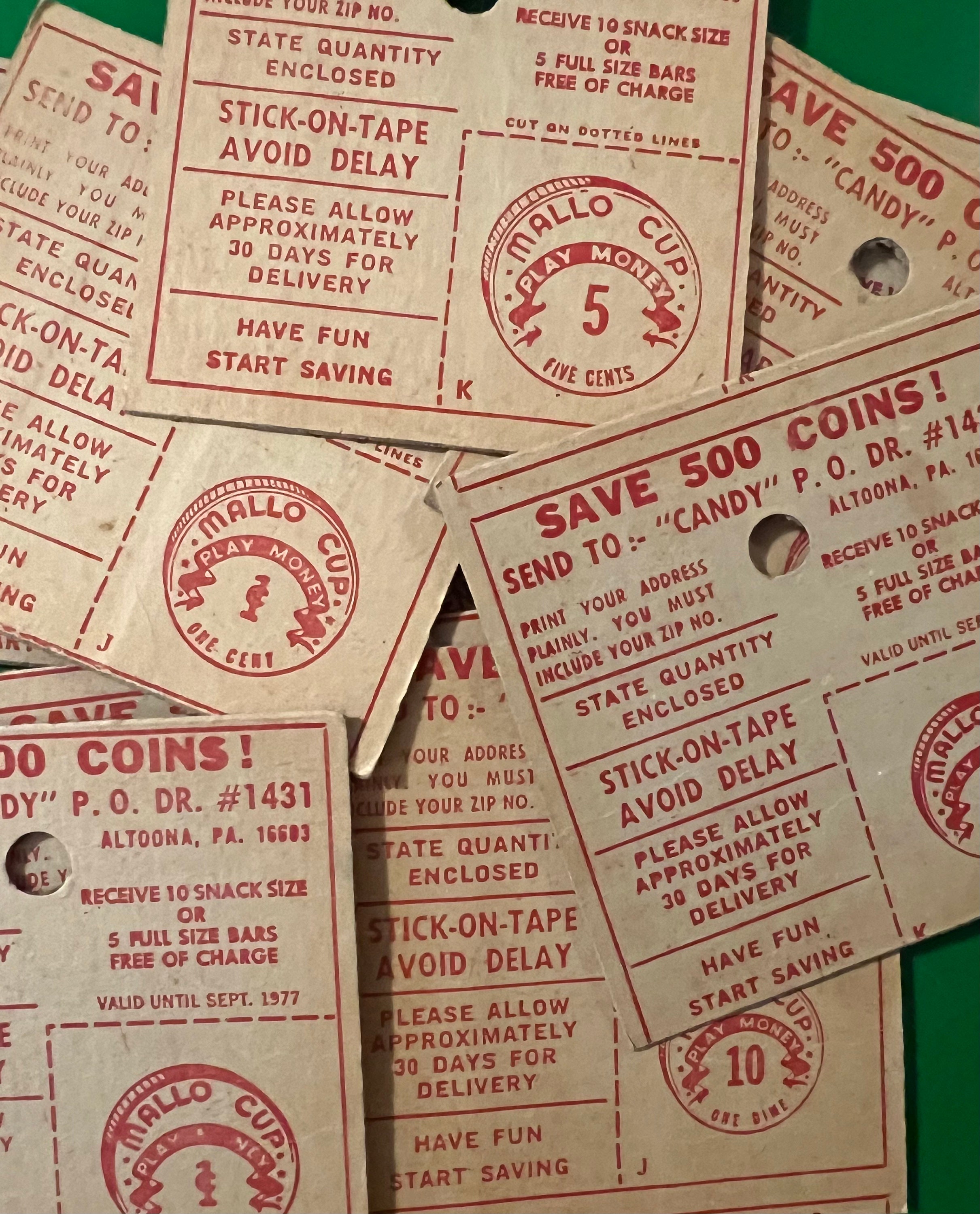
Thank for the links, jbuck. Always interesting to see contemporary news stories matched up with images of an issue of replica coins.
I think that
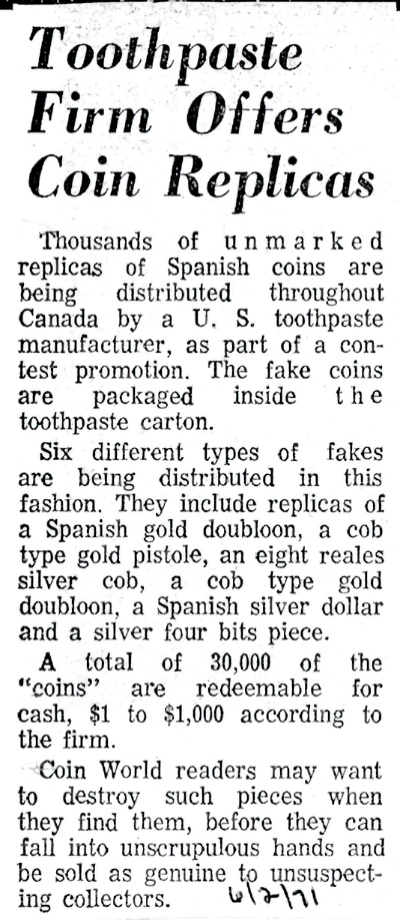
Coin World contributor was perhaps slightly more concerned than they needed to be about these fakes being passed off as genuine coins, given the nature of the "replicas" being just one-sided with modern inscriptions on the backs. I assume the author hadn't actually seen any of the replicas in person. On the scale of dangerous fakes, these would be way down the bottom of the list.
Nevertheless, in a different time and place, such "coins" would have been prohibited in the US under the 1973 Hobby Protection Act, as they do not clearly have "COPY" stamped on them. Though I do note, both from the article and from the bilingual nature of the replicas themselves, that the target market was Canada. The US laws would not have been violated if the replicas were neither manufactured in nor imported into the US.
As far as Canadian anti-replica laws were concerned, in 1970 they passed a law prohibiting the manufacture, sale or import of replica coins that were "intended to deceive". The law also only applied to "current coin", which 200 year old Spanish coins certainly would not have qualified as. So legally, I think these replicas were safe.
Quote:
But, interesting that Numista doesn't give a value, although it is assigned a rarity index of 94 on a scale from 0 to 100.
This is an excellent illustration of a maxim that every collector (of anything, not just coins) needs to know: "Just because something is rare, doesn't automatically make it valuable".
Market theory says that for something to be valuable, it needs two things: low supply (i.e. rarity) and high demand (lots of people want it). And for these replicas, the number of people actively wanting to collect them is considerably lower than the number of surviving specimens.
Plus, I'm not convinced that, objectively, they actually are all that rare. Most of Numista's members are quite strict "coin collectors" who would either not collect exonumia or not include it in their "main" coin collection and thus not waste time adding it to their Numista database. I suspect there's still quite a lot of these things out there, somewhere. The article mentions a number of 30,000 but this figure is just the "prize coins"; for the contest to be economically viable, the vast majority of the giveaway coins must have been the "non-prize coins", meaning that I suspect the mintages for each of the different replica types would have been well over 30,000. What sort of numbers? Well, unless Unilever still retains the records, we won't know for certain but we can have some fun with some statistical guesswork.
The population of Canada in 1971 was around 21.5 million people. Statistically, people (then and now) use an average of about 1.5 tubes of toothpaste per year. And Pepsodent seems to have had about a 3% market share of the Canadian toothpaste market at the time. So, this means there should have been about a million tubes of Pepsodent toothpaste sold in Canada that year. Assuming the promotion ran for half a year, and assuming numbers of each of the six coin types claimed in the article to be issued are about the same, that means each coin type would have a mintage of around 80,000.
Now, many of these replicas probably ended up in the trash, either thrown out by recipients or dumped when unsold expired toothpaste was disposed of. Some have also probably been destroyed if the replicas ended up getting "deposited" in a bank or tossed into a bag of coins dumped into a Coinstar. But there should still be plenty of these things, sitting around in people's "weird coin" jars or odds-n-sods drawers, and in coin dealer's scratchtrays. There should still be way more surviving replicas than people wanting to collect them. Hence, low value.
Don't say "infinitely" when you mean "very"; otherwise, you'll have no word left when you want to talk about something really infinite. - C. S. Lewis






 Posted 06/01/2026 3:21 pm