Well, I have an
update with images. ( as promised by the end of April )
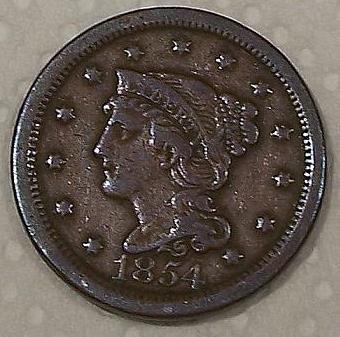
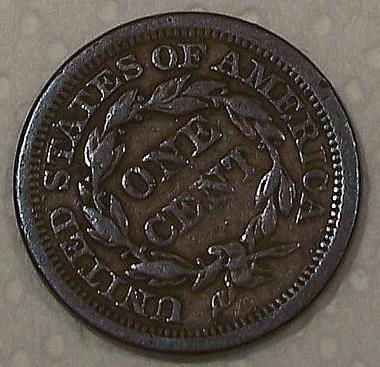
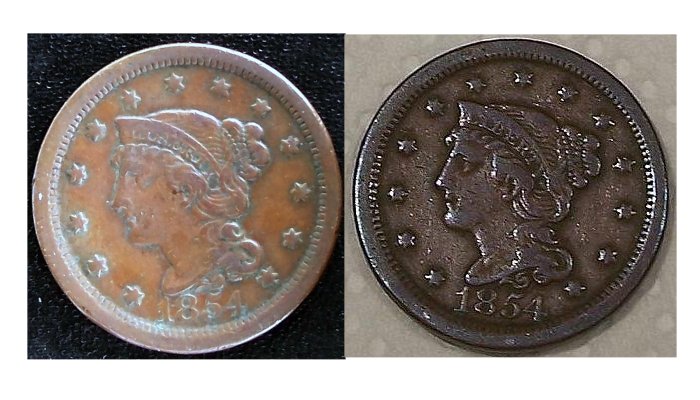
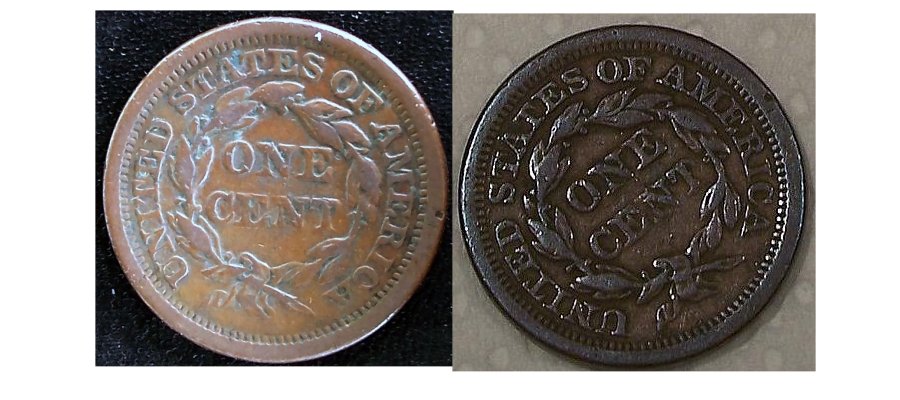
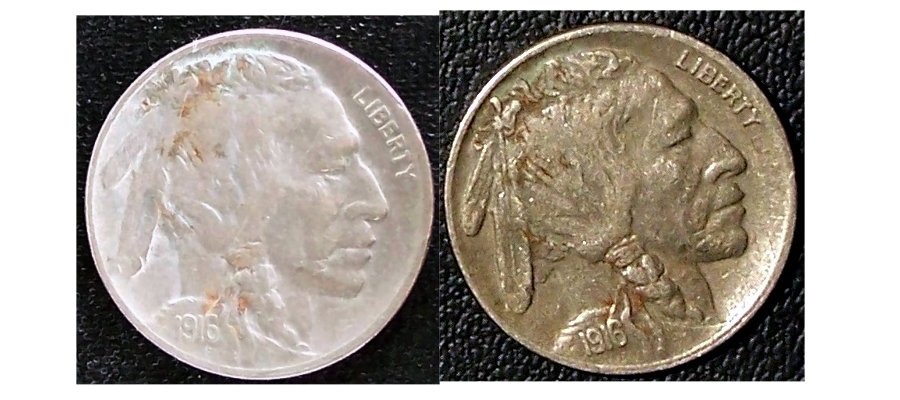
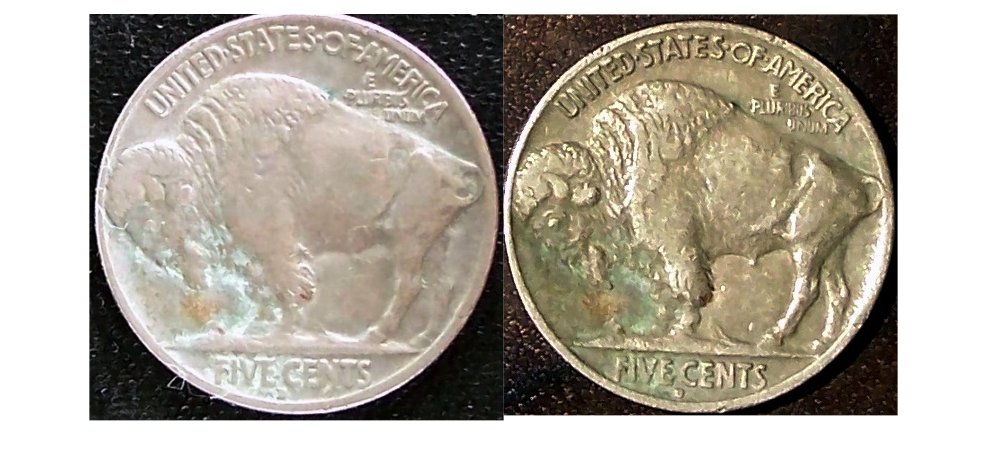
Here are initial before and final after images.
The theory was that BadThads Verdi-Care would reduce or eliminate verdigris and protect the coins without doing damage to the coins color, tone or patina. It would also tend to seal and protect the affective areas with an invisible micro layer.
The technique used was in two stages.
First I put a dome of the Verdi-Care on one side of the coin and let it soak there, held in place by the rim, for various amounts of time and observed. Times ranged between 30 seconds and 80 seconds per side depending on the amount of problem the coin had and how quickly I observed a reaction.
This produced some changes without any rubbing at all. I noticed that older coins tended to improve significantly and those that had a very light "more fresh" layers of verdigris. One
Memorial cent came completely clean of a green haze after step 1. (NOT SHOWN) and another turned white where it once had green. also NOT SHOWN.
I think it would be interesting to see if this would lift that white milky haze that appears on some of the 1970's US Proof coins we encounter. I plan to try this in the future.
These after images below are from a second treatment. As suggested, I used a microfiber cloth and this procedure.
I soaked these coins in Acetone overnight. I had a bowl of distilled water handy and my hairdryer.
( I was careful to NOT use the hairdryer near the ACETONE )
I pat dried the coins after a rinse in the D water, then dried them with the hairdryer. Then I put a few drops on the coins sides ad rubbed them gently and looked at them from time to time. I added another drop or so to moisten the cloth. The verdigris just about completely disappeared from the Large cent, the
Seated quarter the 2000 P nickel. The 2000 P nickel has a white surface though now that the green is gone and it is not desirable. The Buffalo has had a positive trade off. It looks rubbed but it looks better than it did with the deep corrosion of brown and dark green verdigris. It still remains but given a choice of the before and after, if I needed a 1916 D nickel and these were my only two to chose from, I would take the treated one for eye appeal. The half dollar had no change, as the problem it has is probably not corrosion but some kind of PVC adhesion in the crevices. The 1967 cent improved even more on the second round and I think a third try would eliminate all of the green. If this were a 1909 S vdb, I would go for it and rub it with the solution and the microfiber towel until it was all gone. It might look cleaned to some degree but I think considering the initial problem, it would probably be considered "restored".
A BU 1940S nickel still has a small spot under the bust but it is a dark spot now and "sealed" I would think where it once had a green spot on top.
ConclusionBadThads Verdi-Care is good stuff. I think that we need to be realistic here. Although my experimenting thus far is on a very small scale, my observations are apparent to me.
It is my guess that after some more experience with using it, I will be able to take a pretty educated guess on what coins will improve using it and which ones will probably remain with problems.
I think after getting better with this stuff, I might be able to cherry pick problem coins at quite the bargain price and improve them and have them gain value.
Therefore, I think whatever the cost, this "stuff" should pay for itself in raising the value of those uglier coins.
My 1854 Large Cent is significantly improved and I feel it has appreciated in value by at least $10.00 from what it was before this project.
Plans.
I have a number of nice nickels that lived in a whitman folder and have verdigris on the edges. That has to go and this should do the trick with the use of a microfiber cloth.
Test on hazy proof coins.
BEFORE


 AFTER
AFTER








 First Page
 Previous Page


 Posted 04/27/2010 5:51 pm