| Author |
 Replies: 31 / Views: 15,981 Replies: 31 / Views: 15,981 |
|
|
|
Pillar of the Community
 United States
539 Posts |
well I wasn't trying to start a turf war with this thread. I actually thought the chemistry lesson was vry interesting and remember why I didn't do to well in college on that subject!
Thanks also for pointing out that acidic and caustic are two different things. I know that sounds simple but I was not thinking that way about it. It does do an interesting number on aluminum, foaming action and all. I'm going to try it on a zinc coin tonight - I feel like the evil scientist these days...
|
|
Bedrock of the Community
United States
20753 Posts |
Quote:
I feel like the evil scientist these days...
Actually a great idea. Way to many times on the internet you'll hear someone say something that just isn't so. As long as you've got that MS70 stuff and not afraid to experiment with it, try it on all sorts of STUFF. I recommend instead of coins though you try similar materials such as a piece of Copper Pipes instead of pennies. Try some on a car's Chrome if you can find a car with some, that is. If you look around you'll notice a lot os items made of metals that could be used for such an experiment. |
|
Bedrock of the Community
United States
11951 Posts |
weavus135 I was hoping you would get the answer to the question you wanted. "what is in MS 70" Sometimes these threads will drift away from the original intent. I know there are times when you can find out the active ingredients of a product, and it never hurts to ask. My spin on MS 70 is that is it does a good job for it's intended purpose. There are coins out there that have a lot of .. lets call grime... coins that are not really attractive but may be uncirculated and have good detail. Just take your time with this product and give it a try. I have a Jefferson War Nickel, that I wish I had a before picture of. But... I do have a after picture. 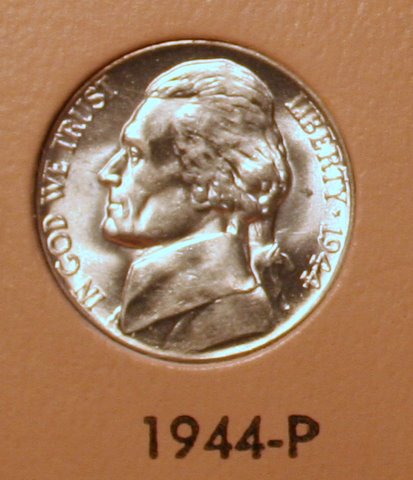 |
|
Bedrock of the Community
United States
17884 Posts |
Quote:
6Na + 6H2O reacts to give 6NaOH + 3H2, which comes off as a gas, the sodium hydroxide stays in solution. Where it is again available to react with more aluminum. Quote:
yeah I do remember getting some on my fingers from the lid and it felt soapy and slick like feeling That is one of the characteristics of basic solutions, they are slippery. Although with the MS70 it probably comes more from the detergents. Something that most people don't seem to realize is that acids are not the only corrosive solutions. Bases are also corrosive and the stronger the base the more corrosive it is. |
|
New Member
United States
1 Posts |
I realize this is an old post I'm replying to but no one had really answered it the current formulation of MS-70 is 2-Butoxyethanol (111-76-2) and Potassium Hydroxide liquid (1310-58-3) the butoxyethanol is the primary ingredient found in Purple Power which is sold at stores like Walmart as a degreaser in the auto section. its about $5 per gallon there. The Potassium hydroxyde (KOH) is also known as potash. it is also used in soap making and is commonly known as lye. since the goal of the mix should be to keep Ph as close to neutral as possible I find a mix ratio of 20-1 (butoxy-to-Pot) to do the trick |
|
Pillar of the Community
United States
4211 Posts |
 shinycoins. That answers it pretty well. |
|
Pillar of the Community
 United States
8056 Posts |
So, an organic solvent plus lye.
Not what one would normally consider as a soap or detergent (which, as pointed out previously, are historically the carboxylate salts of sodium or potassium).
Though it sounds like the combination acts that way.
Edited by tdziemia
03/25/2018 10:52 pm
|
|
Bedrock of the Community
United States
17884 Posts |
I believe lye is sodium hydroxide. Also used in soap making and in drain cleaners such as Drano which was a dry mixture of lye and pieces of aluminum. You poured it down your drain, the water dissolved the lye, it would react with the aluminum producing heat and gas to help "melt" clog with the expanding gas helping to push it down the drain. If you're interested the MSDS for MS-70 can be found here http://www.translinesupply.com/PDF/...530.MSDS.pdfEdited by Conder101
03/26/2018 11:10 am
|
|
Moderator
 United States
196100 Posts |
to the Community, shinycoins! |
|
Pillar of the Community
United States
1314 Posts |
Never under estimate the power of chemicals. 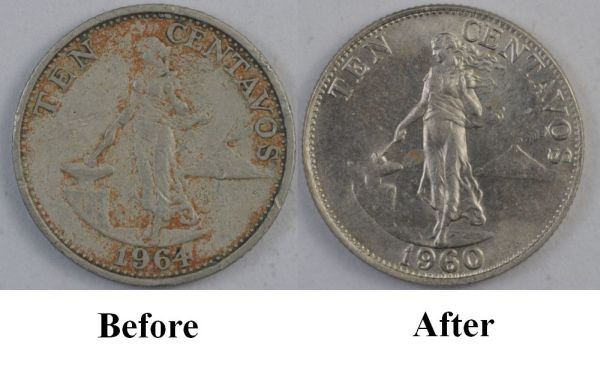 |
|
Pillar of the Community
United States
8056 Posts |
Quote:
If you're interested the MSDS for MS-70 can be found here Thanks, @conder. Thus, the answer is revealed! The contents: - 2- butoxyethanol (as stated upthread, an organic solvent also present in oven cleaners) - potassium hydroxide - sodium gluconate - sulfonate salts (also used in detergents, shampoos, etc.) Strong alkalis, whether sodium or potassium hydroxide, can be used to decompose organic matter (even corpses). So it looks like a formulation designed to remove organic material. Noteworthy is that the MSDS warns against using the product on aluminum, zinc or tin (and don't forget that bronze typically contains significant amounts of tin). Quote:
Never under estimate the power of chemicals. Indeed! Edited by tdziemia
03/27/2018 08:59 am
|
|
Bedrock of the Community
United States
10065 Posts |
Quote:
Strong alkalis, whether sodium or potassium hydroxide, can be used to decompose organic matter (even corpses). The aforementioned slippery feel is demonstrating this fact. How much squash could a Sasquatch squash if a Sasquatch would squash squash? Download and read: Grading the graders Costly TPG ineptitude and No FG Kennedy halveshttps://ln5.sync.com/dl/7ca91bdd0/w...i3b-rbj9fir2 |
|
Bedrock of the Community
United States
17884 Posts |
Quote:
Never under estimate the power of chemicals Yes, look at how those chemicals change the date! |
|
Bedrock of the Community
13014 Posts |
Quote:
Yes, look at how those chemicals change the date! That might be the best comment ever |
|
Bedrock of the Community
United States
94367 Posts |
I'm sold. Where can I buy it, and can you choose the new date?
|
| |
Replies: 31 / Views: 15,981 |








 First Page


 Posted 11/15/2010 9:19 pm


