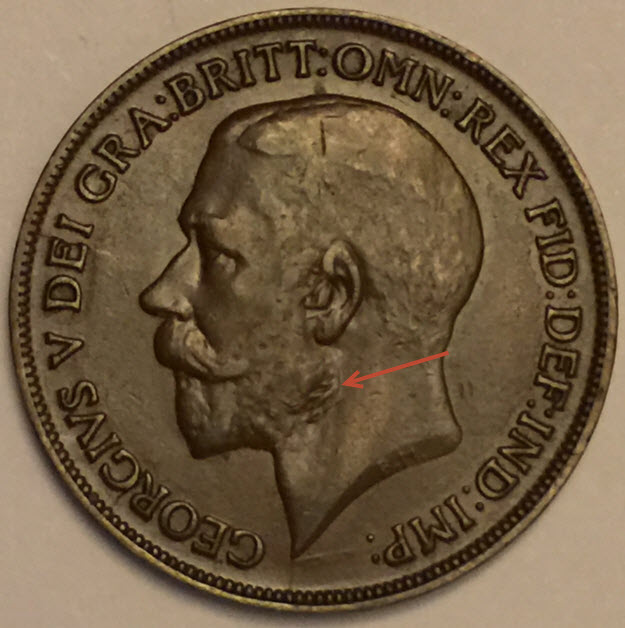
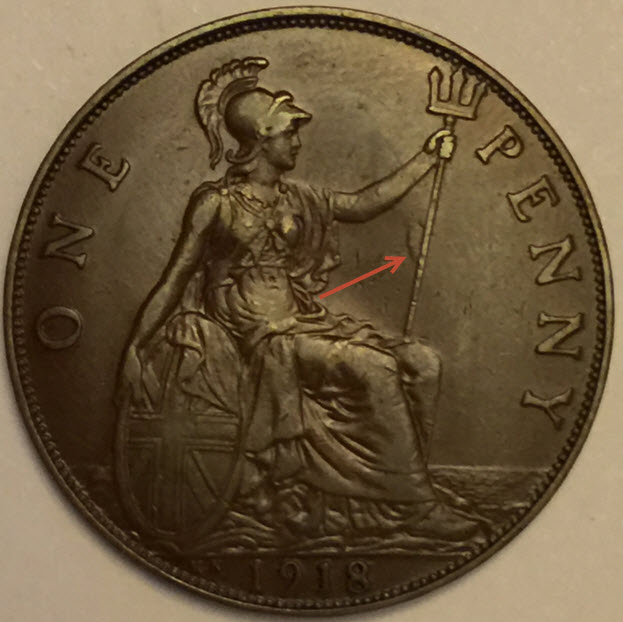
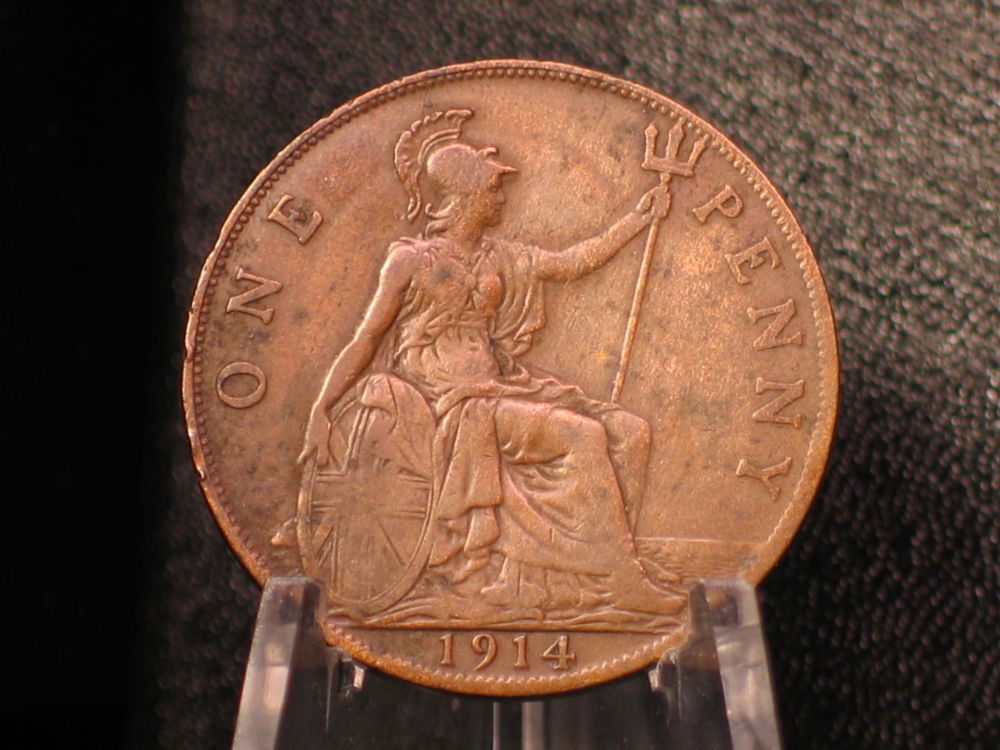
I am looking through some British pennies that I have and noticed a peculiar arc on the reverse of a 1914 Penny. I tried to find some overlays, however; all I could find was a reference to a "Norton Die Clash". It looks like that is what I have.
I know what a "die clash" is but can anyone explain what a "Norton Die Clash" is? Any opinions on value?
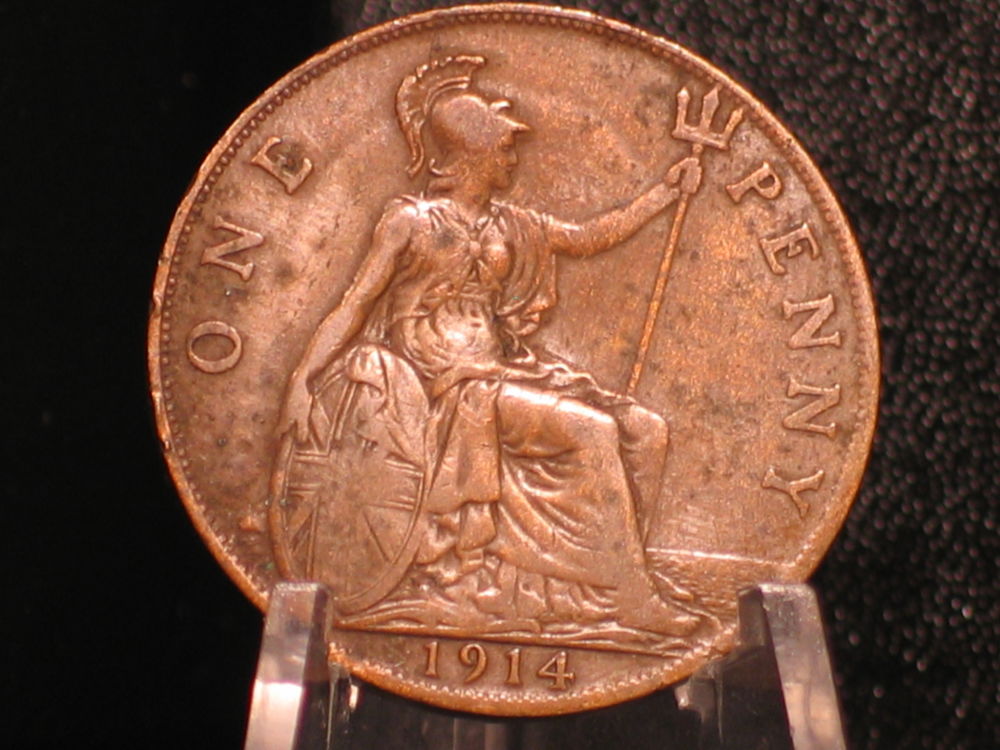
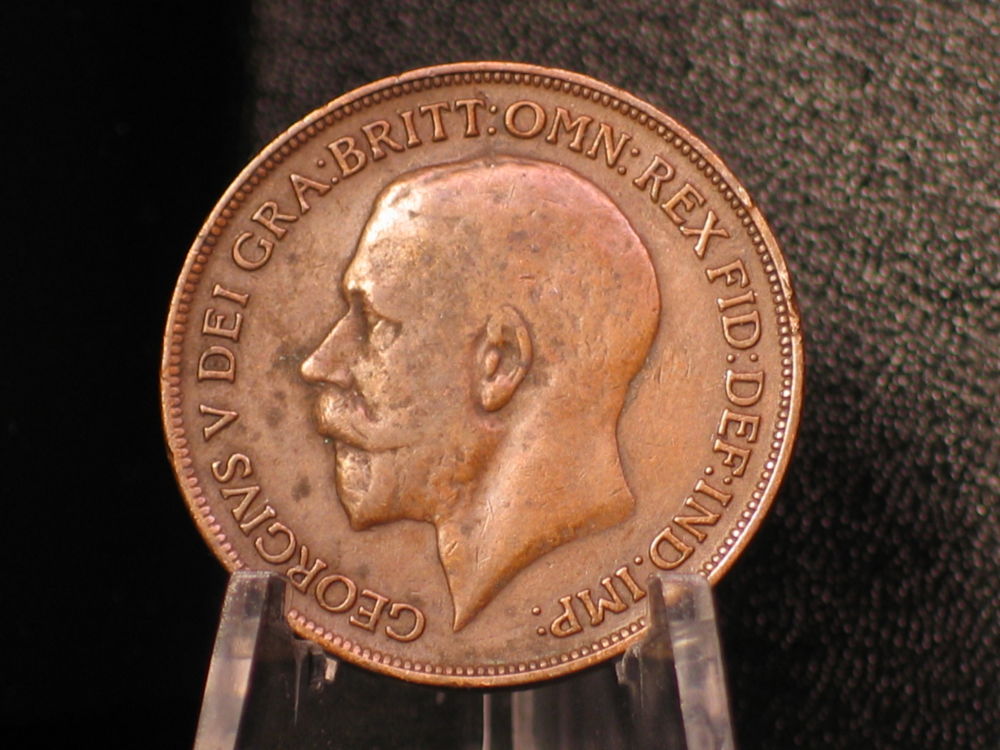
Not a die clash, but rather a phenomenon known as "ghosting".
This occurs due to the high relief and large surface area of George's bust on the obverse taking up so much of the metal in the coin that it actually causes the relatively shallow-relief reverse side to cave inwards, leaving a "ghost" impression of the bust on the reverse side. It's extremely common to see on George V pennies from 1911 to 1922 before the bust was modified to a lower relief, and is not worth additional premium.
And the Norton die clash (although I'm not aware of it being called that) might refer to the die clash you can see on the 1918 kings norton pennies, among other dates. There is a clash on the trident and also on the neck of George, and this is referred to as 'birds foot flaw' as it resembles a birds foot.
Disclaimer: While a tremendous amount of effort goes into ensuring the accuracy of the information contained in this site, Coin Community assumes no liability for errors. Copyright 2005 - 2026 Coin Community Family- all rights reserved worldwide. Use of any images or content on this website without prior written permission of Coin Community or the original lender is strictly prohibited. Contact Us | Advertise Here | Privacy Policy / Terms of Use









 Posted 11/20/2015 02:17 am