| Author |
 Replies: 4,683 / Views: 276,784 Replies: 4,683 / Views: 276,784 |
|
|
|
Pillar of the Community
United States
9395 Posts |
1504 -- Brandenburg, 1 groschen:   |
|
Pillar of the Community
Belgium
1185 Posts |
Quote:
1504 -- Brandenburg the first time we see the strange 4 symbol (I may have missed one the last week or so); and we may see more as it is often used on coins of the 15th and early 16th century what are the roots of this symbol? |
|
Pillar of the Community
United States
1186 Posts |
That is the old Gothic 4 that's seems to have transitioned to the modern 4 in the early 1500's.
|
|
Moderator
 United States
34558 Posts |
Mine has the old version of the number 4 too. Here is a Patard from the Netherlands Duchy of Brabant dated 1504 AD and minted at Maastricht. It was holed at some point in the last 500ish years, possibly with an old square nail. 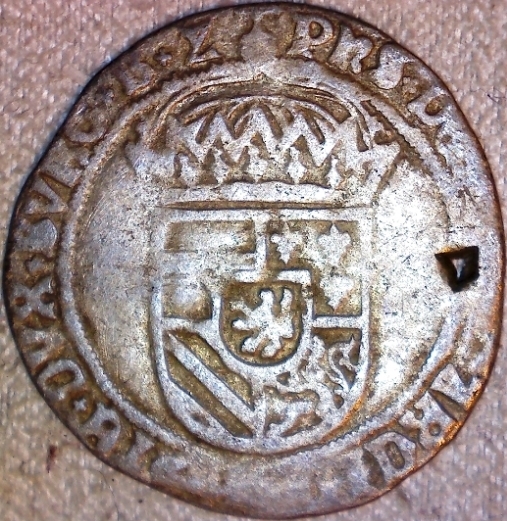 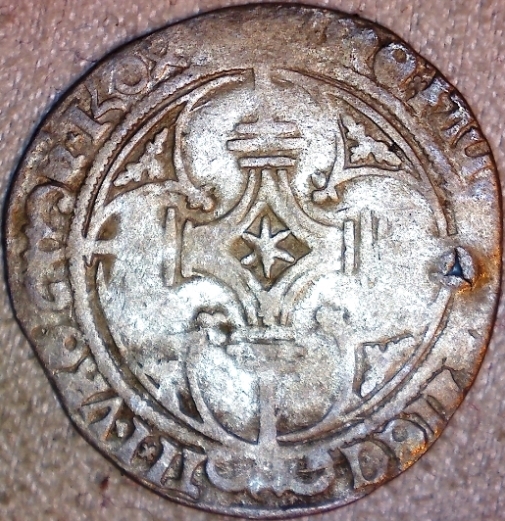 "If you climb a good tree, you get a push."
-----Ghanaian proverb
"The danger we all now face is distinguishing between what is authentic and what is performed."
-----King Adz
|
|
Pillar of the Community
 United States
8056 Posts |
Quote:
the first time we see the strange 4 symbol (I may have missed one the last week or so) Quote:
That is the old Gothic 4 that's seems to have transitioned to the modern 4 in the early 1500's. For 1514 we had two types posted. The Hungarian denar had this old style 4, but the Lithuanian half groat (several posted) had the modern 4. I think by the 1490s we will have a larger statistical sample on those 4 s  And I must comment that the detail on pepactonius' coin is very nice! Edited by tdziemia
06/04/2018 9:38 pm
|
|
Pillar of the Community
United States
9395 Posts |
1503 -- Brandenburg, 1 groschen:   |
|
Moderator
United States
34558 Posts |
Here is another Groschen of the Electorate of Brandenburg dated 1503 AD (but this one is from the Berlin Mint). I have it attributed as Saurma 4696. 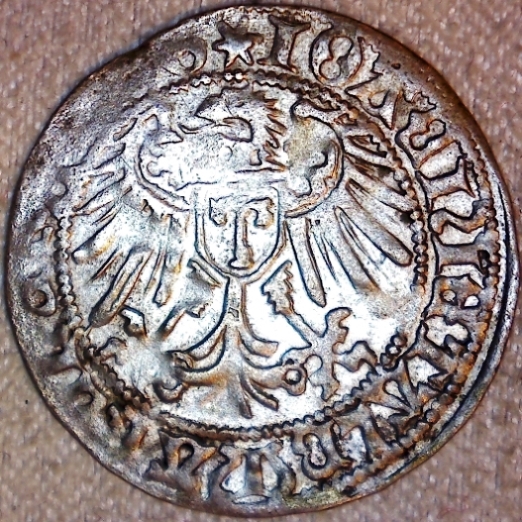 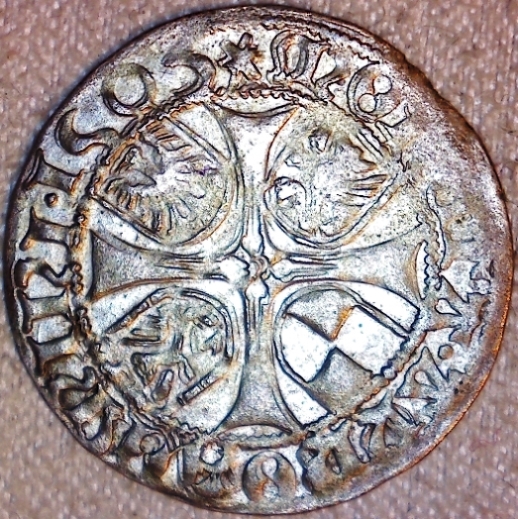 "If you climb a good tree, you get a push."
-----Ghanaian proverb
"The danger we all now face is distinguishing between what is authentic and what is performed."
-----King Adz
Edited by Spence
06/05/2018 8:12 pm
|
|
Bedrock of the Community
United States
79259 Posts |
That's very cool Spence! It must be very rare to get one of these.
Errers and Varietys.
|
|
Pillar of the Community
United States
8056 Posts |
1502 Duchy of Brabant, Toison d'Argent. 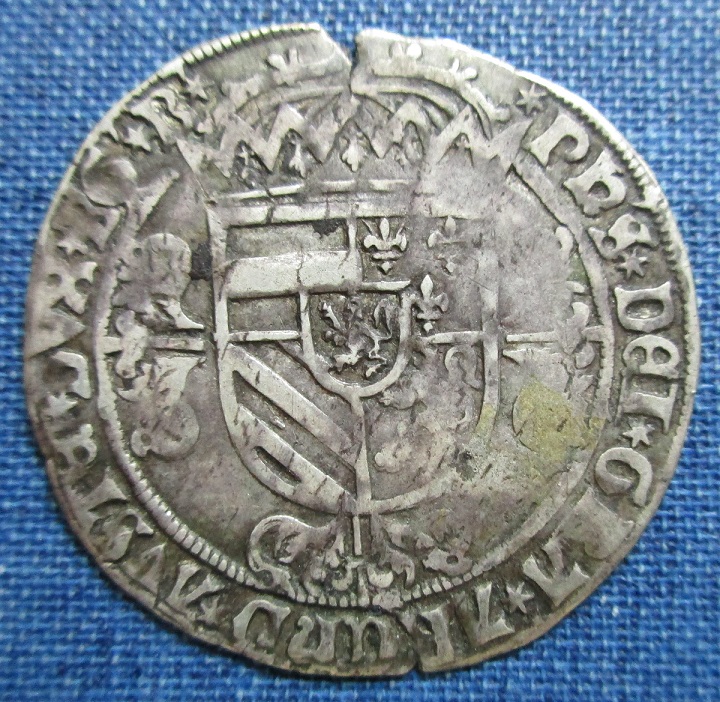 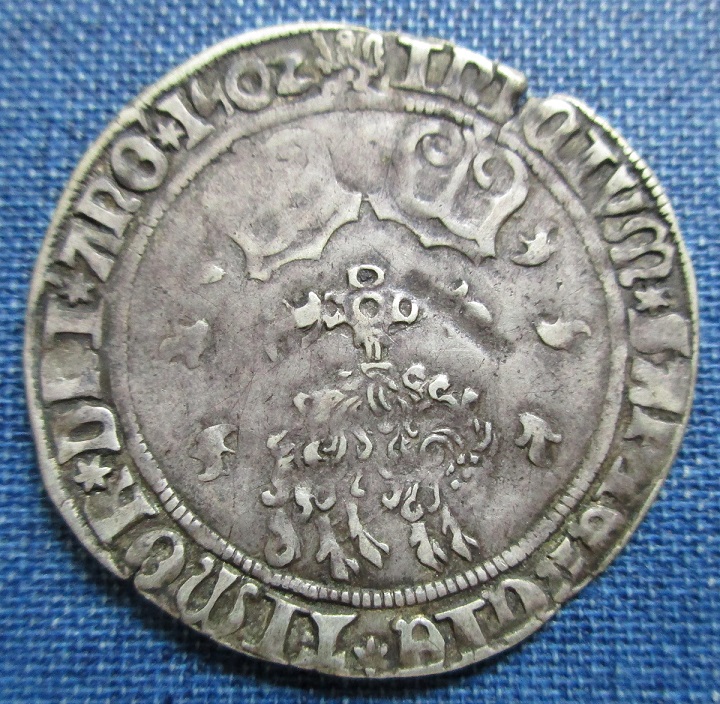 |
|
Pillar of the Community
United States
9395 Posts |
1502 (MCCCCCII) -- Gottingen, 1 kortling:   |
|
Pillar of the Community
Belgium
1185 Posts |
again a series of photogenic silver pieces  the two groschens from Brandenburg are very nice as is the Kortling and the Toison d'Argent @tdziemia Quote:
1502 Duchy of Brabant, Toison d'Argent indeed the OBV legend reads DUX BO B but I am confused by the lion mintmark, which is used by Flanders in what mint was this coin produced? |
|
Pillar of the Community
United States
2643 Posts |
Brandenburg 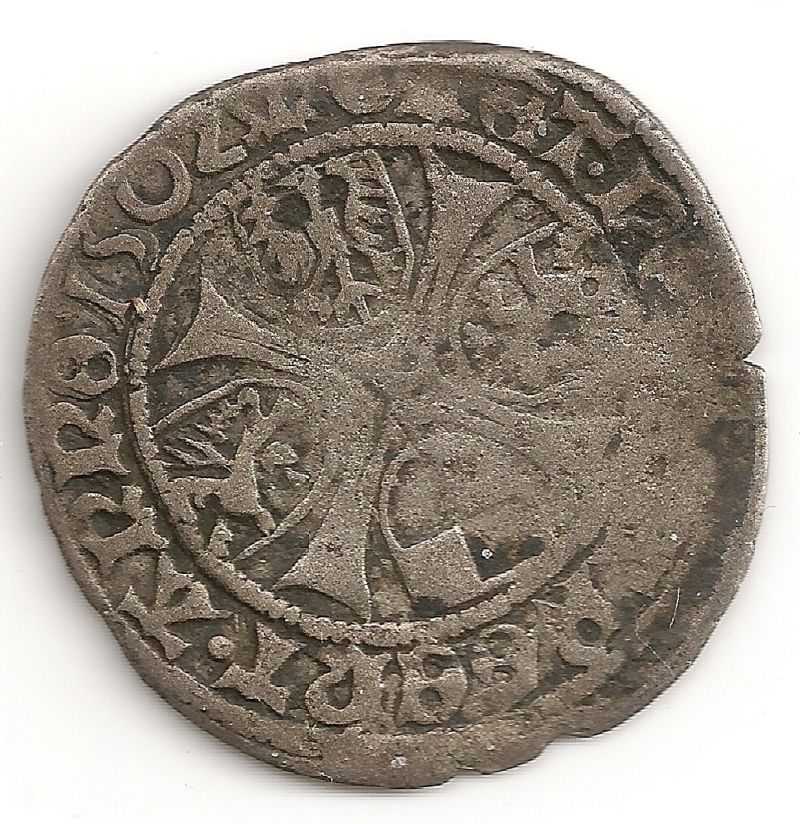 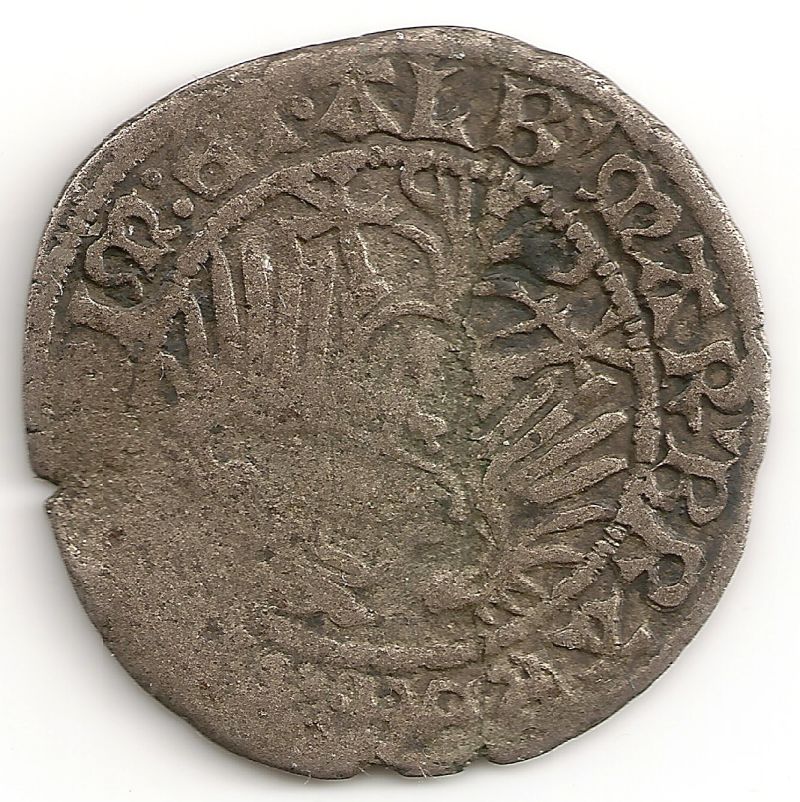 |
|
Moderator
 United States
195964 Posts |
Looking good! We are getting closer and closer to the magical 1487 goal.  |
|
Moderator
United States
34558 Posts |
Thanks @E&V! To add to the visual patois of 1502-dated coins posted today, here is a Witten from the German City State of Lünenburg. It is attributed as Saurma 3450 and Jesse 594. Interestingly, it has an archaic form for the 5 in the date. 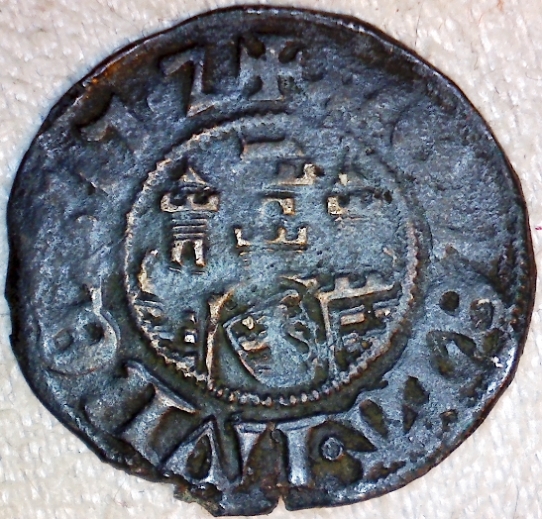 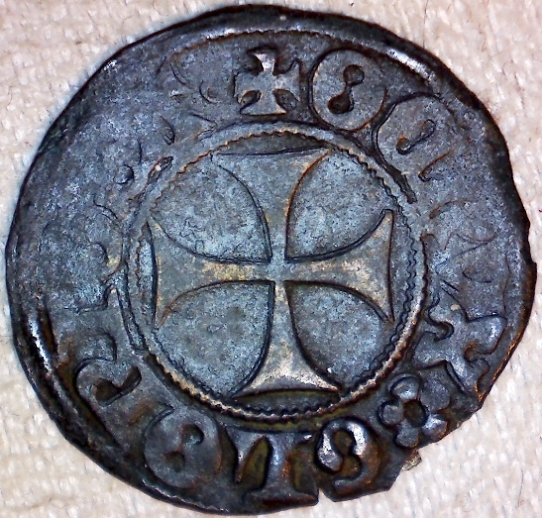 "If you climb a good tree, you get a push."
-----Ghanaian proverb
"The danger we all now face is distinguishing between what is authentic and what is performed."
-----King Adz
|
|
Pillar of the Community
United States
8056 Posts |
Quite a bountiful harvest for 1502! I like the Roman date on the Gottingen coin (when did "D" for 500 come into use?) Quote:
but I am confused by the lion mintmark, which is used by Flanders
in what mint was this coin produced? Good question. The coin was purchased from Elsen, and they attributed it as a coin of Brabant, and the mint as Antwerpen/Anvers. I have another date of the same type, from another source, who also give the mint as Antwerp. However, in another thread, I posted a Brabant florin of the same period (1500-1506) minted at Antwerp that uses the hand as mint mark. Is it possible that the lion and the hand were both used during this period? Edited by tdziemia
06/06/2018 9:24 pm
|
| |
Replies: 4,683 / Views: 276,784 |








 First Page
 Previous Page


 Posted 06/04/2018 4:09 pm


