







 ....
....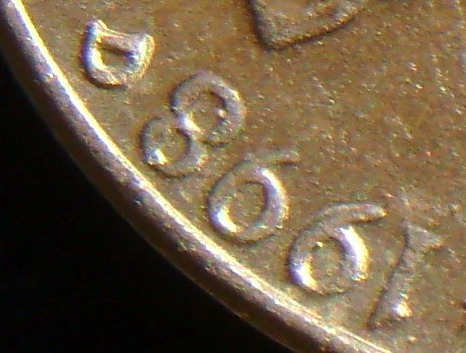 1998-DDJefferson.jpg


 Posted 02/25/2008 3:51 pm


On the Nickel image I'm not sure what your referring to? Die wear show excessive on Nickels as the planchet is harder and wears the dies faster. But I can tell what for sure you are seeing.
Machine Doubling can appear on one device or many. Sometimes on Obverse or reverse. Sometimes on both. If you have a OBW roll of coins, you will notice on machine doubled ones coming from the same die, varying degrees of doubling. So stronger, others weaker. The play of the machine determines on each strike how they will look. Normal/minor/major. Common happenings, you soon figure out how you can tell the difference. On a post 1990 doubled die you can have both the date and mint mark doubled that was hubbed into the die that way. But most of the time when you see the date and mint mark doubled in the same direction, it is Machine Doubling. There is a 1996-D doubled die that is a doubled die with the mint mark doubled, but these cases are rare occurrences.
A hub doubled die will have some evidence that it is not machine doubled. Notching, wider letters, or doubled letters with separation. Usually machine doubled coins the devices are the same size, but the metal is moved to make an appearance of Machine Doubling. Sometimes we want to hold on dearly thinking we have a machine doubled coin and it is nothing. Other times we have what we think is nothing and is a variety. Knowledge is the beginning of wisdom. Reading here, asking questions and others sharing is what makes this hobby so interesting. Hands on varieties will help a lot with recognizing them from machine doubled coins. So purchasing the different types of varieties will help a lot. Seeing what makes it a variety in hand helps with what you've learned. You train your eye to spot the difference and soon you can tell the difference. It just takes time.
OK, another question?
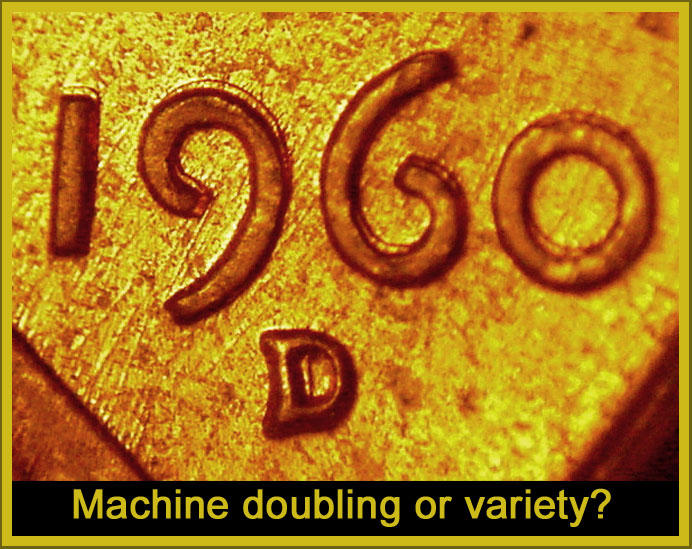
What do you think?
Machine Doubling can appear on one device or many. Sometimes on Obverse or reverse. Sometimes on both. If you have a OBW roll of coins, you will notice on machine doubled ones coming from the same die, varying degrees of doubling. So stronger, others weaker. The play of the machine determines on each strike how they will look. Normal/minor/major. Common happenings, you soon figure out how you can tell the difference. On a post 1990 doubled die you can have both the date and mint mark doubled that was hubbed into the die that way. But most of the time when you see the date and mint mark doubled in the same direction, it is Machine Doubling. There is a 1996-D doubled die that is a doubled die with the mint mark doubled, but these cases are rare occurrences.
A hub doubled die will have some evidence that it is not machine doubled. Notching, wider letters, or doubled letters with separation. Usually machine doubled coins the devices are the same size, but the metal is moved to make an appearance of Machine Doubling. Sometimes we want to hold on dearly thinking we have a machine doubled coin and it is nothing. Other times we have what we think is nothing and is a variety. Knowledge is the beginning of wisdom. Reading here, asking questions and others sharing is what makes this hobby so interesting. Hands on varieties will help a lot with recognizing them from machine doubled coins. So purchasing the different types of varieties will help a lot. Seeing what makes it a variety in hand helps with what you've learned. You train your eye to spot the difference and soon you can tell the difference. It just takes time.
OK, another question?
What do you think?
Edited by coop
02/25/2008 3:53 pm
02/25/2008 3:53 pm


