| Author |
 Replies: 1,299 / Views: 153,547 Replies: 1,299 / Views: 153,547 |
|
|
|
Valued Member
United States
343 Posts |
Adding to the existing cautions about TPG census figures... I've observed that tokens with TOKEN in the recorded grade (e.g."Token MSxx") often do not appear in the overall NGC census. That was true of the "before" token in the post above. There are at least eight high grade Canadian tokens designated proof by NGC that I suspect are absent from the NGC census for this reason. Buying a top pop? Maybe. Finally, here's a Robins token that is absent from the census for reasons unknown. 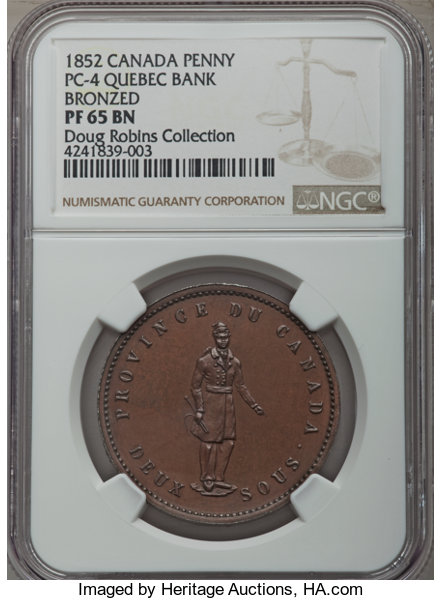 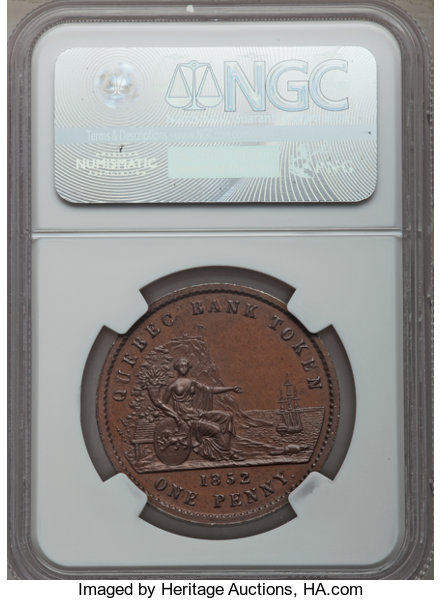 |
|
Pillar of the Community
Canada
2786 Posts |
nice one Yarm that one will add to my shock over the piece/prices posted by AINS... Q: can one request a proof or specimen designation when submitted to a TPG? NGC first deemed this MS, then half a dozen or so years later PR ?!?! only a slight difference (10½ times) in the value after all... |
|
Valued Member
Canada
222 Posts |
Quote:Wade: Q: can one request a proof or specimen designation when submitted to a TPG? @Wade:To my knowledge, yes, but there is no guarantee that you will have this attribution. But for the people I know who had this type of certified tokens to do, that's how they did it. Especially since NGC and PCGS are not very good at detecting Proof tokens from Heaton Mint. This is not always obvious, and they often make mistakes of this kind. The example I mentioned earlier is far from unique. I'm sorry if my English isn't perfect... I'm learning a little more every day.
Edited by ainsivalavie
02/15/2019 6:08 pm
|
|
Valued Member
Canada
222 Posts |
Quote:Yarm: Adding to the existing cautions about TPG census figures... I've observed that tokens with TOKEN in the recorded grade (e.g."Token MSxx") often do not appear in the overall NGC census. That was true of the "before" token in the post above. There are at least eight high grade Canadian tokens designated proof by NGC that I suspect are absent from the NGC census for this reason. Buying a top pop? Maybe. Finally, here's a Robins token that is absent from the census for reasons unknown. @Yarm:Since I have worked with the most reputable TPG population reports for my second ongoing book on Bank of Upper Canada tokens, I had the opportunity to explore these for several dozen hours. For NGC, although it is true that in some cases tokens are not present in their census, in several other cases it is rather a classification problem on their part. Indeed, it is not uncommon for them to create two different categories for the same issue, sometimes even more. Thus, for some tokens, there may be a specific category for so-called " Bronzed" tokens (Proof/Specimen). While for others, it is only a lack of knowledge of NGC for this type of coins. Thus, for the 1/2 Penny 1857 Specimen (PC-5D / Breton #720) we find the categories:  « 1857 PC-5D BANK OF UPPER CANADA» and « 1857 PC-5D HEATON STRIKE BANK OF UPPER CANADA» While all the tokens for this year were strike by Heaton Mint. This is just one example among many. In fact, I would like NGC to explain to me the difference between the «Proof» and «Specimen» designation for this same series of tokens. Because personally, I have not been aware of a multitude of creation processes for this type of non circulation tokens (Excluding the distinction between The Royal Mint and Heaton Mint process, and in some cases the process to have a " Bronzed" type finish). Of course, I can be mistaken, there is little information available on this particular subject for this period of time, and I didn't have the opportunity so far to observe in person a very large number of «Proof/Specimen» tokens. In short, to me, it only adds to the confusion from NGC. PCGS and ICCS also have a problem of this kind, but it is less important in my experience (At least for this type of coins). But ANACS and ICG, it's terrible. And unfortunately, the last time I asked them, CCCS does not have any data compiled for colonial tokens. I was able to create one with the data I was able to collect, but it remains very incomplete. I'm sorry if my English isn't perfect... I'm learning a little more every day.
Edited by ainsivalavie
02/16/2019 05:55 am
|
|
Valued Member
Canada
222 Posts |
Quote:
Ainsivalavie: And unfortunately, the last time I asked them, CCCS does not have any data compiled for colonial tokens. I was able to create one with the data I was able to collect, but it remains very incomplete. For those interested, I compiled a population report for the CCCS certified colonial tokens, for which I had the information available through my archives. This one is obviously incomplete, but since CCCS does not produce any compilation for this type of coin, I believe that this report containing 336 tokens is a good start. To download in high resolution PDF format, here is the link:http://numinfo.alwaysdata.net/pdf/C...valavie).pdfNote: If I have time available, it is possible that I will update this data in the coming months/years. In this case, the PDF file available at the above Web address will be replaced by a more recent version. Low resolution population report in JPG format: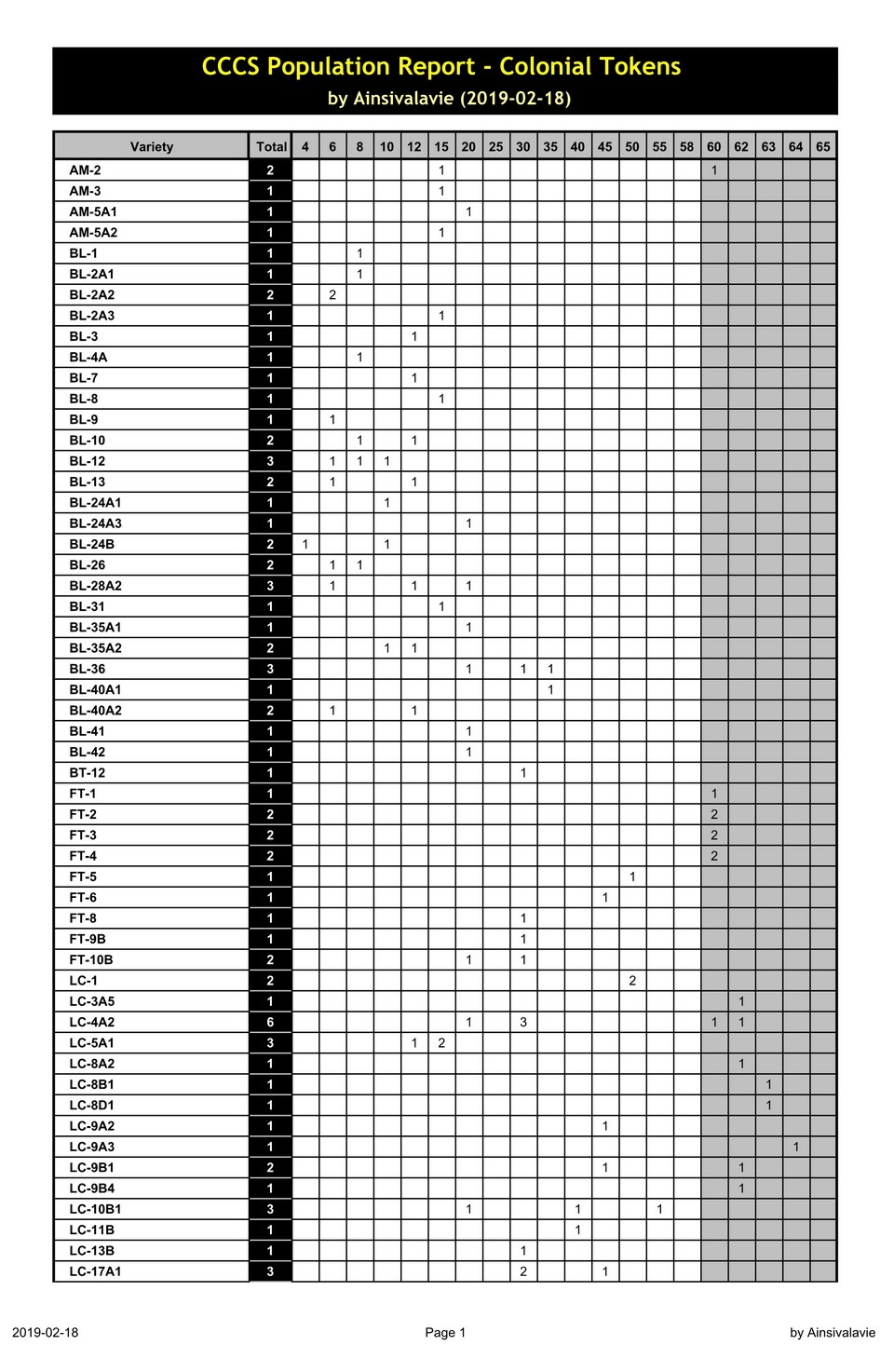 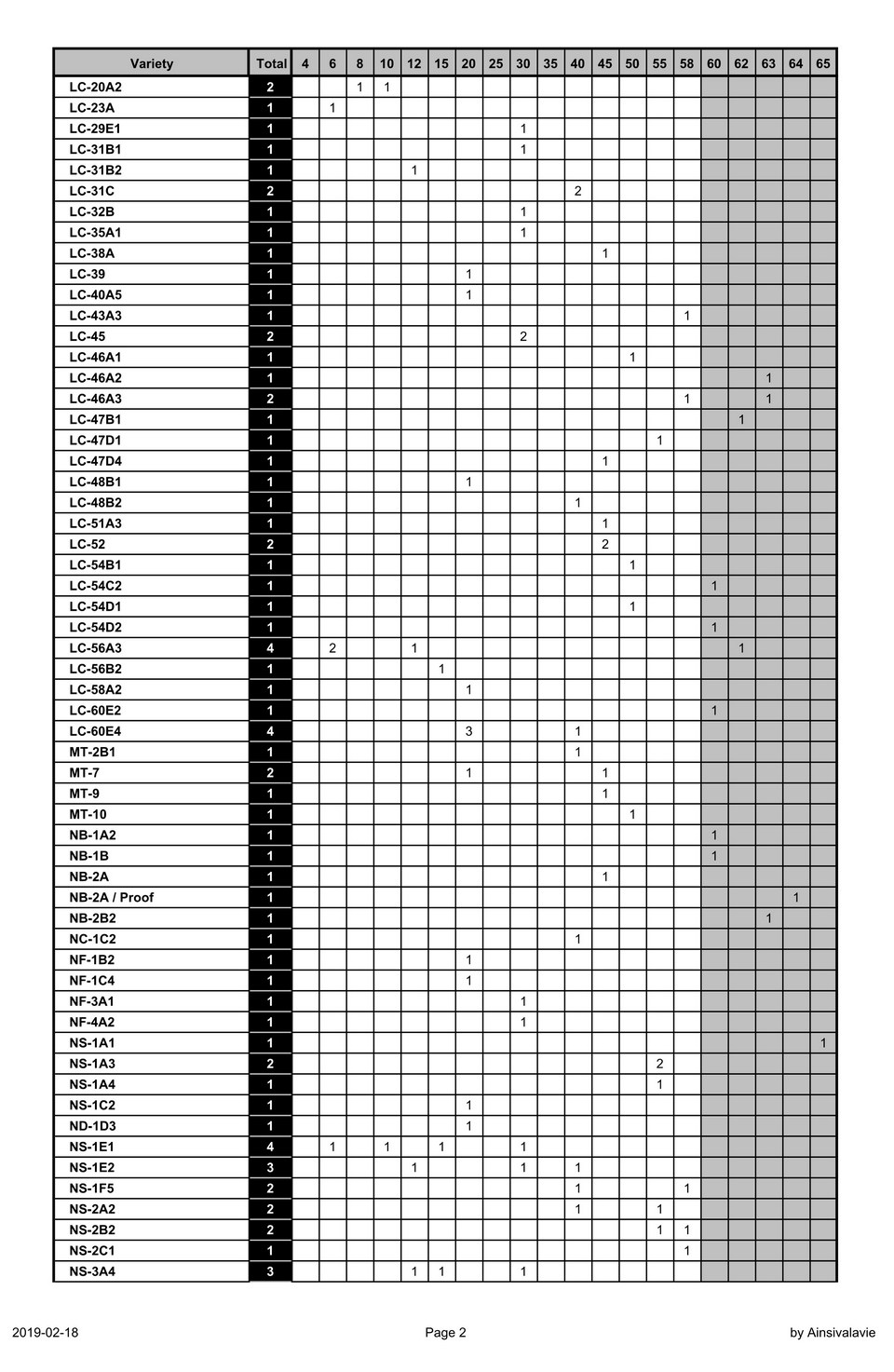 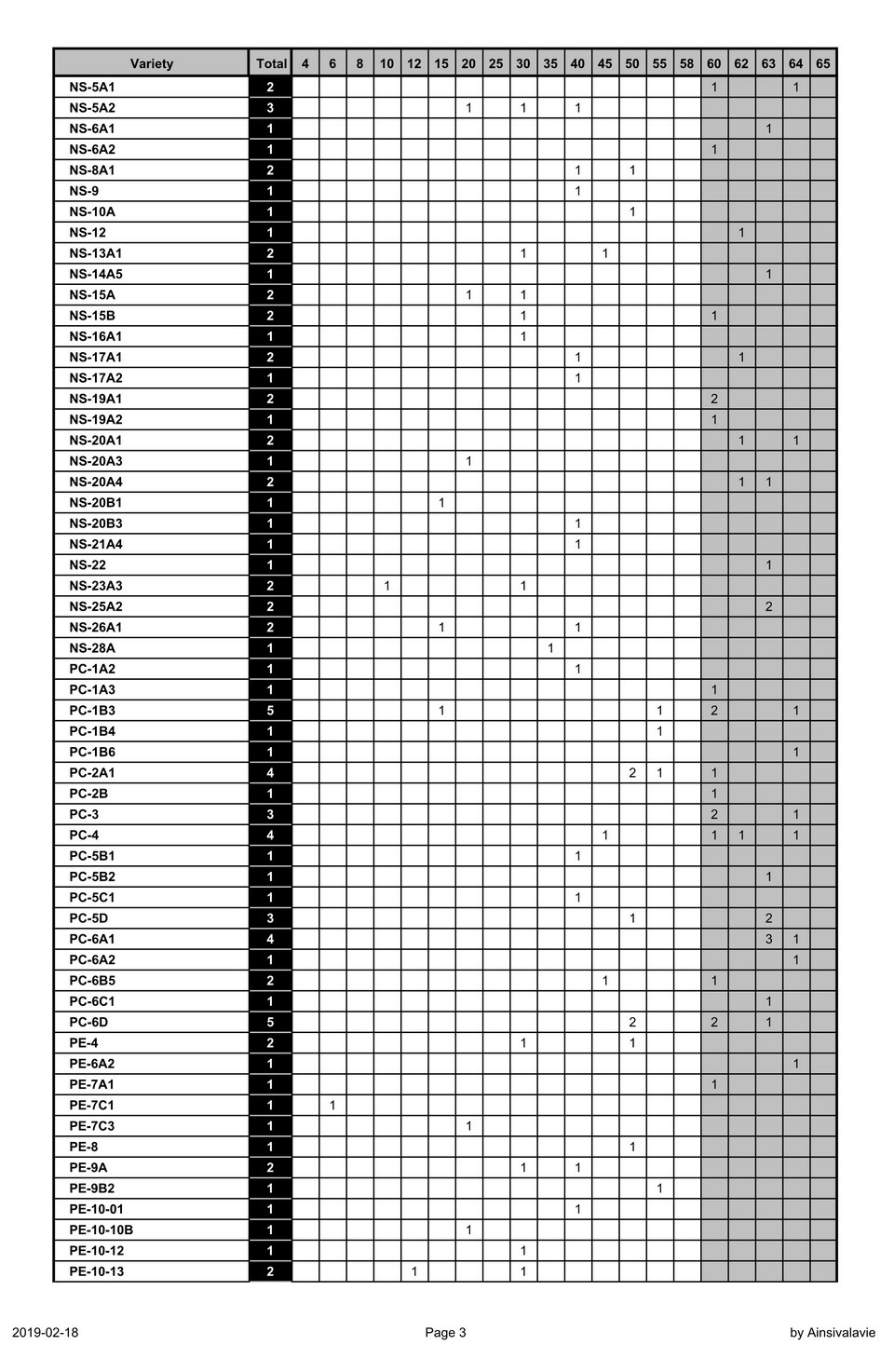 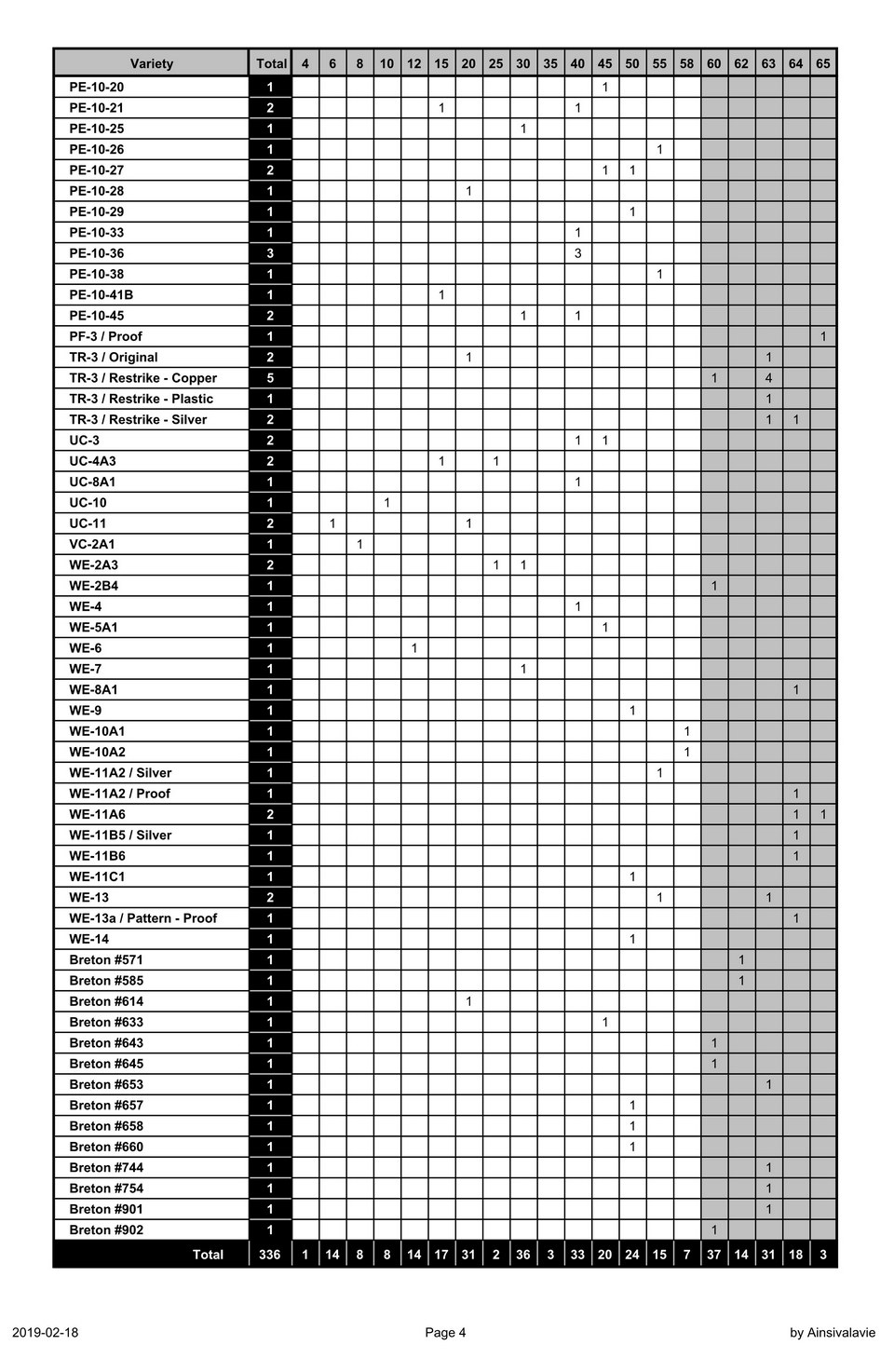 I'm sorry if my English isn't perfect... I'm learning a little more every day.
Edited by ainsivalavie
02/18/2019 1:48 pm
|
|
Pillar of the Community
Canada
847 Posts |
|
|
Moderator
 United States
198004 Posts |
Quote: Here's a recent $6 pickup on ebay. The biggest double chin ever. Looks like the same kind of "blistering", in Greg Ingram's Tiffin Tokens catalogue, caused by very worn dies, not by wear on the coin. Very nice!  |
|
Pillar of the Community
 Canada
5669 Posts |
Terry ... Back in the mid-80's, before I started to specialize in large cent varieties, I used to go in with a friend and buy large lots of foreign coins from Jeff Zarit down in Dallas. He used to sell items that weren't worth the trouble to list individually in his mail lists, nor go through the time necessary to do research to properly ID very old stuff. Almost all of the "poundage" (he used to sell the stuff by weight and called it "premium junk") that we used to buy was pre-1900, with some of it back to the 1600's, especially for German States items. We would pile it on a table and divide up what we got, alternating choices. Since I usually wanted the Canadian stuff, some of the last things left on the table would be worn Canadian tokens, especially the Tiffin tokens. In the 3 years that we did this, I must have gotten 7-8 of the Tiffins that I considered worthless. I think that I sold all of them at a garage sale for $1-2 total for the lot, thinking that they were badly worn Brit pennies and half pennies, not knowing that XF examples could look like a regular AG coin. One of my more unpleasant memories from 50 years of collecting.
|
|
Pillar of the Community
Canada
2786 Posts |
Quote:
not knowing that XF examples could look like a regular AG coin tokens ain't easy! same thing could be said when it comes to dragon slayers, only in reverse. a VF looks like AU to most people. |
|
Valued Member
Canada
56 Posts |
|
|
Pillar of the Community
Canada
2786 Posts |
nice one Tlutz While not spectacular, this is my latest: I have not delved very deep into the bouquet series, but when I see a de-laminating planchet (not rare for this series) I am compelled to snap them up. 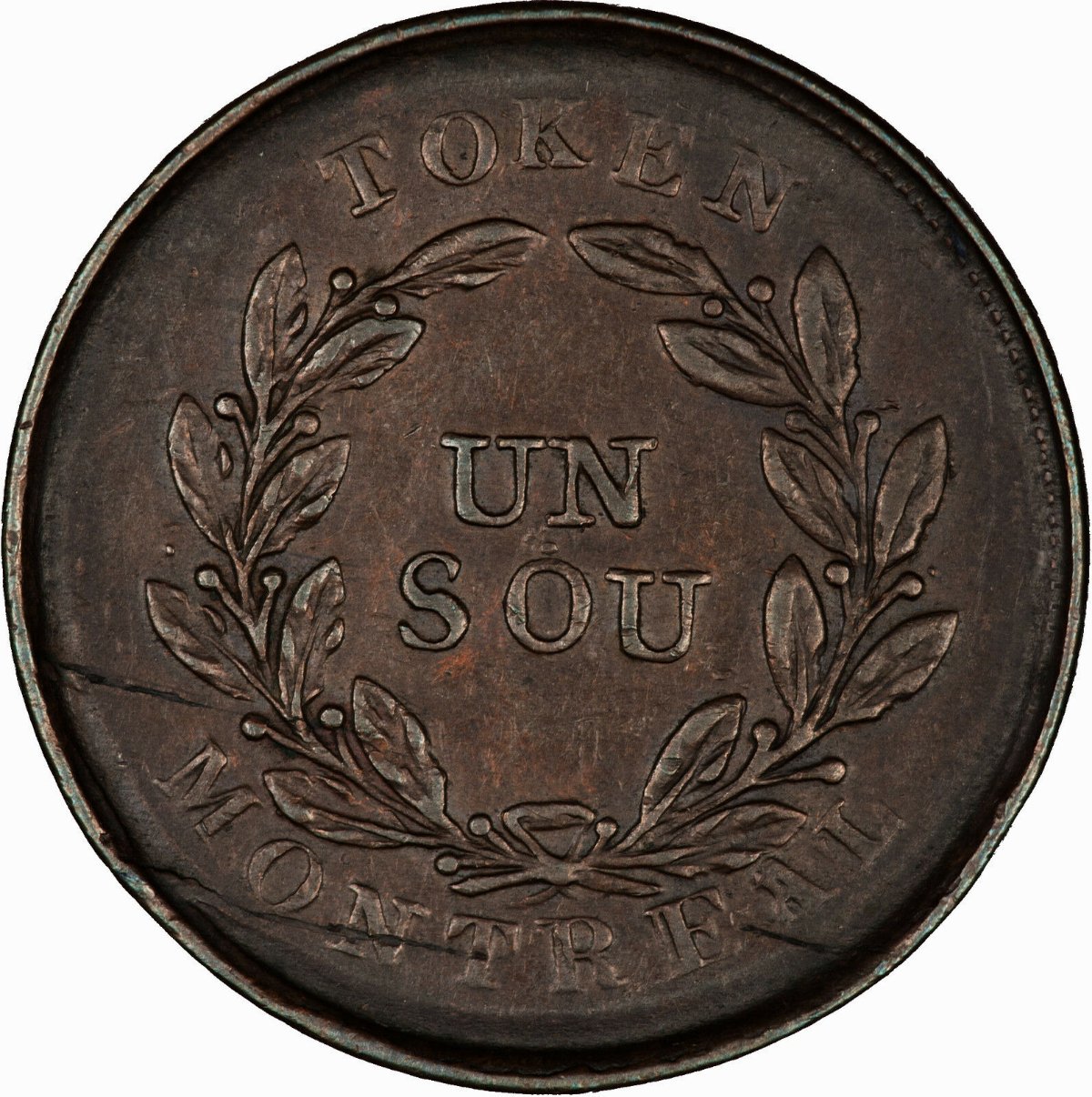 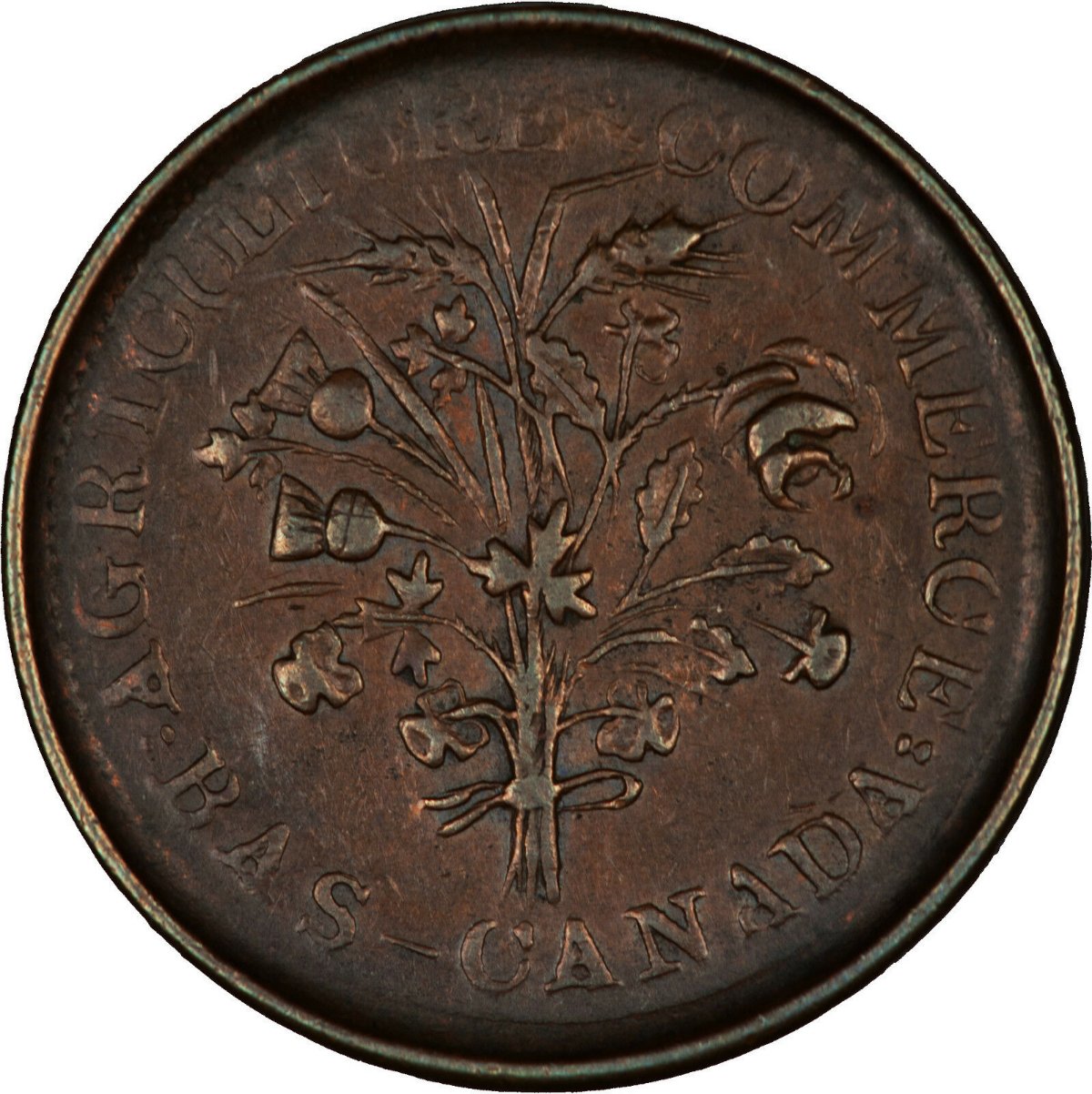 |
|
Pillar of the Community
Canada
847 Posts |
Okie, I feel the pain. Co-worker showed a friend and I a treasure box containing 500 hundred (about 1/2 were silver) 1600 to late 1800's coins (UK, Europe, many East India Company and India). Didn't want to sell. Ended up with one copper rupee. Instead I started buying "junk lots" on ebay at a dollar to 3 dollars a coin starting in 2000, and that's how I managed to get so many 1859 cents and colonial tokens and 1700's UK halfpennies. I sold off the dragonslayer and Quebec tokens before 2010 and was lucky to get $7-8 even for EF's. Now everyone is asking $15 or more for Fine or worse. Wade, I too have a terrible time with grading the old tokens. I recently came across an ebay auction that really shocked me. An imitation token, LC48-C2 (TF-01b) was shown in an ICCS flip. It was graded at MS-62. I had 48 of the imitation tokens at one time. I had bought them in the junk lots above and never paid more than $7 (2000-2010). They always seemed to be VG to VF to me, until I saw this ICCS grade. 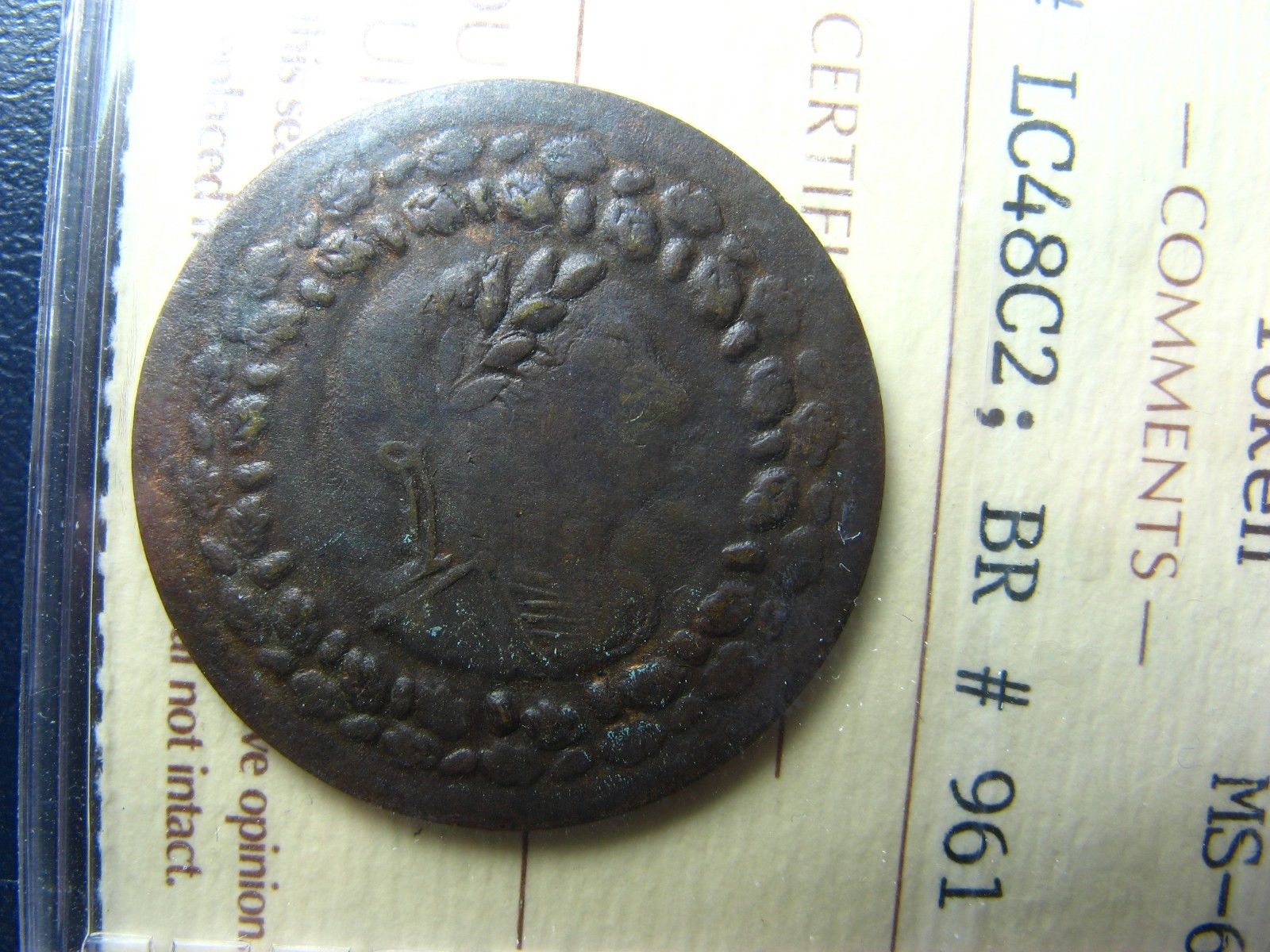 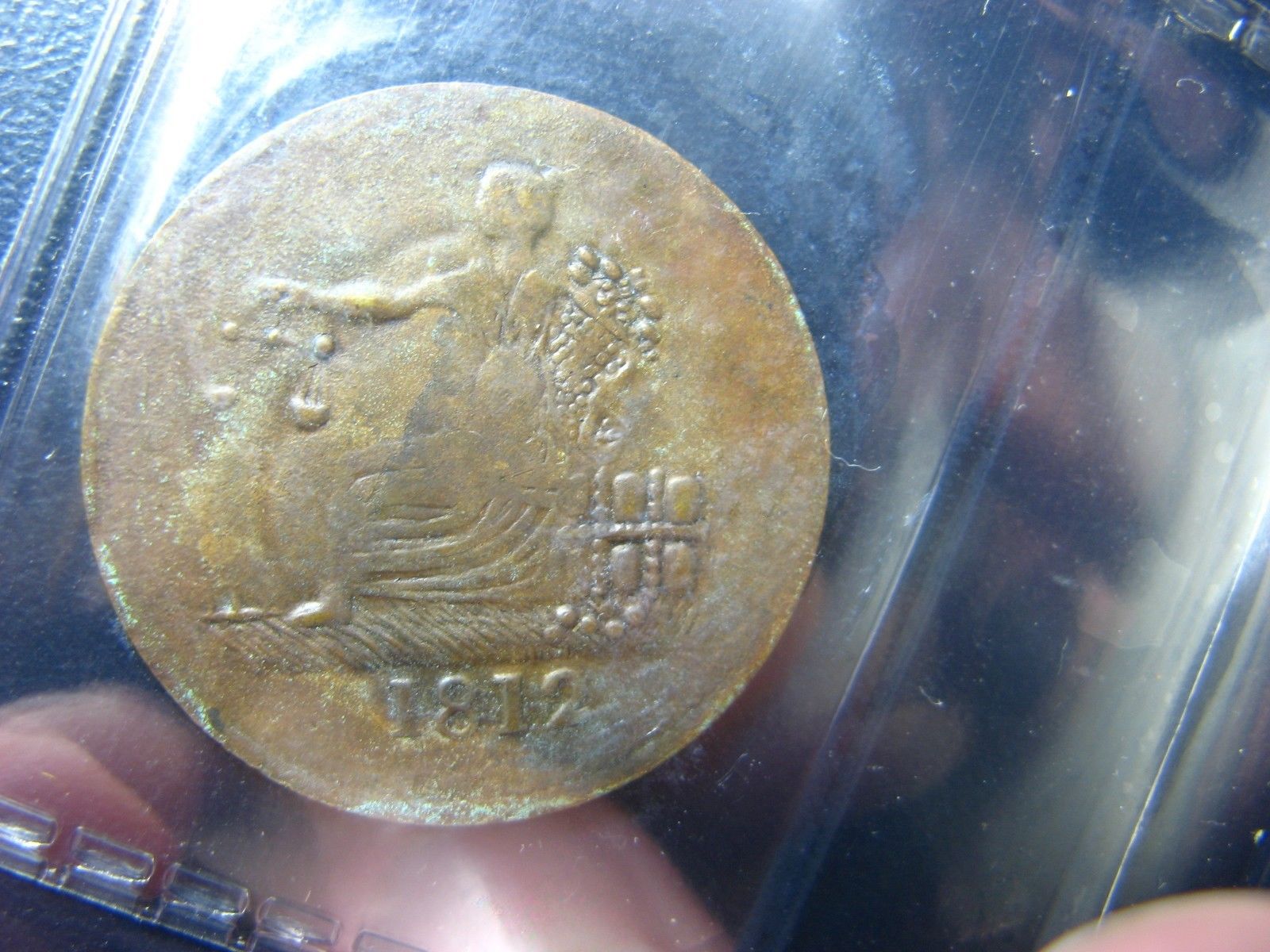 I'll have to revisit my whole token collection. I thought I had an EF and VF for these two LC48-C2's (TF-01b and TF-01c); 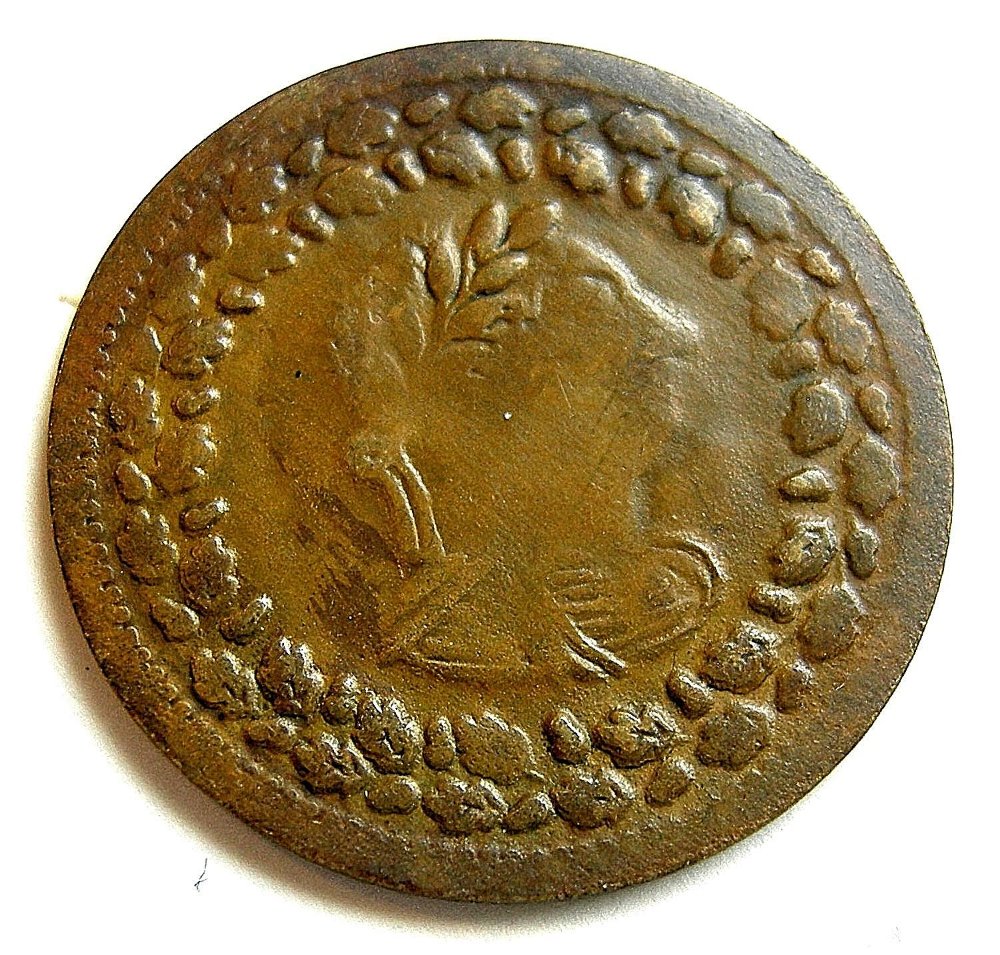 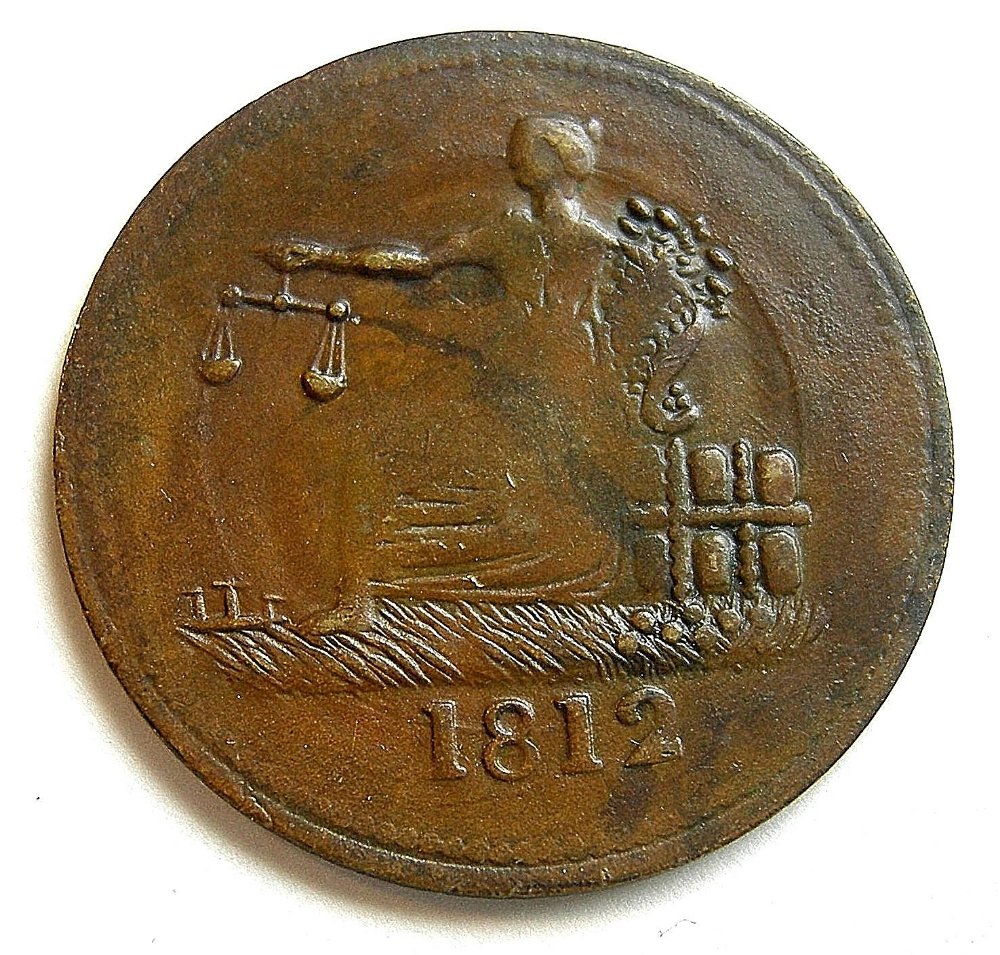 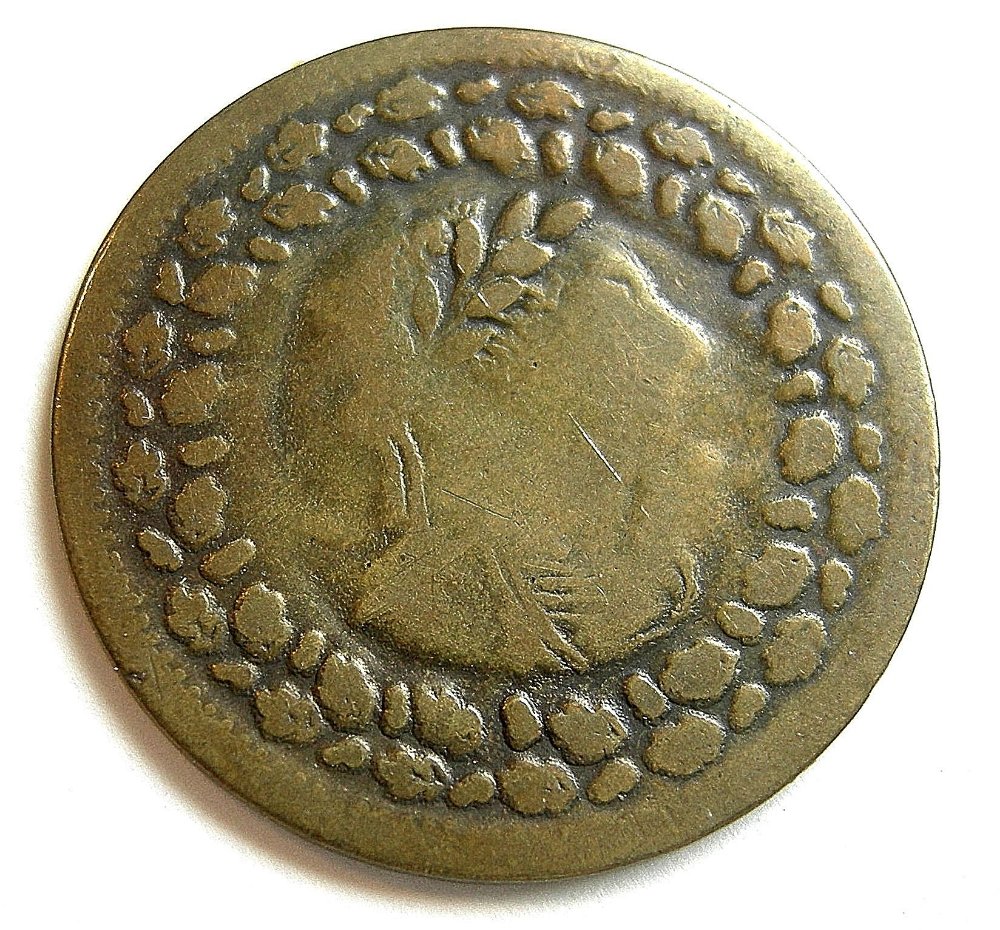 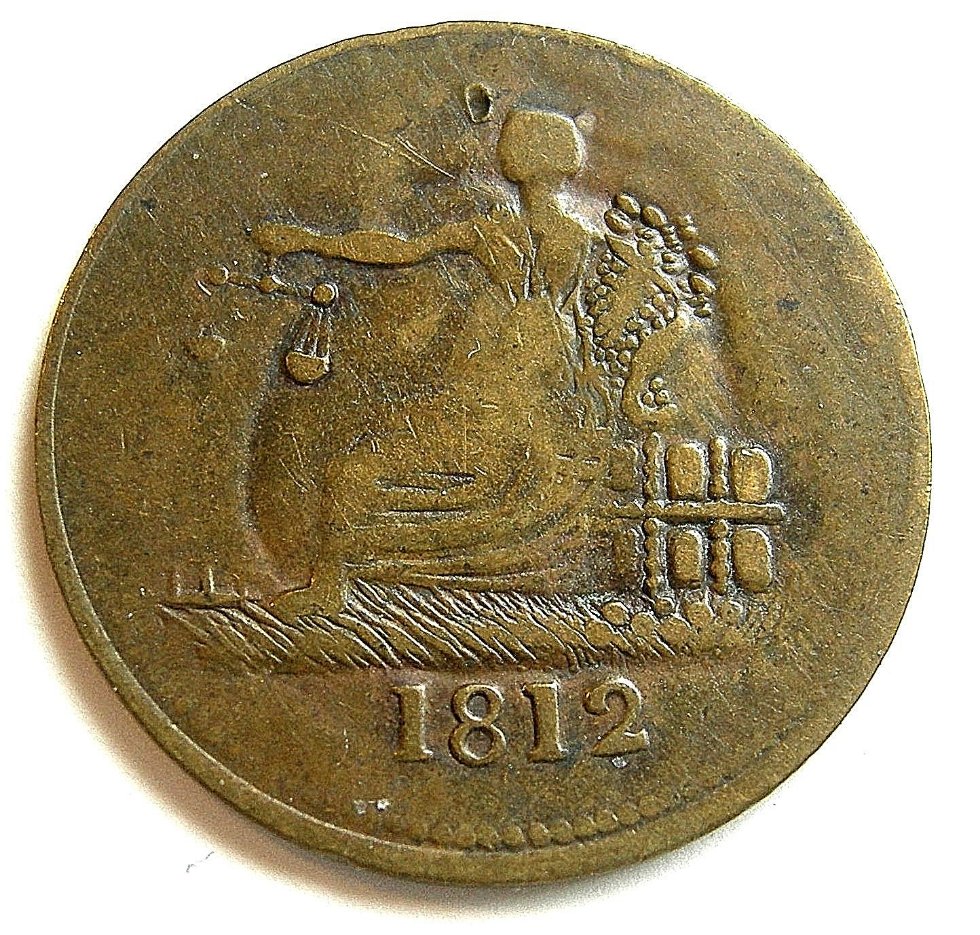 |
|
Pillar of the Community
Canada
847 Posts |
I'm always saving errors. I always have to check my stuff when someone posts a coin I have. I checked out my LC-31C, the same kind as Wade's just above. My 2011 token book has the highest grade listed as AU. Wade's looks to me like it is that AU. Mine also looks to be AU. I didn't find a lamination but what a difference in the beads/rim of the two tokens. 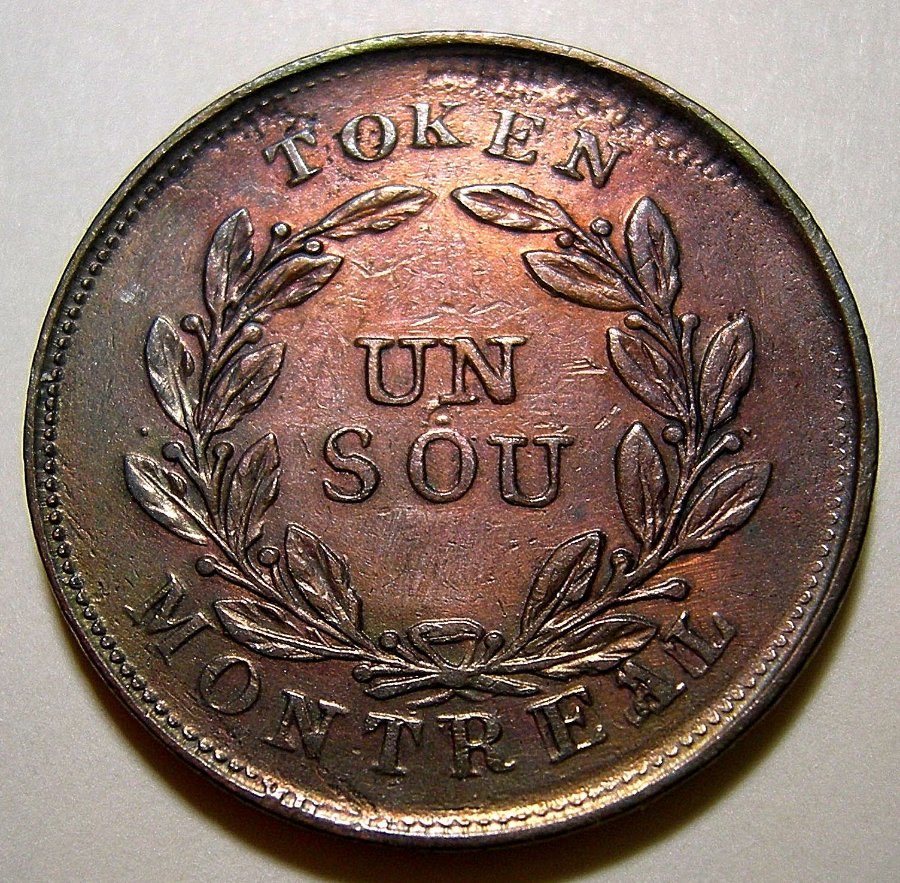 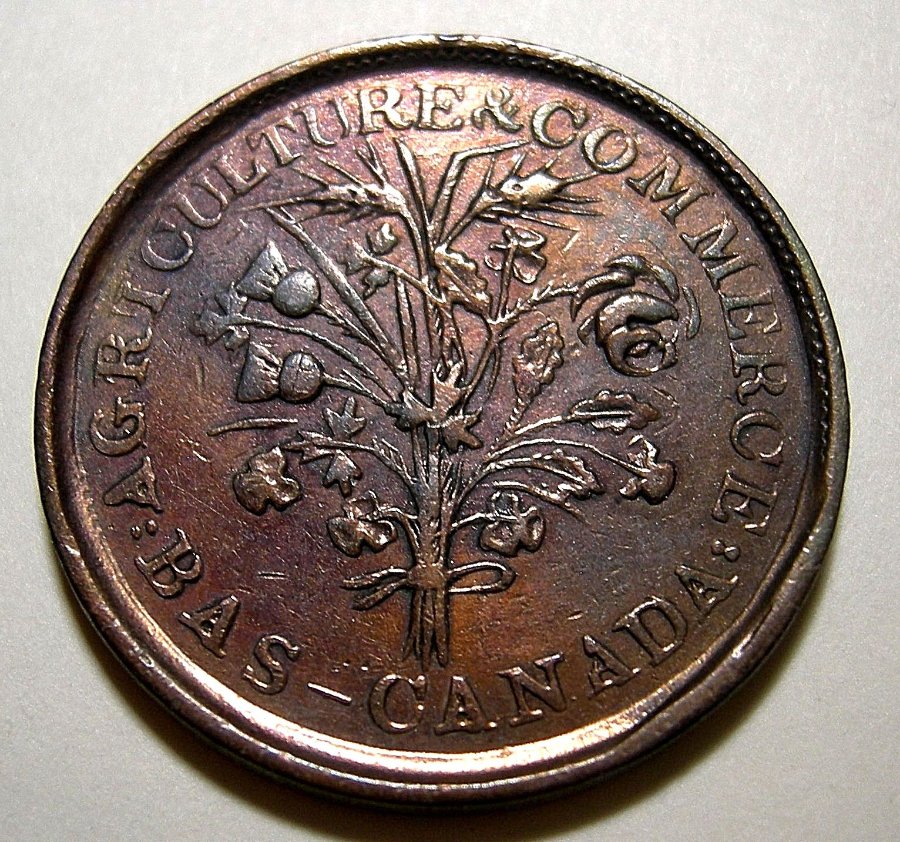 Had a look for other bouquet sou with a lamination and found one (N of TOKEN), which is also struck off-centre. (LC-40A1) 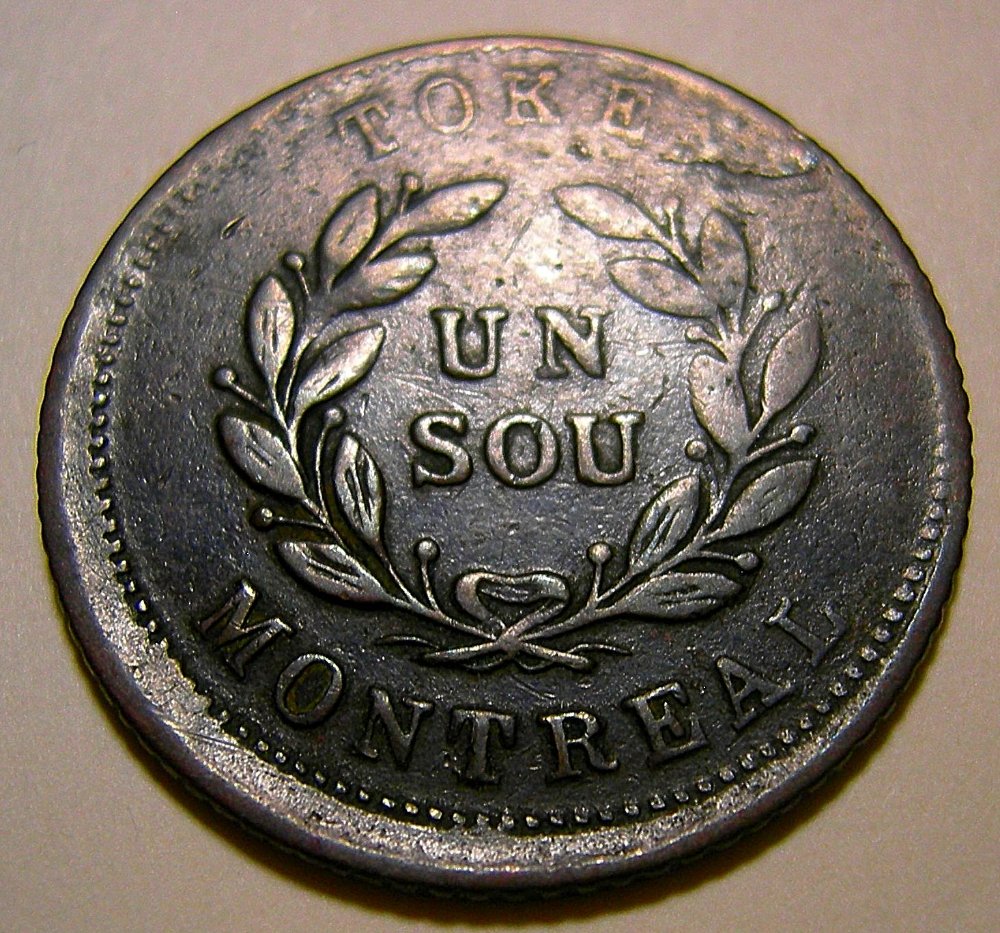 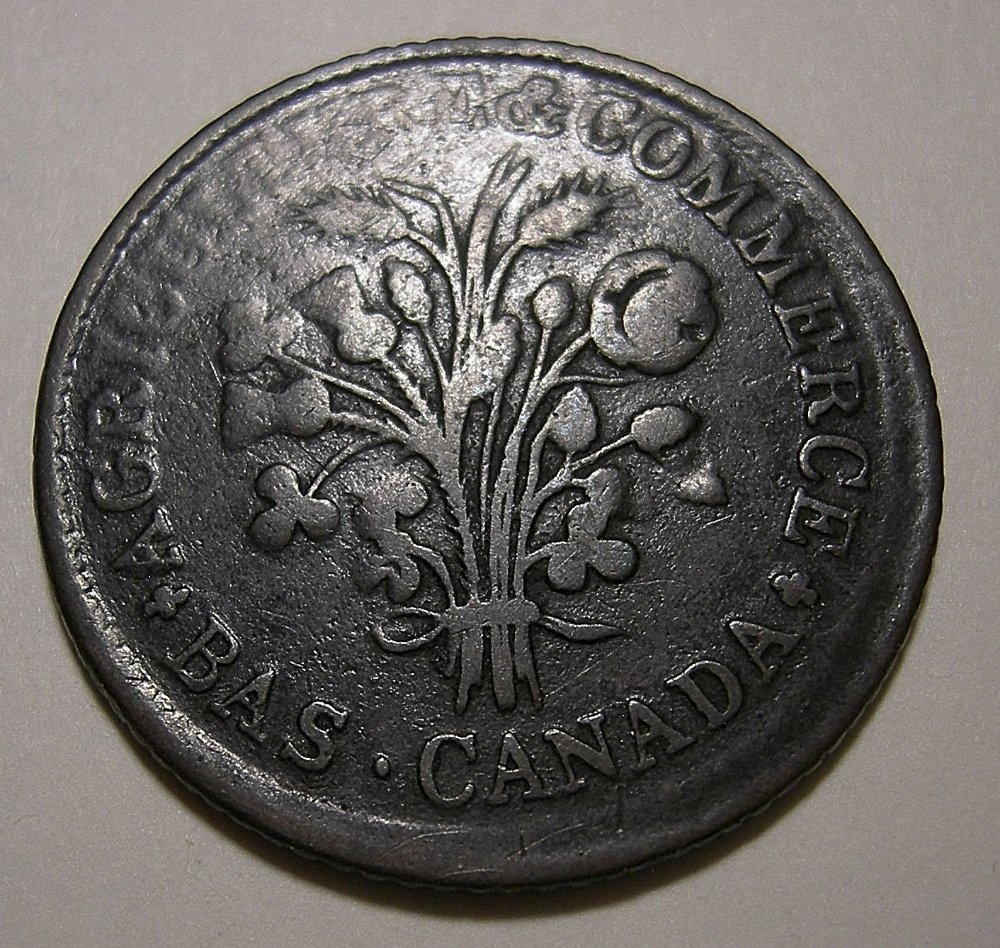 |
|
Pillar of the Community
Canada
2786 Posts |
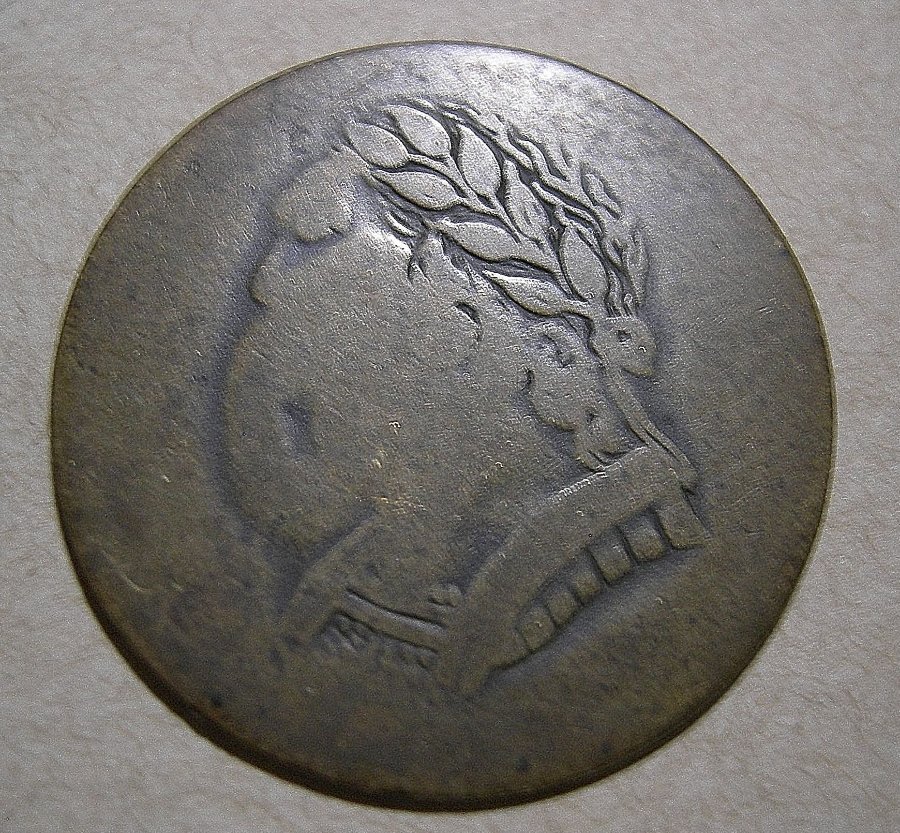
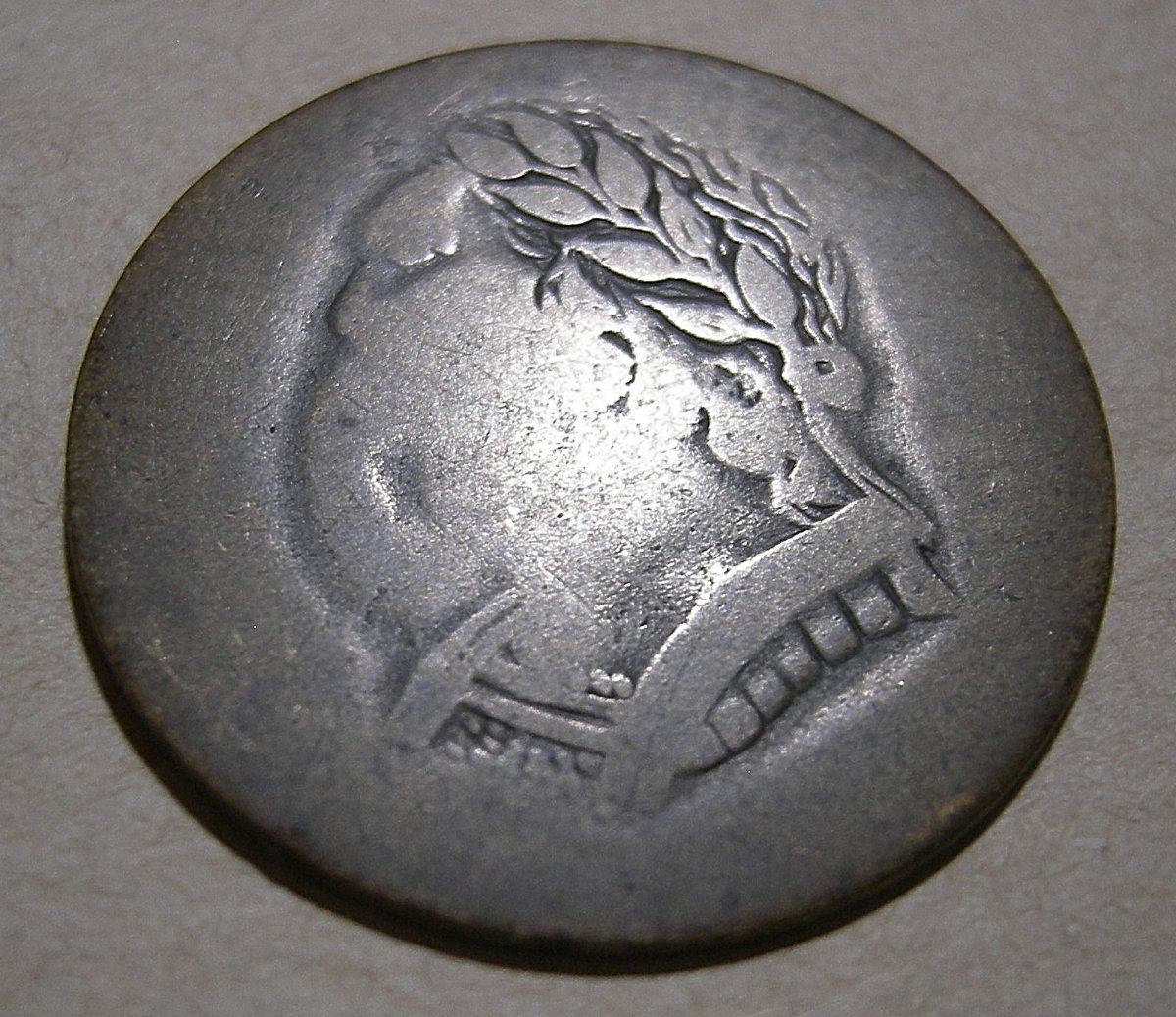
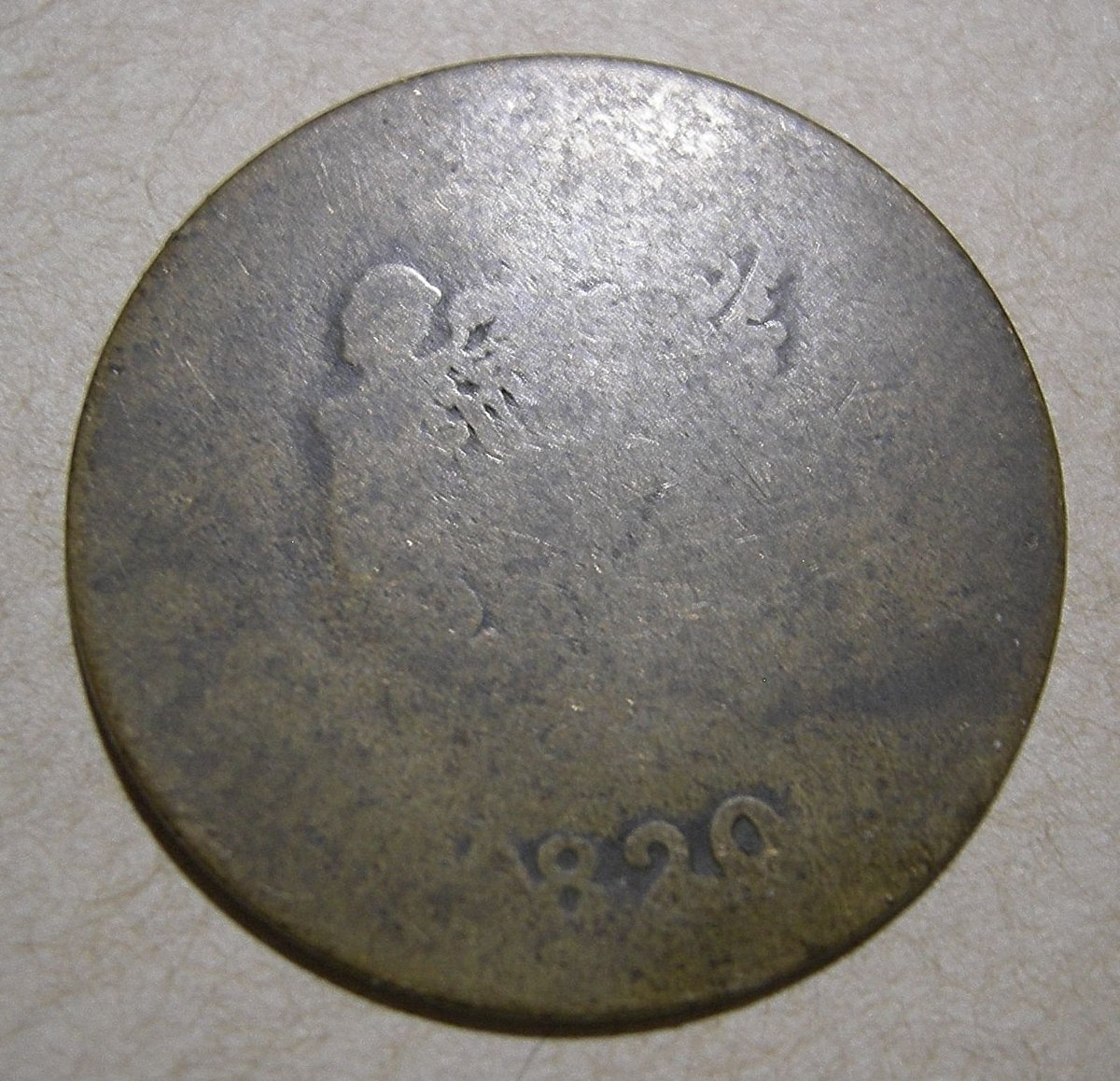
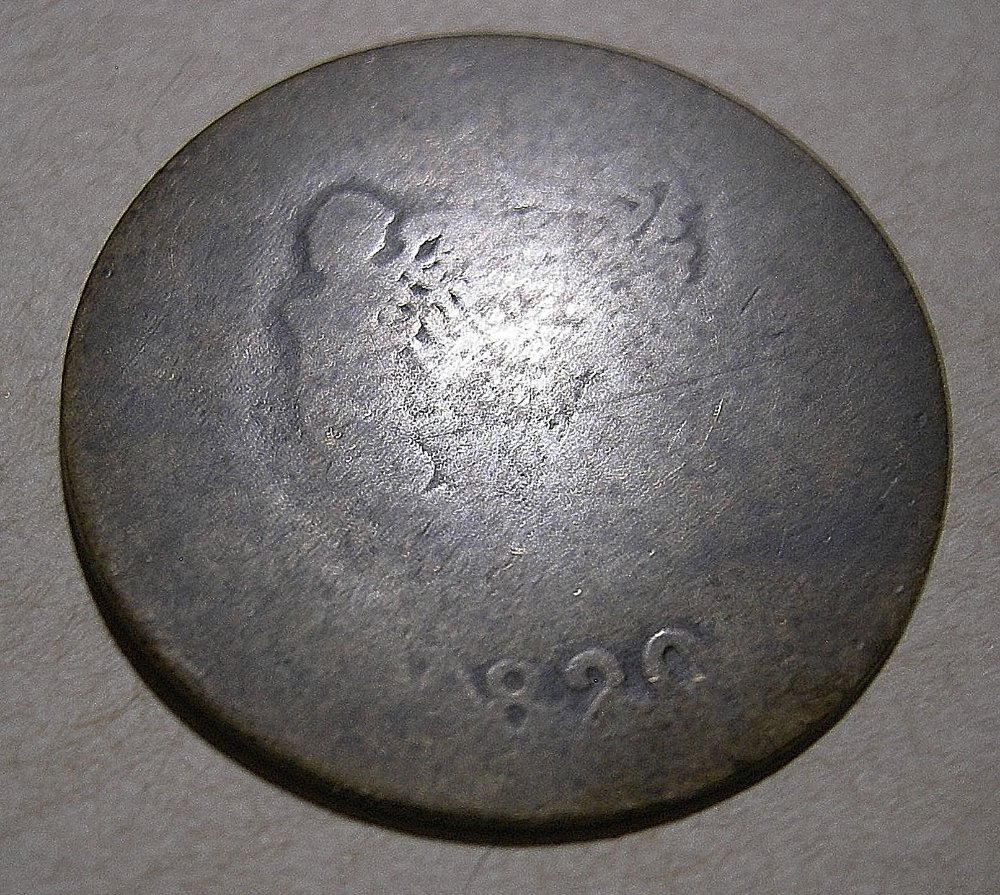
Rebellion Sou with a clip 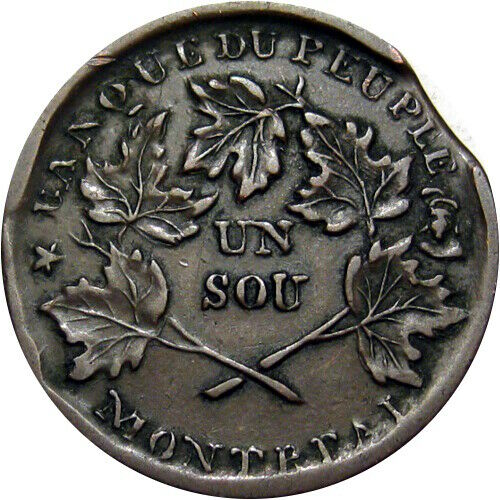 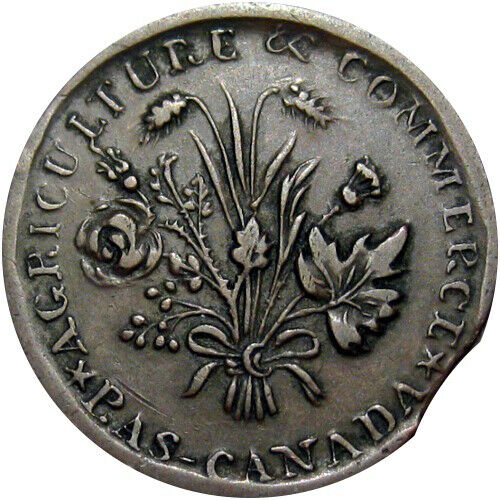 |
|
Valued Member
Canada
222 Posts |
Quote:
Wade: Rebellion Sou with a clip @Wade: I had seen this token on ebay this week, I wanted to bet on it, but the selling price went up higher than what I would have liked to pay. Did you acquire it? If so, it's definitely a great catch. The LC-4A2 (Breton #716) is definitely the token I prefer among the colonial tokens. I have a multitude of copies. In fact, it is very likely that when I have finished writing my book on the Bank of Upper Canada tokens, I will start writing a book on that token. That's why for the last 10 years I've been taking advantage of this opportunity to accumulate information on it. I'm sorry if my English isn't perfect... I'm learning a little more every day.
Edited by ainsivalavie
03/25/2019 11:37 pm
|
| |
Replies: 1,299 / Views: 153,547 |





 First Page
 Previous Page


 Posted 02/15/2019 2:52 pm