| Author |
 Replies: 5,980 / Views: 455,934 Replies: 5,980 / Views: 455,934 |
|
|
|
Bedrock of the Community
 United States
10284 Posts |
 Crazy Horse Crazy Horse was a Native American war leader of the Oglala Lakota in the 19th century. He took up arms against the United States federal government to fight against encroachment by white American settlers on Indian territory and to preserve the traditional way of life of the Lakota people. On June 17, 1876, Crazy Horse led a combined group of approximately 1,500 Lakota and Cheyenne in a surprise attack against brevetted Brigadier General George Crook's force of 1,000 cavalry and infantry, and allied 300 Crow and Shoshone warriors in the Battle of the Rosebud. The battle, although not substantial in terms of human losses, delayed Crook's joining with the 7th Cavalry under George A. Custer. It contributed to Custer's subsequent defeat at the Battle of the Little Bighorn. Crazy Horse's actions during the battle are unknown. On January 8, 1877, Crazy Horse's warriors fought their last major battle at Wolf Mountain, against the US Cavalry in the Montana Territory. His people struggled through the winter, weakened by hunger and the long cold. Crazy Horse decided to surrender with his band to protect them, and went to Fort Robinson in Nebraska. Crazy Horse and other northern Oglala leaders arrived at the Red Cloud Agency, located near Fort Robinson, Nebraska, on May 5, 1877. Together with He Dog, Little Big Man, Iron Crow and others, they met in a solemn ceremony with First Lieutenant William P. Clark as the first step in their formal surrender. For the next four months, Crazy Horse resided in his village near the Red Cloud Agency. The attention that Crazy Horse received from the Army drew the jealousy of Red Cloud and Spotted Tail, two Lakota who had long before come to the agencies and adopted the white ways. Captain James Kennington, in charge of the post guard, who accompanied Crazy Horse to the post guardhouse. Once inside, Crazy Horse struggled with the guard and Little Big Man and attempted to escape. Just outside the door, Crazy Horse was stabbed with a bayonet by one of the members of the guard. He was taken to the adjutant's office, where he was tended by the assistant post surgeon at the post, Dr. Valentine McGillycuddy, and died late that night. 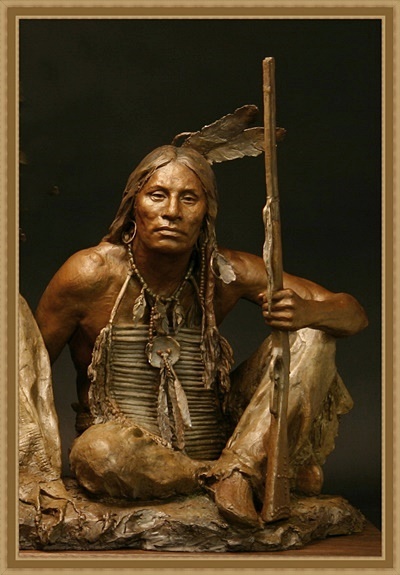 |
|
Moderator
 United States
195559 Posts |
I am glad you got what you wanted, but I also think it is a very interesting set.  |
|
Pillar of the Community
United States
717 Posts |
Nice coin of Crazy Horse.
It is interesting that it was produced by an oil company.
|
|
Bedrock of the Community
United States
10284 Posts |
Hobo, Back in the day, gas stations competed for customers and had numerous giveaways when you stopped for gas.
( They pumped your gas, checked your oil, and cleaned your windshield too. )
Quite often there were several medal sets. Presidents, Antique Cars, and I suppose out west where Husky was, Old West medals. I remember Sunoco had peel open envelopes and the regular set was aluminum for the Antique Car set they had. A series 1 and 2. Once in awhile somebody would win a complete bronze set with an INSTANT WINNER medal.
Come to think of it ... I think I might hunt one of those winner medals down.
|
|
Pillar of the Community
New Zealand
526 Posts |
Recent acquisition Token - Ioannes Paulus II Maria Czestochowa 1983 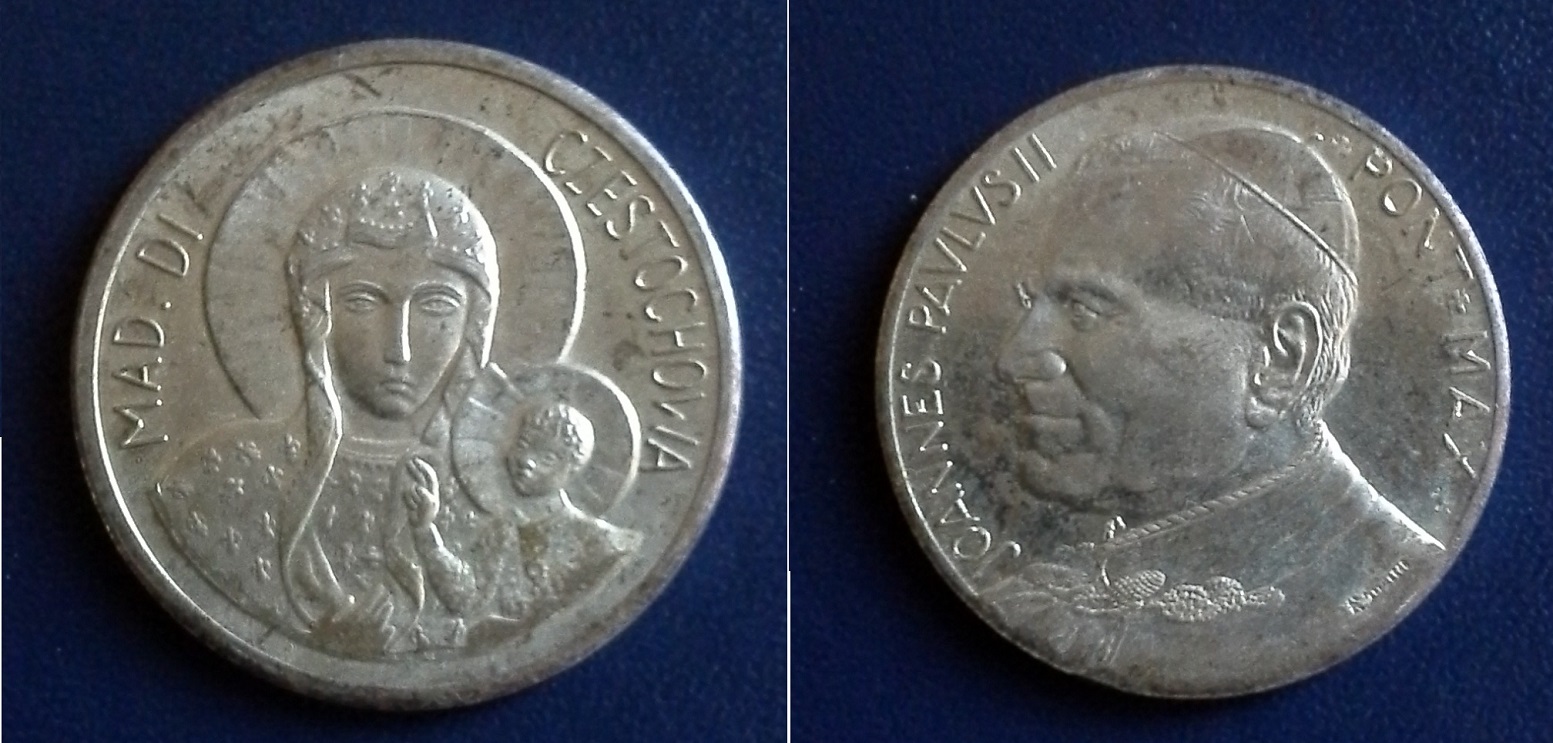 |
|
Moderator
United States
195559 Posts |
Quote:
Recent acquisition
Token - Ioannes Paulus II Maria Czestochowa 1983 Very nice! |
|
Bedrock of the Community
United States
10284 Posts |
Bas S Warwick, thanks for the contribution! I have not seen that one before. I have seen quite a few of these similar medals which I believe are from the same year. I think mine commemorates the visit to Poland? Since you posted that, I suppose these should reside close together here in the thread. Notice it is a strong doubled die. 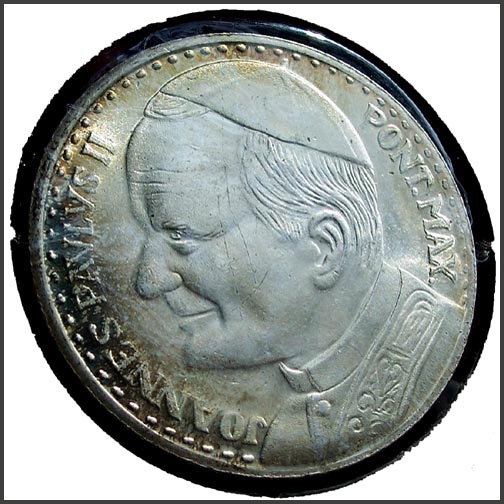 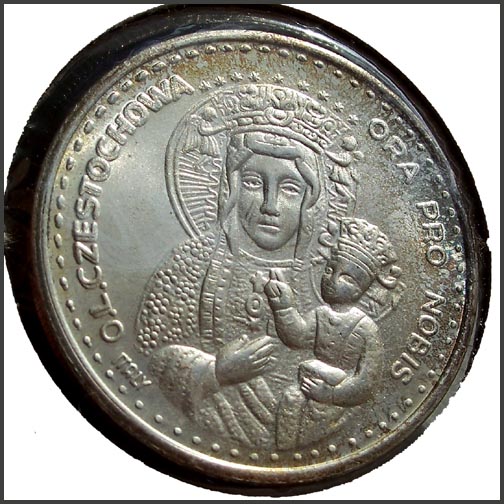 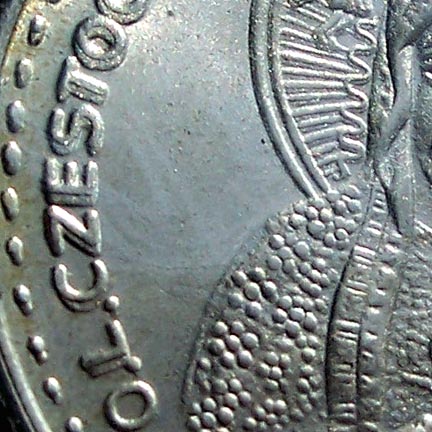 Edited by TNG
05/09/2018 10:43 am
|
|
Valued Member
United States
343 Posts |
Quebec bank halfpenny 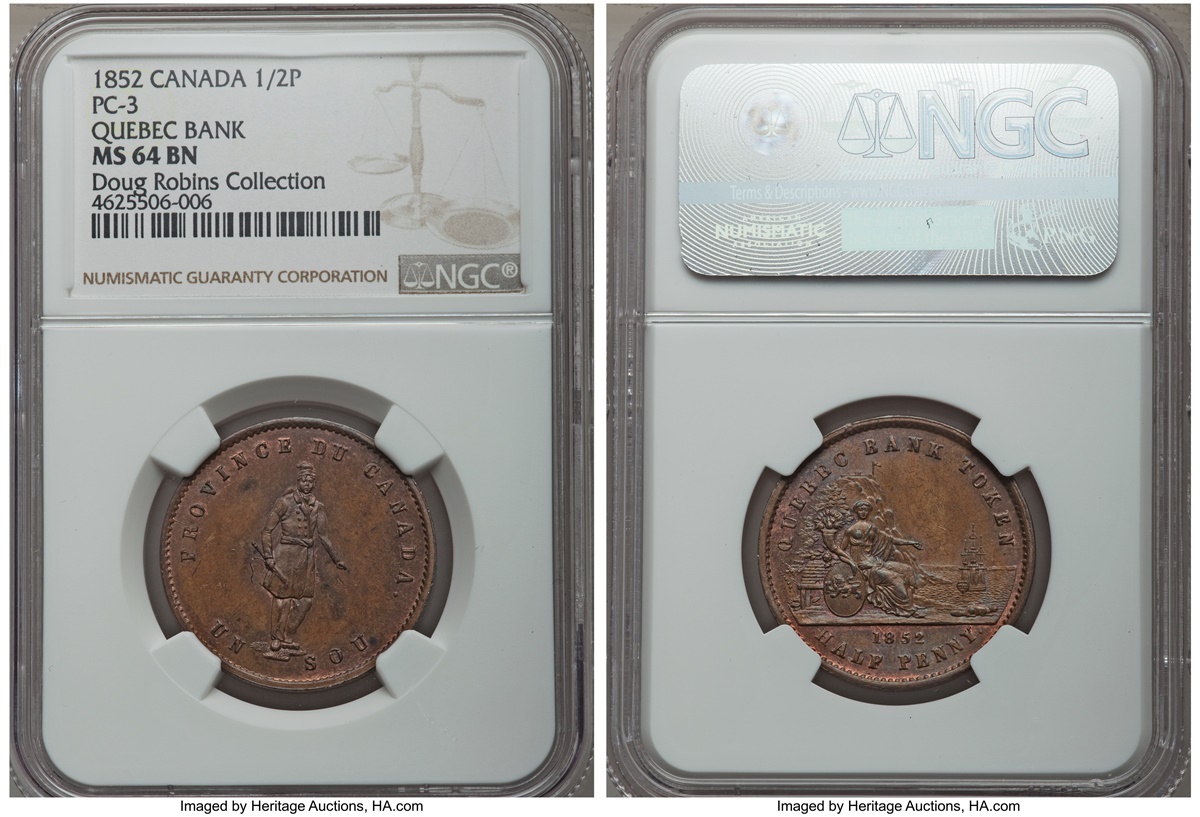 |
|
Bedrock of the Community
United States
10284 Posts |
While this medal is about Samuel Wilson and shows a memorial statue in Arlington Massachusetts I am certainly more excited to have a vintage medal with a good portrait of Uncle Sam here.  The earliest known personification of the United States was as a woman named Columbia, who first appeared in 1738 (pre-USA) and sometimes was associated with another female personification, Lady Liberty.  With the American Revolutionary War came Brother Jonathan, a male personification, and Uncle Sam finally appeared after the War of 1812. Columbia appeared with either Brother Jonathan or Uncle Sam, but her use declined as a national personification in favor of Liberty, and she was effectively abandoned once she became the mascot of Columbia Pictures in the 1920s.  Mrs Pott's Cold Handle Sad Iron advertising Trade Card late 1800's Mrs Pott's Cold Handle Sad Iron advertising Trade Card late 1800'sThe precise origin of the Uncle Sam character is unclear, but a popular legend is that the name "Uncle Sam" was derived from Samuel Wilson, a meatpacker from Troy, New York who supplied rations for American soldiers during the War of 1812. There was a requirement at the time for contractors to stamp their name and where the rations came from onto the food they were sending. Wilson's packages were labeled "E.A - US." When someone asked what that stood for, a co-worker jokingly said, "Elbert Anderson and Uncle Sam," referring to Wilson, though the "US" actually stood for United States. Doubts have been raised as to the authenticity of this story, as the claim did not appear in print until 1842. Here is a Song Book I own in pretty good shape printed in 1897. I see that among the songs is The Star Spangled Banner with three verses!  Uncle Sam did not get a standard appearance, even with the effective abandonment of Brother Jonathan near the end of the American Civil War, until the well-known "recruitment" image of Uncle Sam was first created by James Montgomery Flagg during World War I. The image was inspired by a British recruitment poster showing Lord Kitchener in a similar pose. It is this image more than any other that has influenced the modern appearance of Uncle Sam: an elderly white man with white hair and a goatee, wearing a white top hat with white stars on a blue band, a blue tail coat, and red-and-white-striped trousers.  Edited by TNG
05/09/2018 5:26 pm
|
|
Moderator
United States
195559 Posts |
Quote:
Quebec bank halfpenny Very nice, yarm! TNG, bringing it as per usual.  |
|
Pillar of the Community
New Zealand
526 Posts |
@TNG Quote:
Bas S Warwick, thanks for the contribution!
I have not seen that one before. I have seen quite a few of these similar medals which I believe are from the same year. I think mine commemorates the visit to Poland? Since you posted that, I suppose these should reside close together here in the thread.
Notice it is a strong doubled die.
THG Thanks for posting the scan. Your token appears to be listed on Numista as Silver clad nickel with country as Vatican City (Italy) - diameter 35mm. My token seems to be an unlisted variation of the Czestochowa - (A city of southern Poland) one shown on Numista here https://en.numista.com/catalogue/pieces137725.html br / Country * Tokens * (Poland)
Type Token
Diameter 30 mm
Thickness 2 mm
Shape RoundDiameter noted at 30mm although mine is 35mm, No mention of silver clad although there is definitely a coating as you can see it wearing off. I like error coins so the double die on your token is also very interesting. |
|
Pillar of the Community
New Zealand
526 Posts |
1937 King George VI, Coronation medal. Mintage 70,433 Metal Bronze (coated with ?) Weight 15.76 g Dia 32mm Obverse Profile portrait of George VI facing left. Lettering: GEORGE VI CROWNED 12 MAY 1937 Reverse Queen Elizabeth (Lady Elizabeth Bowes Lyon later to be known as the Queen Mother), facing left Lettering: QUEEN ELIZABETH 12 MAY 1937 Engraver: Percy Metcalfe (PM) 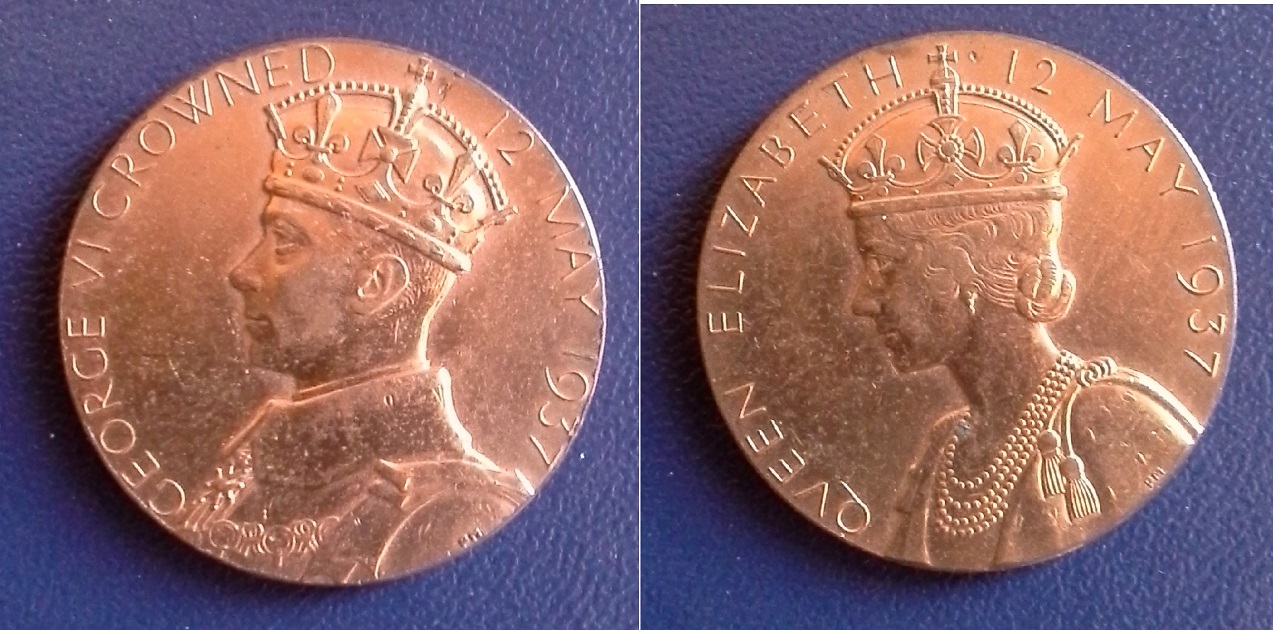 |
|
Bedrock of the Community
United States
10284 Posts |
I have some UK medals of Kings and Queens but they are related to Canada & visits there. I knew my Pope medal was not silver but it looks like it is with good plating. I had one other and it was also doubled. |
|
Pillar of the Community
New Zealand
526 Posts |
@TNG The 1937 medal was obtained in New Zealand (as was the Polish Pope). Interesting how these items move around the world. Here's one you might like from the Boer War 1899-1900. Commemorative Medallion commemorating the Boer war/ Transvaal war. Obverse: The head of Queen Victoria facing left. The words "BRITISH TRANSVAAL WAR" surrounds her. Reverse: The head of a Maori man facing right. The words "SUCCESS TO NEW ZEALAND CONTINGENT 1899-1900" surrounds him. There is a hole pierced through the medal to allow for a metal hoop. Dia- 22mm 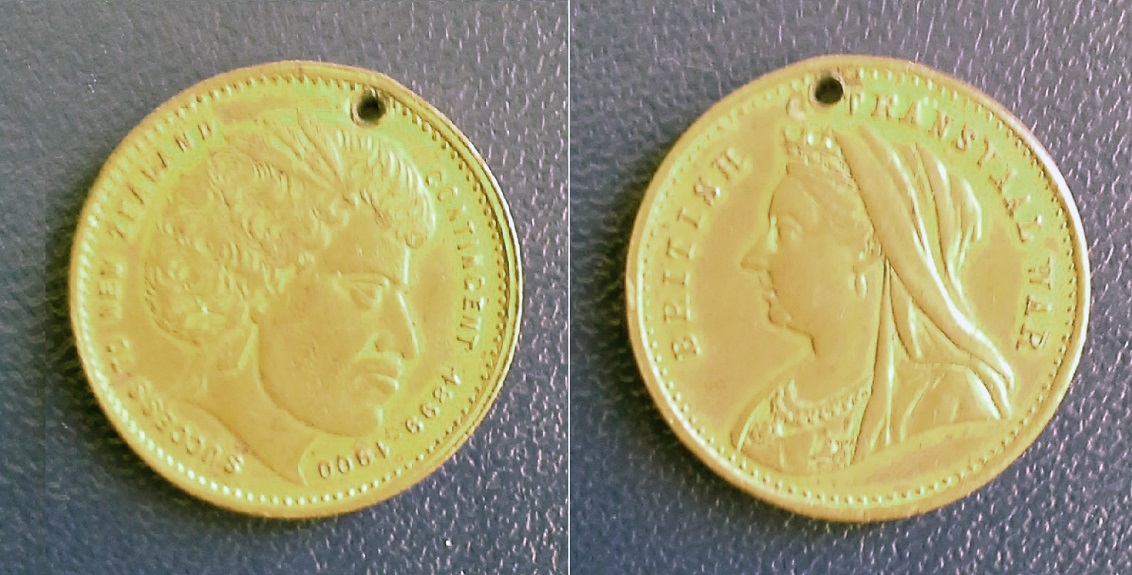 |
|
Bedrock of the Community
United States
10284 Posts |
I just got done reading quite a bit on the Boer Wars. That was an ugly time in South Africa.
I never paid much attention to that before. Heard of it many times but never investigated.
I learn something new ( about something old ) everyday!
|
| |
Replies: 5,980 / Views: 455,934 |







 First Page
 Previous Page


 Posted 05/08/2018 08:49 am





