| Author |
 Replies: 17 / Views: 3,774 Replies: 17 / Views: 3,774 |
Page 2 of 2
|
|
|
|
Pillar of the Community
United States
1801 Posts |
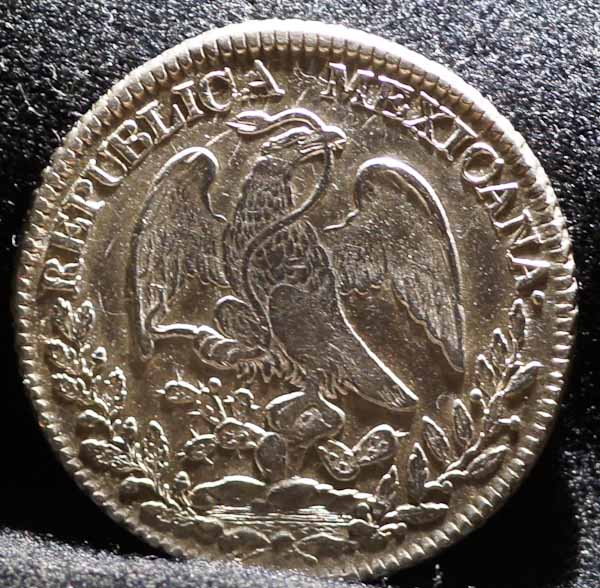
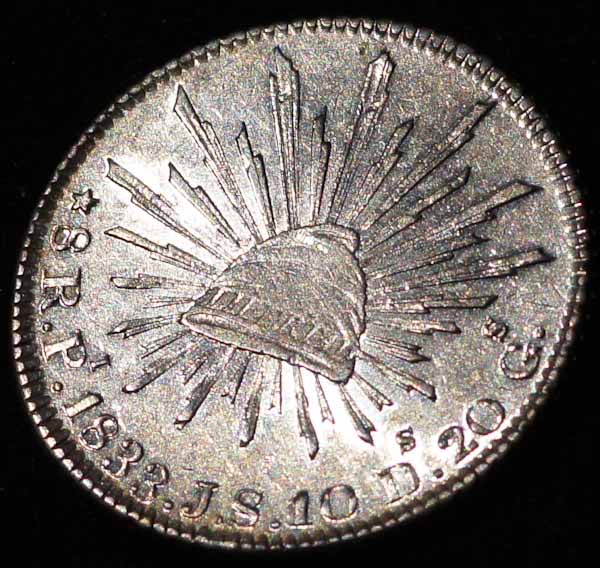
Very interesting coin. I can't see the overdate myself, doesn't appear to me to be a 2 under the 3. As fo the die clash, it is strange the clash appears to be the same side of the coin as pointed out above which would make me very curious about what is going on here. Could you please post the Eagle side as well so we can see the entire coin?
|
|
Valued Member
 United States
115 Posts |
Hi jfransch, Please see a few pictures which should be more helpful than the scans and cellphone shot. 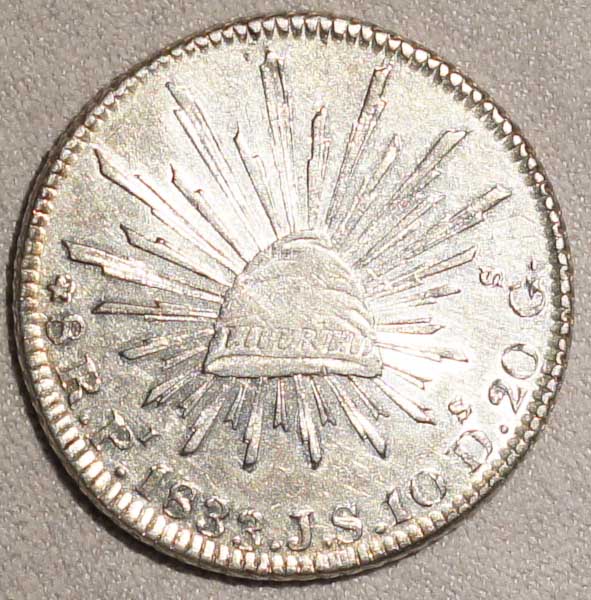 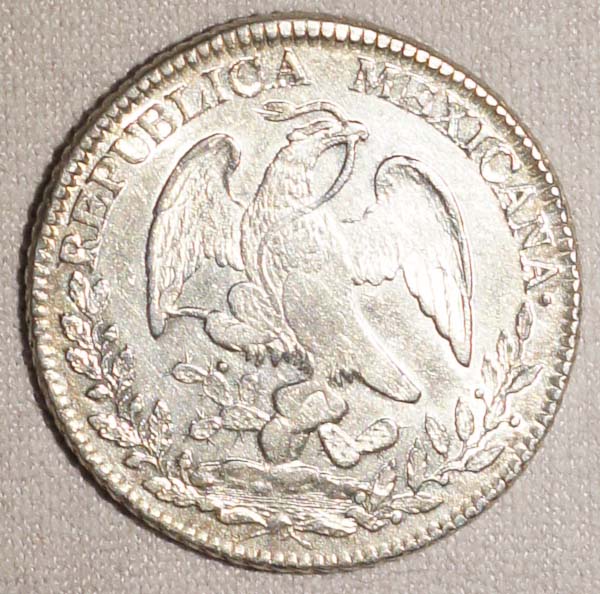 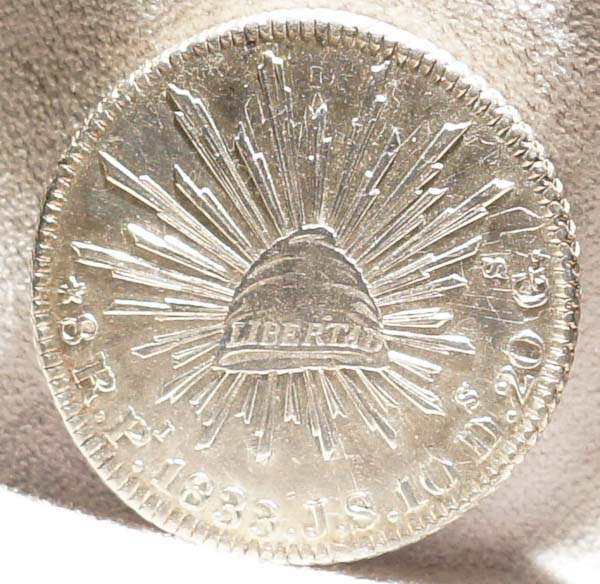 |
|
Pillar of the Community
United States
648 Posts |
hi rexvictor Think your last picture holds the key  rotation? not clash? measure degrees from faint I straight up above cap to faint ray just above s G to the right I see the same distance as the I(7:00) to left of date and the ray of same shape but thinner about (10:00) This may be explained by one weak strike then struck again? I sure don't know but it is a nice picture   |
|
Valued Member
United States
115 Posts |
Hi tokenmast,
Rotation is a good hypothesis, too--I'll try some image manipulation at my main computer tomorrow and see what happens.
If it is double struck, then it does make sense that the faint elements have their full width, but I'm surprised by how crips the outlines are from this really weak "pre-strike."
|
|
Valued Member
United States
115 Posts |
After some time with the pictures on the computer, I'm no closer to determining the rotation from a first strike to the second because the elements just aren't lining up as well as I thought they would. I also reversed the image of the "overlay" to see if the more prominent rays and the "i" match up in that scenario, but they just don't lock together.
It is possible that the first weak strike was a bit off center, but I can't find an alignment for this either. Any 1833 Potosi 8R owners: please check your coins and these pictures!
|
|
Valued Member
United States
115 Posts |
Maybe it's not good forum etiquette to keep posting to my own thread, but I've been studying more on double struck 8Rs here at coincommunity and have found a number of Swamperbob's comments very informative (as usual). A general synopsis of his viewpoint on double struck screw press 8Rs (both portrait and cap & ray) I believe is that they are scarce and are to be viewed with scrutiny for authenticity, however there is rarely any premium value associated with this feature. Also, a wide angle for the double-strike is yet more scarce.
I have a couple of technical questions thus about the features on this coin.
- The coin has some hairlines but in more protected places, the luster/reflectivity is really quite impressive. Would the double strike have contributed to this quality?
- I have no idea what the edge pattern is supposed to look like on this type of 8R. Should I post a picture to see whether the edge was double struck? Is this even possible?
- Why is it that there is no clear rotation of the coin that causes the rays and "i" to match up? I admit that's it possible I'm just not finding it, but the features do appear somewhat different.
If anyone could help with these questions, I'd be really grateful--along with a closeup of a confirmed 1833/2 overdate.
|
|
Pillar of the Community
United States
5362 Posts |
Sorry to be jumping in late I missed this one.
The coin certainly appears to be a Double Struck coin with the second strike rotated about 120 degrees counterclockwise. The second strike does a typically good job of obliterating the first strike. Both strikes appear to be properly centered. These are essentially impossible to identify in lower grades but here it is VERY complete.
There is a solid I (superscript from the mint mark) directly above the central short ray and the rays from the first strike match the bottom of the cap at the left side. That means the date from the first strike should appear faintly just to the left of the I. There are distinctive Ray tips as well and they all appear to be 120 degrees off (roughly).
As noted before the strike process must have produced quite a few of these coins but only the ones like this that appeared NICE would get out of the mint.
Regarding the edge - IT BETTER NOT be doubled. The edge and the strike were DIFFERENT steps. The dentils will be double struck and that is what I see near the edge but the edge details of the engrailling should be a single image except at the overlap.
|
|
Valued Member
United States
115 Posts |
|
|
Valued Member
United States
115 Posts |
|
|
Pillar of the Community
France
1591 Posts |
Gosh, that one is beautiful as well ! What a deep strike !
|
|
Valued Member
United States
115 Posts |
|
|
Valued Member
United States
115 Posts |
The reverse is the easiest place to spot the double strike angle of rotation--hope this helps anyone who is still interested. 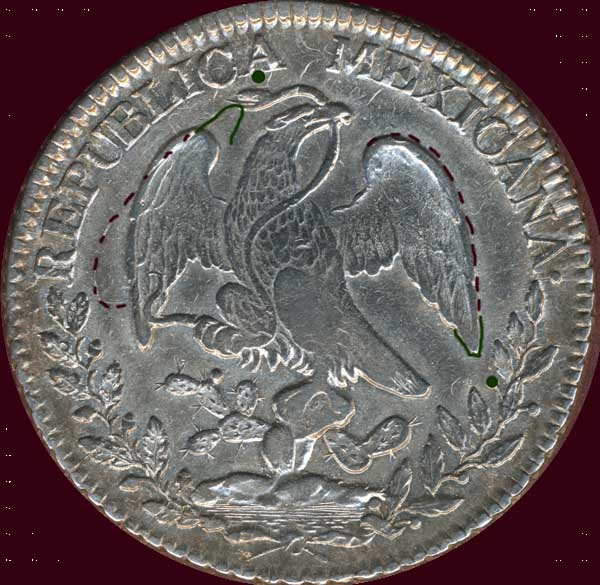 I should have another interesting coin to share with the forum in a few weeks--it has to make a long journey across an ocean first... |
|
Valued Member
United States
426 Posts |
rexvictor
Thank you for those pictures of the edge!
I don't have that many early date Pi 8R's yet so I had been asking if anyone could confirm that the edge on these years 8R's were a lot more crude, wide spaced and not as uniform as other mints like the Guanajuato mint and now I see that your pics have the same type of edge as a 1832 3/2 that I have in my collection.
Thanks again!
Edited by RealPeso
10/18/2011 7:34 pm
|
|
Valued Member
United States
115 Posts |
Hi RealPeso,
I'm glad the pictures were helpful and that they confirm the edge style on the early Potosi coins. Would you mind a couple of your pics to this thread, too? I'd love to see the overdate.
|
|
Valued Member
United States
426 Posts |
Hi rexvictor! Here is the thread regarding my 1832 3/2. Not as good condition as yours but nevertheless a nice piece. https://goccf.com/t/81113 |
|
Page 2 of 2
|
Replies: 17 / Views: 3,774 |
Page 2 of 2
|





 First Page

 Posted 10/12/2011 10:20 pm