| Author |
 Replies: 22 / Views: 8,849 Replies: 22 / Views: 8,849 |
Page 2 of 2
|
|
|
|
Pillar of the Community
United States
1227 Posts |
|
|
Bedrock of the Community
United States
10065 Posts |
makes cents...
How much squash could a Sasquatch squash if a Sasquatch would squash squash? Download and read: Grading the graders Costly TPG ineptitude and No FG Kennedy halveshttps://ln5.sync.com/dl/7ca91bdd0/w...i3b-rbj9fir2 |
|
Valued Member
United States
402 Posts |
|
|
Bedrock of the Community
United States
20753 Posts |
Quote:
I guess this isn't your car then? No, this is. And this is what I call RED. 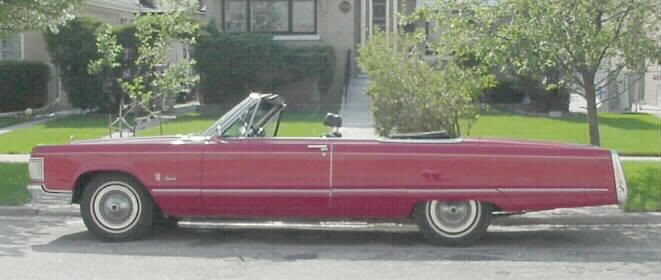 However, after many things done to this coin, it is close to Red.  Edited by just carl
01/15/2013 9:50 pm
|
|
Pillar of the Community
Canada
1411 Posts |
Bad picture?
Looks Maroon to me (and I know reds... the only color that I can pass art with [I'm young enough that last year was the last year I was forced to do Middle School Art... I hated it] [other than grayscale!])
|
|
Pillar of the Community
United States
3755 Posts |
edgman, yes, that is the origin of that saying and you are right, I would think those would be highly collectible as well. Just not the red cent the OP meant...I think.
I agree the term red is very loosely used, but it is a kind of coppery red color.
|
|
Valued Member
United States
402 Posts |
A "Red Cent" The price of the item was not a factor in the use of the Ration stamps. However, to make exact change, shopkeepers were issued small red and or blue coins or tokens. They were made of a vulcanized fiber and were 16-mm in diameter. These basically were "small change" for stamps from ration books. The blue tokens had a value of one point and had two letters and read "OPA Blue Point 1." There are 24 different letter combinations known for the blue tokens. The red cents 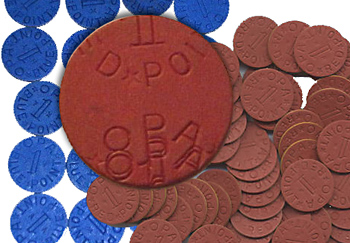 similarly read "OPA Red Point 1" and came in 30 different letter combinations. Some products required red cents in change while other products required blue tokens as change. These cents were issued from 1942 to 1945 when rationing ended. The letters seem to have had no specific meaning and were apparently random. On various price lists, the blue tokens sell for 80 cents and the red cents for 40 cents. The few scarcer letters sell for $2 and $4. Error pieces â€" usually off-center or double-struck pieces â€" are more valuable, with prices shown online of $2.50 to $6 for off-center pieces and $5 to $6.50 for double-struck pieces. On ebay, groups of such tokens often sell for less than 10 cents each. "Thats all folks" edgman    |
|
Pillar of the Community
Canada
1411 Posts |
Interesting... I should pick some up (add another thing to wantlist [Note to self: buy things on wantlist not what you look at randomly as silver bullion])
|
|
New Member
 United States
44 Posts |
I always hear my grandmother talk about things not being worth a red cent. Now I understand! Thanks!
|
|
Pillar of the Community
United States
1227 Posts |
Haha! Funny thing . . . I don't know which of the "older folks" I picked up "not worth a red cent" from, but when I was in my teens I used it all the time and still do, sometimes. I always thought it meant not worth spending money you didn't have, i.e. being "in the red."
|
|
Moderator
 United States
196572 Posts |
Quote:
I really never understood that expression. Maybe I'm color blind but I've never seen a Penny that looks RED. Not even Reddish. Guess my interpretation of Red is different than others. How many natural red heads have red hair?  |
|
Pillar of the Community
United States
4085 Posts |
carl, if you put that car on the windowsill for a couple of months, it will tone just like a Lincoln...cent! Wrap it in a bunch of Taco Bell napkins is even better.
|
|
Valued Member
United States
102 Posts |
I have a couple of the blue chips. I thought they came out of soap powder for some reason. ( was there something like coupons in soap boxes? Or did I kill too many brain cells in my younger days?) nice to know what they are now :)
|
|
Valued Member
United States
178 Posts |
Here are some different colors I found in my coins, sorry but I did with scanner and not look exactly what they are, I dont have a good camera yet :) 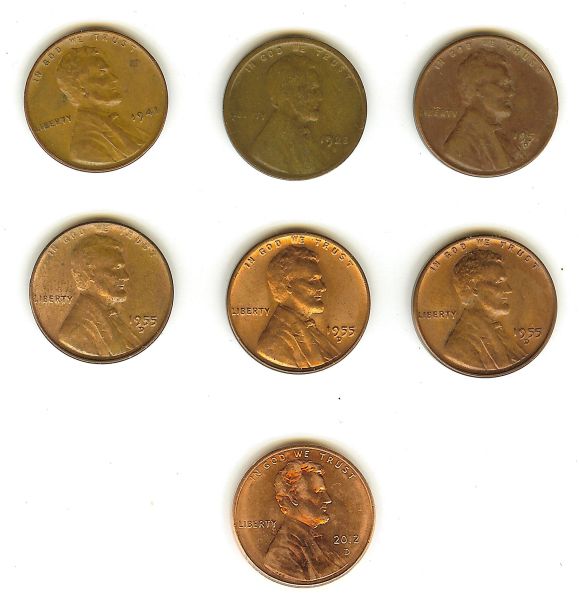 |
|
Pillar of the Community
United States
624 Posts |
OPA stands for Office of Price Administration... Rationing began in 1942, but OPA's weren't issued until 1944. Rationed items included canned goods, meats, sugar, coffee, tires, gas, silk stockings....
The OPA coins (commonly called OPAs) were used as change for food. OPAs were used by retailers to give change back for food bought with ration stamps.
The blue tokens were used for processed foods; red tokens for meats and fats.
|
|
Page 2 of 2
|
Replies: 22 / Views: 8,849 |
Page 2 of 2
|








 First Page


 Posted 01/15/2013 5:53 pm


