Hi Jfransch,
It is by Gilboy and you are right the book along with the 2 volumes of the Compendium VIII Reales Compendio de las Piezas de Ocho Reales apparently are collector items worth more than most 8 reales but as I have seen posted it is more prudent to invest money into the appropriate reference books to gain knowledge than to drift or sail into ignorance that can waste thousands on fake coins.
You are right it can become an obsession- not just the historical education you obtain but as in this regard it stimulates your powers of perception, reason and scientific knowledge â€" such as how to perform a sp test and then put it all together as a detective and hopefully produce a logical determination that stands before others to support your stance.
I also agree that there are many new areas to branch off and specialise in that is why I have decided to try and restrict myself to 8 reales as to try and cover all the reales as well as the Austrian/ German pre 1800 talers that I started to collect is impossible- at least for an old head like mine.
I only wish that I could download every ones knowledge on reales especially yours and Swamperbob's years of experience into a section of my brain. ( not saying that there are others that do not know just as much or more â€"just I have just started to trawl this forum and not that you both seem to be forefront in regards to 8 reales).
It is frustrating as it seems it will take years to get up to speed on just the many different mints and their designs and abnormalities â€" not to mention the counterfeit in that was down by in th e1800 and even prior if my memory serves me correct.
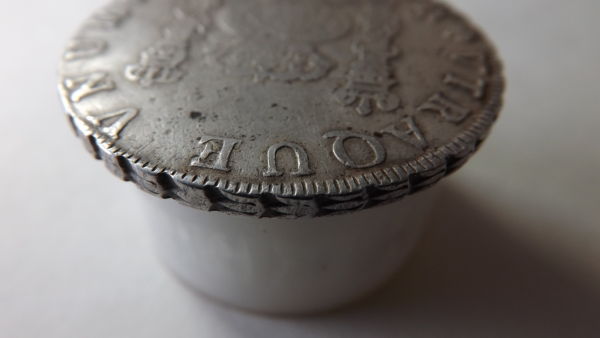
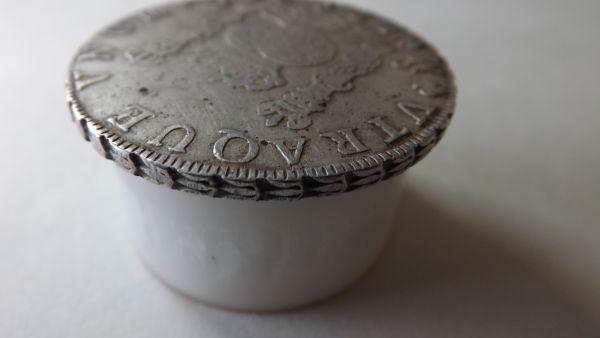
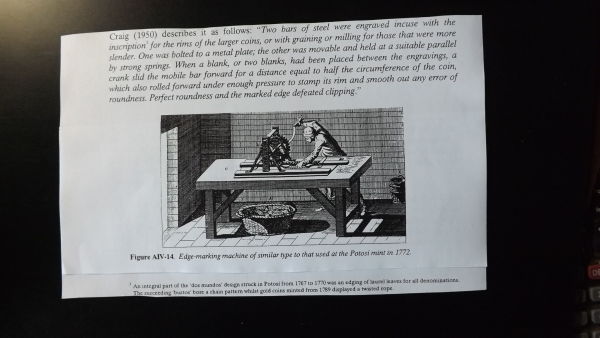
I have attached a drawing on the edging machine that apparently was used around 1772 â€" it shows long bars that were engraved to do the edging but I cannot seem to discern if they were long enough to produce just one edge by reversing the movable top engraving bar to support my theory. Most likely Swamperbobs reply is 100% correct that the bars would not be produced long â€" I suppose it is the rebellious sceptical gene in me that need to exhaust all possibilities so I apologise Swamperbob I should just listen to your years of experience- Most Of us Aussie convicts have hard heads.
I have just started to skim through my copy of the The milled Columnarios Of Central And South America, Numismatic history of Mexico from the pre-Columbian epoch to 1823 and it was interesting to read the following;-
"Yet whereas no limit appears to been fixed for each denomination in England , in Spain they were set out in detail though it is very possible that the limits were observed with lips more than with the heart and mind.
For silver coins they were: 8Rs Up to 4 grains (0.1996g) 4Rs Up to 3 grains (.01497g)......"
"In the Spanish dominions on the other hand, by the order of 9 June!728, lightweight coins were put aside for the payment of staff salaries(!) and, should any mint have surplus "febles", it could send them on to less fortunate sister intuitions."
"The diameters of the coins rarely varied but the thickness was determined by the number of coins that had to be obtained from a given quantities of metal."
Very interesting to note that weights may not of always been as strictly enforced as some state especially when mints were privately managed and not by the Spanish State as in later years even though there was severe penalties if caught.
The Author also makes a comparison to that of England when the moneyers customarily struck a quarter of the guineas several grains too heavy and another quarter too light. Only the correct and lightweight coins passed into circulation with the Gold merchants collecting the heavier coins and reshipping them back for reminting at the correct reduced weigh which resulted in them picking up 2 or 3 per cent profit on each coin. Apparently the practice was given the nick name- "Come again Guineas"
Anyway thanks for the welcome I hope I do not outwear it with too many questions.






 First Page


 Posted 02/05/2013 8:46 pm