| Author |
 Replies: 19 / Views: 4,851 Replies: 19 / Views: 4,851 |
Page 2 of 2
|
|
|
|
Valued Member
 Croatia (Locally: Hrvatska)
92 Posts |
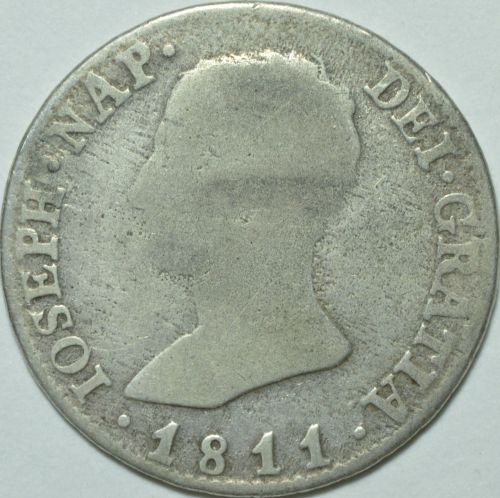
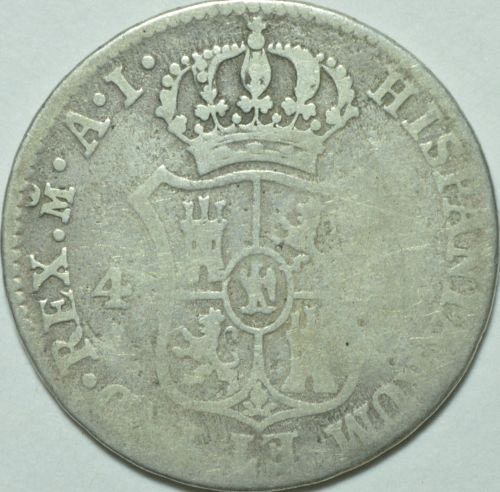
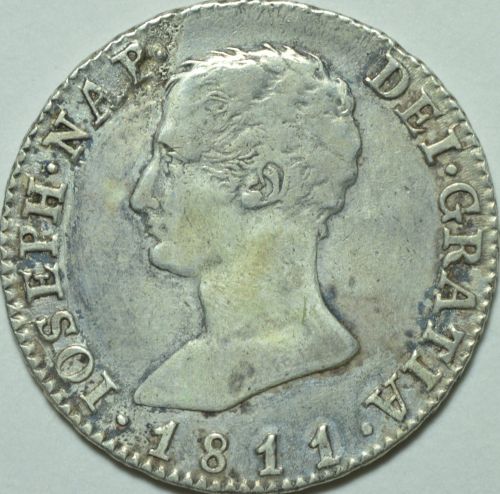
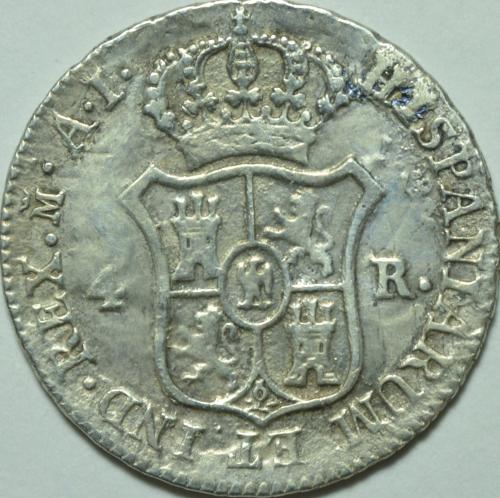
Here is scan of edge: 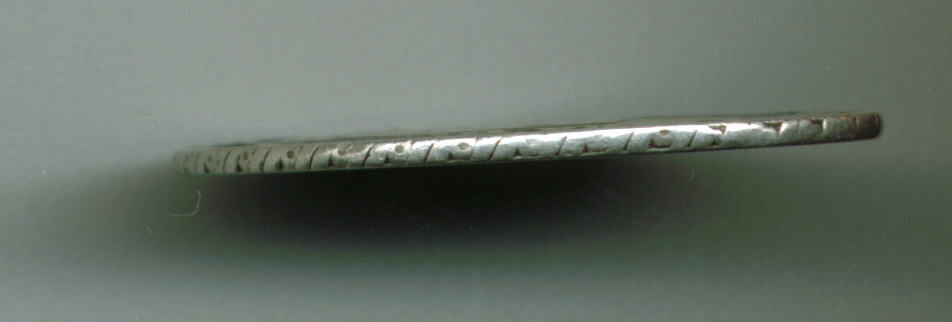 I paid for this coin 30$ with postage. What to do? Send coin back to seller or keep it? And sell later like contemporary counterfeit? Thanks |
|
Pillar of the Community
United States
5362 Posts |
That edge looks good.
It is of course possible that weights are incorrect but I have searched several sources now and find weights consistent with the lower version.
I dealing with post 1830 counterfeits weights tend to be greater than in the earlier colonial issues. They are not as common as underweight copies but they do occur in the Hard Times period issues.
Coronado's book lists mostly modern forgeries and few truly Contemporary coins.
I would still classify the coin as "suspect" and keep checking.
The first fact to check is the SG.
|
|
Pillar of the Community
France
1591 Posts |
30 USD with postage is a nice price (well, an OK price).
The edge looks good.
I'm always mixing weights on those, it's a real mess (with the "de vellon" series, and different denominations ...)
|
|
Pillar of the Community
United States
5362 Posts |
The De Vellon series rarely came to the states so I have never seen that many of them. But the ones I have handled fall into essentially correct weight ranges. The weight was 27.07 grams per 8 reales and I have always used a direct mathematical conversion by proportion.
I thought that it was not so much the silver standard as the conversion difficulty that kept these coins at home.
As you can see from the following chart no exact match occurs below the 4 reales so change would have been necessary in denominations that were not made.
8 Reales de plata Fuerte = 20 Reales de vellón
4 Reales de plata Fuerte = 10 Reales de vellón
2 Reales de plata Fuerte = 5 Reales de vellón (not made)
8/5 Reales de plata Fuerte = 4 Reales de vellón
1 Reale de plata Fuerte = 2.5 Reales de vellón (not made)
8/10 Reales de plata Fuerte = 2 Reales de vellón
1/2 Reale de plata Fuerte = 1.25 Reale de vellón (not made)
2/5 Reale de plata Fuerte = 1 Reales de vellón
I am intrigued about the idea that perhaps homeland coinage was debased without knowledge of the public. But if that were the case why are some of the coins made standard and the others OVERWEIGHT. That makes no sense to me.
|
|
Valued Member
Croatia (Locally: Hrvatska)
92 Posts |
|
|
Pillar of the Community
United States
1962 Posts |
When Krause etc. post blatantly inaccurate information on the entire homeland Spain portrait Reales series, conversations like this that go off the deep end ensue... Would anyone question that coin just from LOOKING at it? "I am intrigued about the idea that perhaps homeland coinage was debased without knowledge of the public..." That's exactly what happened... Spain fiddled with the specs. of the homeland issues vs. the colonial pieces from as far back as 1686, and some semblance of consistency within that fiddling wasn't really established until late in the shield pistareen series (1750s or so). If you Google things like "Old Plate" vs. "New Plate" reales, the "quinto" or King's Fifth on the colonial issues, you'll locate some info about this. Long story short... the homeland 4R and 8R (REGULAR, not vellon) were kept at the old standard, while the 1/2R, 1R, and 2R were effectively debased/devalued by 20%. By the time the "head pistareens" (portrait reales) were introduced in Spain in 1772, they had basically settled into to a standard of just about 6 grams weight as struck with a fineness of .8125 or thereabouts... FIVE times that equaled the old 8 Reales aka Peso standard. The Napoleon vellon issues replicated this, but with the different value real... Thus, the Vellon 4R is the exact same coin as the preceding Charles IIII 2R. If you putter around Google Books and elsewhere online, there are some period resources which break down the assay of these and other world coins of the time. A quick example - the Eckfeldt DuBois book: http://books.google.com/books?id=8K...AAJ&pg=PA122 |
|
Pillar of the Community
Australia
2830 Posts |
I am very interested in coins of this era, but I know that I am still a novice.
I think it is important to keep in mind that this is a Napoleonic issue, rather than a Loyalist.
Do we know if the Napoleonic mint was working to the same weights and standards as the previous regime ?
|
|
Pillar of the Community
United States
5362 Posts |
I can understand under alloy coins to a limited degree and I understand weight ranges but what I don't understand here is a heavy coin?
These were always the first to hit melting pots following Greshams Law.
I have yet to see them in reality but I will check Eckfeldt's 1842 book thoroughly.
|
|
Pillar of the Community
Hong Kong
1270 Posts |
|
|
Pillar of the Community
United States
1962 Posts |
Bob, the point is that Krause's quote for these Napoleon vellon 4R as 5.4g of .903 fine silver, as far as I have ever seen, is not what these are in reality... They are in fact a heavier coin, whose as-struck weight was apparently close to the 6.0g observed weight for the regular early 1800s Spain portrait 2R. Therefore it is certain that they too were struck in a lower .800's fineness because that would yield the expected amount of silver content (1/5 of the "Duro" - 8 Reales de Plata or 20 Reales de Vellon).
I sort of suspect that they took they the standard "duro" weight, 27.07g at .903 fine, divided by 5, and printed the result. Don't forget, they also screw up the specs on the devalued regular Spain portrait 2R by stating that those are 6.77grams, the old plate standard (which the colonial pieces remained on). I think I've read that "officially", 6.77g of .903 was the still the quoted specification from the crown, as if they were an aging actress lying about their age when everyone knows otherwise... I presume this is what Krause is regurgitating.
Then again, my older 1800s Krause also never notes the difference between the older Ferd VII pieces and the 1834-early 1850s vellon-type issues of Isabella II, so if you didn't know better, you'd assume they should be the same type of coin...
|
|
Pillar of the Community
United States
5362 Posts |
So if I am understanding you correctly the Spanish continental issues contained the correct amount of silver packaged in a heavier coin but that the equivalency in terms of actual silver content was maintained between Vellon and Plata Fuerte systems?
I have no reason to doubt what you say at all. Especially about Krause and shortcuts being taken. However, in this case, it seems to me that this just ends up requiring the Continental coins to use a different assay of silver than they received from the colonies.
They could not melt colonial silver coins and re-strike them as continental issues. They had to melt adjust and recoin.
The extra work and cost of adding extra copper then making the coins heavier to produce an end result containing the identical quantity of silver anyway seems to be wasteful and gains the crown absolutely nothing. In fact the crown spends extra money to make the same face value in coins.
Or am I somehow missing something in this transaction?
Or were the Vellon coins produced in a much lower assay allowing the crown to make a profit at the expense of the people?
I did some quick math. If we presume that the silver content in the 4RV was 1/5th the Duro (8RPF) that means that the 4RV contains 0.7859 oz Ag x 1/5 = .1572 oz Ag or 4.89 grams of pure silver or 4.89/6.0 = 814 fine silver.
But unless they altered the ratio or fineness someplace along the line - the 20RV would have to weigh 5 x 6.0g or 30 grams. Which it did not. The 20RV was equal to the 8RPF in weight at about 27 grams.
I also checked in with Eckfeld. Under Spain on page 122 are some very interesting figures, First they provide the average weight and fineness of coins assayed by the US mint in the years prior to 1842.
The Dollar coin of Spain was always within a couple cents of being correct. The most serious deviation was for the Spanish-American coins of Mexico during the revolution and that was only 5 cents per dollar coin.
So all dollars were roughly 900 fine and weighed 27 grams or there abouts. The dollar was 8 Reales Plata Fuerte or 20 Reales Vellon. The 4 Reales vellon was called the Pistereen or Peseta.
Specific averages by type are provided. The Spanish dollars tested at Philadelphia resulted in:
Charles III and IV 1772 to 1808 900 fine 412 grains
Ferdinand VII 1808 to 1821 900 fine 414 grains
Joseph Napoleon 1809-1813 900 fine 415 grains
No Spanish dollars tested after 1821 - non circulating in the US.
The Spanish American dollars ran a range of 897 to 903 fine and a weight of 413 grains average.
So for dollars there is no difference.
The Pistareen is different.
1707 to 1712 83.6 grains 11 dineros or 917 fine
1715 to 1771 92.3 grains 10 dineros or 833 fine
1772 on "head" 92.3 grains 9.75 dineros or 813 fine.
There are 480 grains per troy ounce so the head pistereen (4 reales of vellon) of Spain (not the Spanish American 2R) weighed .1923 troy ounces or 5.98 grams.
Problem solved by the Philadelphia mint in 1842. The 4 reales of vellon weighed 5.98 grams and used .813 fine silver. It was not equivalent to any Plata fuerte denomination.
After 2 hours of reading and checking math and getting really confused by terms I think I understand.
So given the revised weight standard the coins may be fine after all. They are about the right weight. If you can do SG they should test 10.15 not 10.3.
So I answered my own questions the 814 and 813 finess are actually a good mathematical cross check.
It was ONLY the pistereen which was debased significantly. They were initially accepted at 20 cents each but that dropped over time and by 1842 they were no longer in use in the US,
So the only question I have is WHY?
Edited by swamperbob
03/06/2013 10:50 pm
|
|
Pillar of the Community
United States
5362 Posts |
So if I am understanding you correctly the Spanish continental issues contained the correct amount of silver packaged in a heavier coin but that the equivalency in terms of actual silver content was maintained between Vellon and Plata Fuerte systems?
I have no reason to doubt what you say at all. Especially about Krause and shortcuts being taken. However, in this case, it seems to me that this just ends up requiring the Continental coins to use a different assay of silver than they received from the colonies.
They could not melt colonial silver coins and re-strike them as continental issues. They had to melt adjust and recoin.
The extra work and cost of adding extra copper then making the coins heavier to produce an end result containing the identical quantity of silver anyway seems to be wasteful and gains the crown absolutely nothing. In fact the crown spends extra money to make the same face value in coins.
Or am I somehow missing something in this transaction?
Or were the Vellon coins produced in a much lower assay allowing the crown to make a profit at the expense of the people?
I did some quick math. If we presume that the silver content in the 4RV was 1/5th the Duro (8RPF) that means that the 4RV contains 0.7859 oz Ag x 1/5 = .1572 oz Ag or 4.89 grams of pure silver or 4.89/6.0 = 814 fine silver.
But unless they altered the ratio or fineness someplace along the line - the 20RV would have to weigh 5 x 6.0g or 30 grams. Which it did not. The 20RV was equal to the 8RPF in weight at about 27 grams.
I also checked in with Eckfeld. Under Spain on page 122 are some very interesting figures, First they provide the average weight and fineness of coins assayed by the US mint in the years prior to 1842.
The Dollar coin of Spain was always within a couple cents of being correct. The most serious deviation was for the Spanish-American coins of Mexico during the revolution and that was only 5 cents per dollar coin.
So all dollars were roughly 900 fine and weighed 37 grams or there abouts. The dollar was 8 Reales Plata Fuerte or 20 Reales Vellon. The 4 Reales vellon was called the Pistereen or Peseta.
Specific averages by type are provided. The Spanish dollars tested at Philadelphis resulted in:
Charles III and IV 1772 to 1808 900 fine 412 grains
Ferdinand VII 1808 to 1821 900 fine 414 grains
Joseph Napolean 1809-1813 900 fine 415 grains
No Spanish dollars tested after 1821 - non circulating in the US.
The Spanish American dollars ran a range of 897 to 903 fine and a weight of 413 grains average.
So for dollars there is no difference.
The Pistareen is different.
1707 to 1712 83.6 grains 11 dineros or 917 fine
1715 to 1771 92.3 grains 10 dineros or 833 fine
1772 on "head" 92.3 grains 9.75 dineros or 813 fine.
There are 480 grains per troy ounce so the head pistereen (4 reales of vellon) of Spain (not the Spanish American 2R) weighed .1923 troy ounces or 5.98 grams.
Problem solved by the Philadelphia mint in 1842. The 4 reales of vellon weighed 5.98 grams and used .813 fine silver. It was not equivalent to any Plata fuerte denomination.
After 2 hours of reading and checking math and getting really confused by terms I think I understand.
So given the revised weight standard the coins may be fine after all. They are about the right weight. If you can do SG they should test 10.15 not 10.3.
|
|
Pillar of the Community
United States
1962 Posts |
"It was ONLY the pistereen which was debased significantly. They were initially accepted at 20 cents each but that dropped over time... It was actually the pistareen, plus its little siblings the 1R and 1/2R... Note that they DID try to mess around with the silver content of the 4R and 8R as well in those post-1686 years (think of the ensuing "Maria" series pieces, plus the 1718 shield 4R and 8R... those seem to have been just about exact 2x and 4x multiples, respectively, of the pistareen 2R of that time...), but it didn't go over well in merchant circles. Thus the 4R and 8R (used more for trade) were kept as "full weight", but the smaller pieces (whose job description was more "small change" in nature) stayed at the reduced silver content level... This made me think of an article on pistareens and their role in the Colonies that I believe was published by the Colonial Coin Collectors' Club aka the C4... Re-skimmed it briefly, Sect. 3 touches on the discrepancy between the pistareen, 1R, and 1/2R vs. the bigger denoms.: http://numismatics.org/wikiuploads/...stareens.pdf |
|
Pillar of the Community
United States
1962 Posts |
Also, regarding the pistareen weights...
1707 to 1712 83.6 grains 11 dineros or 917 fine
1715 to 1771 92.3 grains 10 dineros or 833 fine
1772 on "head" 92.3 grains 9.75 dineros or 813 fine.
Keep in mind that especially for those late 1710s-early 1720s pieces that became so prevalent in the southeast, the weights you find for what by all accounts seem to be "genuine" pieces really seem to fluctuate... some near that prescribed 6.0 grams listed for 1715-up, but many a good bit lower (accounting for wear, obviously).
And of course there were plentiful counterfeits of those pieces as well...
|
|
Pillar of the Community
United States
5362 Posts |
I read the paper very interesting.
It is very colonial in perspective of course. I was reporting on the test result that the Philadelphia mint reported in 1842. Testing of foreign coins had been going on since the late 1790s based on earlier mint reports. One of those destructive assay tests fixed the value of the US dollar at the average of the 8R coins in circulation. It was fixed by measurement AND ASSAY. The coins used were Spanish-American issues NOT Spanish-peninsular issues.
I think the thrust of what Eckfeld said was right at least in the period from 1800 onward. The only coins that circulated in the Federalist and Early Republican eras were the larger 8R and 4R (20R and 10R vellon) types among the Peninsula coins and those were scarce. The Vellon coins (Pistereen and below) were not well received at any time especially after 1827 when the reports about the true value of a Pistereen became well known.
In the US after the establishment of the mint, the minor coins of preference were the 1/2, 1 and 2R plata fuerte coins that did meet assay. The Pistereens were long gone even by Riddell's time (1839-1844).
So I guess we can both be correct within our own time frames. I tend to speak from the perspective of the Hard Times and your focus is 50 or more years earlier when monetary conditions were significantly different.
In the colonial era 1789 and earlier the ONLY struck counterfeits had to be made with hand engraved or punched dies. They were struck in debased silver, some Sheffield plate and base metal washed with a silver (like an amalgam application). There were NO techniques available at that time to make a transfer image die.
Transfer techniques, German silver and the electroplates all date to after 1830 and fall squarely in the Hard Times period when counterfeiting reached its zenith in the US.
Even the Birmingham, England counterfeit 8R types date to AFTER 1796 and well within the US Federal period. They are strictly speaking not colonial at all by a US definition but they are from a Spanish colonial perspective.
I also checked Riddell's work and his data for the various types. His work confirms Eckfeld (Riddell may have used some of Eckfeld's data in addition to assay's by Hort of New Orleans.)
The assay standard varied within a very narrow range of 898 to 900 for both the peninsula and colonial issues and weight variation was 2 grains. The exception was Barcelona which was singled out as BAD but in that case assay was 896 and they were 4 grains lite.
I think our exercise tends to confirm that assay standards whatever they were wer adhered to far more closely than many early 20th century experts thought. Most of the under assay coins found in the market place are NOT crude originals they are in fact counterfeits of several different varieties.
That is essentially the contention that we lay out in our book along with the proof.
|
|
Page 2 of 2
|
Replies: 19 / Views: 4,851 |
Page 2 of 2
|








 First Page

 Posted 03/05/2013 12:17 pm