| Author |
 Replies: 58 / Views: 7,166 Replies: 58 / Views: 7,166 |
|
|
|
|
Pillar of the Community
 United States
5362 Posts |
Quote:
Just from seeing the coins, it's true you don't see all that many Ferd.VII pieces with chops on them (though you find chops on some imaginary/military Mex 8R of 1808-11). But "were not welcomed" doesn't necessarily have to mean "were never accepted or used", does it? And does it automatically imply that Ferd.VII issues absolutely would NOT have been targeted for replication? The key to the reason the Class 2 coins were made in the first place was the premium OVER silver melt that they carried. Charles III, Charles IIII and the Transitional coins of Mexico City were the coins that carried a premium. China would take the others but at far lower rates of exchange. Ferd VII might trade at 4% over silver - The US Trade dollar at 4% under but the Carolus coins from Mexico were traded at 16 to 80% over silver spot. That is not a typo. At one point in 1856 an unchopped Carolus dollar traded for 80% OVER silver content. The only coins treated this way were the ones with Mo. The merchants distrusted Eagle dollars - all Bolivian and Peruvian coins after Charles III and US issues. I have even located cases where the Limae monogram was recut to read Mo. This alteration only makes sense in light of this Mo preference. They too Limae coins that would trade 5% under silver changed the mint mark at got 20% over - nice way to make a 25% profit for a little hand tooling. Therefore Class 2 coins after Charles III are usually Mexico City. The Charles III coins are fewer in number but can come from several provincial mints. The Charles IIII and the transitional Ferdin's (which have a fat head and wide ribbons) all were acceptable AT A PREMIUM if they were also from Mexico City and had NO wear or CHOPS. There were not that many high grade unmarked Carolus dollars in 1856. Yet that year 35,000,000 were shipped to China to pay the balance of trade deficit of the west. This premium carried on until the first few decades of the 20th century. The Carolus dollar was only demonetized in China in 1935 in favor of the FAT man dollar. But they were still hoarded. They only started to come back to the west after silver prices rose. I guess old fat men like me are important in China. Maybe I should move there.  And $22 is a very good price I just paid $92 for a new one to test. Edited by swamperbob
04/18/2013 10:06 pm
|
|
Pillar of the Community
United States
1962 Posts |
Concerning the anecdotes from your local New England ring... Interesting that you've now linked it, potentially, to a higher level. Those dots seem like they could connect. If the scope was indeed that large, it's all the more fascinating that more info concerning these operation(s) didn't leak out.
You've shown that 1805 piece before... I don't recall, have you found any twins to it?
With a brief answer, WHY exactly did they not like the Ferdinand bust, even of the Mo mint? Kind of silly, when you think about it... They were picky enough to prefer the coins with the Mo mintmark... yet rejected (relatively speaking) coins with that same mark, which would test to be the same, content-wise, because they had a different picture.
Maybe they though the Charles' big schnozzes held aphrodisiac powers...
|
|
Pillar of the Community
United States
5362 Posts |
Quote:
With a brief answer, WHY exactly did they not like the Ferdinand bust, even of the Mo mint? Kind of silly, when you think about it... They were picky enough to prefer the coins with the Mo mintmark... yet rejected (relatively speaking) coins with that same mark, which would test to be the same, content-wise, because they had a different picture. That point was not lost on English, US and even Chinese sources. They all thought it was crazy. An official edict was promulgated by the Chinese at the behest of US trading interests in 1838 making the Mexican Eagle dollar Standard in China. This was affirmed and made even more official in 1856. The edicts simply didn't stop the preference. The US Trade dollar which contained more silver was also rejected. It traded UNDER melt as much as 4%. There are references to the absolute preference from before 1840 and there is NO reason. It is just a preference for the fatter face (Buddha like) Carolus with THICKER ribbons (rich?). That is why they preferred the picture of Carolus but accepted the transitional bust of Mexico City. Regarding the Mo mint mark that was due to actual fire assay tests from what I gather. The coins of Bolivia and Peru were found to be unreliable in content. The same problem was reported with the South American Republican coins AND with the first Mexican Eagle dollars. So by the late 1830's the Chinese were fixated on just Carolus from Mexico City. NOTHING ELSE carried the big premium. The dates didn't matter - we record several impossible dates for Chas IIII - the earliest meant for circulation is a Class 1 dates 1700 and the last 1895. So the date range was of no concern. The assayer initials were also of no importance so there are many incorrect combinations and fantasy assayers. One interesting quote I found from a Chinese author indicated that the US Trade dollars were accepted at a discount then melted and recoined as Carolus dollars so that the sharp Chinese merchants made enough to produce a tidy profit even after the extra work. The added silver in the Trade dollar was a bonus that paid for the re-coining. Quote:
Concerning the anecdotes from your local New England ring... Interesting that you've now linked it, potentially, to a higher level. Those dots seem like they could connect. If the scope was indeed that large, it's all the more fascinating that more info concerning these operation(s) didn't leak out. The scope of the project is something I have always marveled at as well. But in the era of political corruption and the robber barons who controlled big business it makes complete sense. They always operated in secret behind closed doors and left minimal records. The fellow charged in California with smuggling of counterfeit coin that got off as a result of the "senator" also had ties to shipping, textiles and railroads he was on several boards and had powerful relatives. His partner (an in-law) was a Railroad president. Another factor to consider is that in the period after the Civil War, New Bedford, Mass was the city with the largest number of millionaires per ca pita in the world. It was the area where Hetty Greene and her father operated. I did find ties to one of the larger banks of the time (pre-crash of 1929) and it appears the raw silver came through that channel. The bank is long out of business and any old records are unavailable. No one officially knows anything about their present whereabouts. But I learned of an archive that supposedly had the bank collection. In a preliminary phone conversation on a sale of records I was brokering, I brought up the subject of counterfeiting in relation to the bank and their negotiator (an archivist)acted like he knew all about it. So I travelled back to New Bedford a couple months later (a 750 mile trip) only top find out I could NOT hunt through the files and he "knew nothing about any counterfeiting operation". I reached the same dead end when I enquired about the corporate records of the metal works. The company had gone through several mergers (it still exists technically) and it appeared all the old files were moved to a central point about 30 years ago. But when I asked if I could get research access, they said about 10 years ago all of the corporate records were destroyed and no photocopies or microfilm records were ever made. The official answer was another "stonewall". One of the letters I uncovered (for which I could NOT GET permission to print - from a different archive) also refers to "the Supreme Court" as being an avenue of appeal in the counterfeiting case. These may be veiled references but the individuals involved included a State Governor and another US Senator as well as several judges. I have not completed the family trees but there are clear links to many influential names. One other "fact" to consider that points to a very high level of support was that the Law of 1873 (The Crime of 1873) actually included a clause that made a legal defense possible to a charge of counterfeiting for producing NON-current foreign coins in the US. Up until 1873 such production was against the law. The law of 1873 changed that provision and this was the basis used to quash the case against the Mass Attorney General in 1893. There are NO court records anywhere of these proceedings that I could locate. Why more records can not be found is likely because many have been lost - destroyed - or perhaps they were never written in the first place. Imagine the diplomatic problems that might have resulted with Mexico if the truth was known. We were after all producing money that they wanted a 15% surcharge for making legally. That amounted to millions of dollars potentially. We were making these coins after being turned down. I think we are seeing the tip of an iceberg. What has yet to be uncovered is likely far more than has been uncovered to date. |
|
Pillar of the Community
United States
1962 Posts |
|
|
Rest in Peace
United States
2668 Posts |
Quote:
... the Law of 1873 (The Crime of 1873) actually included a clause that made a legal defense possible to a charge of counterfeiting for producing NON-current foreign coins in the US. Up until 1873 such production was against the law. The law of 1873 changed that provision and this was the basis used to quash the case against the Mass Attorney General in 1893.
There are NO court records anywhere of these proceedings that I could locate... This is fascinating. |
|
Pillar of the Community
United States
1962 Posts |
|
|
Pillar of the Community
United States
5362 Posts |
I have seen the 1786 already and have been in discussions with the owner from the day it went up.
He says it has one clear overlap and damage at the spot where the second should be. He counted the segments and believes there is an overlap at that point.
I made him an offer based on it being a Class 2 counterfeit that he rejected. He expects to get much more than that at auction. I have set a slightly higher snipe bid that I do not expect will win. As of this second it is not dead yet but on its last gasp so to speak.
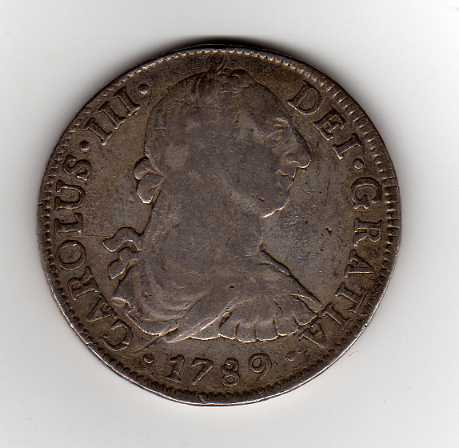
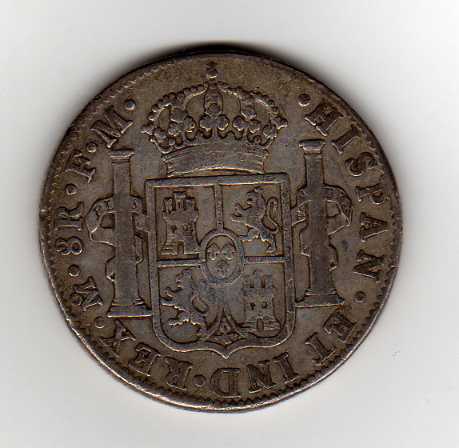
This is an excellent example of a VERY FULLY developed keyhole. Identical in shape to that seen on 1789 coins. That of course is an IMPOSSIBLE happenstance - but the coin is his and we are not yet published.
I hope the winner wants a VERY nice fake.
|
|
Pillar of the Community
United States
1801 Posts |
|
|
Pillar of the Community
United States
1962 Posts |
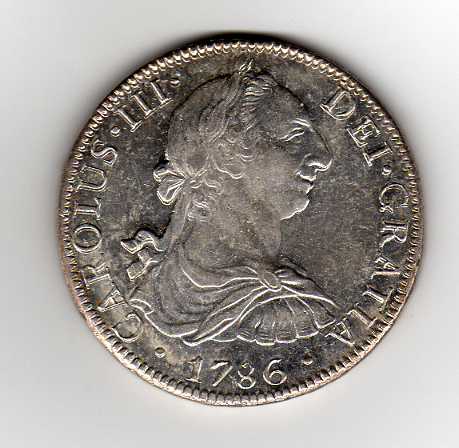
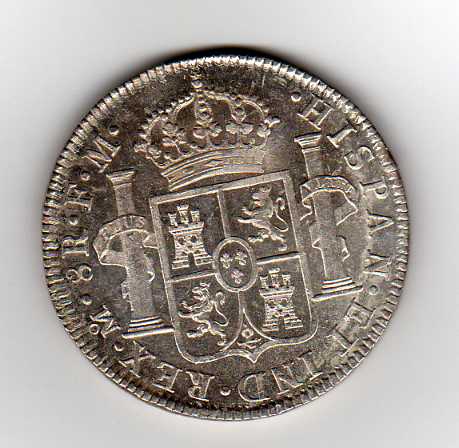
Jfransch, do you have a larger scan of the 1786? Hard to tell about the castle windows from that size - not totally sold on that. Interesting piece overall, though... Obviously near UNC, luster and hint of PL on the reverse. Certainly a professionally struck coin (not a crude early contemporary counterfeit and clearly not a modern numismatic fake).
For the purposes of this discussion... just on surfaces alone, it's either genuine or a very well made example of Bob's proposed bullion restrikes. Depending on those castle windows, etc., if it IS one of Bob's "Class 2" pieces... this would be important piece as it affords a chance to see what the surfaces look like in a (nearly) "as struck" state...
PS - not sure this is very important... but interesting how that lower right castle is notably crooked. Not typical. Also, note the doubling in the obverse legend...
Edited by realeswatcher
04/22/2013 2:32 pm
|
|
Pillar of the Community
United States
1801 Posts |
Realeswatcher
Send me an private message with your email and I will send you a high resolution scan of the coin. It is virtually unc, beautifully struck, fully doubled on the entire obverse including parts of the portrait and weighs 26.96 gr. In hand it is a beautiful coin.
|
|
Pillar of the Community
United States
1962 Posts |
Quote:
Swamperbob wrote:
...while it is likely that block patterns were changed on matrix blocks - the pattern is the same for BOTH types - keyhole and rectangular. It is as if a single example from a matrix block gave rise to numerous copies of itself instead of new punches being made from the original block.
If these working dies were all made using one particular punch (or even if one matrix block was damaged) and they were used for four consecutive years I would expect to see a progression in the damage from 1786 to 1789. There is NONE apparent. If anything there is some slight change in shape that is OUT OF ORDER. This presents us with the very unlikely probability that the reverse dies were cut and used years out of sequence.
In Birmingham England, there has long been a suspicion that some die makers (the professional class of engravers) actually produced punches for 8 Reales to supply many different factories with counterfeit matrix sets. To me that makes sense. In the half penny series, this same thing happened. Sometimes the punches are seen on HIGH QUALITY dies while in other cases the same punch designs appear on dies are very poorly executed.
If the punches were sold from one centrally located facility this makes sense. Conversely it would not fit a pattern of each factory making their own punches from scratch. With this in mind, Bob, I'm comparing Jfransch's piece (he's sending a larger scan) to the that 1786 on ebay... and in turn to several dozen 1786 pieces from auction archives (Ponterio, Heritage, the Spaniards...). -- While it's interesting that the lower right castle on jfransch's piece and that ebay 1786 keyhole window are both slightly crooked, their reverses are not the same die. The castle alignment is apparently coincidental? -- Jfransch's pics aren't large enough (yet) to really examine the other features on the castle and shield so we can't really scrutinize that piece... BUT in looking at the ebay 1786 mentioned, note those prominent chips missing out of several spots along the inner part of the shield (I'm sure Bob is aware of this)... Interestingly, more than a few of the auction archive pieces show a chip in the EXACT SAME SPOT to the left of the balcony of upper left castle. The placement is too exact to be coincidental, I think... However, it is not quite as large a chip as on the ebay (actually, I see TWO variant sized chips in the archives... like gradual stages). And, guess what? All of those archive pieces I saw with a chip in that spot have NORMAL castle windows... NOT keyhole castles... -- On the auction archive pieces with some form of that chip present, most also seem to have another small chip (on the shield border directly in line with the right front paw... of the lower left lion) that doesn't seem to be present on the aforementioned ebay keyhole 1786... also, the other chips that DO show on that ebay DO NOT seem to be there on the archive pieces... ***BROKEN SECTION of the castle wall to the right of the right castle window: Bob has mentioned this feature many times before, including Page 1 of the thread. Well, curiously, almost every 1786 piece shown in auction archives SHOWS this break! This includes pieces WITH the missing chunks out of the shield border... and pieces WITHOUT those missing chunks. NOTE that perplexingly, the ebay 1786 mentioned ALSO seems to show sort hint of this break in the castle wall... but again, that piece HAS the keyhole castle whereas all of the auction archive pieces I saw with the wall break have NORMAL windows. I just pasted some reverses as a quick illustration... you'd have analyze the years around 1786, the obverses, etc. But there are certainly a lot of permutations of shield border state and castles here (not even looking at the crown, lions, pillars). I don't see any immediately obvious pattern. PS - One other feature to note... something else Bob has touched on before -- Look at the upper central vertical dividing line within the shield (separating the upeper shield quadrants). The line clearly rests OVER the upper horizontal shield border on the ebay keyhole window 1786... whereas the auction archive reference pieces all show a smooth intersection of these lines, no visible overlapping.  Edited by realeswatcher
04/23/2013 03:25 am
|
|
Pillar of the Community
United States
1962 Posts |
Did find a keyhole window 1786 from Cayon:  |
|
Pillar of the Community
United States
5362 Posts |
realeswatcher From all appearances you are certainly getting the hang of this. Perhaps you will someday be the person to break the code and publish this sequence. It is a complex subject. I have not spent enough time to sequence the punches but if we get enough decent pictures together in one place it may be possible. This is of course unlikely to be completed in my lifetime - so I am leaving the details of topic to my successors. I just hope I can peak interest in the subject so that the dumbing down of the hobby to a reliance on TPG slabs does not come to pass. That small chip under the parapet is likely a feature from the matrix block as it appears on both real and forged coins. The keyhole appears on several coins that are beyond all doubt forgeries. So as a working theory I will adopt the statement that the keyhole window identifies a counterfeit. As a theorem it stands to be tested and verified. How long it survives will be the test of the truthfulness of the theory. When I saw that first chip in the wall a ways back I wondered if that would also be a "proof" but it was eventually too common on both fakes and genuine so the theorem was abandoned for the chip in isolation. Regarding the Shield Outline itself. The surviving matrix blocks point to a complete outline without the devices in the quadrants. This was likely in use at Mexico City where they had a horse powered screw press. But if you check mint to mint it is obvious that many mints broke the shield down into manageable sections (see almost any Bolivian issue and it is clear). That is why I have adopted the theory that any overlap in the sections of the shield outline are highly suspect (at Mexico City). This same degree of suspicion does not extend to all the branch mint facilities. These chips will in my opinion become a basis for proving when the matrix block was changed and how often it was changed over the years of production.
|
|
Pillar of the Community
United States
1962 Posts |
Yeah, if someone devoted the time, perhaps die sequencing could be done - though the idea of so many different Bullion Restrikes (whose dies would be copied from various stages of genuine pieces) throws a big wrench into that. Large Cents are of course mapped out this way, and Bust Halves have Overtons, and I don't know if Morgans are completely, but obviously the VAM people are aware of die stages... One funny thing on this topic... when you were mentioning how the keyhole seemed to be more developed on 1787/88 compared to some 1789 pieces... Makes sense, but there's an early 1830's large cent reverse used in two different years (forget which exactly) that paradoxically appears to be in an later state in its pairing with the EARLIER date obverse. The shield outline is kind of interesting... I've seen some Potosi pieces around the CarIII/CarIIII transition, apparently genuine, that have practically crooked shields... Definitely something to take a closer look at. Anyway, Jfransch sent me a bigger picture of his 1786 piece. Curious piece... window is somewhat keyholed, but not as much as others, and the right window isn't as rounded out. Again, hard to establish pattern without detailed study... That castle break (from right window to wall) does appear on almost every auction archive coin (presumably at least some are real), but also on the keyhole left window castles... Of course, that means nothing b/c "they" could have created dies/punches from genuine 8R that had that feature. What I found interesting was that there are a few other definite die or punch markers shared by some coins... one being a nick in the left pillar (clear on jfransch's piece and that 1786 on ebay)... the other being a cluster of pinprick-like ticks on the lower right shield border (just above where the R pillar connects). I included a composite of the ebay keyholed 1786, jfransch's piece, the Cayon keyholed 1786 (a diff. rev die than those two, note the lettering above the pillars), and another worn ebay piece with the same shield outline ticks to the lower R and early stages of others... BUT normal rectangle castle windows... AND note a diagnostic missing chunk from the castles' right turret. BTW, at the bottom is a picture of a 1786 from Ponterio I think is a great study example. Note that it has normal rectangle windows... and note that same diagnostic chunk missing out of the right castle turret as that worn piece mentioned above (but slightly different lettering position?). It also has a mid-stage of the missing chunks from the upper right portion of the shield border seen on the ebay keyhole window 1786, and one by the lower left lion's belly... At first glance, there's no sign of the one at the upper left seen clearly on the ebay 1786... BUT if you look very closely, the very beginning of it is there. I also think the cluster of ticks on the lower right shield border is present (hard to be certain, but I think I see it).  http://stacksbowers.com/auctions/Au...?LotID=95116 http://stacksbowers.com/auctions/Au...?LotID=95116 |
|
Pillar of the Community
United States
1962 Posts |
1786 PCGS58, with clear keyhole window, in Ponterio Jan. 2013. Interesting... definitely different die than the 1786 ebay piece or jfransch's - can tell immediately that the lower right castle is aligned level, not crooked/tipping right. -- no sign of notch in the lower left pillar -- shield outline: no trace of any missing chunks (or the beginnings thereof) on the left side of the outline. Some fraying of the upper R corner, "perhaps" an early stage of what's seen on the others... no decisive sign of the tic cluster at the lower right seen on 1786 ebay and jfransch pieces.  |
|
|
Replies: 58 / Views: 7,166 |
|








 First Page
 Previous Page

 Posted 04/19/2013 12:21 am