| Author |
 Replies: 19 / Views: 2,513 Replies: 19 / Views: 2,513 |
Page 2 of 2
|
|
|
|
Pillar of the Community
Sweden
729 Posts |
No I do not know how those chmicals react with silver, but why take a chance? Do a search on this forum and you will get 100s of threads where EVERYONE states that nail polish remover is a big no-no. There are about 13 reasons not to use nail polish remover, and those are: Quote:
Water
Gelatin
Lanolin oil
Cocamidopropyl dimethylamine propionate
Amp isotearic hydrolyzed soy protein
Cetyl acetate
Acetylated lanolin alcohol
Polysorbate 80
Fragrance
Peg-15
Cocamine
Denatonium benzoate
Yellow 11 Edited by epikur
10/19/2013 09:32 am
|
|
Pillar of the Community
1751 Posts |
If you don't wanna ruin the coin, don't half-you-know-what it.
|
|
Pillar of the Community
United States
602 Posts |
|
|
Pillar of the Community
United States
4433 Posts |
Personally, I'd not bother with cleaning this coin. From a numismatic standpoint, its value doesn't warrant conservation. It would be a good coin to experiment on and learn about cleaning and conservation though, if that is your goal. I have an ugly, lead counterfeit of a 1918 Walking Liberty half that my Dad found and gave me back in the 1950's. Like the 1944 dime, it's not worth much from a numismatic standpoint. Its value to me is simply that it was a gift from Dad, a memory. That's why I still have it after sixty or so years. Enjoy the hobby and the memories, son ... |
|
Pillar of the Community
 United States
2368 Posts |
Any other things to experiment with? Again I don't care about the value... Ketchup, vinegar, soap, anything?
|
|
Pillar of the Community
United States
2368 Posts |
@ ExoGuy
Yes, that is my goal, to experiment. I am trying the nail polish remover. Grease is starting to dissolve into the solution and not seeing any damage to the coin. Will check on it often and will keep this thread updated...
|
|
Rest in Peace
United States
7075 Posts |
Okay -- since you've already stuck the coin in a bunch of chemicals, I would recommend getting those other chemicals off as soon as possible. So maybe a rinse in distilled water would get some of the lanolin and other stuff off the coin. Distilled water is better than tap water because it won't be acidic. Acids, of any kind, will eat away at the coin. Distilled water is only about a dollar for a gallon so it's worth getting.
The thing about the other chemicals is that you may not see the damage done to the coin for some time.
|
|
Pillar of the Community
1751 Posts |
Honestly, if it's just grease, it should come off fine using your nail. Don't push hard, just lightly push down on the coin and pull your finger across the surface. and it should come off none the worse for the wear.
|
|
Pillar of the Community
United States
1373 Posts |
I find it amusing that tap water, something that is vital to humans for survival, is dangerous to hard metal. Bad for coins, very good in tummys.
|
|
Pillar of the Community
United States
4897 Posts |
Quote:
very good in tummys. Not always....depends a lot on geographic location, history of land use and source.... |
|
Pillar of the Community
United States
2368 Posts |
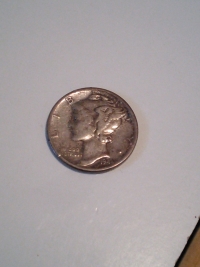 Success! I will use distilled water like you said. |
|
Rest in Peace
United States
7075 Posts |
Not bad at all.
When you go to store it, make a note to yourself about where it came from.
|
|
Moderator
 United States
23522 Posts |
Ironically, the best way to get all the other chemicals off of the coin is pure acetone. Admittedly this one is just a good "experimental" coin - you haven't destroyed any real value with what you've done - but it's never advisable to reinforce bad habits.
|
|
Pillar of the Community
United States
9811 Posts |
 and pure acetone is super cheap, I have a quart, that lasted so far 3 years, and I've used maybe 1/6 of it. Only cost $3.98 "Buy the Book Before You Buy the Coin" - Aaron R. Feldman - "And read it" - Me 2013! ANA Life Member #3288 in good standing since 1981, ANS, Early American Coppers Member (EAC), Colonial Coin Collectors Club member (C4), Conder Token Collector Club member (CTCC), Civil War Token Society (CWTS) member, Liberty Seated Collectors Club (LSCC) & Numismatic Bibliomania Society member (NBS), USMex, Member in good standing, 2¢ variety collector. See my want page: http://goccf.com/t/140440 |
|
Bedrock of the Community
United States
20753 Posts |
Quote:
I find it amusing that tap water, something that is vital to humans for survival, is dangerous to hard metal. Bad for coins, very good in tummys. And too, depending on where you get it, tap water could contain anything and everything. Some tap waters come from wells. Some from a city system where it is Chlorinated. Some from a water softener. One of the biggest problems people have with house plants that constantly die is the water is from a water softener. Those add salt to the water and that kills plants. Acetone is normally available in quart cans at any place that sells paint. Menards, HomeDepot, Walmart, Kmart, Sears, Target, etc. Cost varies but normally abour $4. |
|
Page 2 of 2
|
Replies: 19 / Views: 2,513 |
Page 2 of 2
|




 First Page

 Posted 10/19/2013 09:55 am





