First Page


 Posted 04/14/2014 03:29 am


Very nice lot.
The 1884 Zs JS is a contemporary counterfeit perhaps the highest grade of the type I have ever seen. I have one that I have not photographed which by notation I graded as EF. This is quite likely better. In 1884 Zacatecas had started using standardized designs and this die pair is simply wrong. The edge design is also a poor copy. If you ever want to sell this one let me know.
The 1805 Mo TH is in my opinion likely to be a Class 2 contemporary silver counterfeit (un-authorized restrike) of the type made in the US for the China market. The edge design is quite bad and the face designs rather typical. These are forgeries that are potentially as old as 1830 but likely to date after 1870 - an XRF test could confirm generally where it falls on the date line.
The 1807 Mo TH is much better looking and possibly genuine. There are two issues - first the 0 in the date. What does the opening in the top of the 0 look like? There are several shape varieties but I only consider 1 font to be correct. Specifically where is the inward return and what shape is it? The second issue is the edge - toward the bottom of the picture there are diagonal cut lines which could be indicative of a Class 2 restrike.
The 1874 Mo BH looks fine no issues on being real. You should check to see if the coin is the over assayer variety BH/MH. The traces will be outside at the upper left of the B and can be tough to see as the die wore out.
The 1896 Go RS looks real and I believe when I blow up the pictures I see traces of the recut die from either Alamos 1896/1 Go/AS RS/ML - or possibly the Go/Ga overcut die. There are several different dies involved and the traces run from really very clear to hardly visible at all. No one has a handle on how many die there were at this time. The very clear variety of the Go/As variety is more common than the Go/Ga variety so you need to look at this one at 30x. I also note that the edge shows a jam in the edging mill. At this time a steam edger mill was in use that did several blanks at one tie. Jams resulted in lengthy overcuts on the edge 2x and 3 x are known. After 3X the edge looks like hamburger. This coin has a pretty clear doubled edge.
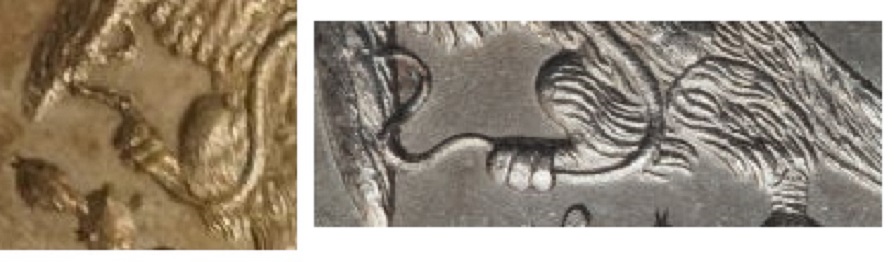
The final coin 1896 Mo AB also has a multiple edge image. These as die errors are VERY common after the steam edger came into use. Some edgers loaded up to 10 blanks at one time and jams are far more common that a nice clear clean single edge. This is about exactly opposite of what the situation was when the manual mill was used. The coin itself seems fine. There are a nice pair of incomplete chops under the eagle's wing. These are the better type chop but being incomplete the premium will be a wash versus loss due to damage. Too bad they are not complete, but a chop collector especially a beginner might actually pay extra. The rest of the chops are minor and only slightly detrimental in my opinion because they are weakly applied and/or incomplete.
In general not a bad group at all. The two 8Rs even if restrikes will likely hold present value for some time. At present the actual extent of this forgery group is unknown. Estimates of upwards of 50 million have been made but the actual number may never be known. Market situation will likely mitigate any attempt at adjustment in basic price. Dealers will fight because they could potentially loose a lot of money.
The 1884 Zs JS is a contemporary counterfeit perhaps the highest grade of the type I have ever seen. I have one that I have not photographed which by notation I graded as EF. This is quite likely better. In 1884 Zacatecas had started using standardized designs and this die pair is simply wrong. The edge design is also a poor copy. If you ever want to sell this one let me know.
The 1805 Mo TH is in my opinion likely to be a Class 2 contemporary silver counterfeit (un-authorized restrike) of the type made in the US for the China market. The edge design is quite bad and the face designs rather typical. These are forgeries that are potentially as old as 1830 but likely to date after 1870 - an XRF test could confirm generally where it falls on the date line.
The 1807 Mo TH is much better looking and possibly genuine. There are two issues - first the 0 in the date. What does the opening in the top of the 0 look like? There are several shape varieties but I only consider 1 font to be correct. Specifically where is the inward return and what shape is it? The second issue is the edge - toward the bottom of the picture there are diagonal cut lines which could be indicative of a Class 2 restrike.
The 1874 Mo BH looks fine no issues on being real. You should check to see if the coin is the over assayer variety BH/MH. The traces will be outside at the upper left of the B and can be tough to see as the die wore out.
The 1896 Go RS looks real and I believe when I blow up the pictures I see traces of the recut die from either Alamos 1896/1 Go/AS RS/ML - or possibly the Go/Ga overcut die. There are several different dies involved and the traces run from really very clear to hardly visible at all. No one has a handle on how many die there were at this time. The very clear variety of the Go/As variety is more common than the Go/Ga variety so you need to look at this one at 30x. I also note that the edge shows a jam in the edging mill. At this time a steam edger mill was in use that did several blanks at one tie. Jams resulted in lengthy overcuts on the edge 2x and 3 x are known. After 3X the edge looks like hamburger. This coin has a pretty clear doubled edge.
The final coin 1896 Mo AB also has a multiple edge image. These as die errors are VERY common after the steam edger came into use. Some edgers loaded up to 10 blanks at one time and jams are far more common that a nice clear clean single edge. This is about exactly opposite of what the situation was when the manual mill was used. The coin itself seems fine. There are a nice pair of incomplete chops under the eagle's wing. These are the better type chop but being incomplete the premium will be a wash versus loss due to damage. Too bad they are not complete, but a chop collector especially a beginner might actually pay extra. The rest of the chops are minor and only slightly detrimental in my opinion because they are weakly applied and/or incomplete.
In general not a bad group at all. The two 8Rs even if restrikes will likely hold present value for some time. At present the actual extent of this forgery group is unknown. Estimates of upwards of 50 million have been made but the actual number may never be known. Market situation will likely mitigate any attempt at adjustment in basic price. Dealers will fight because they could potentially loose a lot of money.