| Author |
 Replies: 32 / Views: 4,185 Replies: 32 / Views: 4,185 |
Page 3 of 3
|
|
|
|
Pillar of the Community
Canada
3049 Posts |
SPP:
If there's any way I can help if you're interested in doing a die state on the 1920-1936 pennies ... please send me a line...
I have around 2K between '20 & '36 almost all common dates... with approx 300 1929's specifically.. Would love to help if I could.
|
|
Pillar of the Community
Canada
1984 Posts |
Pacificcoin "Personally I would Not touch that 1929 variety or recommend it to any of my clients. Many more solid coins than a date position variety." That's a wee bit harsh!. Us small cent collectors don't have much to work with...... is it really less interesting than the countless minor varieties of Vicky large cents? And don't even start me on 1932 nickels! Personally I don't think so. Just stirring up trouble! We are all entitled to our opinions.  Edited by Smallcentguy
02/27/2015 4:22 pm
|
|
Pillar of the Community
Canada
1442 Posts |
The Canadian Variety market is ripe for explosion and growth, when the proper reference book comes along. the 1929 high 9 will be among them  |
|
Pillar of the Community
 Canada
5646 Posts |
Not only would "a reference book" be nearly impossible to write, you wouldn't be able to lift it. Given that the definition of a "variety" has grown by leaps and bounds so that any die crack, clash, or repunched digit or letter magnified 50X that shows a teeny offset is now advertised as a variety, the definition would take up a chapter all by itself. Coins described by many folks on ebay as "variety" probably aren't nor are some TPG ID's or their lack of comments. To include all the denominations and monarchs would be an undooable task, given that you would have to exclude any author who was a dealer, auctioneer, or TPG. Any of those may (and probably would) have alterior motives to place populations that would be favorable to his/her own stock. The only true guide would have to be made by a group of collectors spread out among the denominations and then vett all the information for agreement. If you mix too many personalities together, you get a great deal of discord and they would be facing a daunting task with population data and inventory required. Please don't even mention a publication from the Bay area that is already out there. |
|
Valued Member
United States
302 Posts |
An extensive Canadian variety catalog would not be impossible. In the 1980s I wrote a 4-volume catalog of U.S. obsolete bank notes for Whitman. It has 72,000 photos and over 100,000 listings. More recently I wrote an on-line catalog of the dies of the 1859 Province of Canada cent, detailing hundreds of dies. In both cases there were those who cried, "impossible" beforehand.
For the Canadian variety catalog, one of the main tasks is the choice of which varieties to include. With the 1859 cents, for example, one would want to select only the most spectacular repunchings, etc., not the whole works (though the hand work on the dies of that time caused almost every die to create a distinct die variety).
|
|
Pillar of the Community
 Canada
5420 Posts |
small cent guy not meant to be harsh in any way at all. There are numerous date spacing varieties throughout the Canadian series due to the way the coins were manufactured. Most of them are ignored to a great degree. I ask this would any of you pay a big premium for a so called variety that can easily be cherry picked. Also I think there are very very few true varieties in the Canadian series that are really collectible. The current definition of what constitutes a variety is pretty loose. When I first started to collect coins the Zoell craze was rampant. I remember a wise old bird of collector told me as he showed me the two different varieties of 1913 ten cents ,if you need a glass to see it ,not important don't pay for it. This was the time of hanging twos, double date 1962 coins, hearing aid halves ,warts on beavers, massless schooners and the like.
|
|
Pillar of the Community
Canada
1442 Posts |
In my experience, every time someone says something "can't be done", someone else is already busy doing it, if not completing it...
|
|
Pillar of the Community
Canada
3234 Posts |
Quote:
I remember a wise old bird of collector told me as he showed me the two different varieties of 1913 ten cents ,if you need a glass to see it , not important don't pay for it. If we still apply that old adage,..we would have to eliminate many of the very sought after 59's like the "inv 9 over 9" or the TP-9 as two quick examples.. ...because many of the 59's are not easily noticed without "a glass".. and I don't think that that will happen in my lifetime.. _____________________________________________ ..as an off shoot here..is this a medium 9 or the standard location of the 9. I see that the tail of this 9 is a bit below the 2 when compared to the above 9's ..This is graded SP 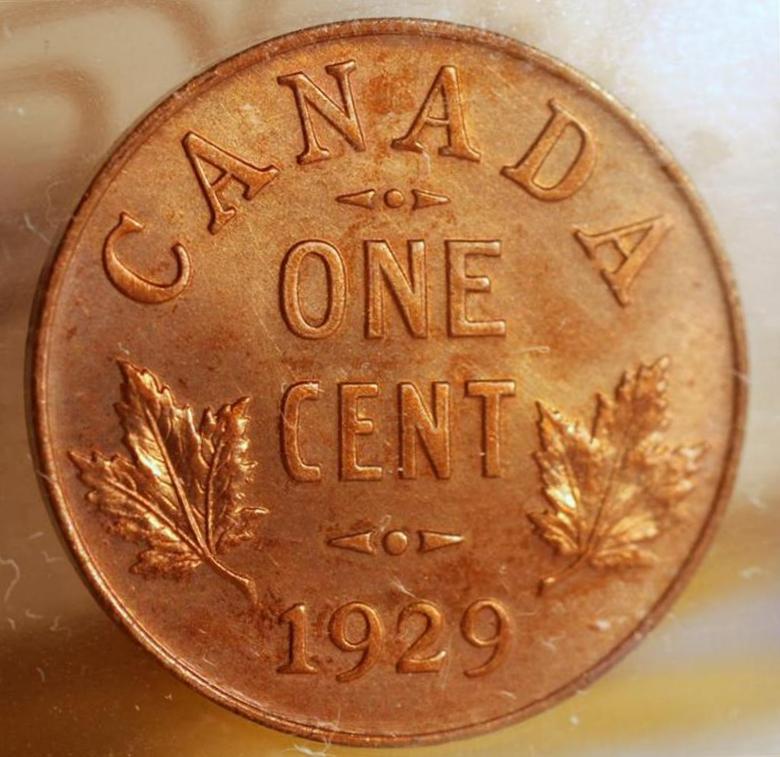 . . Edited by DEVLEC
02/28/2015 09:51 am
|
|
New Member
Canada
49 Posts |
That is a medium 9, a very nice one judging by the color :) Here is a clear high 9 http://www.ebay.ca/itm/HARD-TO-FIND...271740607844My trick not to get caught by a medium 9 is to look up. The 9 will be higher than the 2. I found it easier to make the difference like this. |
|
Pillar of the Community
Canada
5646 Posts |
There could be any number of gradients between low and high. Unless there are secondary markers, I think that this 'variety' will become unmanageable, just like the 1896 "far 6" large cents. Since that was handpunched in for the final digit it could be high/low/near/far with tilts or slants also coming into play.
|
|
Pillar of the Community
Canada
5420 Posts |
|
|
Pillar of the Community
Canada
1442 Posts |
Its not as big of a problem as it's made out to be.
I can think of about 500 "major" varieties in the 1858-1936 date range across all denominations, Canadian and Provincial.
The varieties that would cause the problem of having multiple similar "versions", or different dies are:
1. 1c 1858 5/5
2. 1c 1859 W9/8
3. 1c 1859 5/5
4. 1c 1896 Far 6
5. 1c 1929 High 9
6. 5c 1858 Large Date
7. 25c 1872 A/V (or bar V, or die crack V)
8. NFLD 1880 50c medium, wide dates
The other "492 major die varieties" can be nailed down to a single die.
ICCS has compounded the problem, for example by identifying any one of dozen coins as "1c 1859 5/5" for example (this is where the Haxby identification becomes crucial, IMO).
Or identifying other minor varieties like "repunched 85", which IMO is a non-variety.
Another example, the 25c 1872 "A/V" die crack in the V can appear on 2 different dies, one with a N/N in Canada and one without.
The Charlton guide has botched the 5c 1858 Large Date, as another example. It can't decide whether there are two types, or three types or perhaps more.
But overall, this is a very minor problem in a few varieties, that would have to be properly addressed by any reference work wishing to tackle it.
|
|
Pillar of the Community
Canada
3234 Posts |
Quote:
That is a medium 9, a very nice one judging by the color :) Then medium it is..Thanks BoroLeColon.. ..and here is the obv..with the " "S" wire piece showing on the cheek.." Fine die polishing on both sides.. 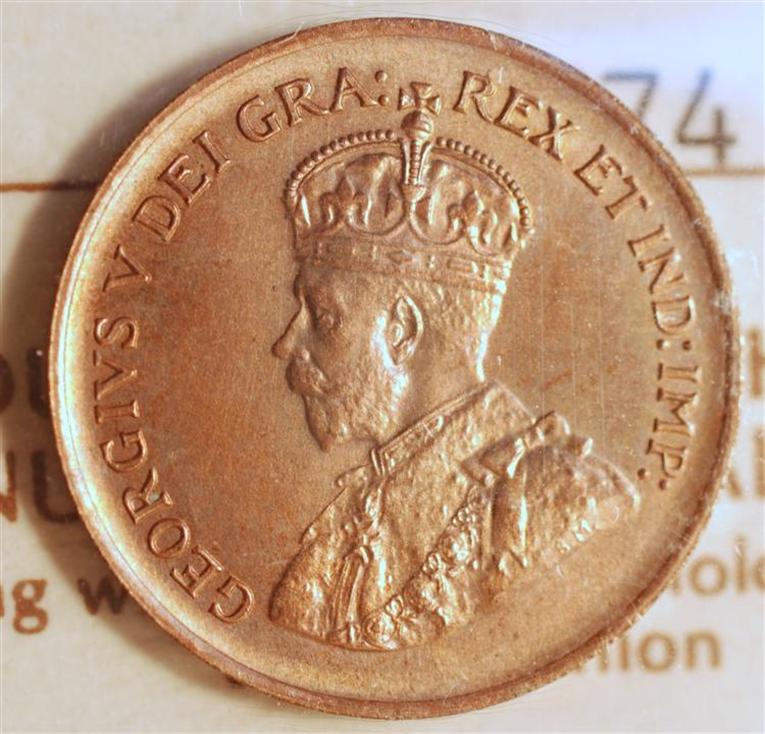 |
|
New Member
Canada
49 Posts |
|
|
Pillar of the Community
Canada
3234 Posts |
The first pic shows it as an SP..The best way to tell is the raised piece of wire on the cheek..
With a 93 kb photo ,..much of the fine details are unfortunately missing..
|
|
Page 3 of 3
|
Replies: 32 / Views: 4,185 |
Page 3 of 3
|








 First Page
 Previous Page

 Posted 02/27/2015 4:21 pm


