| Author |
 Replies: 16 / Views: 9,873 Replies: 16 / Views: 9,873 |
Page 2 of 2
|
|
|
|
Pillar of the Community
 Singapore
631 Posts |
It doesn't stick to a magnet and it weighs 26.4 grams.
|
|
Pillar of the Community
Sweden
1078 Posts |
I'll have to say I'm worried by the overall no-wear appearance of it. The rim and denticles are slightly worn down but everything else isn't. What's also worring to me is that the inner dotted circle on the first picture isn't perfectly round, which is to be expected.
This coin type is another example of highly-counterfeited large silver coins, quite frankly I wouldn't be surprised if yours turns out to be fake. Weight seems alright though.
|
|
Pillar of the Community
United States
865 Posts |
Do you.have the diameter?
|
|
Bedrock of the Community
Australia
21794 Posts |
From pictures alone, looks OK.
About 2% under weight; I don't know the remedy allowance for these, to still be within the allowable weight range, but 2% seems a bit large.
Genuine ones weigh it at 26. 96 grammes.
Test it for comparative ring tone against a known genuine Yen of the same period, and confirm diameter.
|
|
Pillar of the Community
Australia
3841 Posts |
I am on the skeptical side as this is a scarce date and in UNC condition, it is worth more than several hundred, if not a thousand dollar coin. At this point of time, I do not believe it is genuine.
The biggest concern that I have is the dots surrounding the dragon as it does not seem to be uniform. The weight as well is a huge alarm as an aUNC coin should not have such major variance. Lastly, if it is possible, can you please post a photo of the edge?
|
|
Bedrock of the Community
Australia
21794 Posts |
gxseries has picked up on the dots; I agree.
|
|
Pillar of the Community
Hong Kong
1270 Posts |
The pictures look good to me but the weight is an alarm to me. The coin looks nearly UNC, it is a famous type of Trade dollar of the era, the original weight can't be so varied. I agree to have some edge pictures to see and a S.G. test is helpful to determine its silver content. Finally, may I know the diameter of this coin? |
|
Pillar of the Community
Singapore
631 Posts |
As requested, diameter and rim pics. 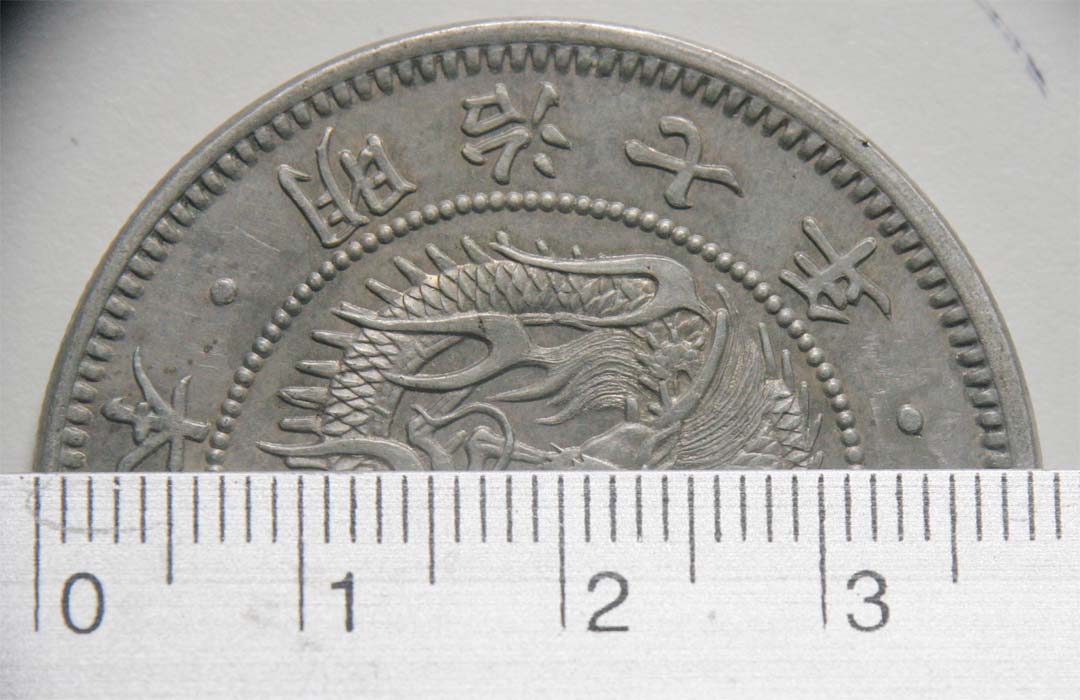 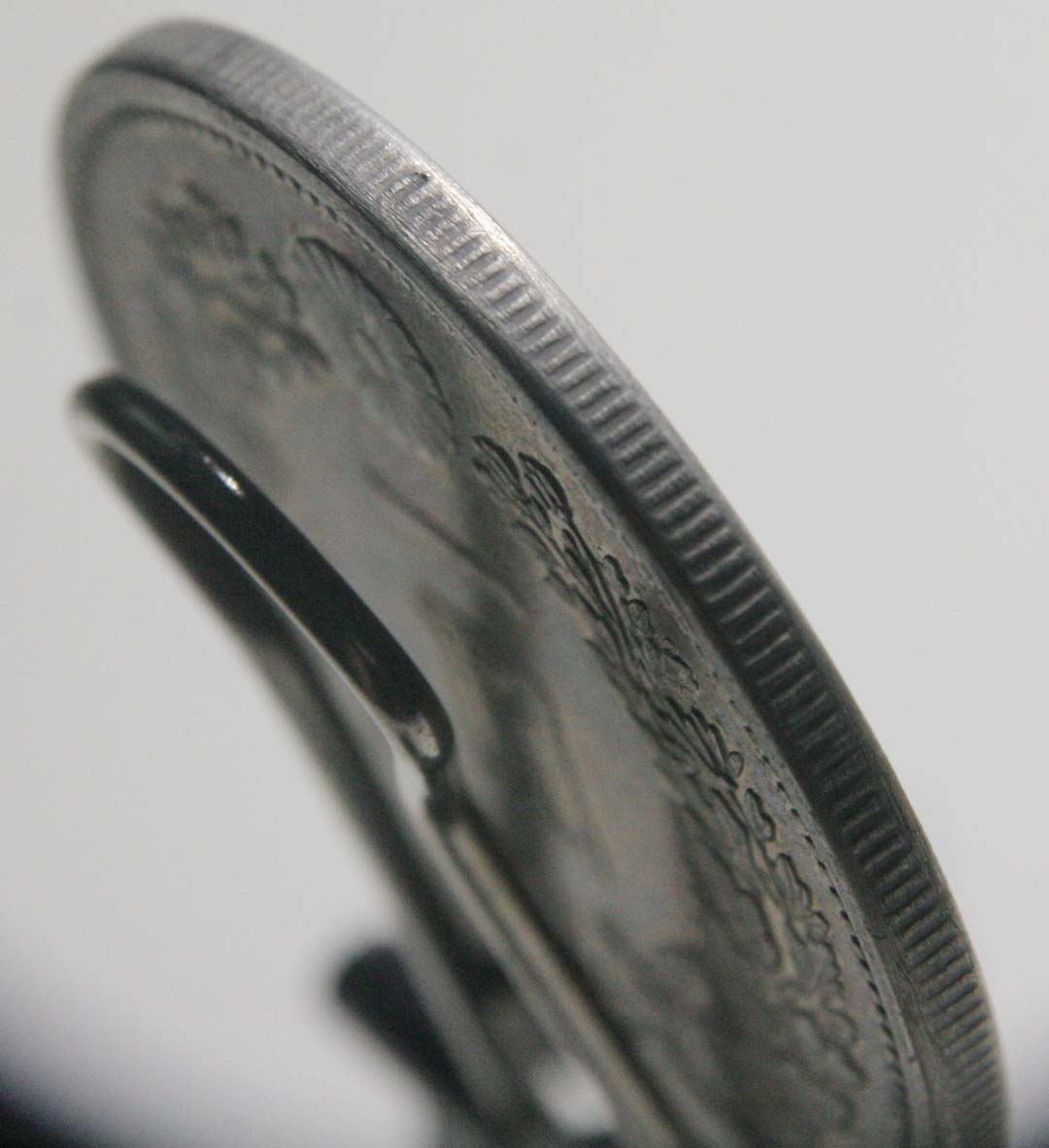 |
|
Pillar of the Community
Hong Kong
1270 Posts |
The edge looks bad. The grade of the edge is not matched with the rest of the coin. More likely to be a fake. Use a genuine coin of same type but different year, then make a ring test comparison, you would find this coin would not ring like the genuine silver coin.
|
|
Pillar of the Community
Hong Kong
1270 Posts |
The scripts of "416.ONE YEN.900" looks too slim. Not good for a close look. To sum up, it is a fake.
|
|
Pillar of the Community
Singapore
631 Posts |
|
|
Pillar of the Community
Australia
3841 Posts |
The edge is a dead giveaway. There are also other minor tellaway signs but I refuse to provide them all in details as counterfeiters have been upping their games.
I would ask for a refund immediately.
My partial coin collection http://www.omnicoin.com/collection/gxseriesMy numismatics articles and collection: http://www.gxseries.com/numis/numis_index.htmRegularly updated at least once a month. |
|
Pillar of the Community
United States
5362 Posts |
I saw this post late - the edge seals the deal it is a Numismatic Forgery. However, there were strong clues of forgery before that - the rounding of the corners where the face die and the collar die meet is the most serious. I believe someone pointed to rim wear as a bad sign. Most centrifugal castings place a seam on the edge and then reed the coins as a second step. This reeding step creates sharp but ragged corners. The forgers grind the corners to obscure the forgery and in the process - rounding the corner of the coin. That was apparent from the first picture. But weight and particularly the edge pictures condemn the coin as a forgery.
|
|
Bedrock of the Community
Australia
21794 Posts |
Numister: what were your suspicions that induced you to start this thread?
That the coin is a fake or not, is not the reason why I asked.
What is most important is something which we all need to learn, and it is this:
If you gave a 'gut' feeling that the coin being offered may be not right, then
1.- either leave it alone, or
2-. investigate it further.
The second approach is in my opinion is by far the healthiest, beacuse
A.- you learn to know when to become suspicious, and
B.- we all learn from the investigation.
Thankyou for starting this thread. That is one of the reasons why the CCF exists: education !
DO NOT be discouraged.
|
|
Valued Member
United States
136 Posts |
I know this has been dormant for a while but I wanted to point out something. Whilst I agree that the coin is indeed a fake its really the edge that demonstrates it along with the weight rather than the beading.
The beading in fact is not particularly suspicious as for the earlier 1 yen coins specifically 74 and 75, the beading was far less a perfect ring than later dates.
There is one other thing in that the reverse seems to be the new shallow veins reverse seen in coins 78 and later rather than the deep veins used for 74 and 75 dates. As far as is known only the 78 had both deep and shallow veins and hence this is certainly a fake from the get go.
|
|
Page 2 of 2
|
Replies: 16 / Views: 9,873 |
Page 2 of 2
|





 First Page

 Posted 12/12/2015 2:20 pm


