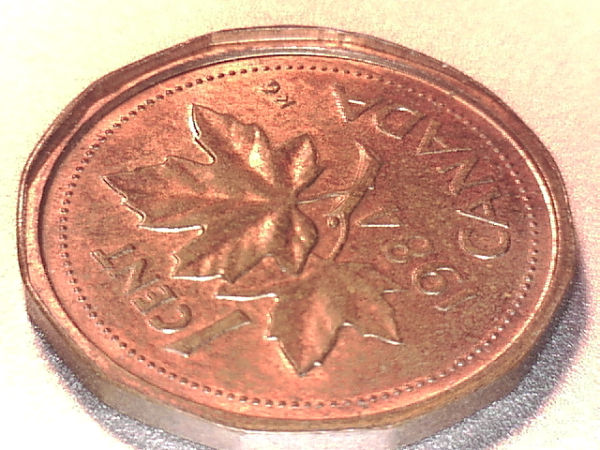
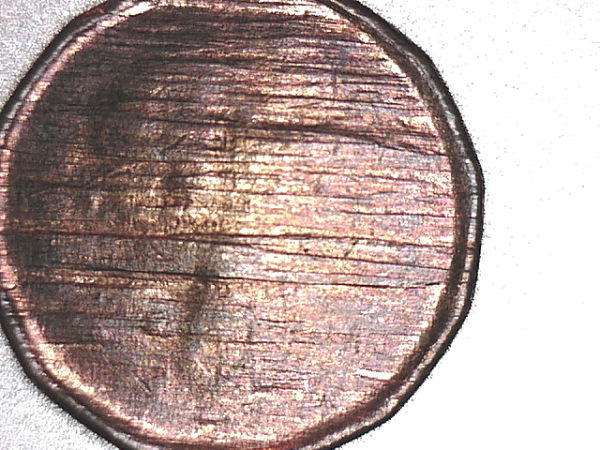
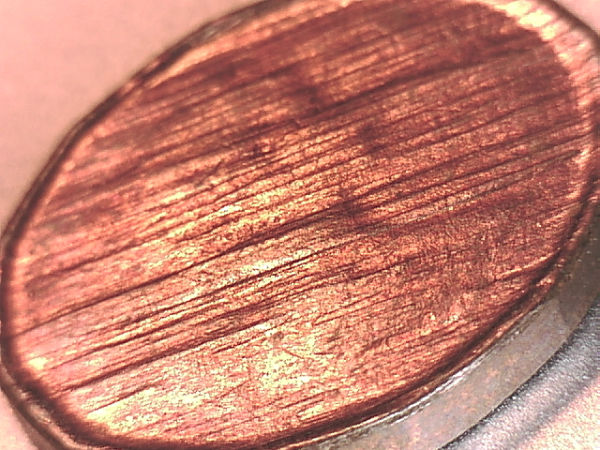
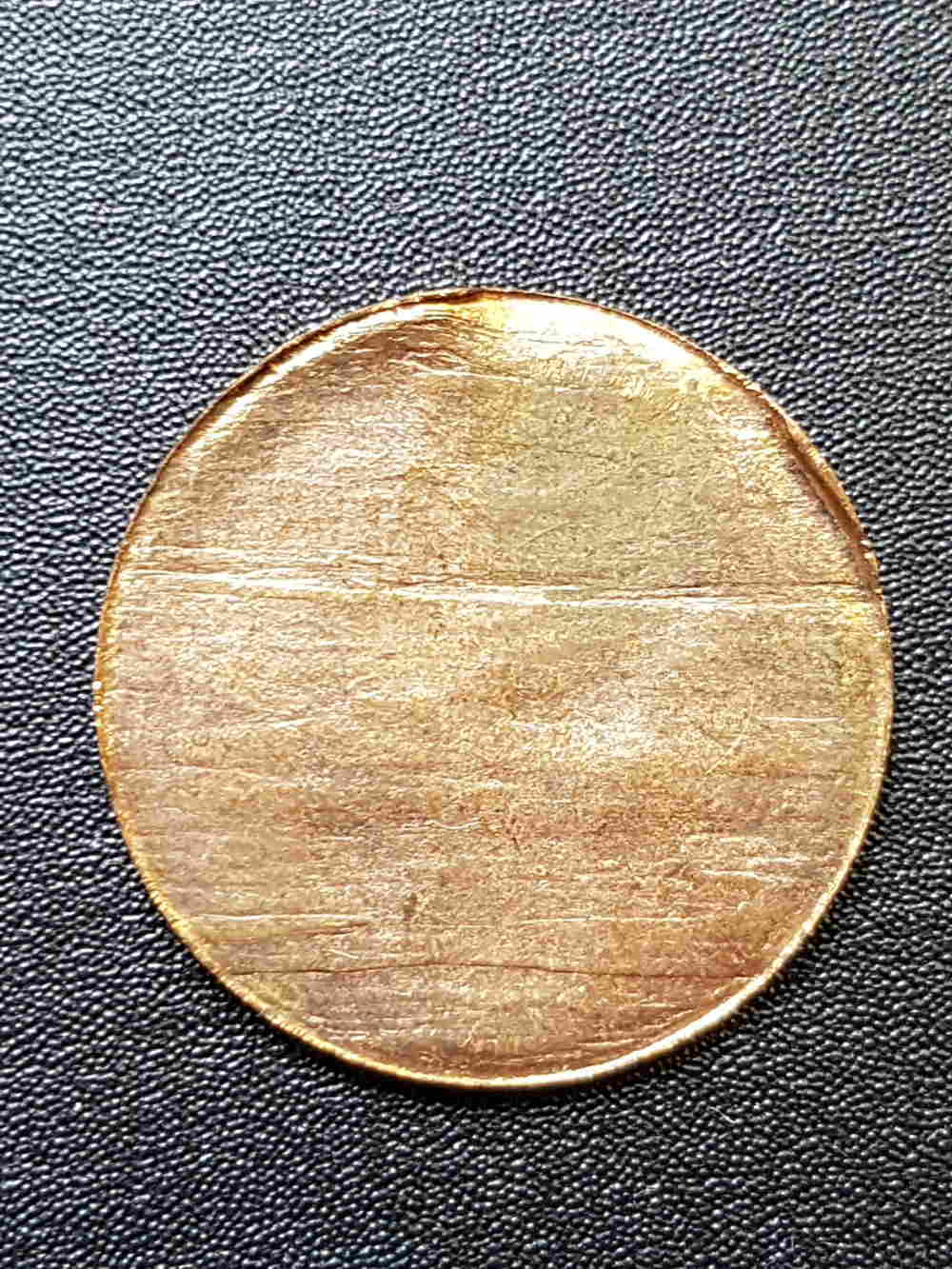
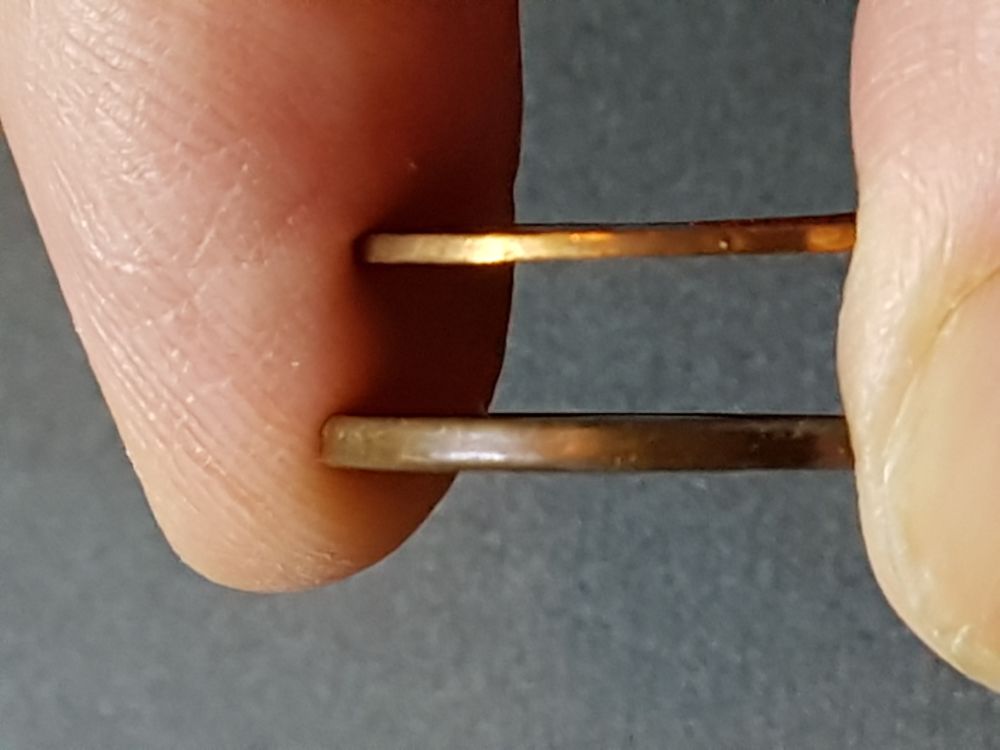
It looks like a struck-through capped die. I guess the difference from US cents is the obverse being the anvil die?
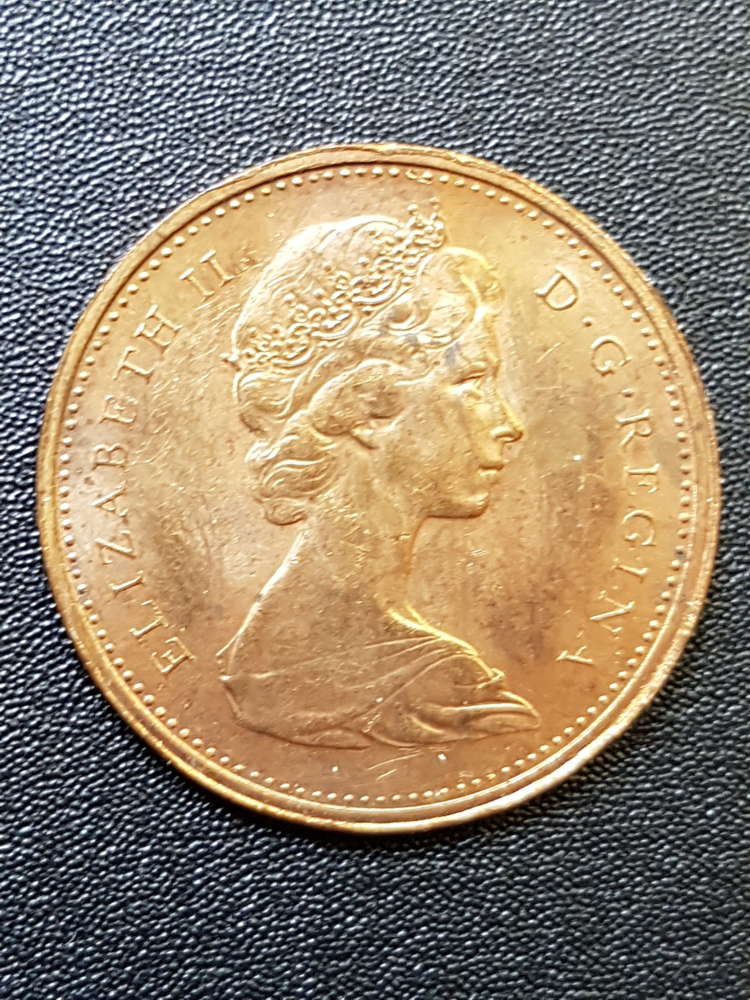
The cent was not ejected and remained on the (obverse) anvil die for several more strikes until it did actually transfer a ghost image of Elizabeth II on the coin.
The reverse shows a clean strike, albeit off-center and tilted.
In Memory of Crazyb0 12-26-1951 to 7-27-2020 In Memory of Tootallious 3-31-1964 to 4-15-2020 In Memory of T-BOP 10-12-1949 to 1-19-2024
Definitely struck through a split planchet. Finning on reverse caused by excessive pressure from the two planchets. Evidence of striations from split planchet noted on obverse die.
Noted below is another example of the error type I have. The split planchet that was involved with my coin was significantly striated. Ghost image od queen noted on third image.
thedollarman is a fast learner... nice to see another one Zimmy!! Now the hard part, I would love to find the piece that was struck through...
"Discovery follows discovery, each both raising and answering questions, each ending a long search, and each providing the new instruments for a new search." -- J. Robert Oppenheimer
It would be very likely since our coins were of the right weight and specifications while the split cent would have been open to rejection due to weight and thickness issues.
"Discovery follows discovery, each both raising and answering questions, each ending a long search, and each providing the new instruments for a new search." -- J. Robert Oppenheimer
Quote: SPP...what to you call the split planchet that your coin was struck through?
Not quite sure I understand your question... it would be a half of a planchet that was split. Whether it was split before it was struck or not, it really does not matter since the blank planchet that struck my coin was placed on top of it (split side was up).
Quote: And is your title the proper designation for your coin?
Yes, it is.
Quote: Could it be called a brockage without there being a die cap involved?
A brockage can be created with a previously struck loose coin sitting in the striking chamber. That is what you often see with indent strikes that have partial brockages. To be a cap, it has to stick to the die...
"Discovery follows discovery, each both raising and answering questions, each ending a long search, and each providing the new instruments for a new search." -- J. Robert Oppenheimer
I guess my question is based on differentiating between split planchet types.
-split planchet before strike which means a thin planchet is struck. It has elements of all of the dies but isn't a full strike
-split planchet after strike which means a full planchet was struck. It has a full strike on one side and smooth on the opposite side with a ghost image
- split planchet before strike, struck on top of another planchet creating 2 uniface coins
It seems like a significant difference to me so as I go through my split planchets and weigh them (purchased the scale after the split planchets) and you posted this thread so I wanted to clarify if there is a difference or if I am barking up the wrong tree.
Thanks for your input. I think I will start a split planchet thread soon to help study them.
Disclaimer: While a tremendous amount of effort goes into ensuring the accuracy of the information contained in this site, Coin Community assumes no liability for errors. Copyright 2005 - 2026 Coin Community Family- all rights reserved worldwide. Use of any images or content on this website without prior written permission of Coin Community or the original lender is strictly prohibited. Contact Us | Advertise Here | Privacy Policy / Terms of Use






 First Page


 Posted 05/02/2017 11:43 pm