| Author |
 Replies: 16 / Views: 4,466 Replies: 16 / Views: 4,466 |
Page 2 of 2
|
|
|
|
Valued Member
 186 Posts |
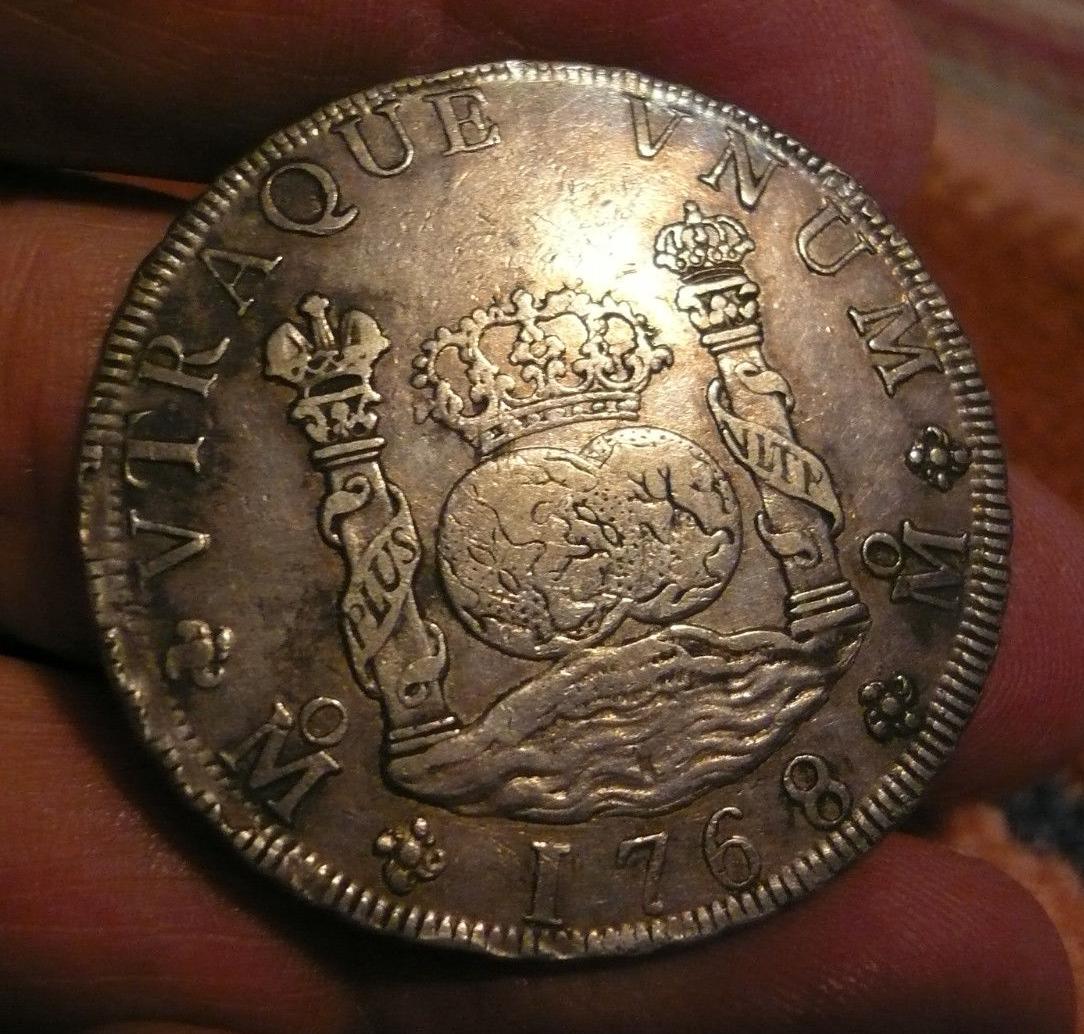
Unfortunately I can't take any further pictures because I don't have the coin with me.It's back home along with the rest of the coins and I only go there twice a year.I'm not sure if that is actually a strip of silver being applied to it, but I remember the edge was right excepting an ex mount mark at 12 o'clock.
Edited by paulCT
02/17/2018 1:26 pm
|
|
Pillar of the Community
United States
1475 Posts |
with my limited knowledge in the coin,
patina seems suspicious for a ~250 year old coin.
Also, probably a jewelry piece at one time.
|
|
Pillar of the Community
United States
1962 Posts |
Quote:
Also, probably a jewelry piece at one time. If the odd extra metal areas at 3:30 and 9:30 on the shield side are what you're looking at... that's not what that effect is. To be honest, not sure exactly what that is... As jfransch threw out there, something like a strip to hide a seam (swamperbob has of course discussed this)... However, this kind of effect (to varying degrees) shows up occasionally on what seem to be perfectly genuine pillar 8R. Maybe I'm making this up, but I thought I remember reading something from either Bob or John L. (or elsewhere?) about a bit of extraneous metal getting upset during the edge application and then getting flapped over on itself during obv/rev strike? I will also guess that the edge overlaps are going to be right around those spots. Whatever the case, compare a few other 1770 examples with similar effects (all generally look OK, from good sources): 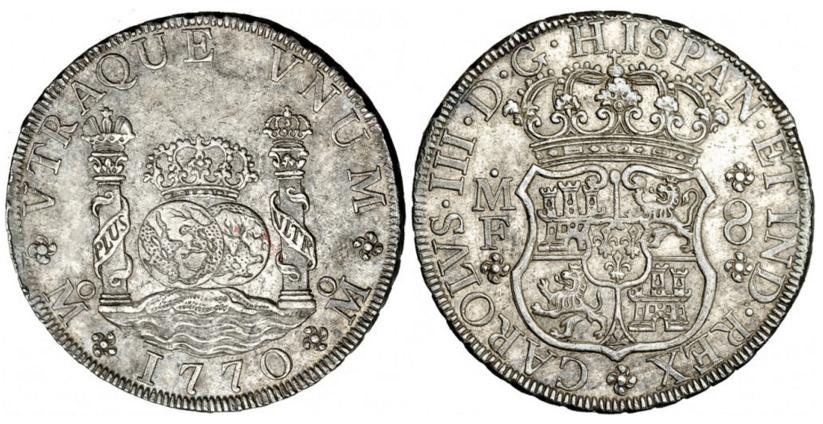 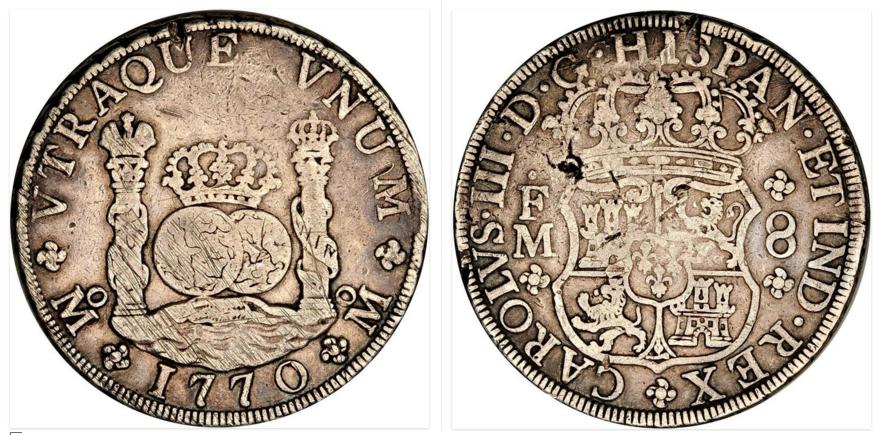 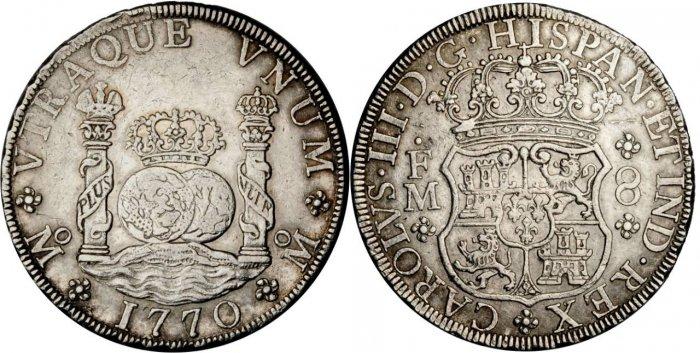 |
|
Pillar of the Community
United States
1801 Posts |
Here is an additional 1770MoMF for comparison. all the design details on the original posted coin look good. My concern is that very questionable section of the edge, we could really use clear up close pictures of that area. I really like the Mexico Pillar Dollars from 1770 and 1771 (as well as the portraits from 1772 and 1773) because they are almost always well struck on large broad planchets. 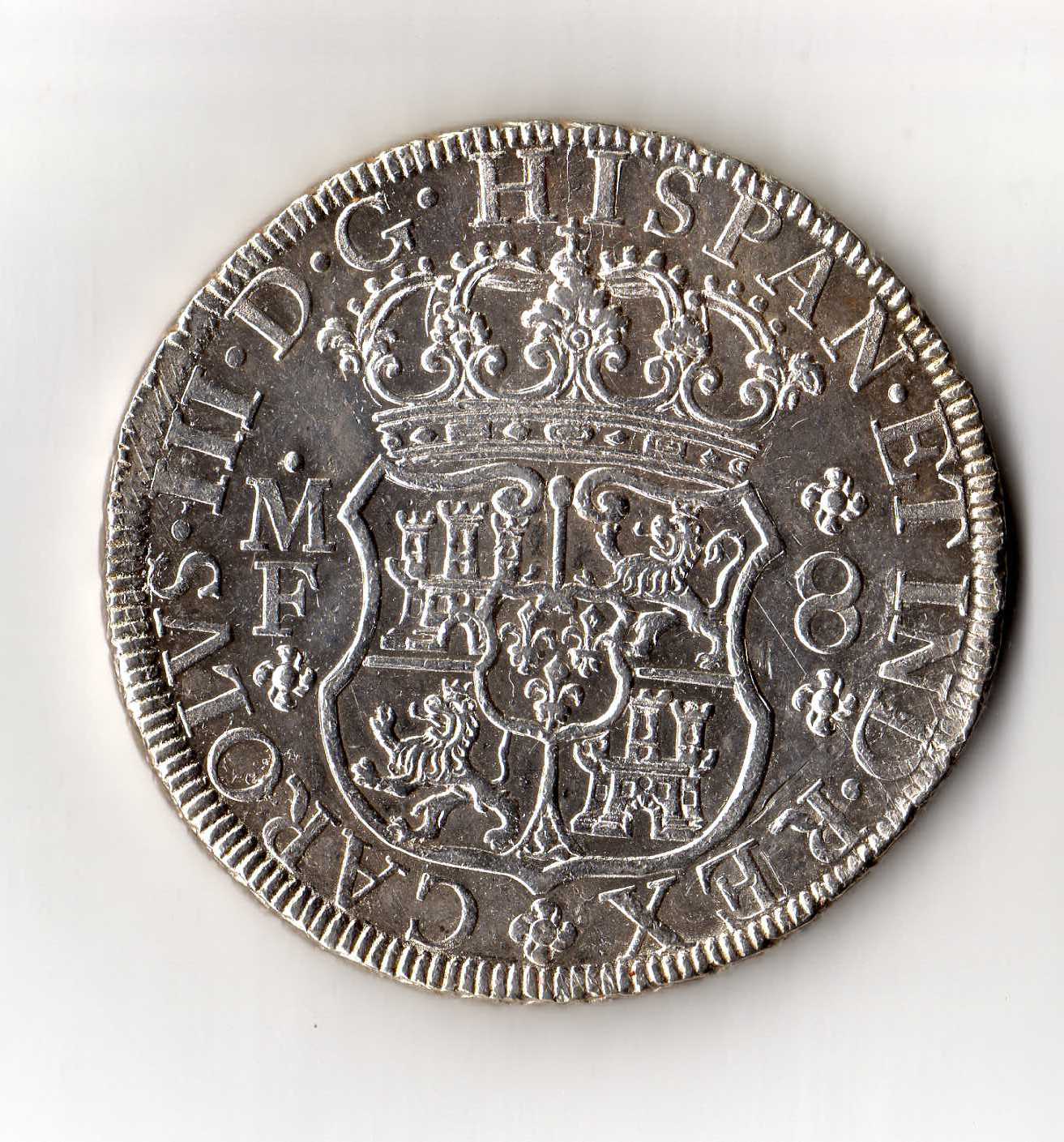 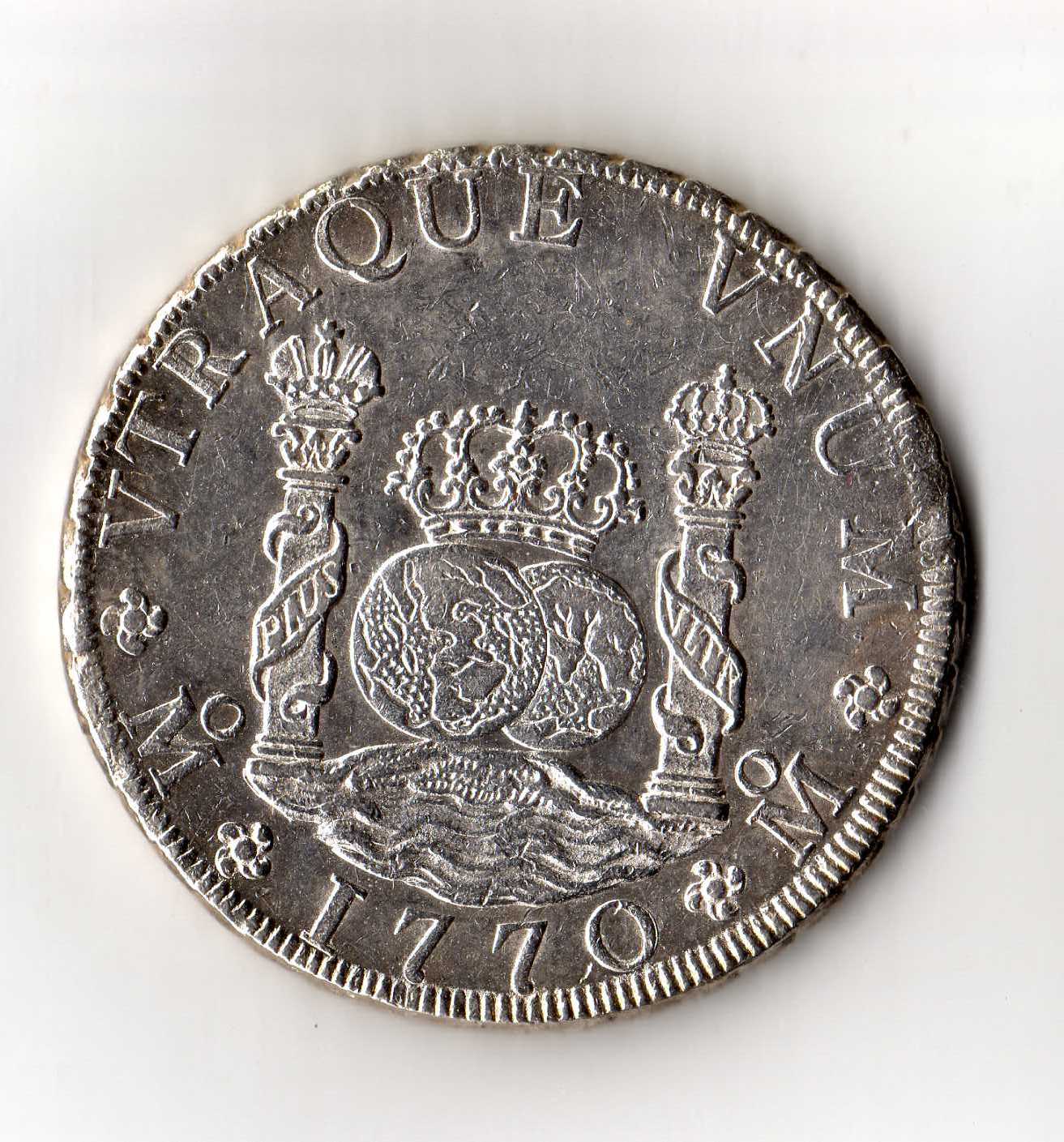 |
|
Pillar of the Community
United States
1962 Posts |
John, look at your piece's photo (shield side). Actually a slight bit of the same effect going on at the ordinal (as circled). Are the edge overlaps at/near that spot and correspondingly across the coin? 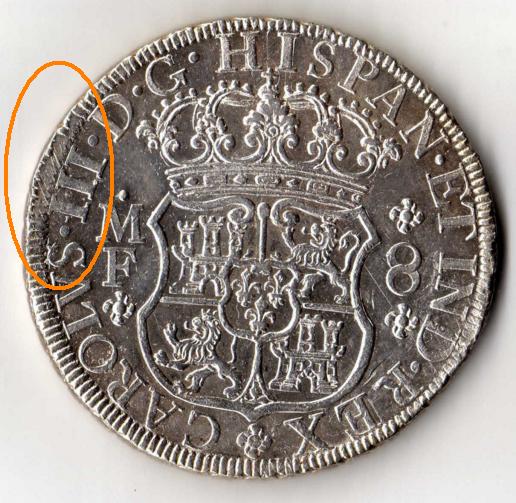 Edited by realeswatcher
02/18/2018 7:11 pm
|
|
Valued Member
186 Posts |
Thank you guys for replying to this topic!  As I said before I don't have the coin with me so it's impossible to get more pictures.The style of the coin was actually not my first concern because I did compared it with similar ones, but the content of the item.I only did a ping test and I panicked, though this test is not necessarily relevant, so i'll probably have to go for a density one next.I will attach a picture of the edge,the only one that I have(you'll see the mount mark on the right side).Thanks again! 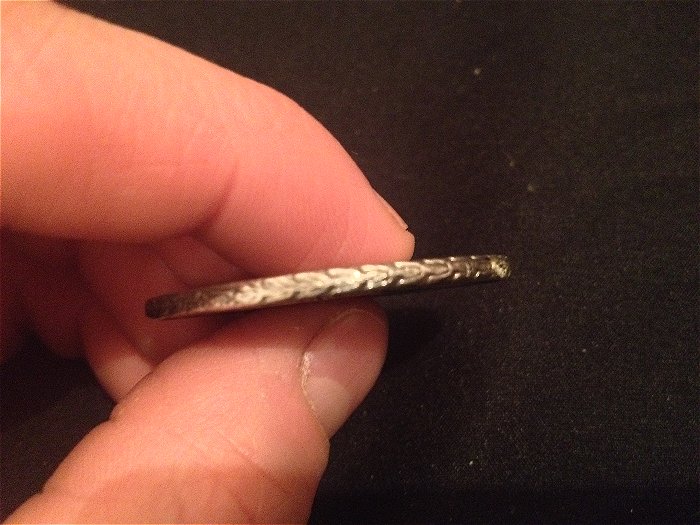 |
|
Pillar of the Community
United States
1475 Posts |
Quote:
If the odd extra metal areas at 3:30 and 9:30 on the shield side are what you're looking at... that's not what that effect is. thanks for the info. so much to learn about Reales series |
|
Pillar of the Community
United States
1801 Posts |
Realeswatcher
Yes the overlaps are at the III and the "ND" of IND. However on my coin there is no evidence of any kind of lamination or peeling silver, just a damage spot on the coin (as you pointed out) where the overlaps appear.
|
|
Pillar of the Community
United States
1962 Posts |
 I'm seeing these all as variations of the same effect... whatever it is. I would guess it's related to the edging process. Here, for example - just in one small spot, and less overt, but it's clear this is the same thing: https://coins.ha.com/itm/mexico/wor...bnail-071515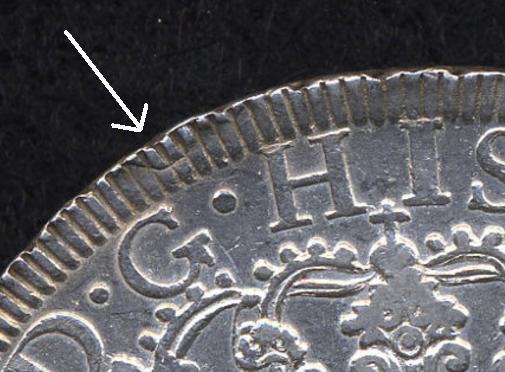 |
|
Pillar of the Community
Czech Republic
803 Posts |
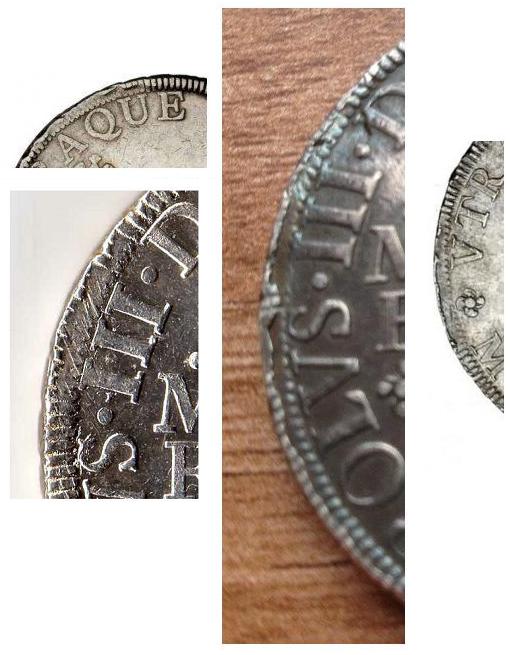
I've seen a similar effect on portrait 8 Reales and would agree that it's most likely to the planchet being thinner at that point resulting in a higher upset rim during edging with the raised portion folding over during striking. When I get home I'll try to find images of a Carlos IV Lima piece I used to own that shows the effect more drastically.
|
|
Pillar of the Community
Czech Republic
803 Posts |
For some reason can't find the image of the coin itself, but did fine a close up of the effect.  |
|
Pillar of the Community
United States
1962 Posts |
Roman... good thought with the Charles IIII Lima (good memory). I think that's something of a similar effect, but it doesn't present exactly the same visually. That seems to be particular to Lima (and it shows up occasionally for C. III also). There was a thread recently about Dutch ducatons that show something sort of similar... and I posted a rather stark instance of those Lima types as an example: http://goccf.com/t/306948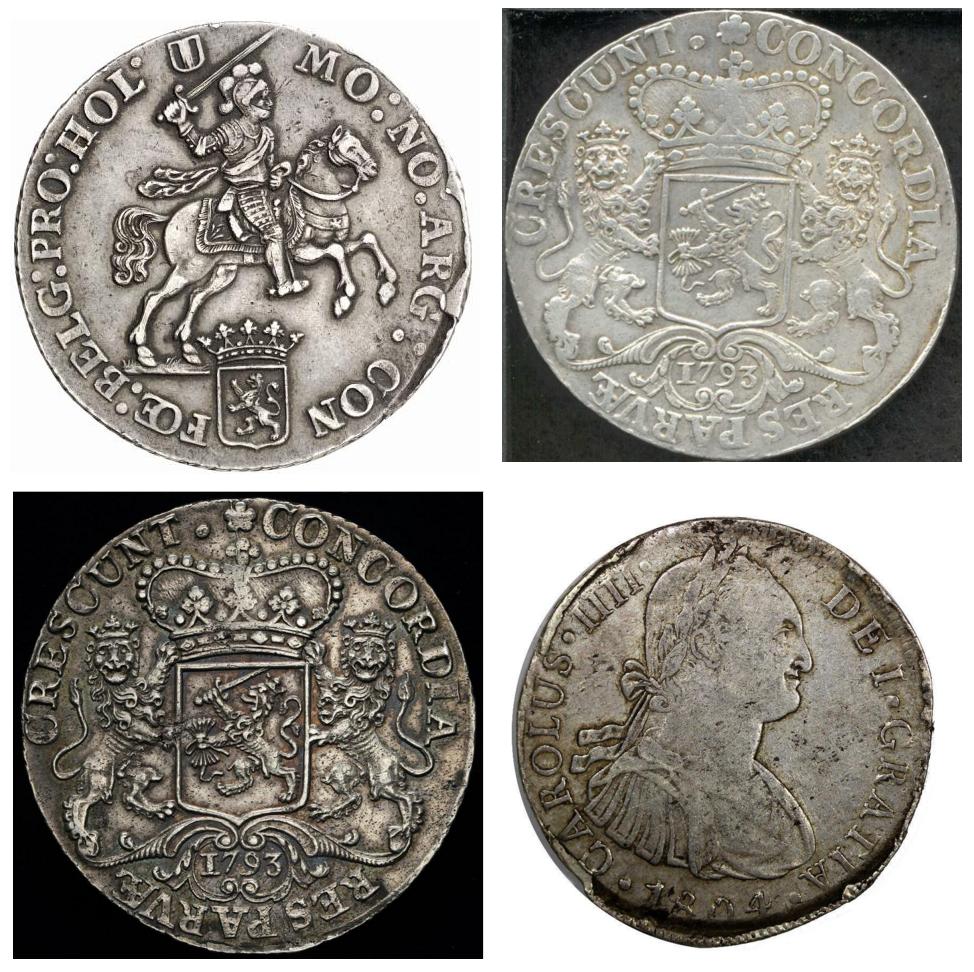 Edited by realeswatcher
02/21/2018 8:08 pm
|
|
Pillar of the Community
United States
1962 Posts |
|
|
Pillar of the Community
Czech Republic
803 Posts |
I might be completely off-base here, but almost looks like detached and partially detached lamination. Using the assumption that it all started in edging - could it be that somehow the edge press during the rotation would somehow "catch" the planchet and cut a thin, incomplete strip along the edge that would in some cases stay on as a fold after striking and sometimes would detach?
Edited by TwoKopeiki
02/21/2018 9:29 pm
|
|
Pillar of the Community
United States
5362 Posts |
The edge here is common on genuine 8 reales where the blanking press has some wear. The effect is caused by a fin of metal attached to the blank. If the blank is the correct weight the person checking the weight does not remove the fin. When this blank with the fin is run through the edging mill it is folded over one of the coins faces. The next step is striking in an open sided screw press. This drives the remaining fin into the face of the coin imparting the design with it. In some cases, the fin is short in other cases longer. Often it remains in place, but sometimes it partially comes away from the coin and breaks off. All of the genuine coins originate in this fashion. All of the photos illustrate coins made using the correct manufacturing techniques. When I speak of a Contemporary Counterfeit edged with a silver ribbon, I am referring to the process developed by Matthew Boulton about 1785 which applies a strip of silver and the edge design in one operation. Here is a picture of a counterfeit that uses the silver ribbon edge. First the whole coin to show the seam runs around the perimeter on both faces; 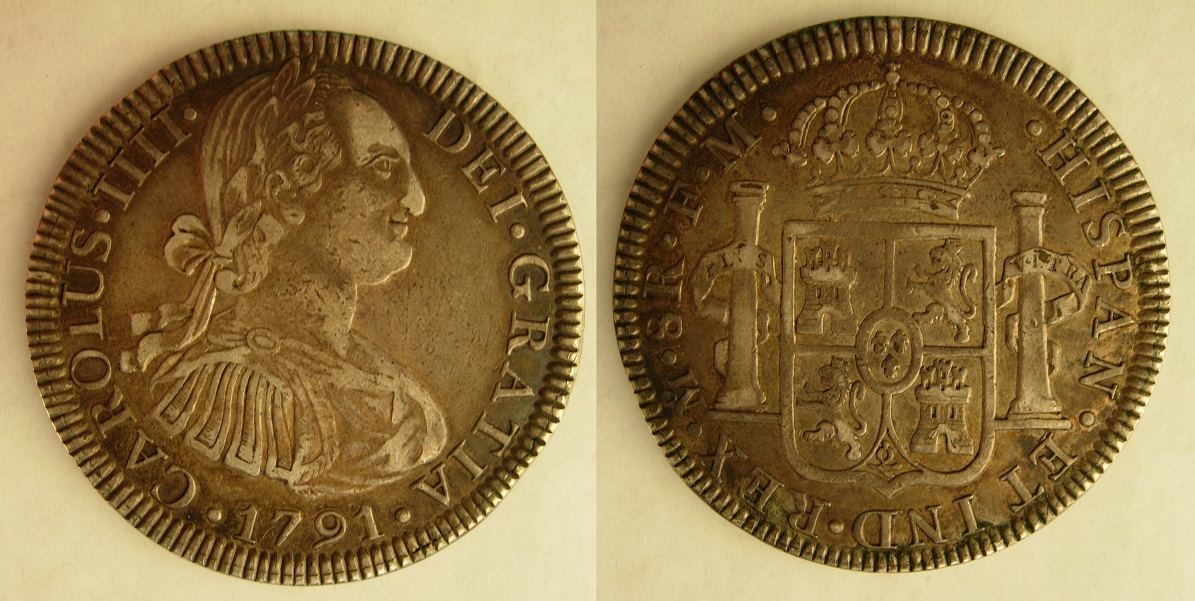 Here is a close up shot of the date area. The seam is visible 360 degrees when examined with a microscope. From a distance, as in the picture above, the seam is most visible where small chips have begun to fall away. 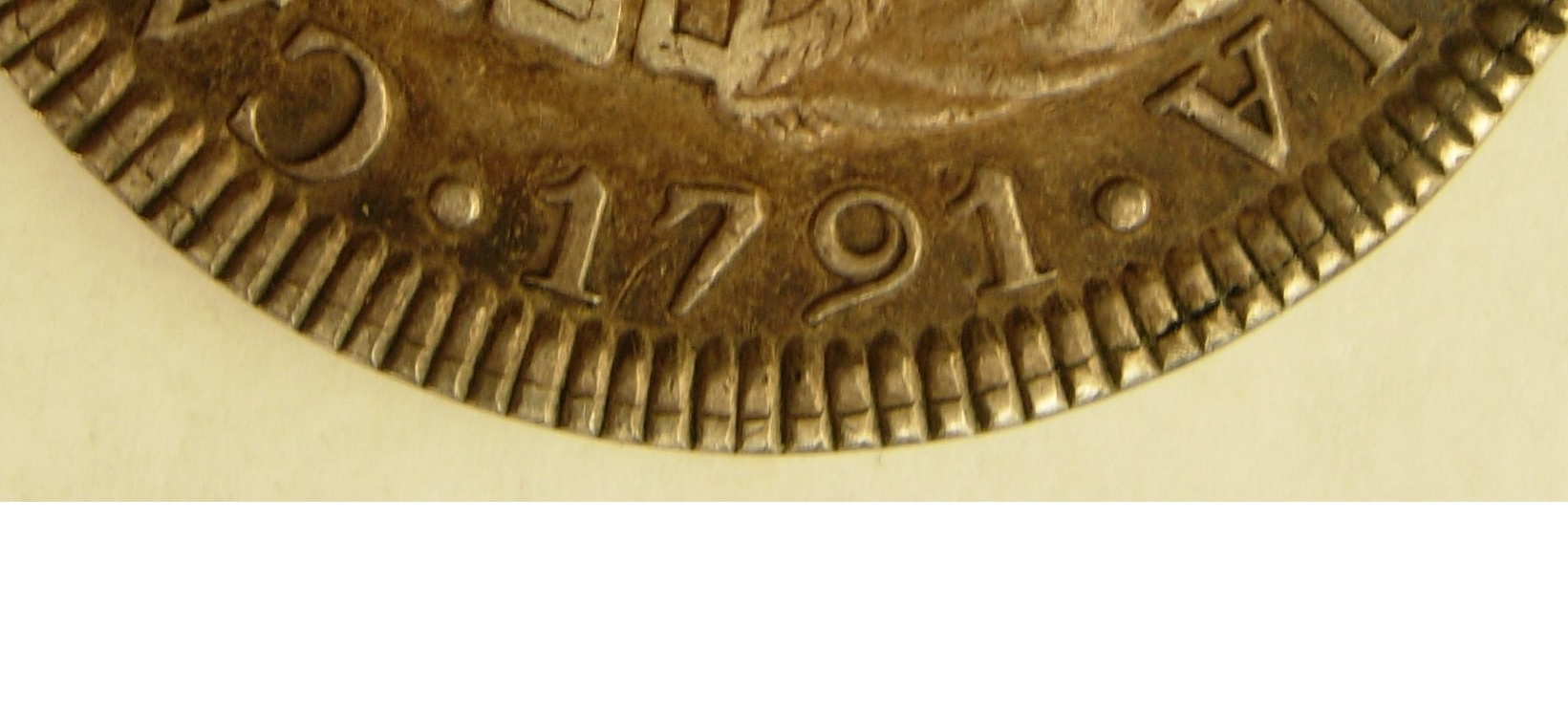 |
|
Page 2 of 2
|
Replies: 16 / Views: 4,466 |
Page 2 of 2
|





 First Page


 Posted 02/17/2018 7:13 pm