| Author |
 Replies: 18 / Views: 10,371 Replies: 18 / Views: 10,371 |
Page 2 of 2
|
|
|
|
Rest in Peace
United States
17900 Posts |
Until you become familiar with toning, be aware that there are many folks "producing" toning to sell specifically to uneducated buyers.
Check out coins found in NGC, PCGS, and ANACS to get an idea of what is and isn't natural toning.
|
|
Valued Member
 United States
80 Posts |
Quote:bigjohn603 The term for what you are asking about is called toning. RoyCoinBoy is correct, it's caused by environmental interactions with the silver. Here is an informative article about it... http://www.coinnews.net/2007/09/03/.-value-3565/ Great article! Thank you very much... |
|
Rest in Peace
10197 Posts |
Never seen an environmentally damaged (toned) coin that wouldn't benefit from a quick dip!   |
|
Bedrock of the Community
United States
20753 Posts |
OR it could be left overs from Lyprocons, not sure of the spelling, looking for their pot of gold.   |
|
Bedrock of the Community
United States
17884 Posts |
Now would you like to know what causes the colors?
It's called thin-film interference. Light passing through the oxidation film on the surface of the coin reflects from both the top surface of the oxidation and from the back surface of the oxidation. These two reflections interfere with each other resulting in a cancellation of some of the frequencies in the light. Which frequencies are canceled is a function determined by the thickness of the oxidation film the light passes through. Different thicknesses mean different frequencies and your eye sees this as different colors.
|
|
Pillar of the Community
Canada
683 Posts |
Quote:
.Never seen an environmentally damaged (toned) coin that wouldn't benefit from a quick dip!
Same here lol. Kind of kidding, kind of not. |
|
Moderator
 Australia
17012 Posts |
As for "what causes it", chemically, the answer is "corrosion from atmospheric sulfur". Silver does not oxidize under normal atmospheric conditions, but pretty much any airborne form of sulfur - be it sulfur dioxide, hydrogen sulfide or organosulfur compounds as well as liquid or dissolved sulfur such as fingerprint oil, onion juice or machine oil - will chemically react with the silver metal of the coin to form silver sulfide. Bulk silver sulfide is black. The colours that we call "toning" derive, as Conder states, from thin-film interference. Basically, when the layer of silver sulfide on the coin is very thin, light can shine through it. The thinnest films are reddish in colour, then greenish, then blue. After blue comes black, because the layer becomes too thick to be transparent. This does mean that, if you have a coin with colours that are pleasing to you, protect it from further reaction with sulfur in the air - otherwise, the colours will change, and eventually turn black. Don't say "infinitely" when you mean "very"; otherwise, you'll have no word left when you want to talk about something really infinite. - C. S. Lewis
|
|
Pillar of the Community
United States
3479 Posts |
I'm loving the debate here. I only posting so that I can retrieve it easily for future reference in my post history.  |
|
Moderator
United States
196749 Posts |
Quote:
I'm loving the debate here. I only posting so that I can retrieve it easily for future reference in my post history. You could also add it to your CFF bookmarks by pressing the  above any post in this topic. You can get to your CCF bookmarks from the Tools menu or add this link to your browser bookmarks... https://www.coincommunity.com/forum...e.asp?mode=3 |
|
CCF Advertiser
United States
1533 Posts |
Eight posts before the words thin film interference get posted. oh well.
|
|
Bedrock of the Community
United States
17884 Posts |
Can't help that, there were already seven posted before I got here.  |
|
Pillar of the Community
United States
2125 Posts |
Quote:
Never seen an environmentally damaged (toned) coin that wouldn't benefit from a quick dip! My babies fear your words! 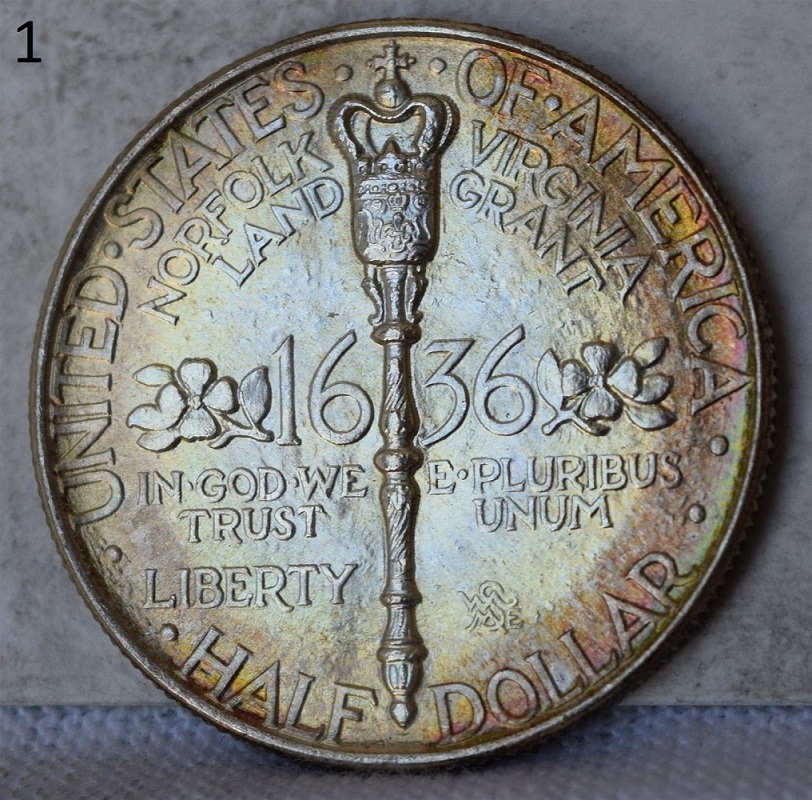 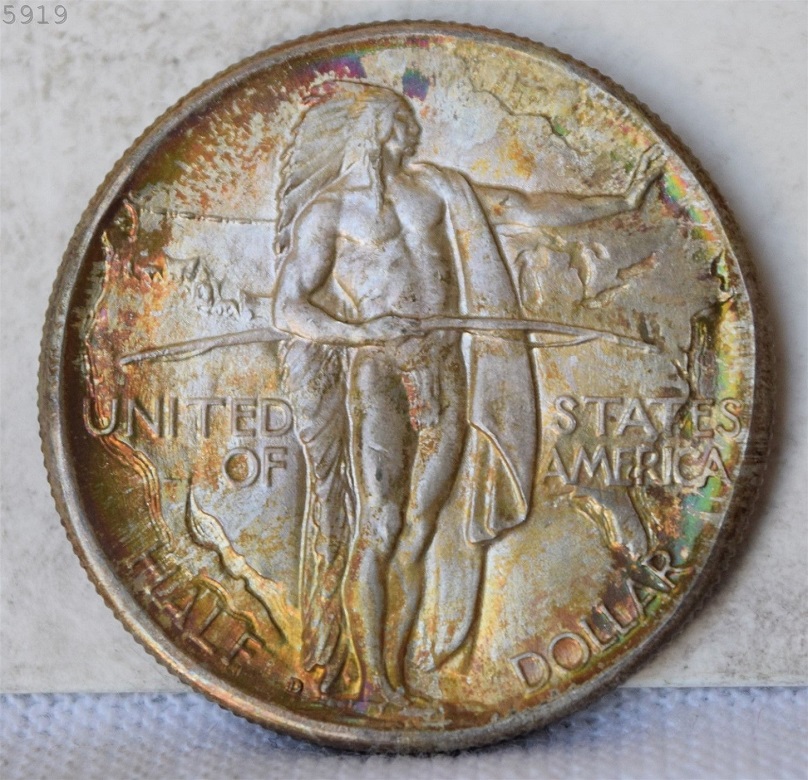 Edited by bandsdean
03/23/2018 2:34 pm
|
|
Valued Member
United States
80 Posts |
Quote:
Now would you like to know what causes the colors?
very informative  |
|
Valued Member
United States
80 Posts |
Quote:
My babies fear your words!
fear not, for they are beautiful. |
|
Bedrock of the Community
Australia
21793 Posts |
The comments of Conder and Sap taken together, give the whole picture exactly.
In the light of these comments, it must be remembered that beautiful rainbow toning is in a very delicate and unstable state between blast white and full dull gray.
To preserve the nice coloring it is essential that the coin is kept in an airtight capsule. If that is not the case now, then take action immediately.
A slabbed coin is somewhat protected in it's prison, but slabs are not airtight. Over the long term, the rainbow toning may still be at risk.
|
|
Page 2 of 2
|
Replies: 18 / Views: 10,371 |
Page 2 of 2
|





 First Page

 Posted 03/20/2018 8:13 pm


