| Author |
 Replies: 22 / Views: 10,630 Replies: 22 / Views: 10,630 |
Page 2 of 2
|
|
|
|
Pillar of the Community
United States
2156 Posts |
Well made educational thread. I learns lots from these types of topics. Thanks coop!
|
|
Pillar of the Community
United States
1070 Posts |
All of these educational threads NEED to be pinned at the top of the page so new members can read them and have a better understanding what to look for (or at least make one thread and post links to all educational threads)
|
|
Bedrock of the Community
 United States
62064 Posts |
For different topics of my threads, you can click on to this link CoopHome (note when you type that it turns blue) it will take you to a thread of all other threads are located to find more information. Just click on the link and you are there. |
|
Pillar of the Community
United States
1070 Posts |
From the bottom of my heart, thank you Coop. I've learned lots from you and MANY members on here. EV, LOM, Jim, John, CH27 and many more. Can't remember all people that helped me learn
Cheers, my American friends
|
|
Bedrock of the Community
United States
62064 Posts |
Part two: MACHINE DOUBLING SPREAD VS MACHINE ALTERED DEVICES:I've seen some are still having issues about Machine Doubling and hub doubling. So lets approach it from another angle? What is missing on Machine Doubling that a doubled die has? The doubled die have the doubling on the die. Machine Doubling is caused by the machine. This can happen on a normal or a doubled die. Because both are struck with a machine, the dies can experience the same bad affect, when the machine is not working properly. When viewing Machine Doubling note that the overall size of the devices do not change. Just the contour on one side of the devices are altered. (Reduced in over all size) How can I avoid finding Machine Doubling? Stop looking for hub doubling on the outside edges of devices. Look at the centers for the spread, enlargement of the devices. Note on the first set of images, you can see a doubled die on the upper images, but on the lower images you can see Machine Doubling on the devices. Note how the doubled die has the larger sized devices? Note on the Machine Doubling on the lower images, you can see where the devices are altered by the machine, removing the contour on the devices. 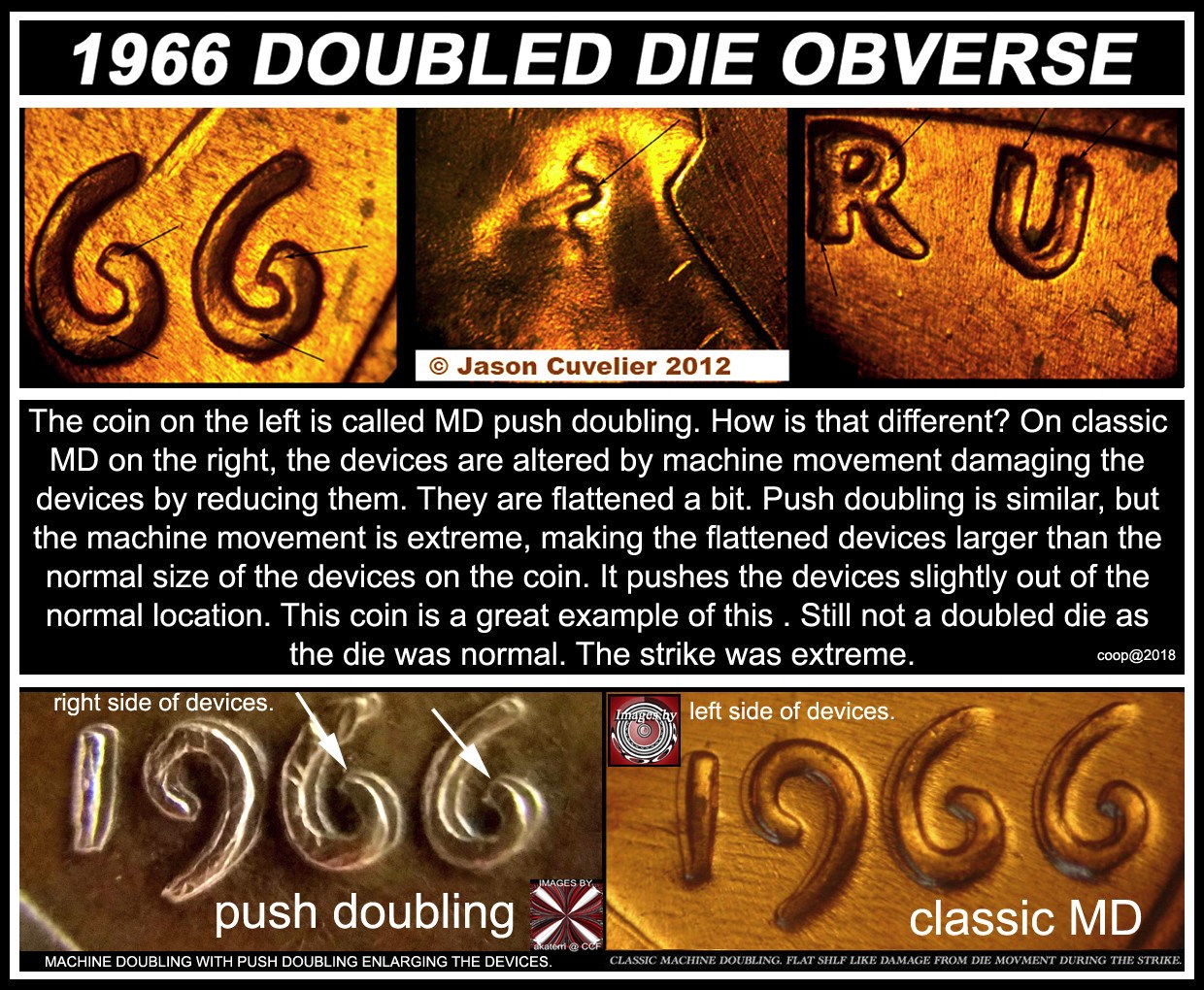
Again look at the upper images? Note how your eyes easily find the hub doubling on those images, because they are noticed by be looking on the center of the devices. Where as the lower devices are affected on the outside edges of the devices?

Note on these images, they are all different types of Machine Doubling. Note the pushed aside of the contour on these devices. Note the flattened edges of the devices? Because the contour was removed. Now look at the 1966 DDO images again? Note that on both sides and top and bottoms, the contour is still present on all sides. What is contour? That is the light flows from light to dark to the bottoms of the devices. On the machine affected devices, this does not occur. The light is on the top, but falls over a cliff to turn totally dark. This is how you can tell if a device is affected or not.
The next image shows a side by side of a normal coin and a machine doubled coin. Without the side by side many may not catch on that the devices were removed, and how both sets of images are the same overall size. So the SBS shows how from one image to look at a different location, your perspective is altered, not showing what you can see next to each other.
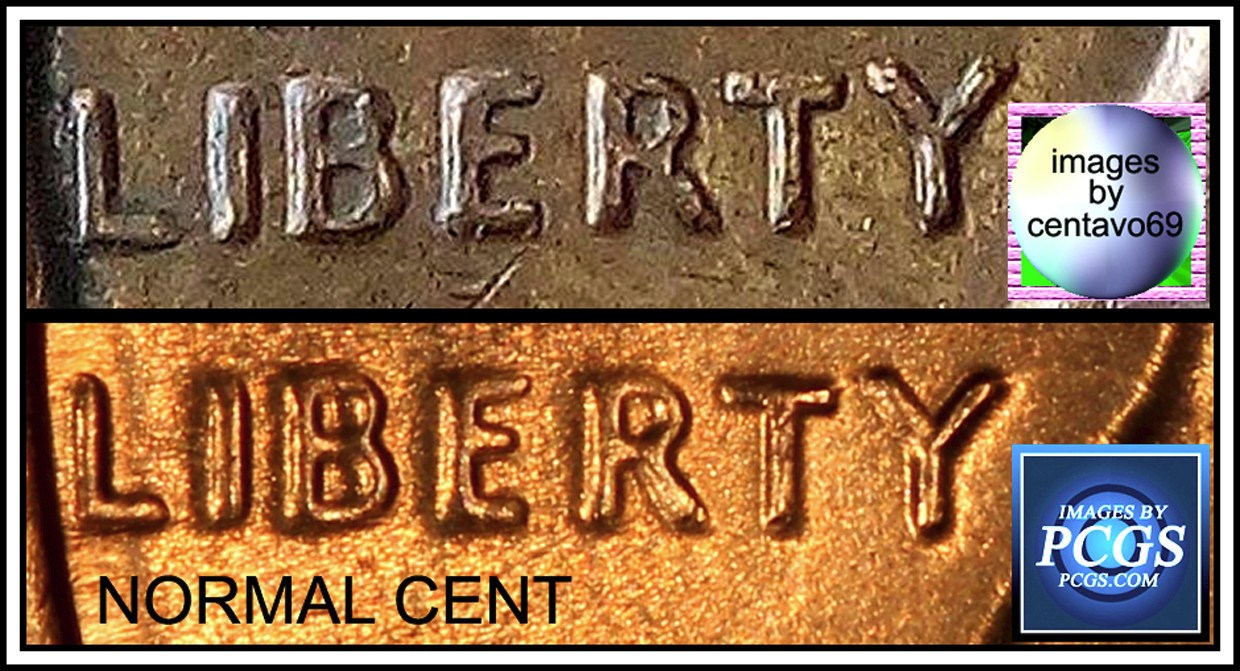
Now you can see that they both have a little MD on each, but the overall sizes are the same, because they both were from a regular die. (No doubled die coin present)
Sometimes light plays tricks also. But using the outline of the devices you can base the spread from the bottom outsides of the devices.

Sometimes on proof coins you can see an extension of the devices on the fields. This is called flat field doubling. This is when the proof coin was struck the first time, there was some Machine Doubling present. Because proof coins are struck twice, on the second strike the first Machine Doubling can be flattened and leave an outline outside on the fields around devices:

Again because this is caused by the machine, and not the die, this is not hub doubling. Just another form of Machine Doubling. Note the overall size of the raised devices are the same, just the fields can show the flat field Machine Doubling.

Note on this image that show Machine Doubling, the devices are the same size, but again note the contour was removed off this device. When new ones search coins, they look at the outside edge of devices and see the Machine Doubling and think, I've found a doubled die. But the die didn't create this, the machine altered the contour on the coin after it was struck.
Another form of Machine Doubling happens on incuse devices such as the ARB quarters:

Because of the machine movement before/during/after the strike, this alters the devices. This happens a lot on this area of the reverse. The devices on the dies are raised and when the slightest movement happens it, enlarges the devices. Again this is a striking issue, not a die issue. I found about 70% of these quarters have slight/mild/strong Machine Doubling on them. Only 30% didn't have this MD present on them. There has not been produced a doubled die on these devices on the outer rim. Why? Because these single squeeze dies affects the central areas of the designs on both sides of the coins.
Cents
DOUBLED DIES: SPREAD IS WHAT TO LOOK FOR ON THESE:
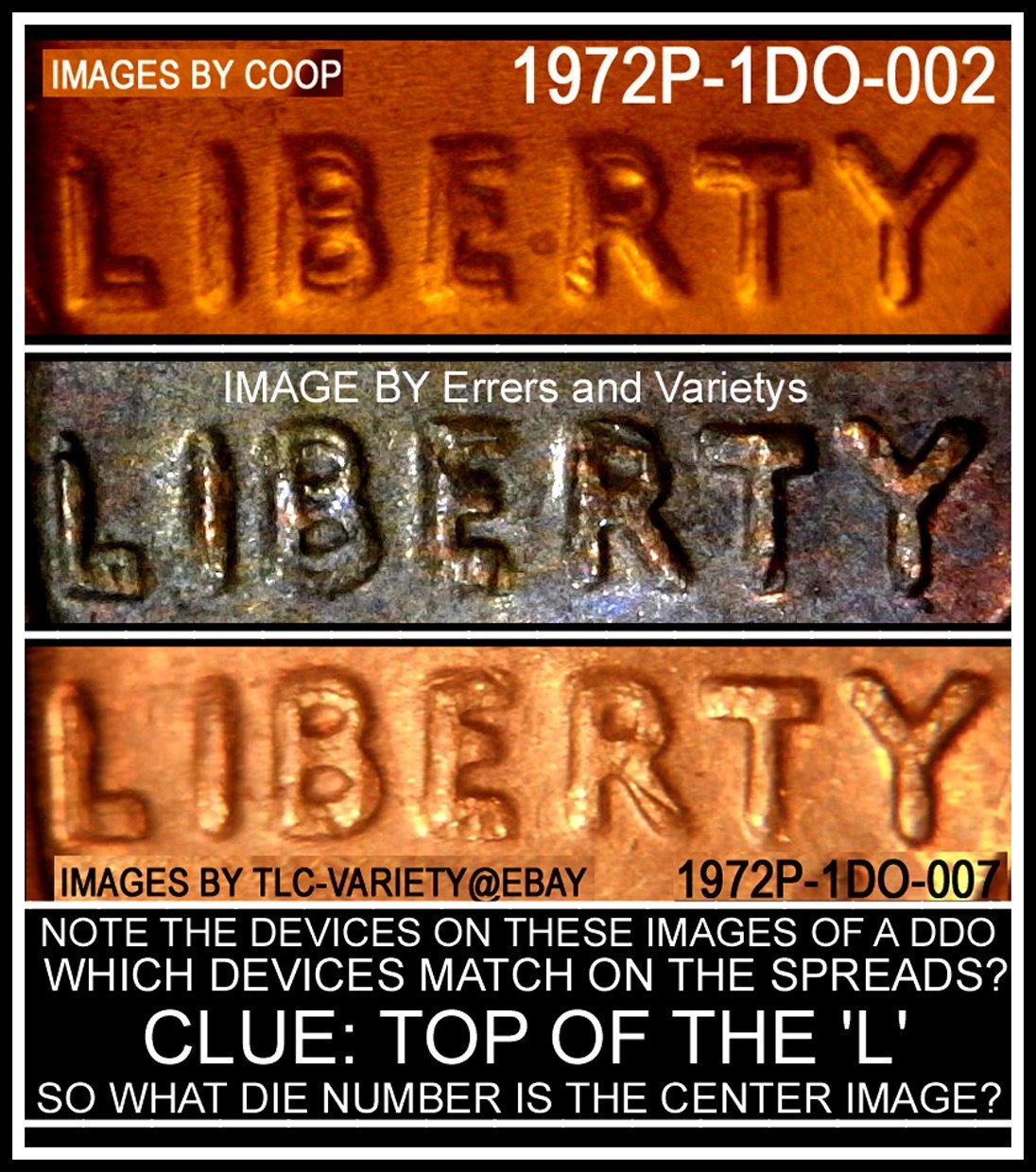
As I mentioned earlier, if you learn how to create side by side (SBS) images, these will help confirm if they are the same die, or not. You can even create them with several choices. The best is the have the image of the area in question you are trying to match up, then have it on the center, then you can use different die numbers on top and bottom of the coin in question. Note the example above, how minor details are seen a lot easier when you use this to match up die numbers. In order for a die to match, all hub doubling must be an exact match. A helpful hint on the pre-1990's cents, the mint marked coins will help determine dies also. After 1990 all the mintmarks are all in the same locations. But the Philly varieties make it harder to determine. So the SBS's are helpful to figure out minute differences.
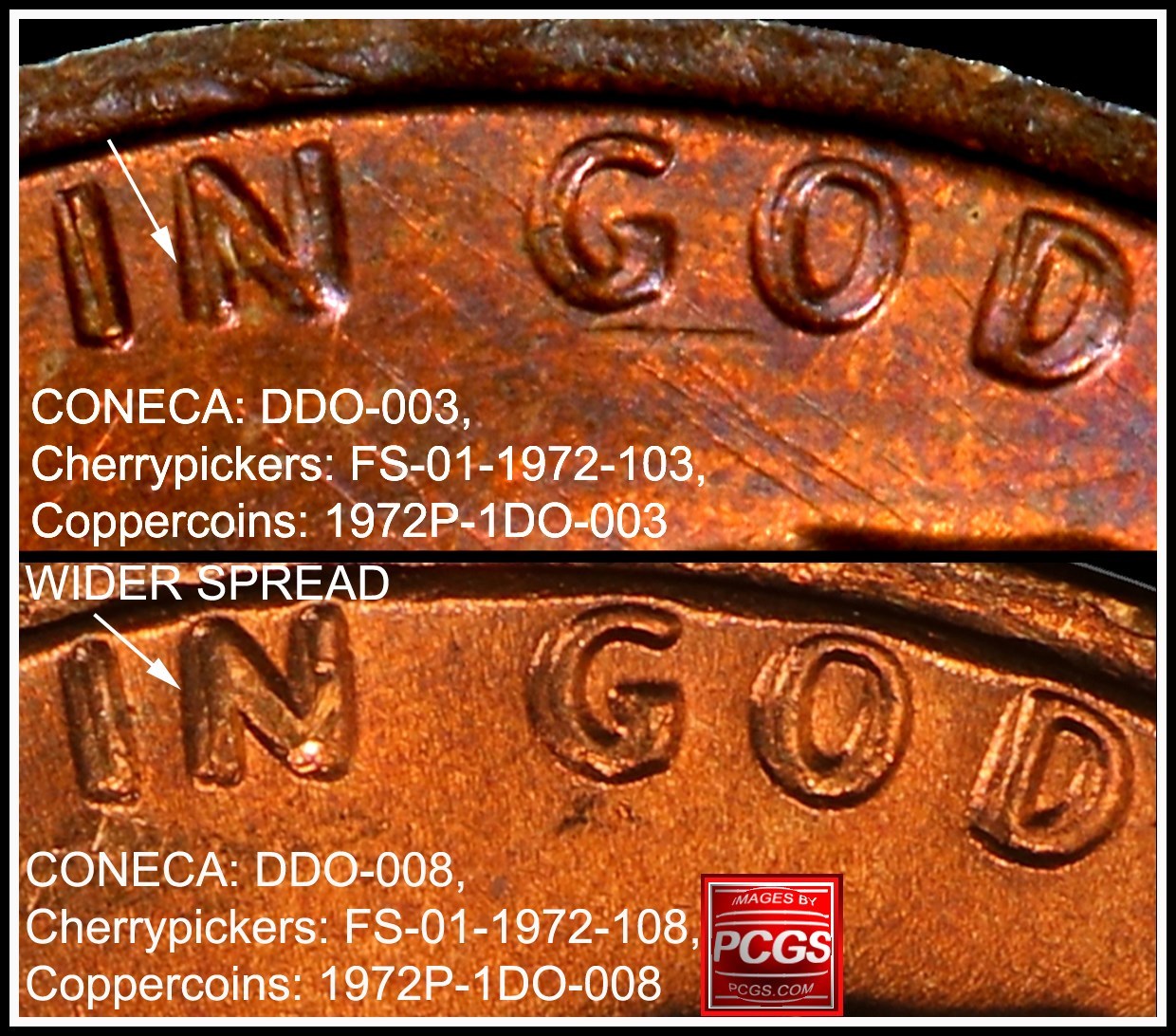
See how looking at them SBS, that it helps to see the differences between dies?
They are also helpful to determine if they are really normal or a variety:


Spotting the spread helps to see how a normal and a doubled die are different:

Some years have really extreme spread. These are very easy to spot and match up:

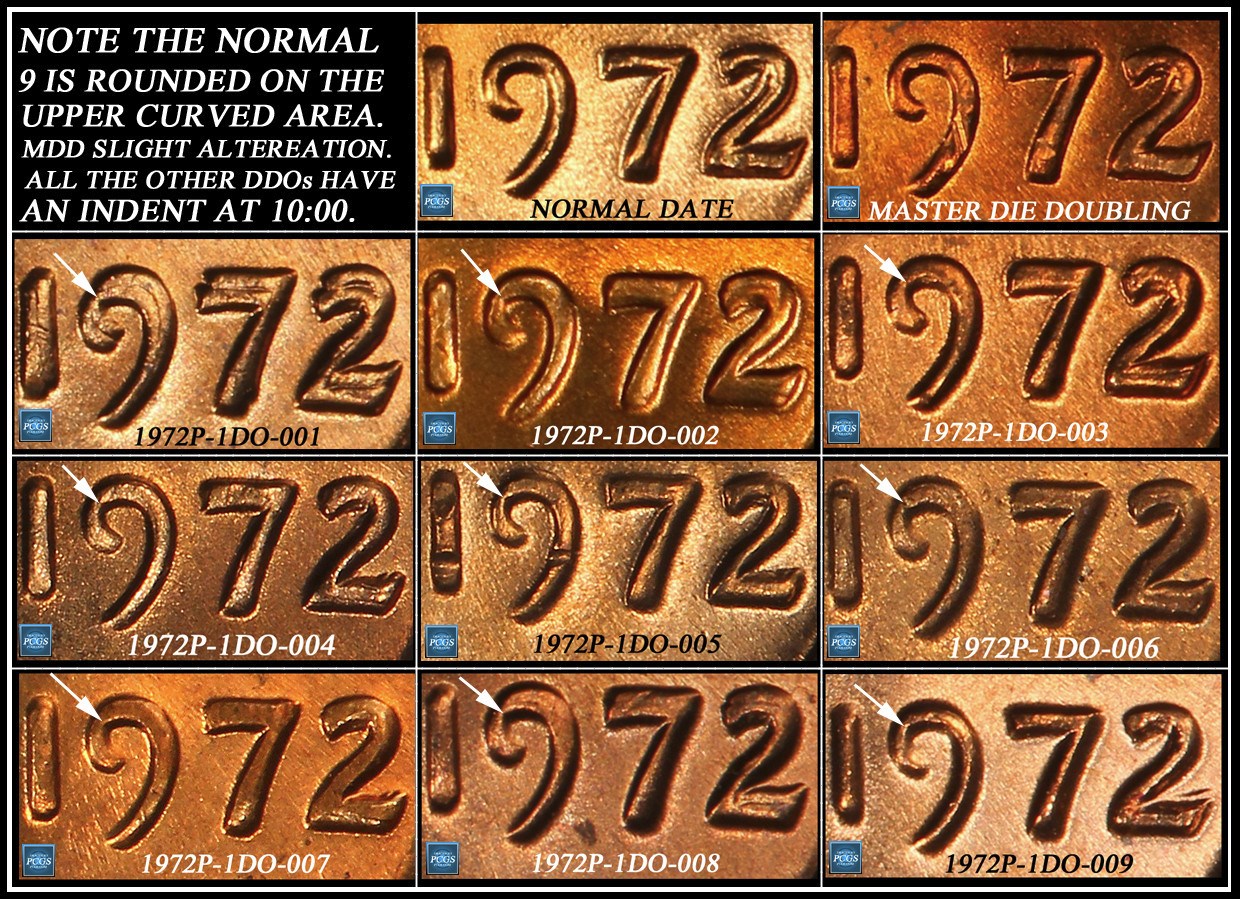
1972 cents have a lot of DDO's on them. Here is a trick I learned on searching that years doubled dies:

Note on this SBS the bases of the devices are wider because of the spread on the devices:
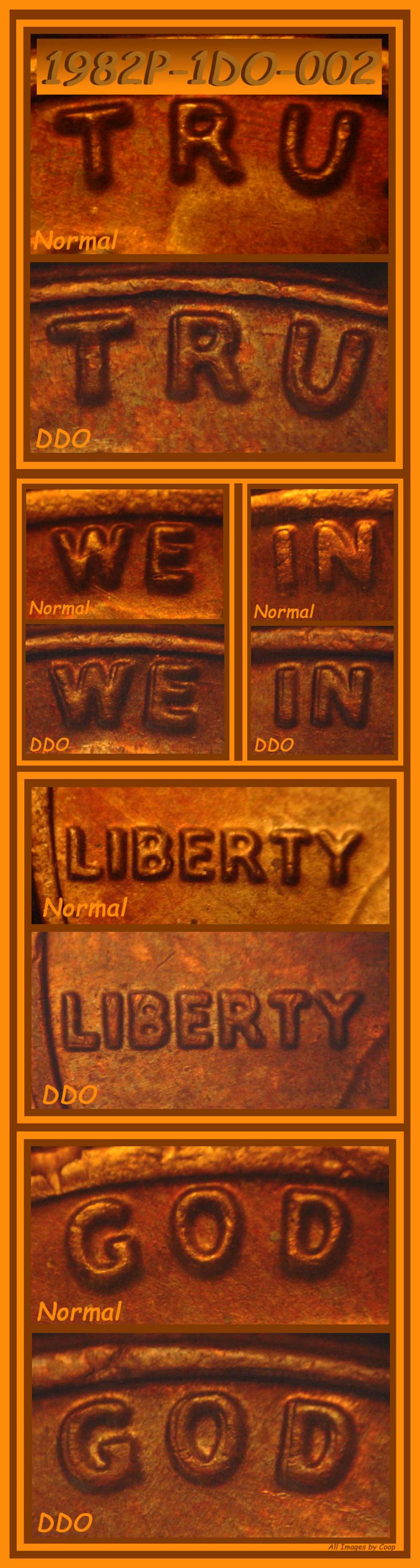
The width of the devices are the clue on this one, but other times they can be taller. Just depending on the spread whether vertical or horizontal depending on the location on the devices have on the die.
Spread with notching is always a nice thing to see on a doubled die:

Note the selection of different dies and finding the correct spread, is made easier with SBS's.

Sometimes Machine Doubling can alter a device to make it appear that it is a certain die:

Seeming them SBS can make or break the match to a certain die. This one looked so convincing, until you note the spread on the devices.
Nickels:

While this looks like Machine Doubling, note the spread on the devices. How they are larger than the normal examples. So spread is the determining factor.

Note the spread on these devices are vertical. If the spread is on a coin, you don't have to make the devices huge. Note a respectable amount of doubling seen on images this size.

A nice spread towards the rim. I love it when they catch my attenetion!
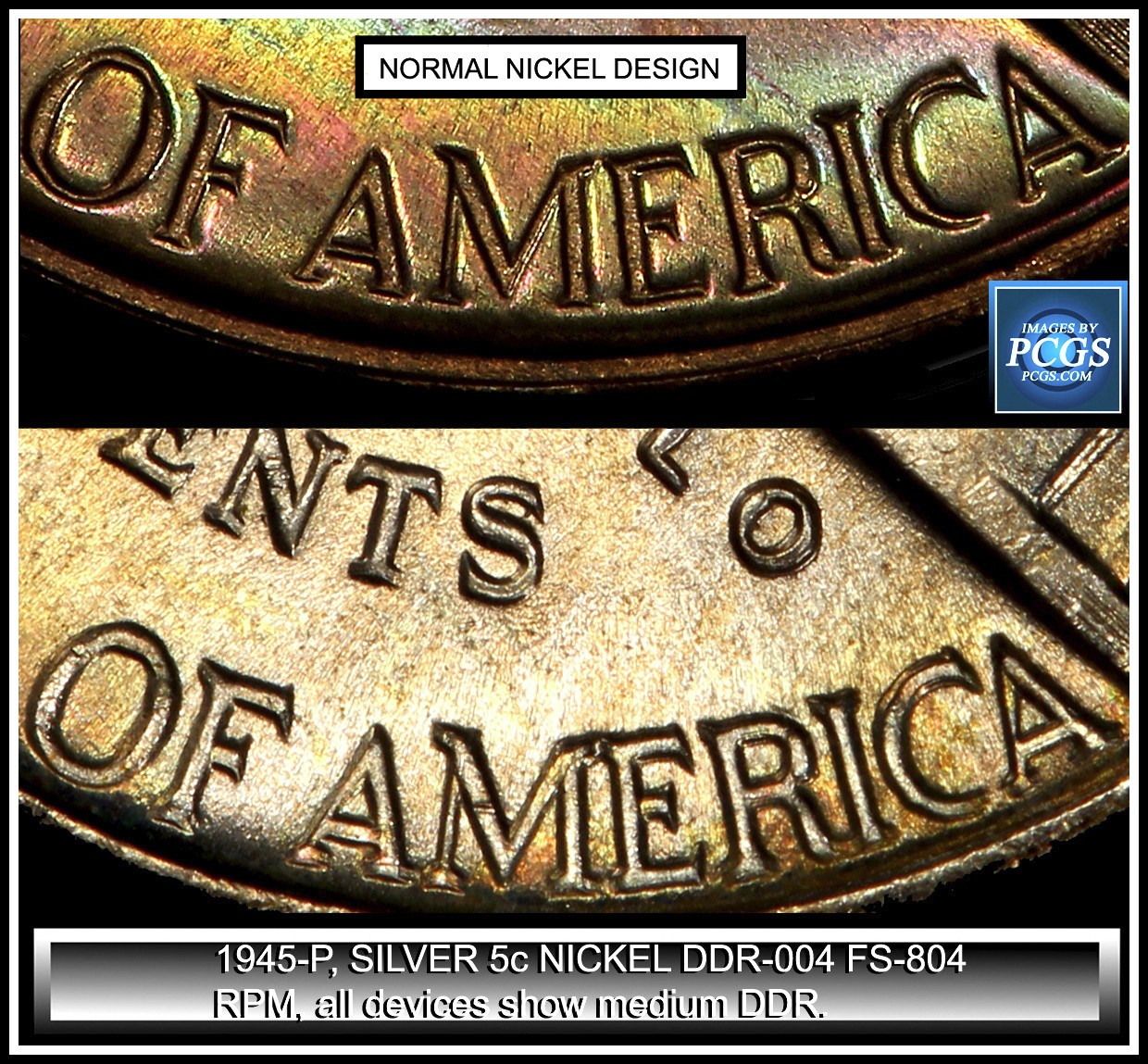
Note the overall spread on these devices in each direction. Compared with a normal set they draw a crowd. (us)
Lets check a few dimes to see if spread can be seen?
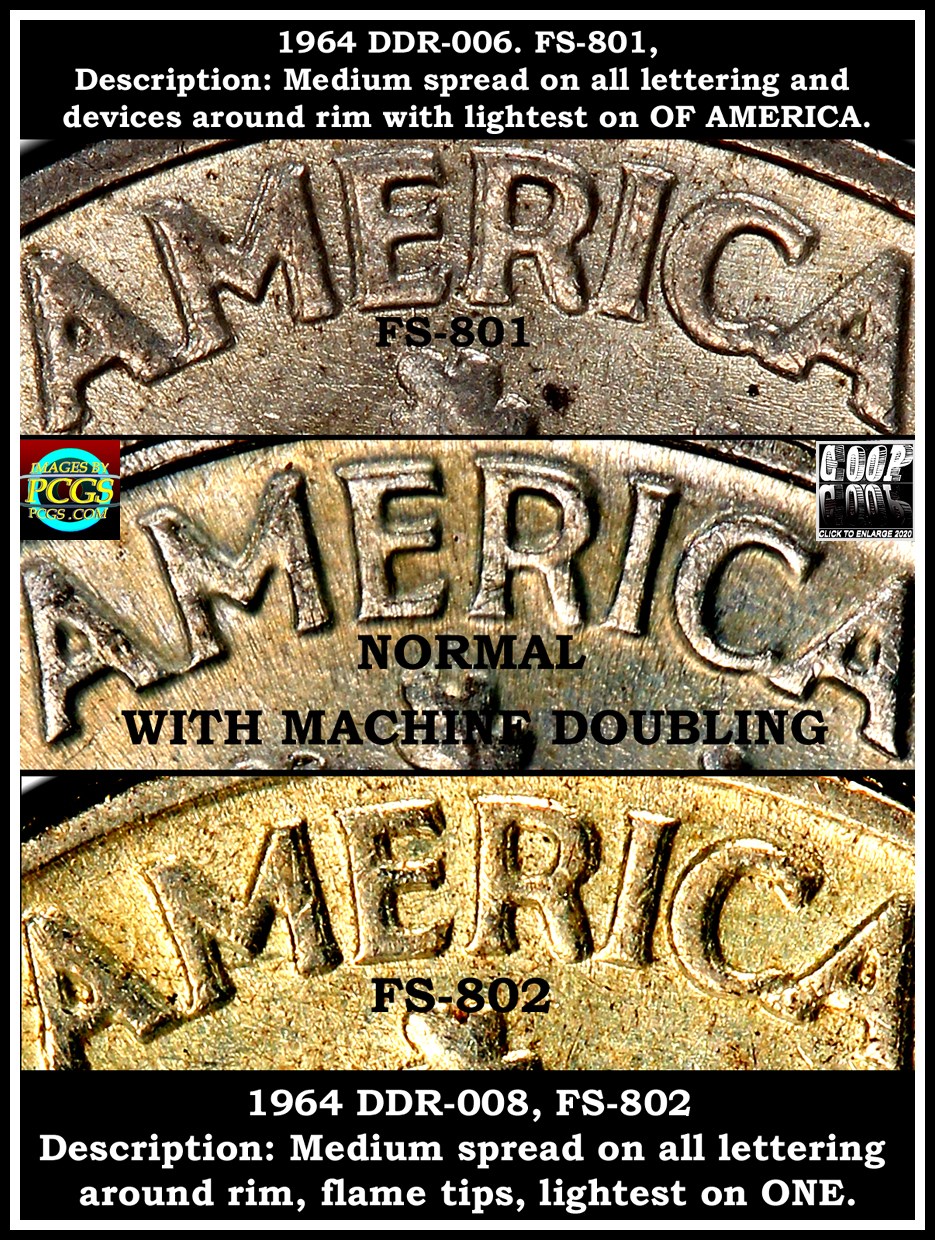
Note the center image. That is a normal die coin with Machine Doubling. Also note the width of these devices. See you look at the center areas for the spread, then you see how enlarged these devices can be, because of the spread. Also note how the centers of the closed devices are smaller, because the spread closes it up.
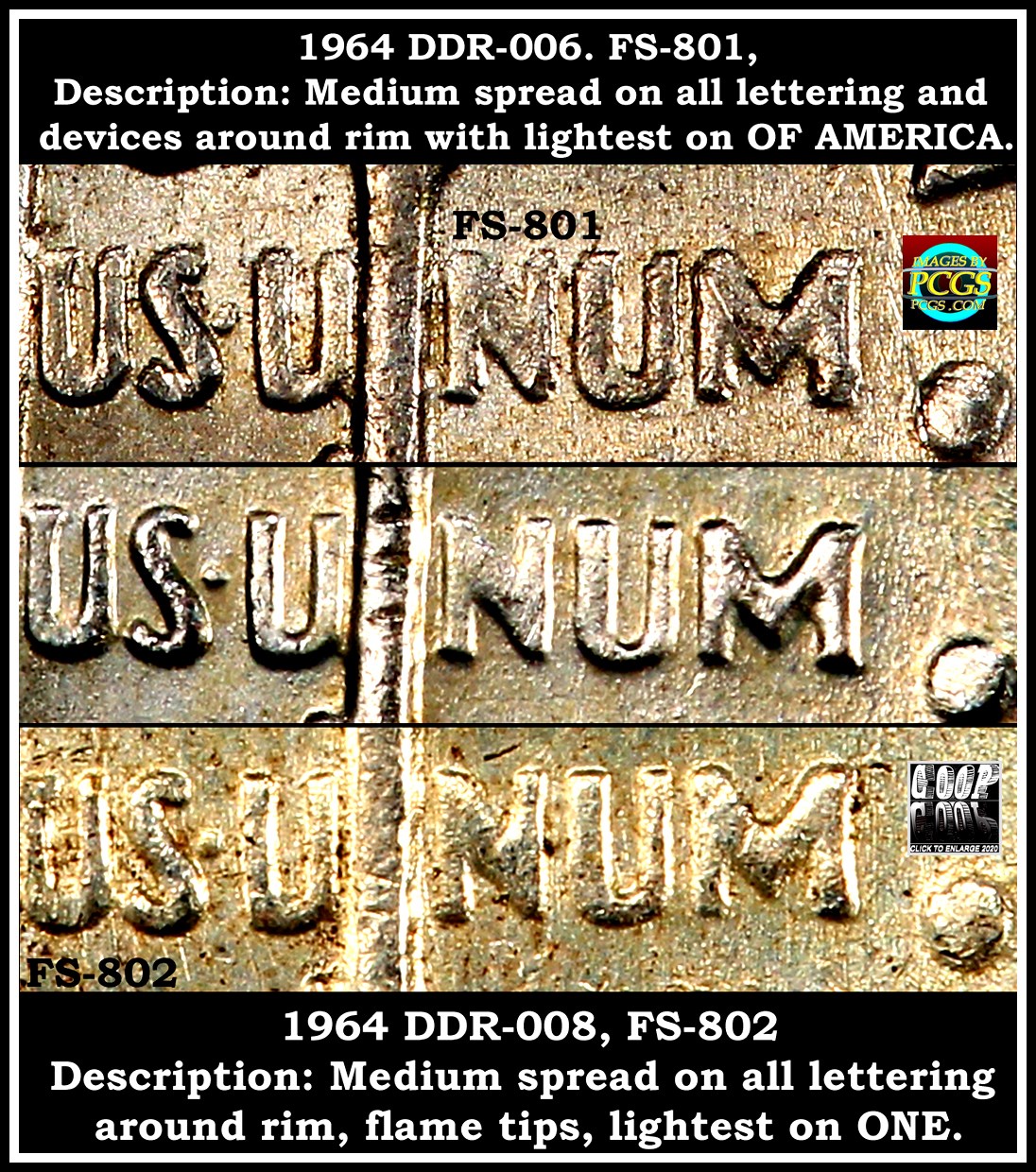
Again note how the devices are wider on the doubled dies because of the spread of the hubbing on the die creation.
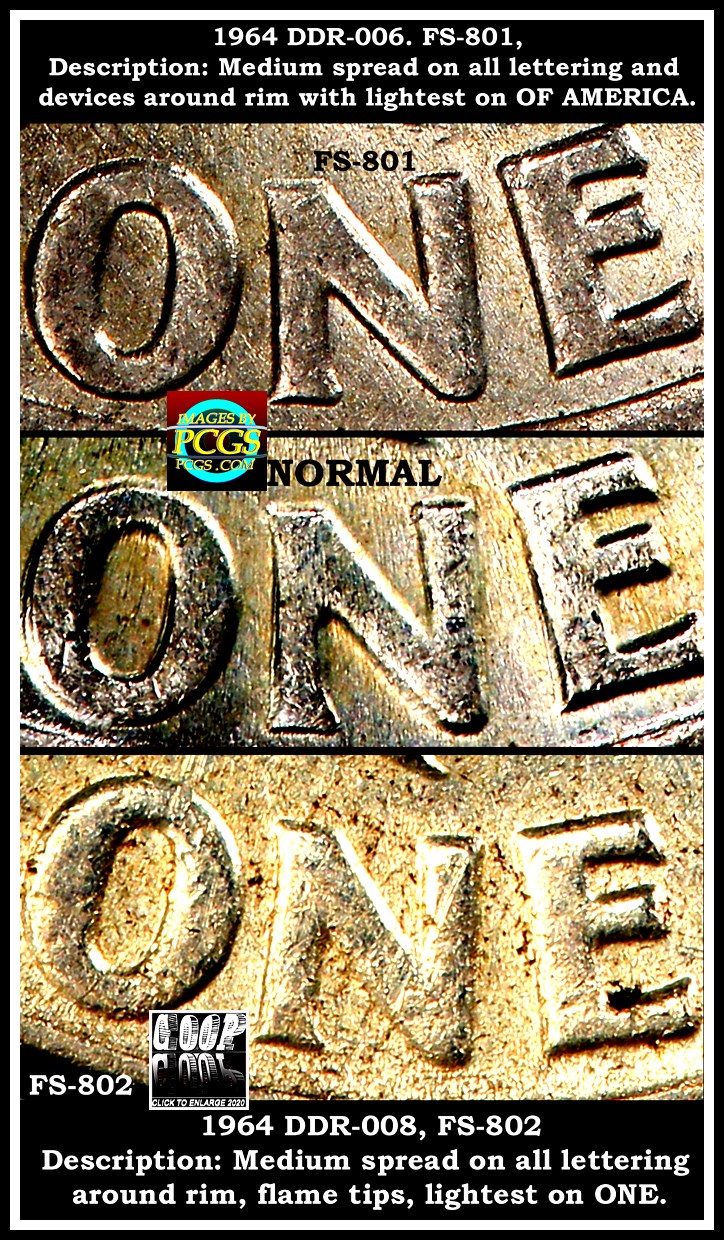
Note again, the spread.
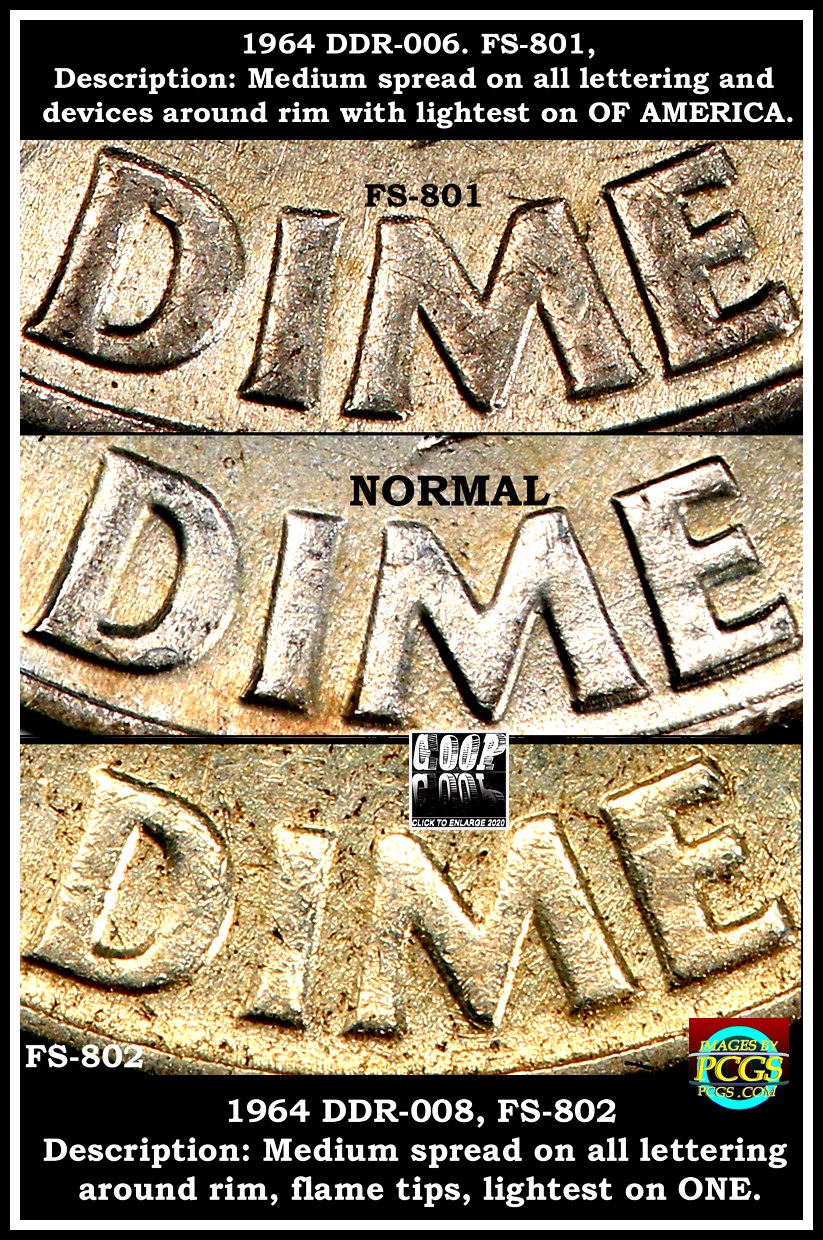
These images show two different DDRs and a normal example in the center.

Again note the closed centers on these devices. Also the size of the devices, because of the spread.

This one is showing die tripling on the tops of the devices. While some think that this is Machine Doubling, note how the devices are made taller because of the spreads of the hub of this die.

Spreads not seeming strong, but not the notching on the corners of the devices.
When you first look at the DDR on this image by itself, you could missing the doubling. But note the width of the spread on the devices?

Same on these devices. A nice spread, noticed by looking at the center of the devices.
Lets check a few quarters:

Note the DDO on the bottom. You can see the spread, but note on the left sides of some devices, you also see Machine Doubling on them.
_SBS_nor_AAA.jpg)
Note that not all the time you see width added to spreading of the devices. This one is on the verticals of this die.
On this one it looks like it is just Machine Doubling. But note the spread of the devices. They are wider than the normal. So it is hub doubling, a nice DDO.
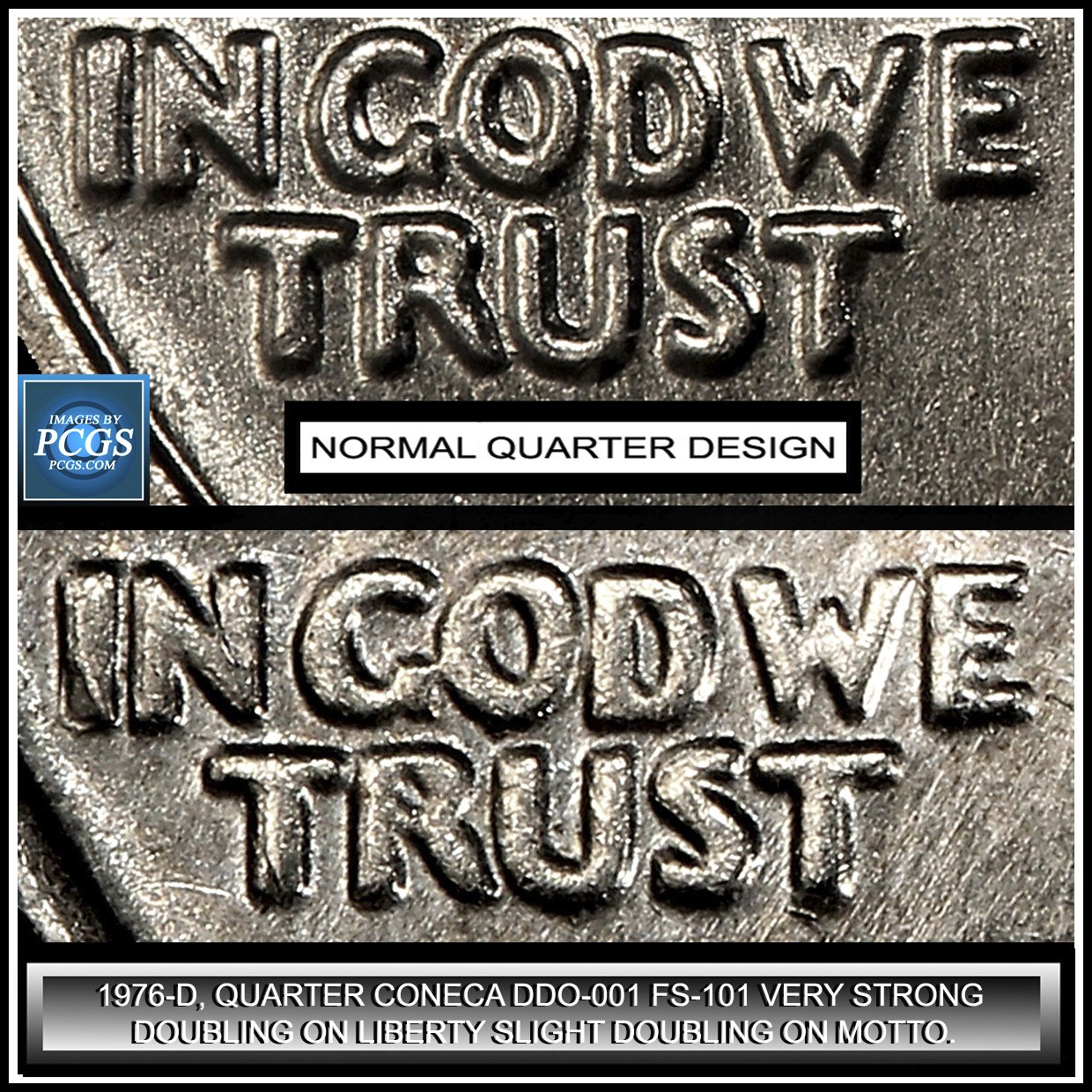
Note the very nice spread on these devices. The larger devices look even larger.

An example of what looks like classic Machine Doubling, but note the size of the devices. The spread is present, showing that is not Machine Doubling. Nice notching on the corners also.So I hope this helps you to learn to look for the spread of the devices and forget about looking on the outsides of devices. Because you will find there is Machine Doubling. An alteration of the devices by the machine. Look for the real doubled dies, because there are out there. Edited by coop
10/25/2020 11:08 pm
|
|
New Member
United States
5 Posts |
I didn't read all of the comments. But, as a newbie, I definitely agree with evan. Also, thank you, it was a very informative read, and well written
|
|
Pillar of the Community
United States
4136 Posts |
To coop and all others who respond to questions on this site I want to say thank you. For you to take the time and effort to help us does not go unseen.
|
|
Pillar of the Community
1110 Posts |
Another brilliant thread coop! Thank you!  ! I'm sure you have, I just can't find it. Have you created a thread like this focusing on Kennedy's? |
|
Pillar of the Community
 United States
584 Posts |
awesome thread as always Coop thanks for more knowledge, and glad I could assist in one of your demos lol
|
|
Bedrock of the Community
United States
62064 Posts |
I've been noting a lot of new ones coming by with Machine Doubling thinking it was a doubled die, so I started concentrating on the spread subject. So added this part two to half newer ones to add to their knowledge to improve on their searches. Remember a lot more subjects of interest is found on the CoopHome link. Note it turns blue? Pages of informatim on different subjects there. (There are three pages of subjects there) |
|
Valued Member
United States
129 Posts |
Truly, a wonderful and educational thread. Doubled die "spread" is something I'm very much interested in. It's a shame that there isn't some sort of scale to grade spread, with, say, the 1955/55 Lincoln as a 10, going down to a 1 for barely discernible spread. The 1955/55 is notable because the spread is greater than the width of the doubled devices. There is actually daylight showing between the images. Now, with everyone's indulgence, I would like to show an image from a previous post of mine, a 2010 2 Rupees coin from India, the one I call the Raja of Rupees (yes, an obvious pun on the King of Lincolns). Almost as much spread as the 1955/55. 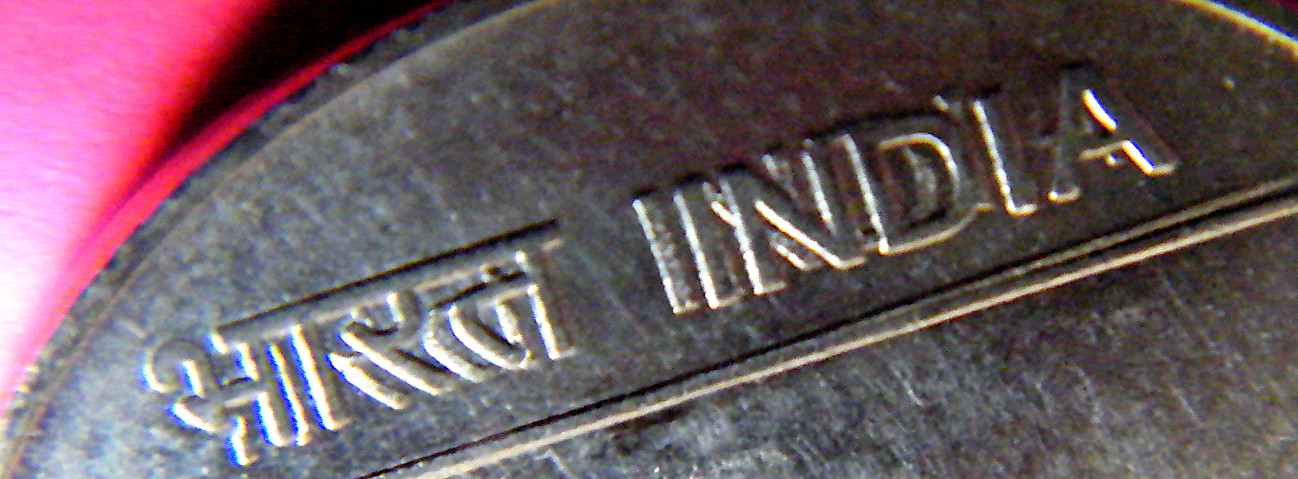 |
|
Pillar of the Community
United States
1427 Posts |
If you want to find the degree of spread, for Class 1, in PS outline an image of a normal version of the coin, copy it, put your coin in there, and rotate until you get them to line up, then measure the rotation of the 2nd outline.
|
|
Valued Member
United States
129 Posts |
The image I posted above looks to me like class IV doubling. Degree of rotation wouldn't apply. There ought to be some measure of shift. If only I could figure out how to transpose a micron scale over the image ..
|
|
Pillar of the Community
United States
7600 Posts |
Thank you coop.A treasure trove of information. You are welcome to add this to your archive. 1963-P 25¢ Doubled Die, CONECA: 1-O-II, Cherrypickers: FS-25-1963-101 WDDO-001 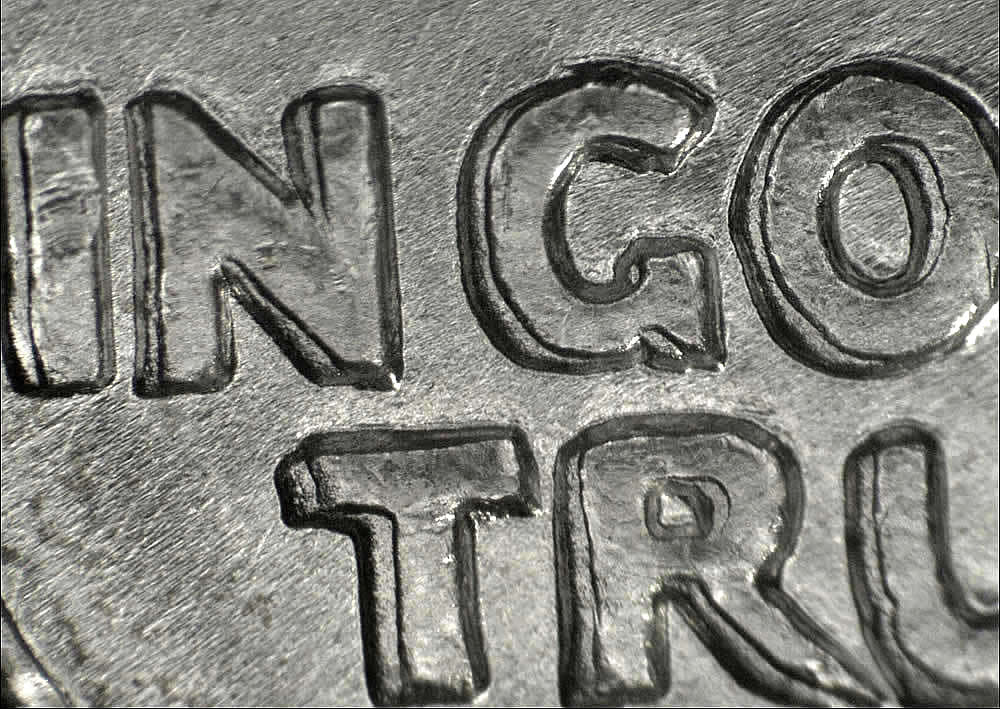 Edited by Chase007
01/14/2021 3:41 pm
|
|
Valued Member
United States
492 Posts |
Great expose Coop from we beginning valued members. Many thanks.
|
|
Page 2 of 2
|
Replies: 22 / Views: 10,630 |
Page 2 of 2
|








 First Page

 Posted 09/08/2019 1:27 pm


