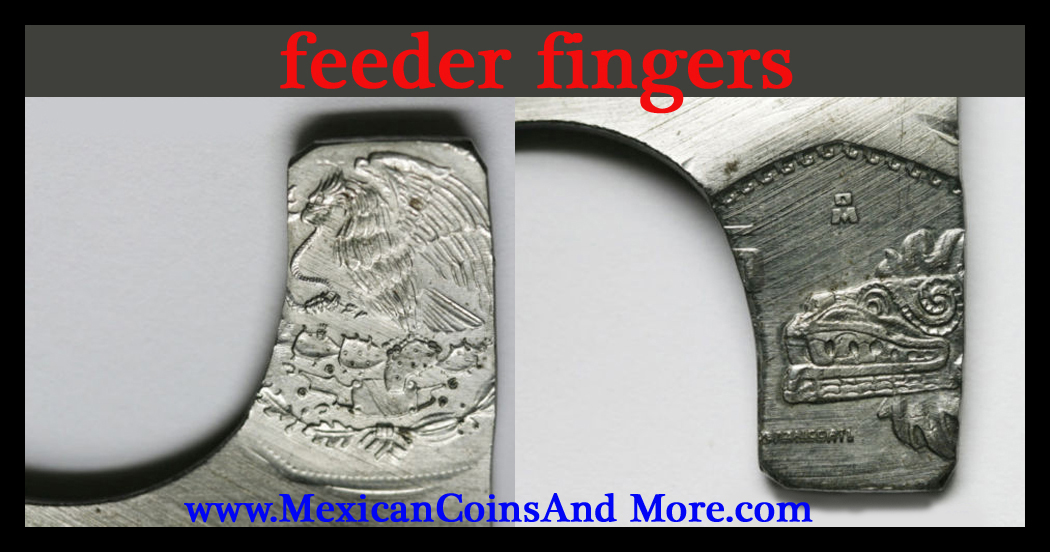
Another thing to learn and recognize. Never known this Feeder Finger Scrapes until today. I do believe I have seen few times when I looked over LMC and LSC. I though it was a bubble or scratches.Very good to know that Feeder Finger Scrapes is error
I've actully seen it quite a bit on the 2017 P's. I didn't even bother keeping them because I thought they were just die scratches or gouges. I've seen them on the reverse as well running "through" the shield but all of a sudden I found a big one sticking out of Abe's neck and then I found like five more so I just figured they were pretty common
Quote: The centrifuge loads the magazine. Pause about 48sec in. You can see the magazine is loaded, but is also offset to the right of the dies alignment as it also appears in the image of the Schuler MRH-150.
Does not appear the planchets free fall directly into the dies path, but are fed into position from that point. Everything happens so fast its hard for me to grasp the whole picture or process for feeding into the striking chamber or strike position. Would think something has to stop / position the planchet in alignment for the upcoming strike. Thanks, Doug.
Feeder finger scrapes can appear on the face struck by the anvil die, the face struck by the hammer die, or both faces simultaneously. They're more common on the face struck by the anvil die. Cents struck after 2001 are almost all struck with the obverse die functioning as the anvil die. So the appearance of feeder scrapes on the obverse face of this cent is not surprising.
The video seems to confirm that there are no feed fingers. The planchet feed IS offset for the dies and it appears the planchet comes down and is then placed into an opening in a vertically oriented collar which rotates to place the planchet between the dies. The coin is struck and the collar rotates again to take the coin away and move another planchet into position. So the collar itself has become the "feed fingers".
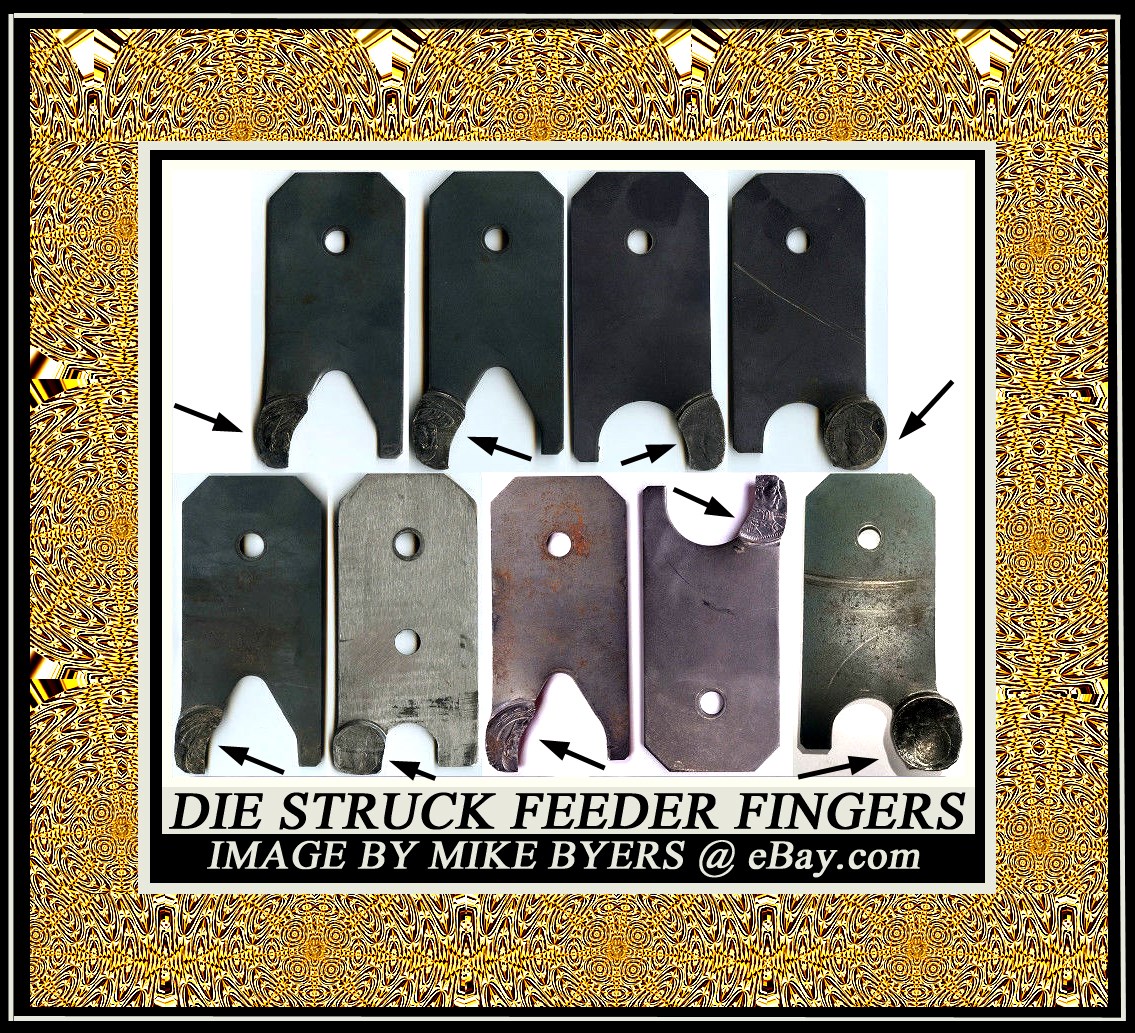
The striking chamber is hidden from view in the video. The collar cannot be the feeder because the collar surrounds the neck of the anvil die. Furthermore, there are plenty of struck feeders from the era of the Schuler press (i.e., coins struck with inverted dies), and even more coins struck through feeders, chain-struck against feeders, and indented on the edge by a feeder. There are even mated pairs consisting of a double- or multi-struck coin and a feeder. Gravity is too slow to feed coins into the striking chamber at a rate of 750 coins per minute.
Quote: Mike Diamnond said: Feeder finger scrapes can appear on the face struck by the anvil die, the face struck by the hammer die, or both faces simultaneously. They're more common on the face struck by the anvil die. Cents struck after 2001 are almost all struck with the obverse die functioning as the anvil die. So the appearance of feeder scrapes on the obverse face of this cent is not surprising.
It probably depends on how bad the feeder finger go damaged from possibly been struck on:
Disclaimer: While a tremendous amount of effort goes into ensuring the accuracy of the information contained in this site, Coin Community assumes no liability for errors. Copyright 2005 - 2026 Coin Community Family- all rights reserved worldwide. Use of any images or content on this website without prior written permission of Coin Community or the original lender is strictly prohibited. Contact Us | Advertise Here | Privacy Policy / Terms of Use






 First Page


 Posted 06/05/2018 1:46 pm





 Another thing to learn and recognize. Never known this Feeder Finger Scrapes until today. I do believe I have seen few times when I looked over


 links and response below from similar topic over a year ago. Thanks, Doug.