| Author |
 Replies: 23 / Views: 2,326 Replies: 23 / Views: 2,326 |
Page 2 of 2
|
|
|
|
Pillar of the Community
United States
2376 Posts |
CoinCents , maybe the OP can correct me but from the photo there didn't seem to be any lateral or vertical movement of the die face at the crack . Without that it would still be a die crack , but , one with potential to be a Cud. |
|
Pillar of the Community
United States
1901 Posts |
|
|
Valued Member
 United States
320 Posts |
I appreciate everyone's posts!
|
|
Valued Member
United States
320 Posts |
Here is a new image of the date closeup. I hope it is clearer to all who view. 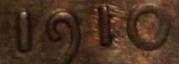 |
|
Pillar of the Community
United States
7601 Posts |
It looks like die gouges as been mentioned, and yes,below the bust there is a Retained Cud now that it's been pointed out. |
|
Pillar of the Community
United States
6207 Posts |
The die crack below the bust either is, is or is very close to, a Retained Cud. It would be useful to take sharp photos of that from maybe four different lighting angles to show it from several angles to really see what is going on there. There are no 1910-S Cuds or Retained Cuds listed on cuds-on-coins yet so this would be a very good find if it is. |
|
Bedrock of the Community
United States
62064 Posts |
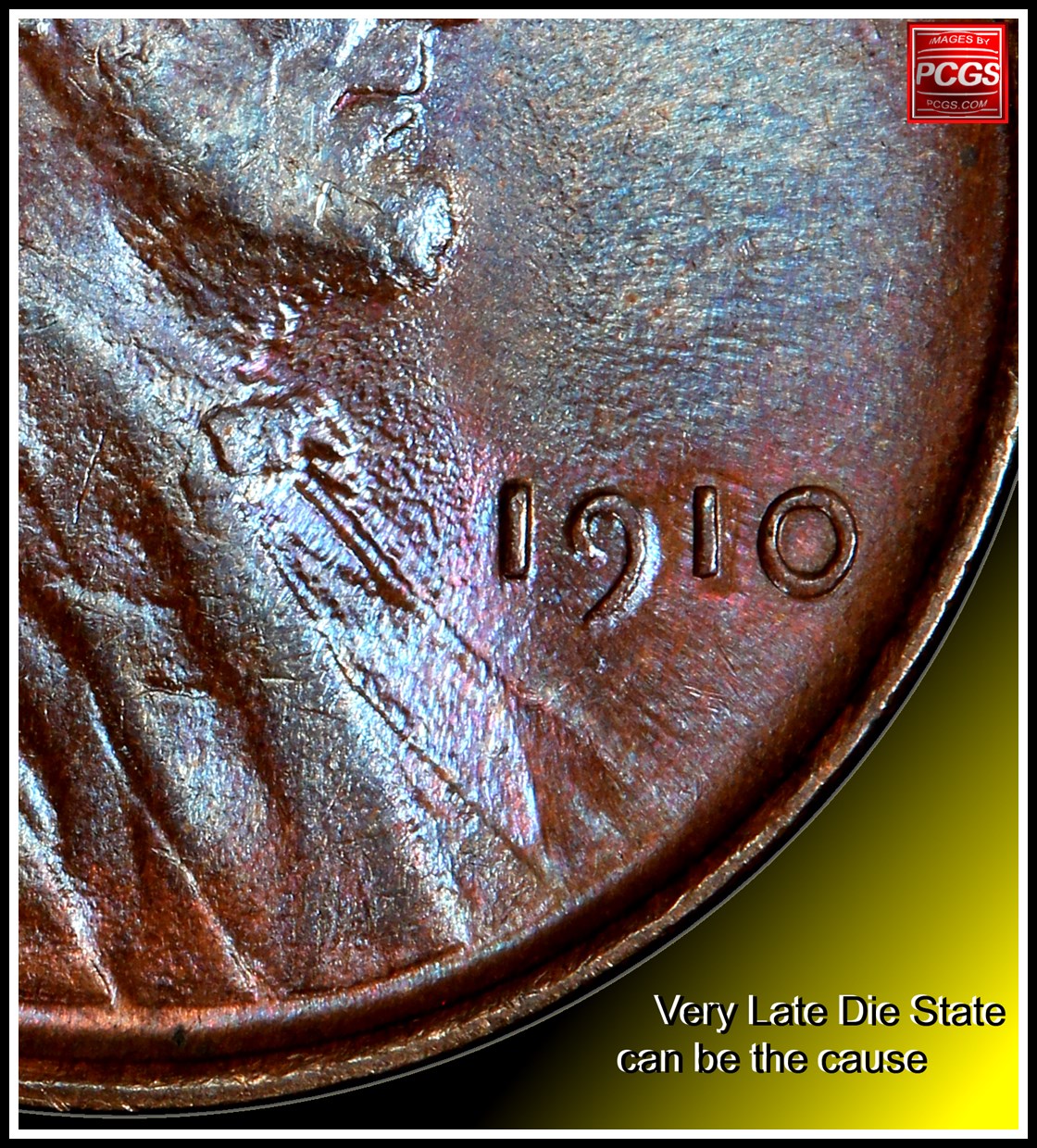 VLDS could affect it, but the rest of the coin doesn't look like this one. But I was alteration to cover an event that happened to the die. |
|
Valued Member
United States
320 Posts |
Thank you Richard for your research and the image. It is far more information than any that I could find in all the research publications that I used. I agree with you. The die file marks and or gouge marks on this 10-s seem to be more distinct than your image.
|
|
Pillar of the Community
United States
2376 Posts |
Collectinsince65 , Coop just gave an example of a late die state 1910 coin. Your coin would not match Coops example as they are different dies from different mints. They would not have gouges in the same places.
|
|
Valued Member
United States
320 Posts |
|
|
Pillar of the Community
United States
3747 Posts |
It does not appear to be an altered date.  The ones in the date are rounded. This is correct for 1909-1910 The portrait design is correct for 1910-1911 See the detailed photos on varietyvista.com. There are no RCDs listed on cuds-on-coins.com for 1910-S cents (yet). |
|
Bedrock of the Community
United States
62064 Posts |
I went looking for a 1910 coin that was in VLDS to see how it looked on that area. Now I can rule that out as an event that might have affected his coin.
|
|
Valued Member
United States
320 Posts |
Thank you to everyone for your posts. Fort Collins thank you for the link to varietyvista. It helped prove that it is indeed a 1910 die. Attached is a closeup of the triangular spot near the rear of the vest. Hope the image is clear to all who view. 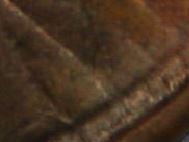 |
|
Pillar of the Community
United States
3747 Posts |
Here is what intrigues me most about this coin: 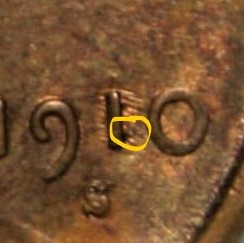 And an unmarked copy: 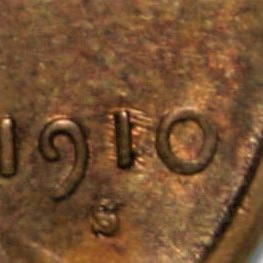 I can make a case for the die gouges. What puzzles me is the raised area east of the second "1." It continues across the "1," though weakly. That suggests two different processes were involved. Let me toss out a possibility for discussion. What if the die were hubbed normally, and during handling or striking coins, sustained shallow surface damage near the second "1." The deepest part of the "1" would be largely unaffected (as it appears), but the field near the "1" would have indentations, which would appear as bumps on the coins. I could see a mint worker trying to file or scrape the field to reduce the indentations, leaving the gouges in place of most of the indentations. After additional coins were struck, I could see a mint worker observing the gouges and polishing that area of the die to remove the gouges. Another note. David Lange wrote that the steel used in dies pre-1915 was inferior to the 1915 and later dies. The dies wore more easily, and produced fewer coins (about 140,000 to 150,000) per die pair than the later dies. That suggests the steel in the early Lincoln series would have been softer and more susceptible to damage than later dies. Just some speculation here, and I'm sure open to other thoughts. You have quite the interesting coin there. |
|
Valued Member
United States
320 Posts |
Interesting speculation fortcollins. Your knowledge of the minting process may have just explained it. Thank you for your insight!
|
|
Page 2 of 2
|
Replies: 23 / Views: 2,326 |
Page 2 of 2
|




 First Page

 Posted 08/24/2018 07:09 am





