| Author |
 Replies: 21 / Views: 3,853 Replies: 21 / Views: 3,853 |
Page 2 of 2
|
|
|
|
New Member
 Canada
15 Posts |
Yeah I have sent images to the guy's in Calgary but as of yet have not received a reply. I guess they are off for the holidays :)
|
|
New Member
Canada
15 Posts |
As tot hem being 'fakes' there's always that possibility, I do recall when living there you could get pretty much anything duplicated if you wanted, from clothes to furniture really, so it's anyone's guess until I can get them into the hands of an 'expert'.
|
|
Pillar of the Community
United States
1543 Posts |
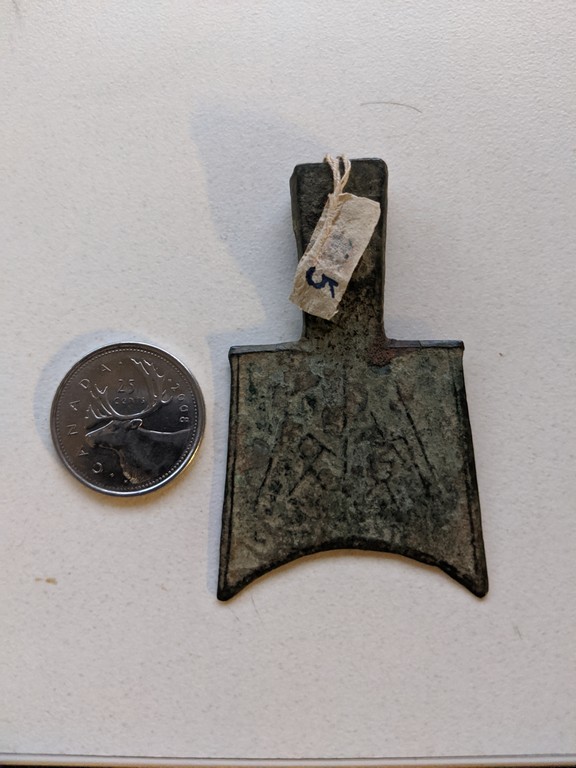
You've changed the pictures, did you do that on purpose?
|
|
New Member
Canada
15 Posts |
No...
Seems that uploading images with the same filename overwrites the originals. Odd.. I'll fix that up later when I get home, it's quitting time here and a Friday to boot so for me it's beer thirty time ;)
|
|
Moderator
 United States
196572 Posts |
 to the Community! |
|
Pillar of the Community
United Kingdom
1168 Posts |
"I do recall when living there you could get pretty much anything duplicated if you wanted, from clothes to furniture really,"
@ScratchMang When living in Yantai I found the same. The Chinese could replicate just about anything. Your coins do look authentic, but as has been previously said, it would take an expert to say for sure.
JIm
|
|
Pillar of the Community
United States
6370 Posts |
Hello! I am your resident expert on ancient Chinese coins.
I saw this thread yesterday, but didn't have time to respond. There were a bunch more pictures. Do you mind uploading them again?
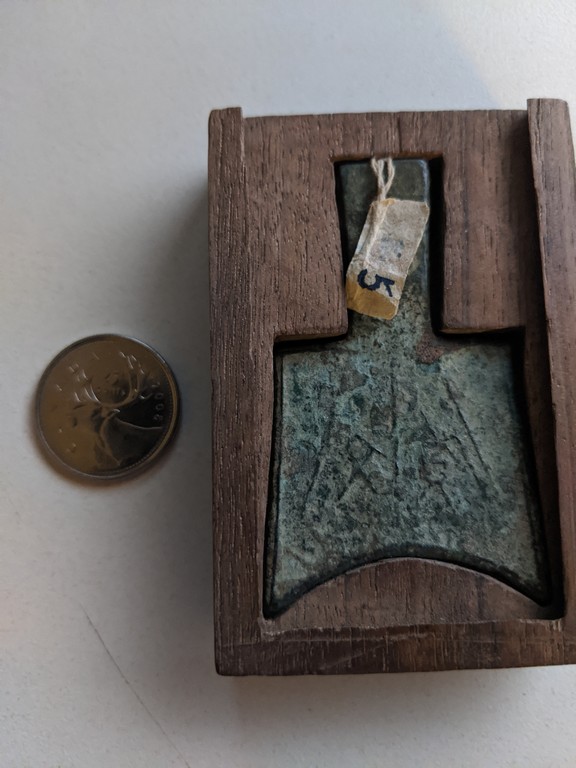
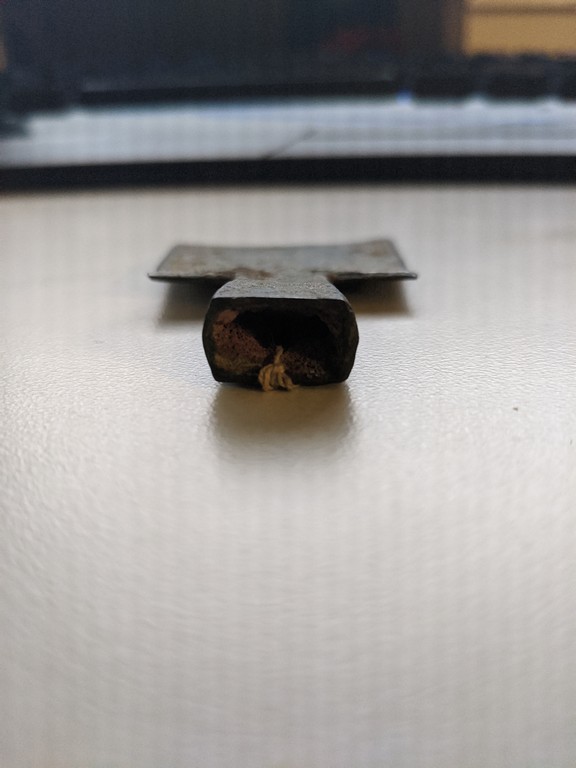
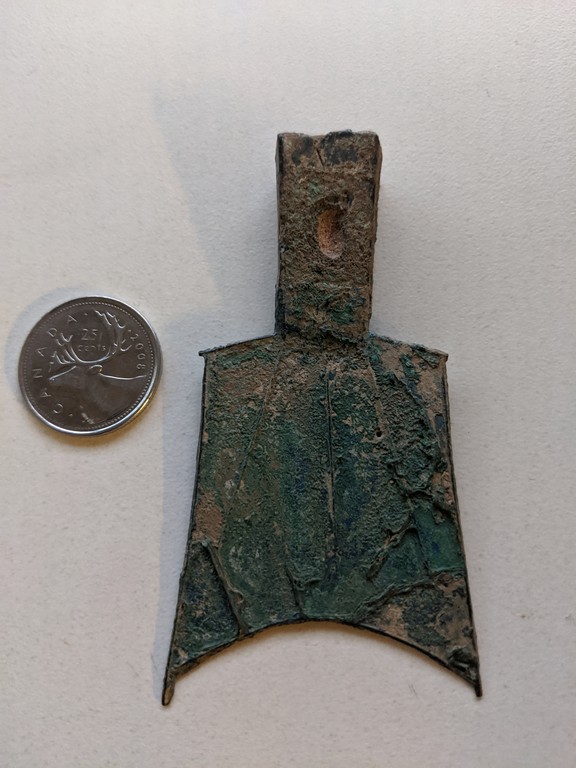
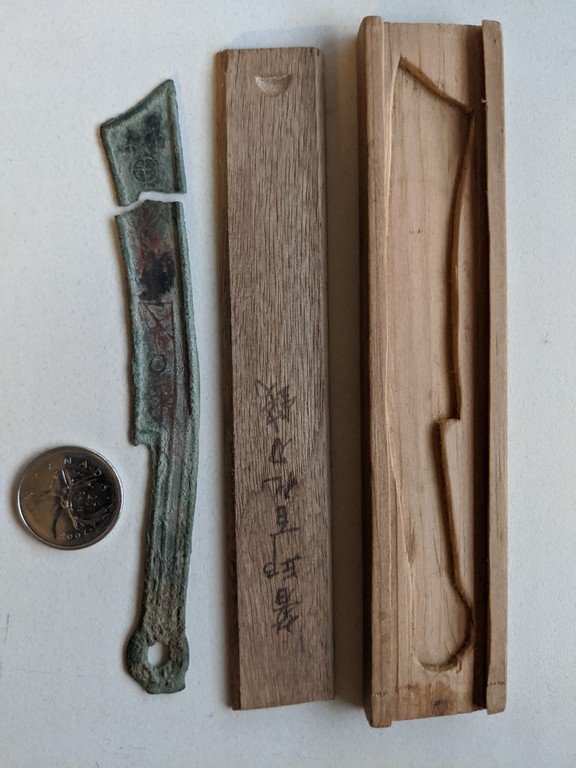
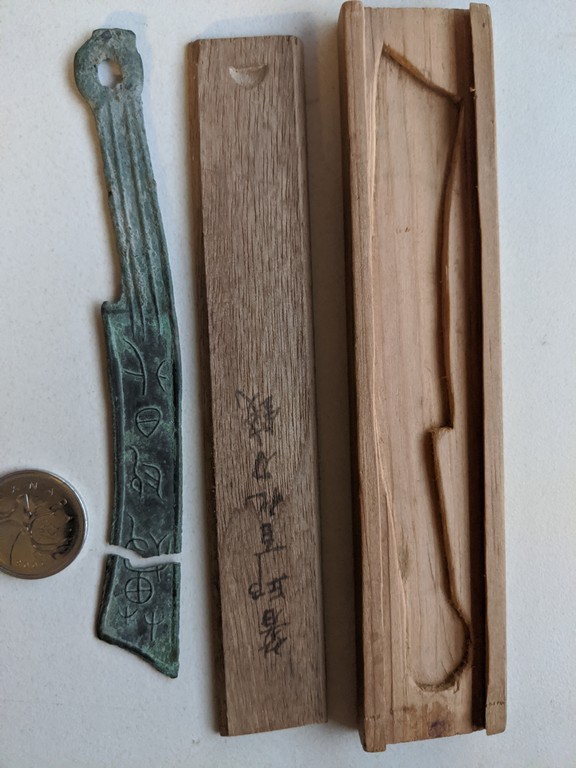
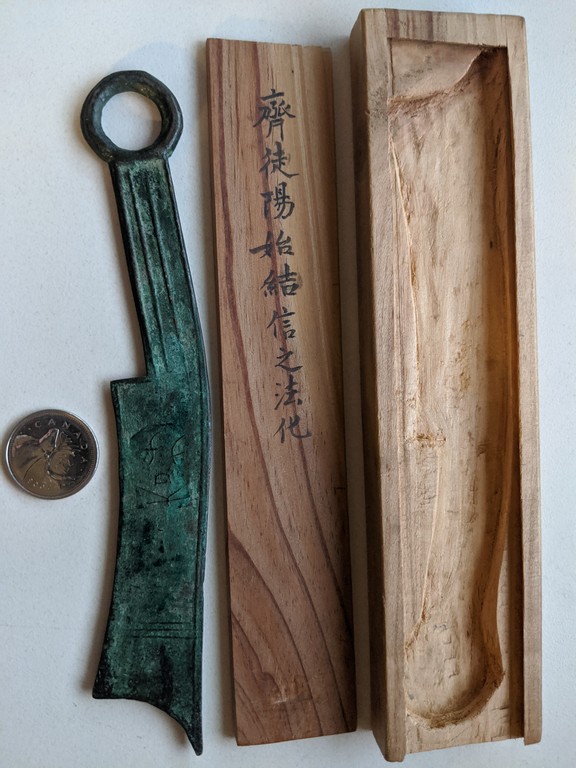
The first coin is a hollow-handle spade. It is much smaller than most and has a 2-character inscription, and it is rare as such. I'm on the fence about authenticity with this one. I've seen these sell for $1000-2500.
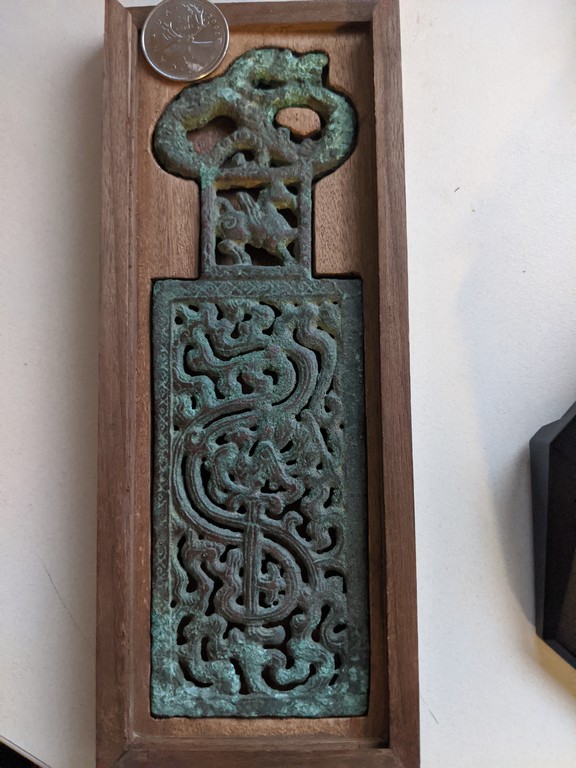
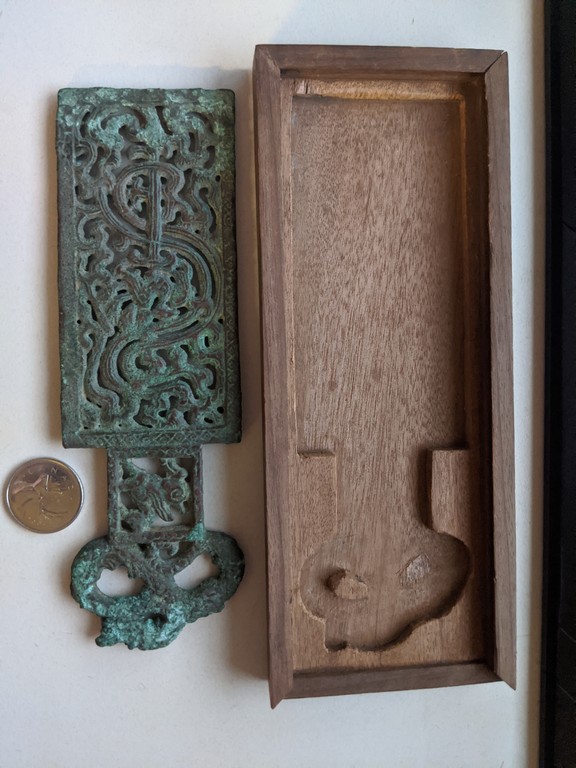
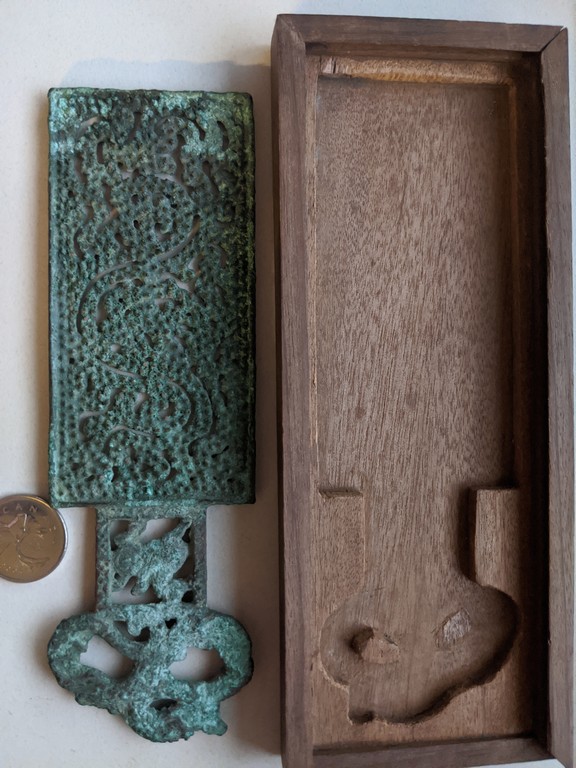
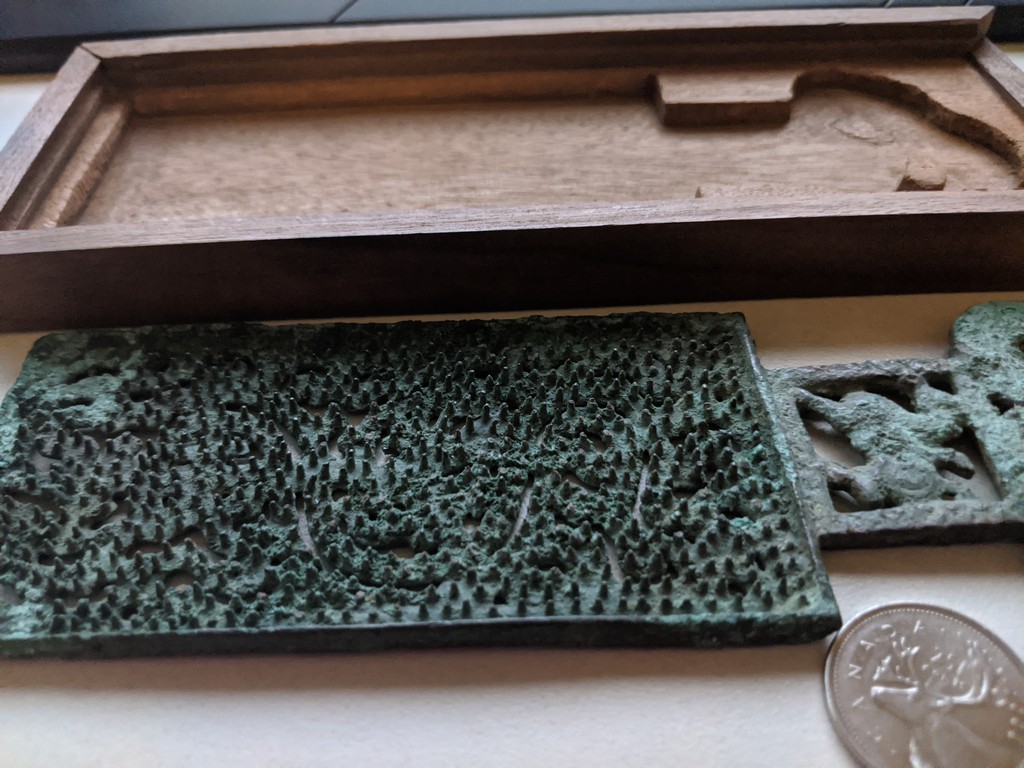
The "cheese-grater" like thing I know nothing about, but I have seen them before.
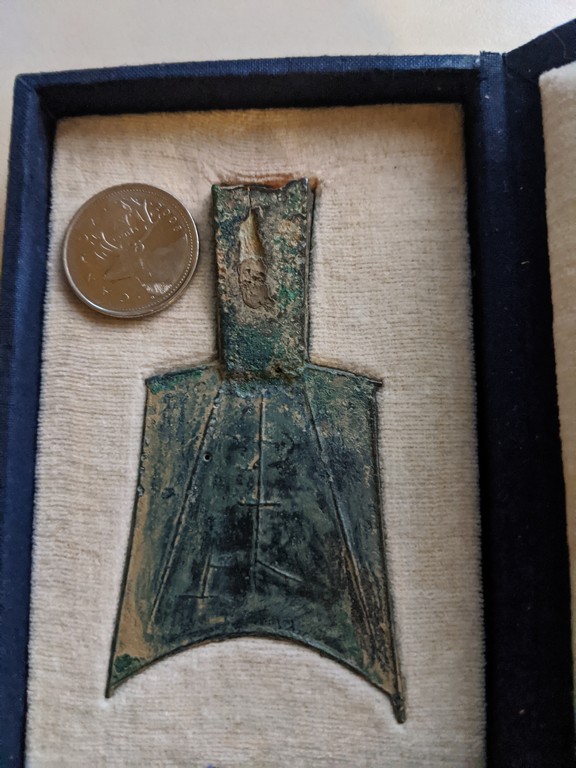
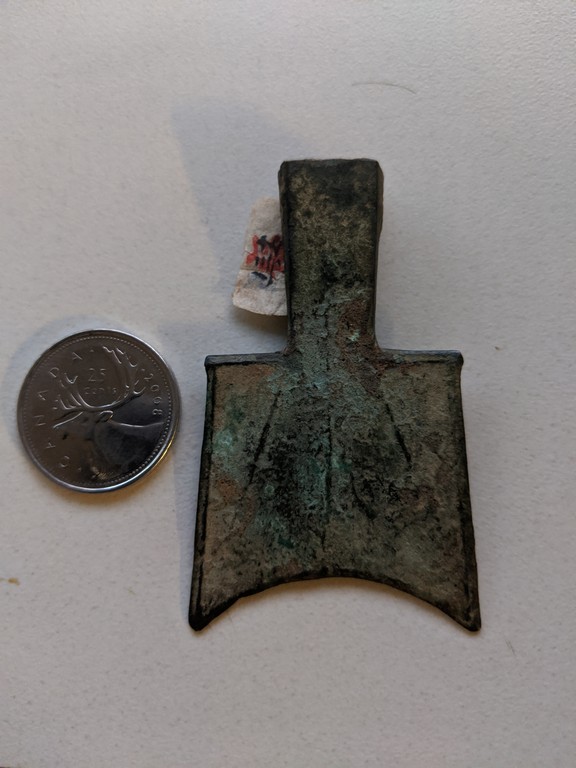
Your next hollow-handled spade is the most common of the type with an inscription of "Wu". It is completely genuine. Value is $500-750.
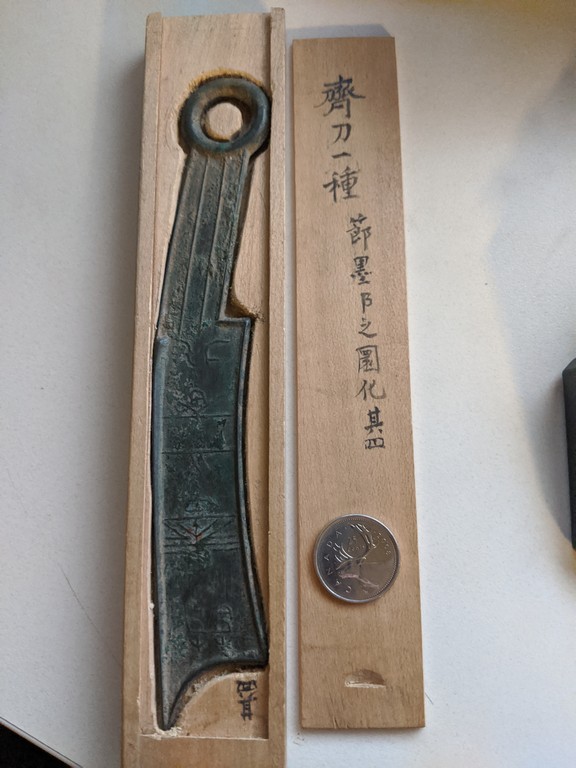
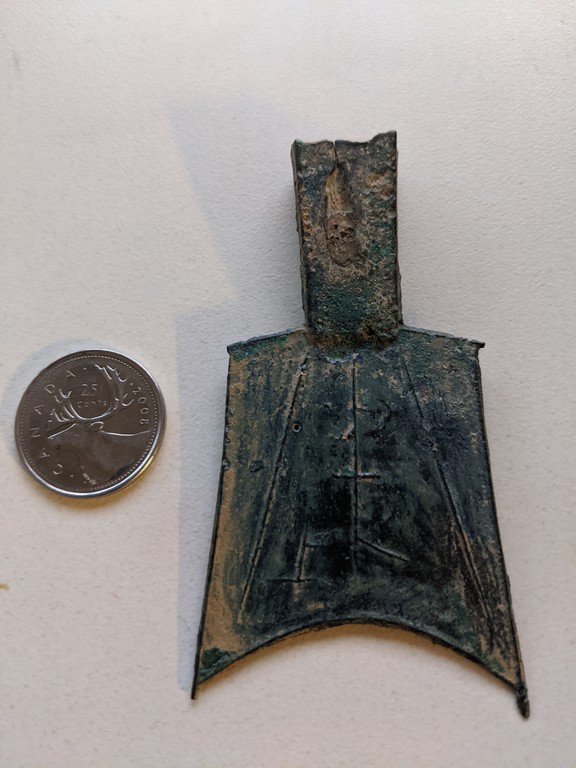
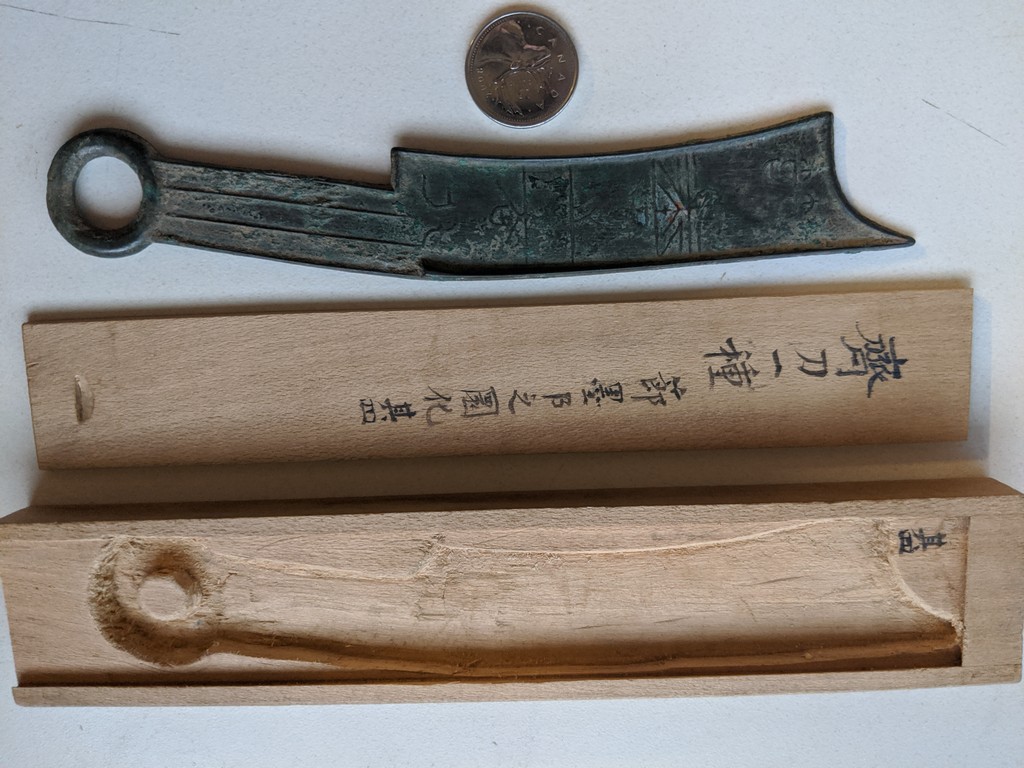
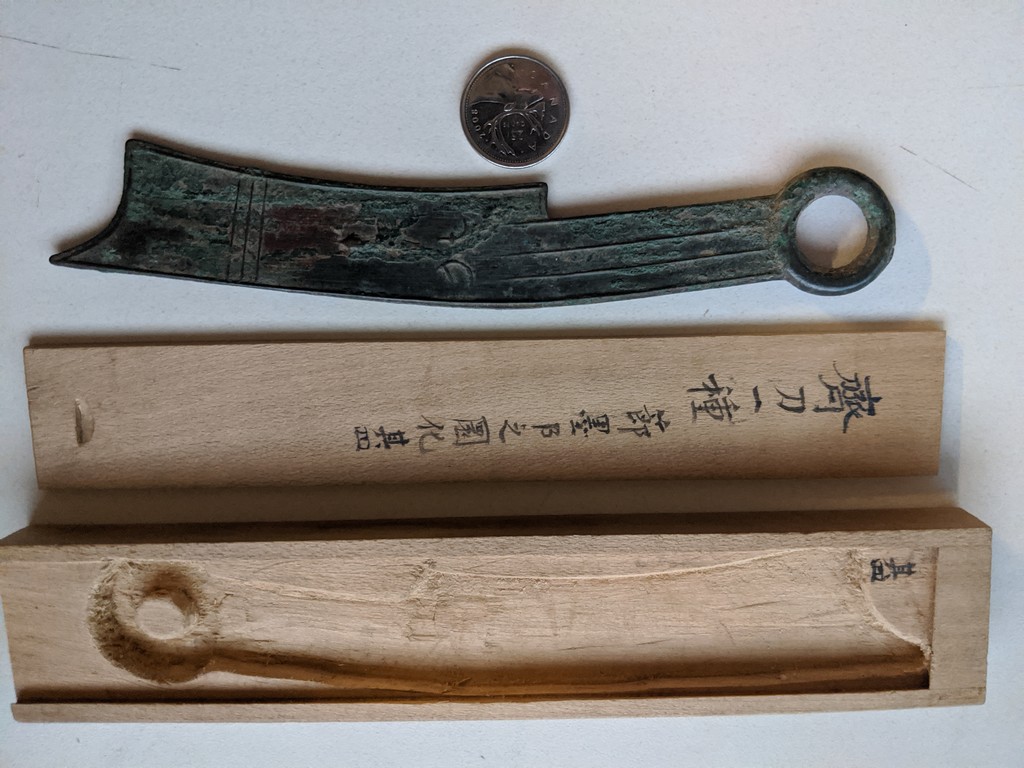
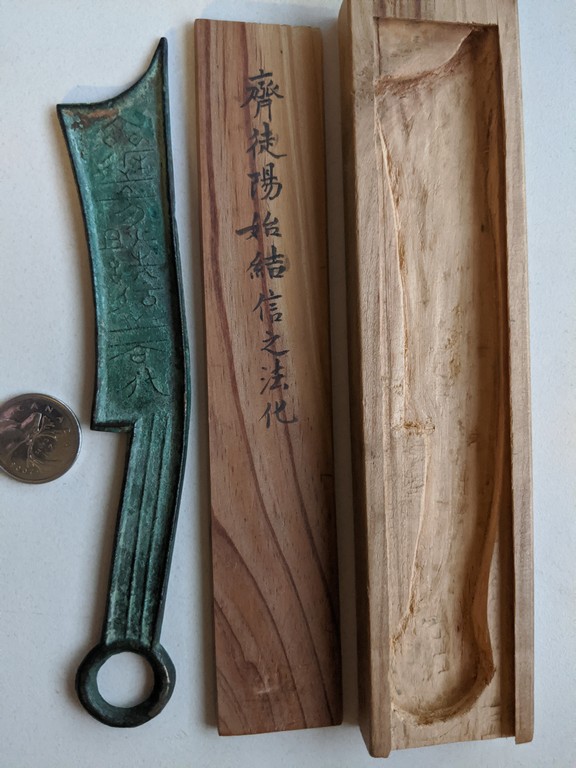
You have a large knife coin, which is a 5-character JiMo knife. It is absolutely genuine. The value of that coin has exploded tenfold in the past 10 years. It would easily fetch $8000-15000 on the market today.
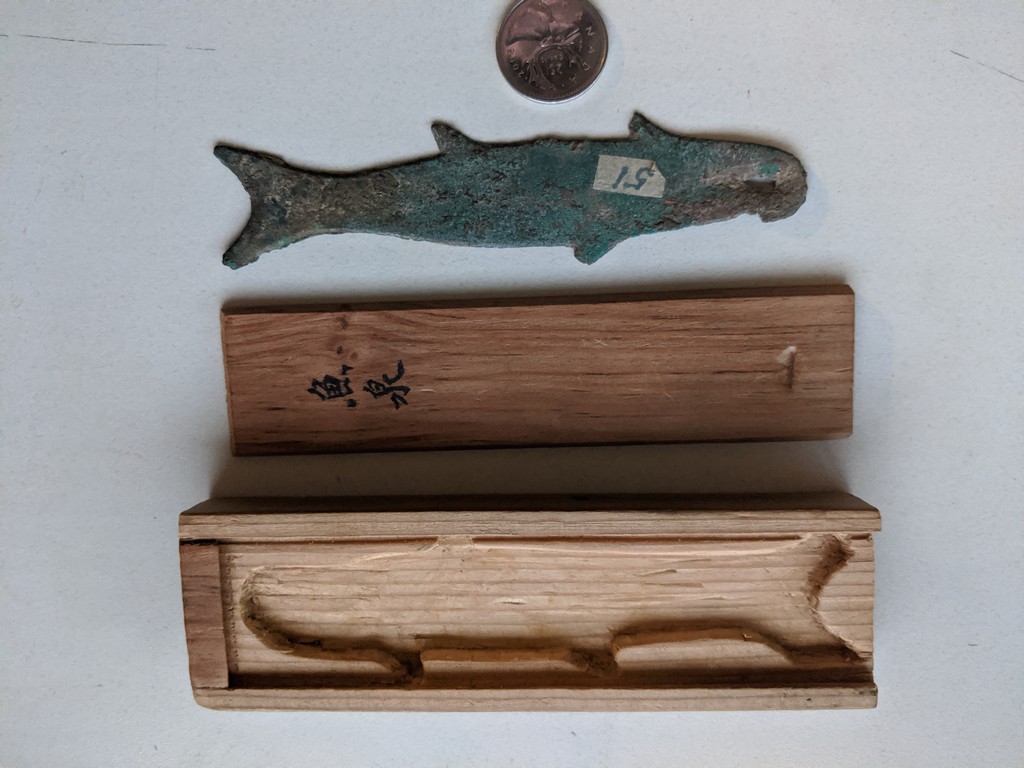
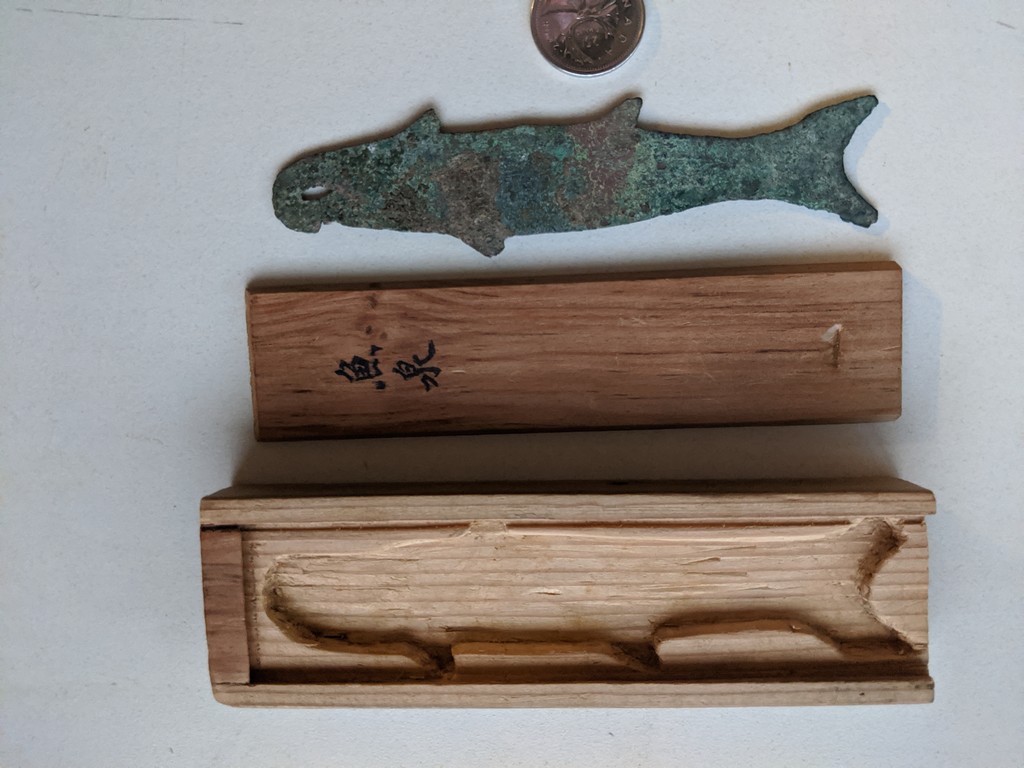
The fish "coin" is a probably burial money that never really circulated. Bridge money is in the same category. They are very common and not valuable. Your would fetch $50-100.
Edited by TypeCoin971793
01/04/2020 08:30 am
|
|
Pillar of the Community
United States
7067 Posts |
Welcome, ScratchMang.
Just wanted to add that when Thomas (TypeCoin971793) says, above, that he is the resident expert with regard to ancient Chinese money, it is an understatement. He is a respected, recognized authority.
Very glad to see that he contributed his thoughts here.
|
|
Valued Member
Netherlands
91 Posts |
Well, I was about to type up a reply, but it seems Thomas beat me to it! I do completely agree with Thomas. Most are completely genuine, save for maybe that first spade. It is exceedingly rare and I have not seen an awful lot of genuine ones, so it is difficult to compare. The Grater money is actually a later, Han dynasty amulet. They are quite rare, but there is only a limited market for them I am afraid. But once again, it is completely genuine.
That sloped shoulder Hollow-head (Wu) is very nice indeed and with a gorgeous blue patina. Should you ever want to get rid of/sell that one, please do shoot me a message!
|
|
Moderator
United States
23731 Posts |
Amazing, glad they turned out to for the most part to be genuine and are rare coins.
|
|
New Member
Canada
15 Posts |
|
|
New Member
Canada
15 Posts |
Still trying to figure out what that last one is.
I'm starting to believe it was some sort of grooming device for an Emperors cat? Or something to remove the zest form a lemon or orange?
Feel free to chime in with your thoughts :)
|
|
Valued Member
Netherlands
91 Posts |
To quote Bruce Smith on these 'graters':
"An extensive listing of these objects appears in Volume 5 of Arthur Coole's Encyclopedia of Chinese Coins (Ch'i Heavy Sword Coins and Debatable Pieces of the Chou Era) published in 1976. Among other names, the Chinese call these things "Lung Niu Hsing" meaning "coiled dragon and stars". One side usually has a design of some sort, while the other side consists of short pegs (which are the "stars" in the Chinese name). Coole notes that a book by Ch'u Shang-lin published in 1819 says these objects were in use between 225 BC and 23 AD -- that is, during the Former Han dynasty. Dr. Turk believes these objects are agricultural amulets made during Eastern Han times. Turk also says that some pieces depict a man standing on a wall, and that that man is Ch'eng Huang, the god of the city wall and moat. However, according to Encyclopedia Sinica, the cult of Ch'eng Huang did not become widespread until Sung dynasty times. Aurel Stein found a fragment of one of these things at Lop Nor (see Ruins of Desert Cathay, volume 1 photo 117). One of these objects was found in a Han dynasty tomb at Shan county, Honan (see K'ao Ku Hsueh Pao 1965 #1). Archaeological Studies in Szechuan by Cheng Te-k'un shows two of these objects (plate 67) and seems to believe they date to Han dynasty times. Harada Yocrapo in an article titled: On the So Called Amulet of the Han Dynasty (Kahei #279 June 1942), shows another type which has a man sitting on a turtle at the end of the handle, instead of the dragon. Another type (Coole #6812 and 6817) depicts in the design two people and a bird sitting on top of a mountain, surrounded by a tiger, turtle, dragon and bird. This is most likely a representation of the Queen Mother of the West and her attendant, plus the Green Dragon of the East, the White Tiger of the West, the Turtle of the North, and the Red Bird of the South. Such depictions are common in Han dynasty art. However, one of this type was found in a Yuan dynasty tomb (Wen Wu 1987 #2 pg. 80); either a copy made of earlier designs, or an antique. Coole also shows two pieces depicting a goat (Coole #6793 and 6794), which Henry Ramsden says were recent fakes being sold to unsuspecting antique collectors in his day (around 1910). However, one such piece was illustrated in the 1875 supplement to Ku Ch'uan Hui. It is still unclear whether these objects were made as amulets or tools, but it is clear that they were not used as money -- since they date to the Han dynasty, when the use of round coins was well established"
I've seen these sell for $100-200 apiece, although it is a difficult market for these.
Edited by AnYangMan
01/06/2020 4:16 pm
|
|
New Member
Canada
15 Posts |
Well there we go!
Sheds some light on the subject to say the least, a somewhat unique piece. Thank you for the input....
|
|
New Member
Canada
15 Posts |
Wokring at a University has advantages. I now know what two of the Knife Coins mean.... 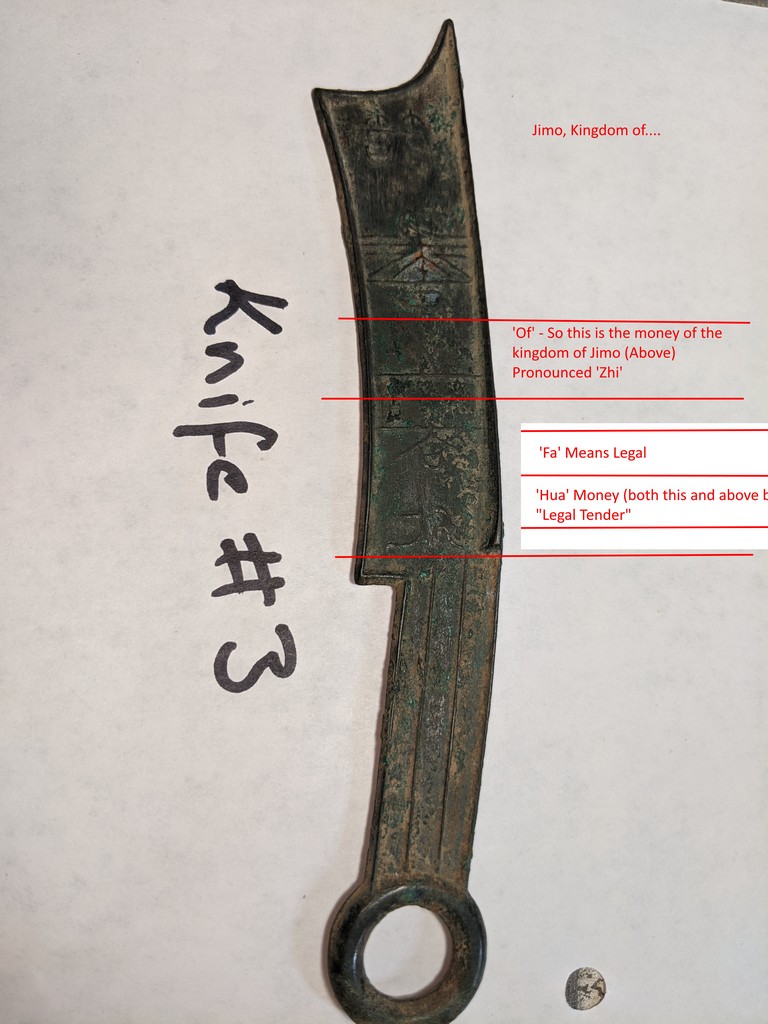 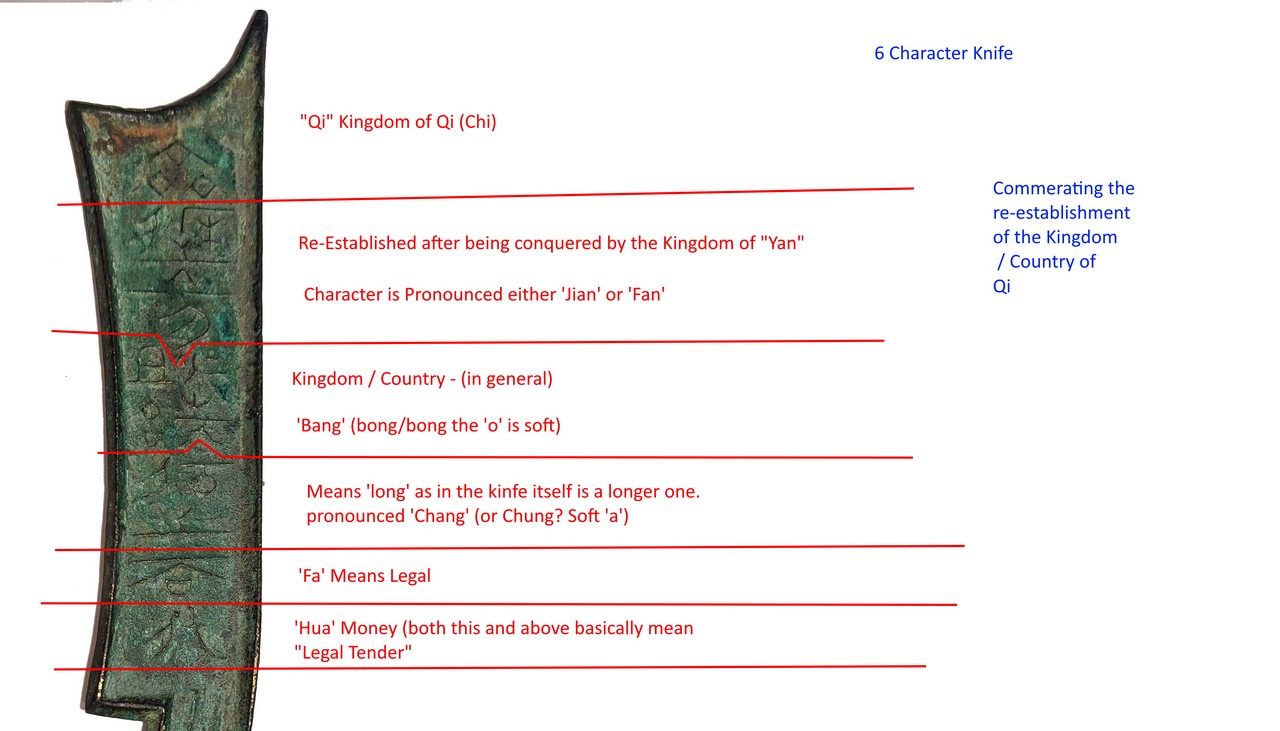 |
|
Page 2 of 2
|
Replies: 21 / Views: 3,853 |
Page 2 of 2
|








 First Page
 Posted 01/03/2020 3:31 pm