| Author |
 Replies: 19 / Views: 4,279 Replies: 19 / Views: 4,279 |
Page 2 of 2
|
|
|
|
Valued Member
United States
221 Posts |
Coinfrog,
I do have that question.
My thinking is that different metallic domains will be stretched in the same direction when the metal is worked in preparing stock for planchets. The directions have to match front to back that way.
I can understand how opposing directions would be perceived if that is true. For an obverse/reverse pair of photos for something with medal alignment, the angle would appear the same. For coin alignment, the angles would appear to be mirror images (different angles) because of the different axis of rotation.
If my understanding of how a woody originates is incorrect, then I apologize for the incorrect gibberish above.
|
|
Pillar of the Community
United States
7368 Posts |
IMO your 1940 cent looks AU to Ms and I believe a premium can be added to that cent...lovely coin...  |
|
Bedrock of the Community
United States
94367 Posts |
Numiscrat - I can only speak from experience and the obvious fact that this 1941 cent is clearly genuine.
Edited by Coinfrog
12/02/2020 10:46 pm
|
|
Valued Member
United States
221 Posts |
Coinfrog,
I still am wondering if my understanding as stated above is correct, but after working my way through those pics again, I realize I was incorrect about the 1940. I thought the grain was running the other direction. I believe the grain direction does match.
|
|
Pillar of the Community
 United States
524 Posts |
It's evident my description produced the unintended inference that one of the two coins was not a woody, when the goal was to assume both were woodies but which was also with a lamination error. My question was to Evaluate if any of these coins has a lamination error. The answer appears to be no. None of the photos are doctored but are raw coins. For noobs like me it is important to know the why in addition to the what, otherwise you could be hosed in a trade, buy or sell. or make an unfavorable impression, which I hope was not my case here. Thanks for all the engagement, it was a blast to read!
|
|
Bedrock of the Community
United States
10635 Posts |
Ok, let's visit this in a bit more detail... it's somewhat difficult with a single coin, but much more confusing when dealing with two coins (part of the reason we ask for one coin per thread). As discussed above, with an improper alloy mix, the "grain" has to match both sides. Think of a plank of wood, the wood grain flows in the same direction throughout the wood. Same thing with a true "woodie" cent. Also as mentioned, the orientation of U.S. coins is such that when flipped over, the reverse appears "up-side-down" in relation to the obverse. As an example, an ooze from 11 o'clock to 5 o'clock on one side would be expected to travel 1-7 o'clock when flipped to the other side. Following this orientation, the "grain" of the first coin above (the 1940) is in direct opposition to what it should be, while the grain in second coin (the 1941) moves as expected, that is, the flow of the grain matches correctly. I'll go out on a limb here and say it is nearly impossible for grain flow between the obverse and reverse to act in a 90 degree stream in relationship to each other, yet it is in the first (1940) coin. So, that is why I said above that one is a woodie, and one is not. And if one is true and one untrue, it makes you wonder how this could have happened? Is one or even both simply surface marks and not a real improper alloy mix?  |
|
Pillar of the Community
United States
2376 Posts |
The 1940 has the "grain" running in the proper direction on both sides. If you look at the reverse pic of the 1940 coin and focus to the viewers left wheat you will see the grain is running correctly between the rim and the wheat. The 90 degree ripples that are a telltale of a lam are just showing darker on this example.
|
|
Pillar of the Community
United States
524 Posts |
I have a lot to this about, love this Forum!
|
|
Bedrock of the Community
United States
10635 Posts |
Quote:
The 1940 has the "grain" running in the proper direction on both sides. OK, I've officially been looking at too many cents. I'm sorry, I had my American cents orientation backwards. I spend most of my "hands on" time searching through Canadian Cents, where the "up-side-down" flip over applies. It's American Cents that remain correct orientation. Sorry for the confusion. So that means it's the 1940 cent that is the true woodie pictured above, while the second coin, the 1941 is not. |
|
Pillar of the Community
United States
1427 Posts |
Neat finds, not sure about the '40, but the '41 is definitely one!
|
|
Moderator
 United States
56855 Posts |
|
|
Pillar of the Community
United States
2376 Posts |
Both coins are woodies. If you look at my 1956 cent in the pic I'm providing you will see waves of metal running perpendicular to the length of the lam. These waves are characteristic of a planchet because of how the metal is rolled to thickness. The reverse of the OP's 1940 coin has these perpendicular lines showing darker than the directional flow lines so that it gives the illusion of a different flow direction. 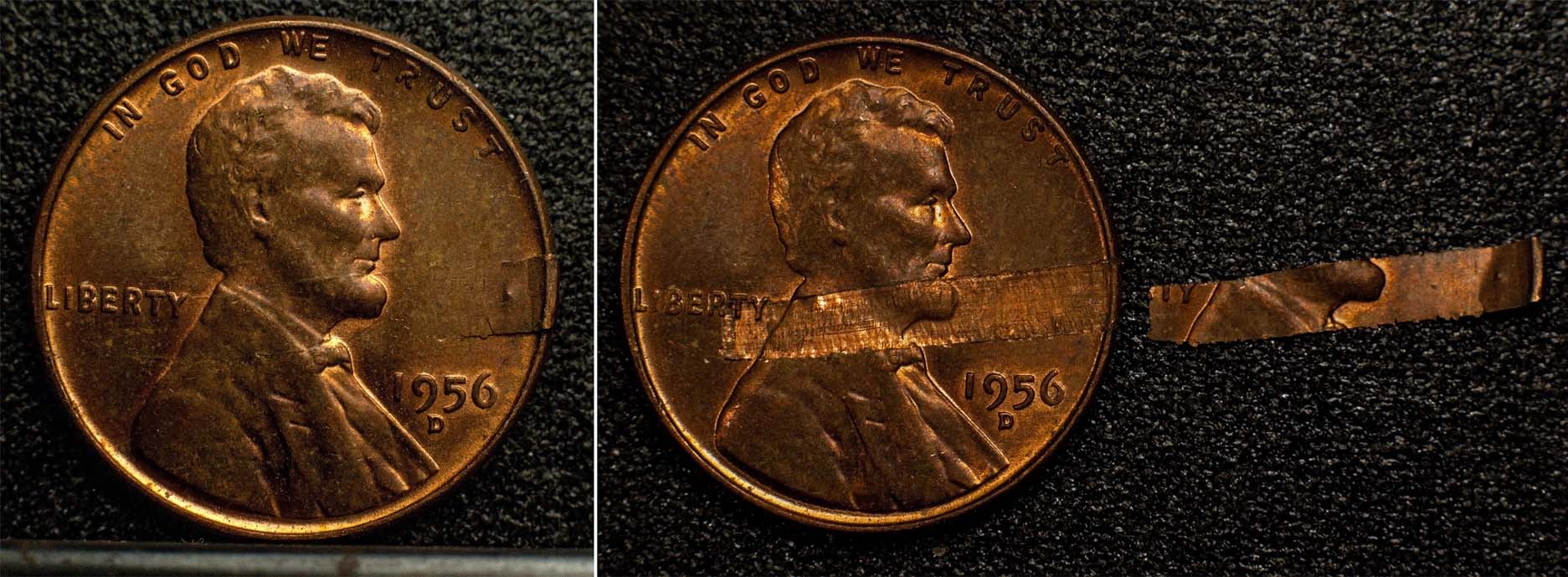 |
|
Pillar of the Community
United States
524 Posts |
@stoneman227, wow, how does that work?
All--thank you for the commentary and education, are there books on coin chemistry you could recommend--I have a science background?
|
|
Bedrock of the Community
United States
62064 Posts |
Have you watched anyone making home made noodles? When rolling out the dough, if there is a loose piece on the batch and it gets rolled into the lump, then it is there, but is not attached firmly or part of the lump. The same with copper. When the metal is rolled flat, if there was a part that was rolled onto the metal, it attaches, but is not part of the mix of metal. When these are cut in blanks and the proto rim 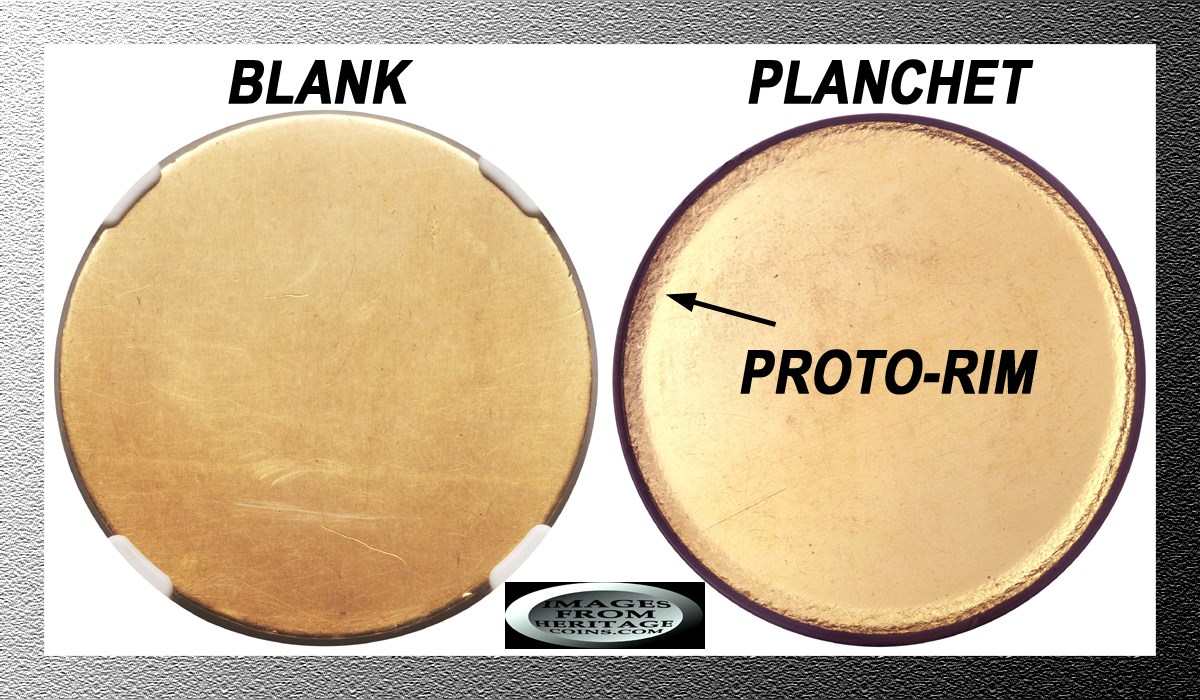 is added to the blanks and becomes a planchet, then that setup process can loosen the attached metal, because if was not in the mix. Then this will peel off the planchet before/after the strike. Thus like the example above, it peels away as it was not part of the mix, but rolled onto the stock material. Thus referred to as a lamination error. 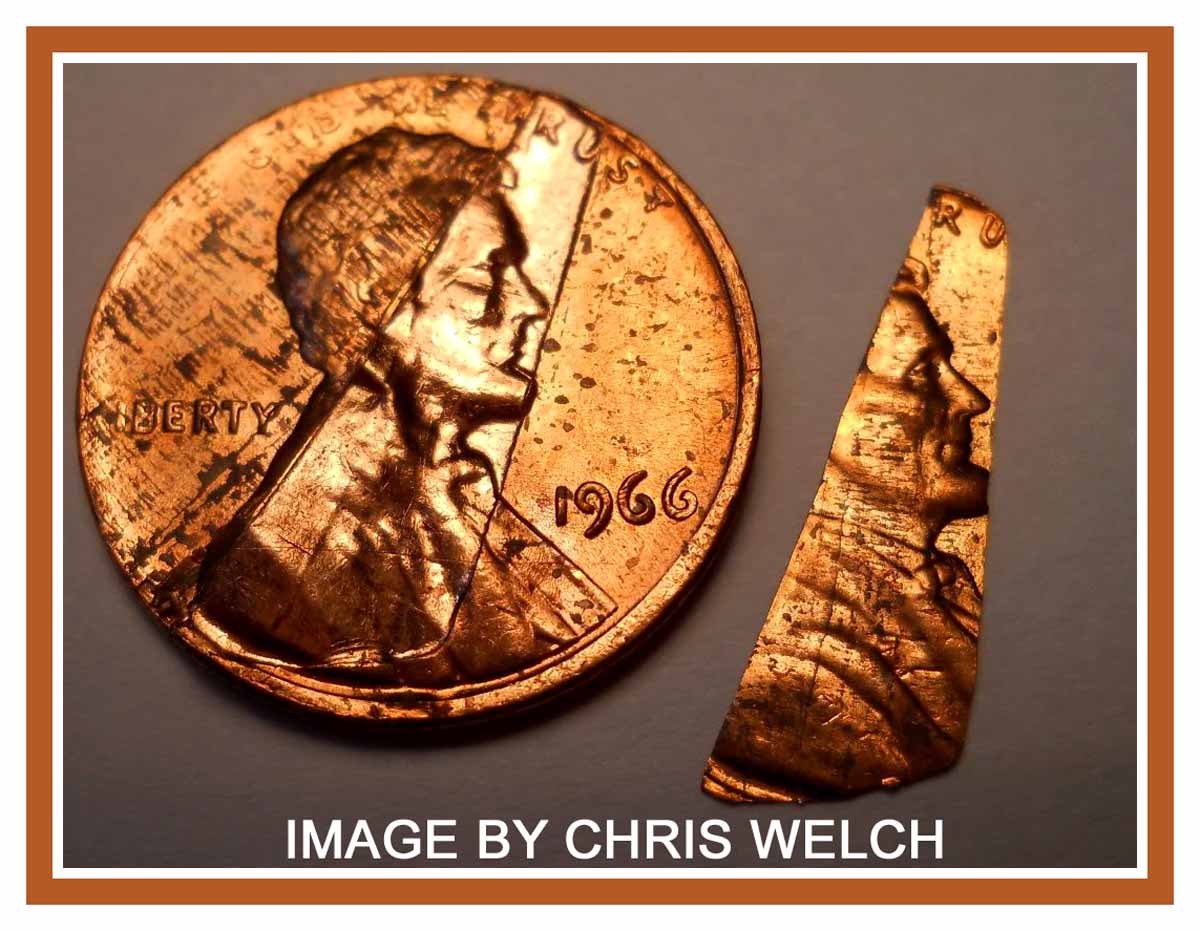 These tend to run in straight lines as the shape of the metal if rolled into the new position, making it longer and thinner when it attaches to the original mix. 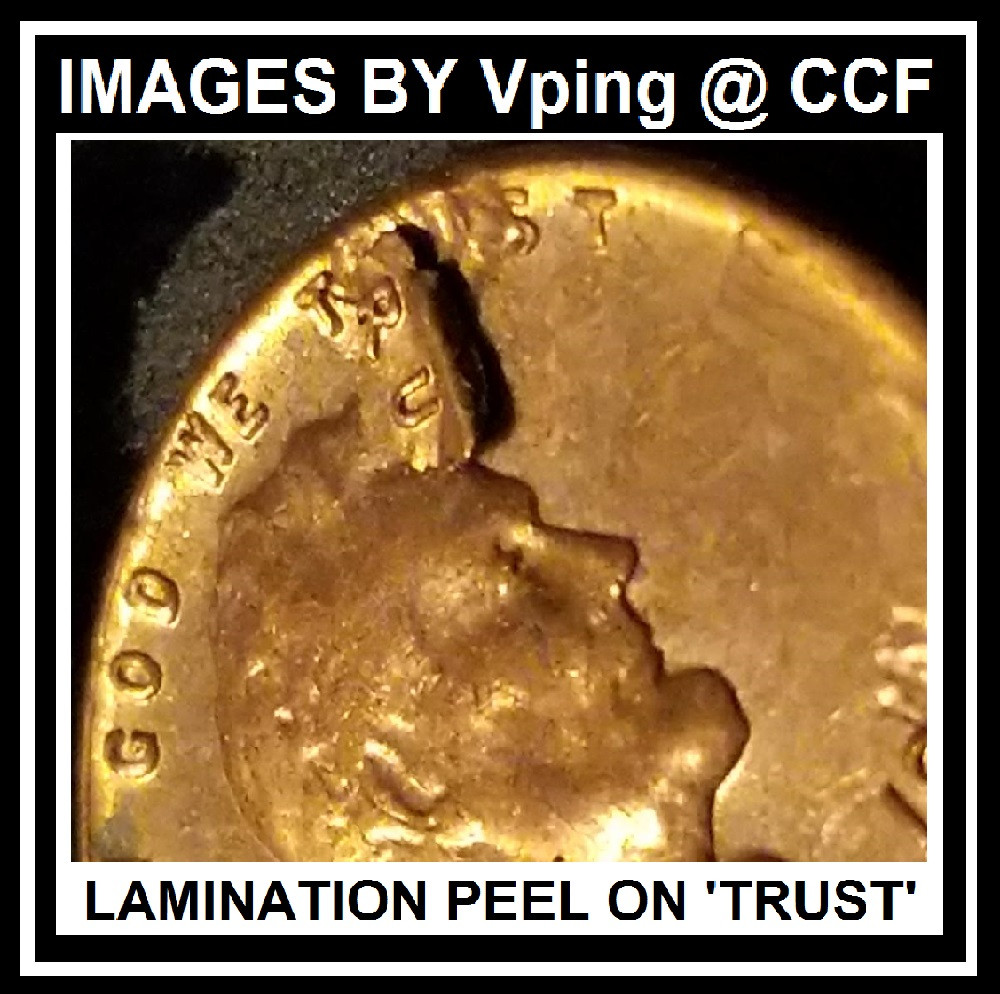 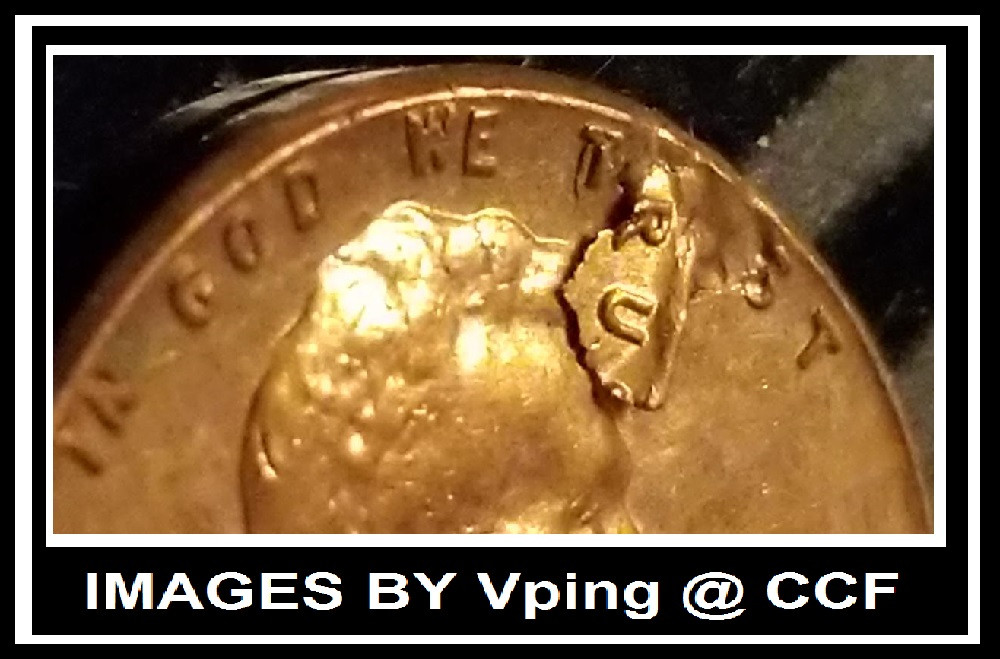 Sometimes it is a piece of debris that get struck onto the coin. Rim bur: 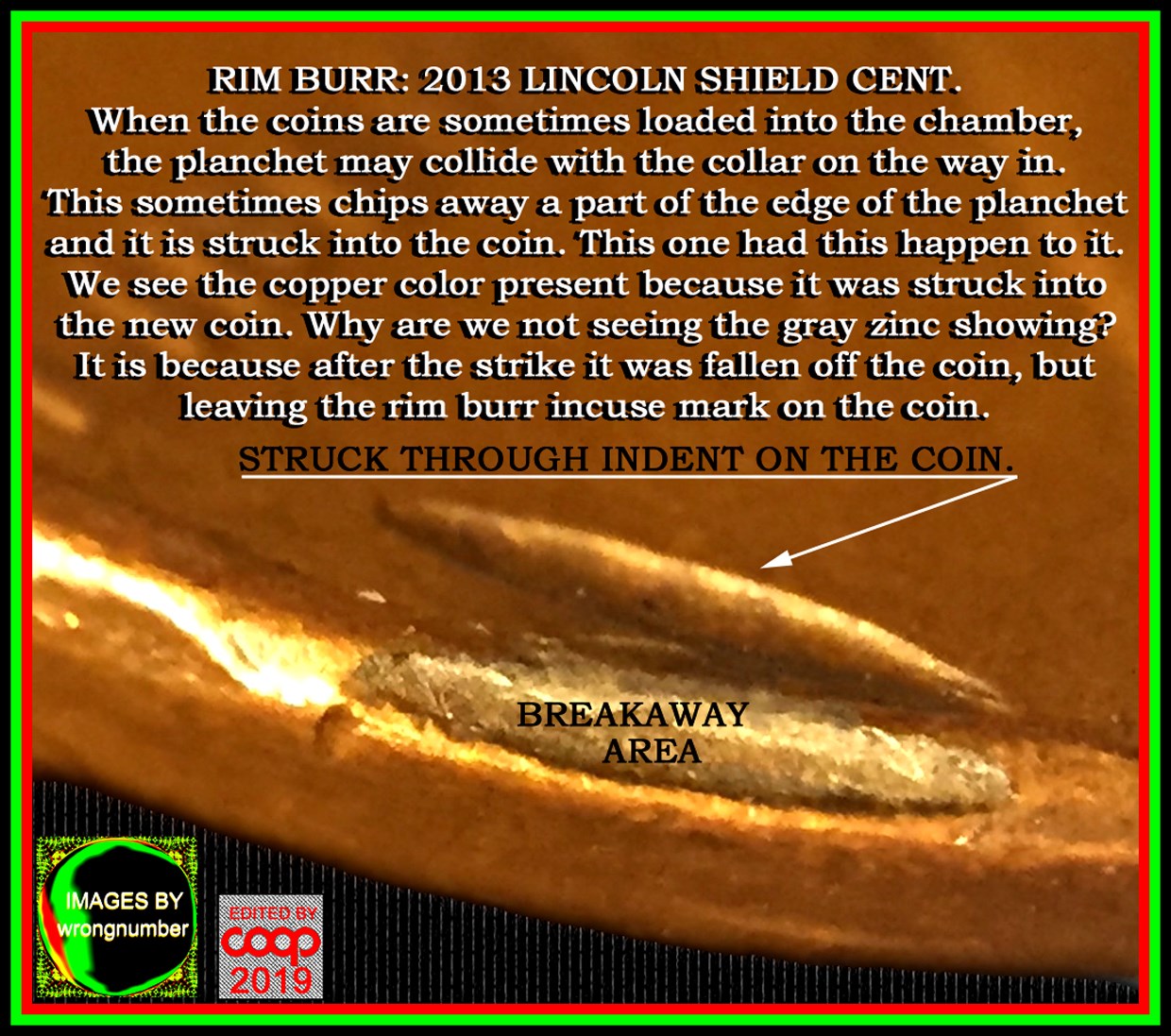 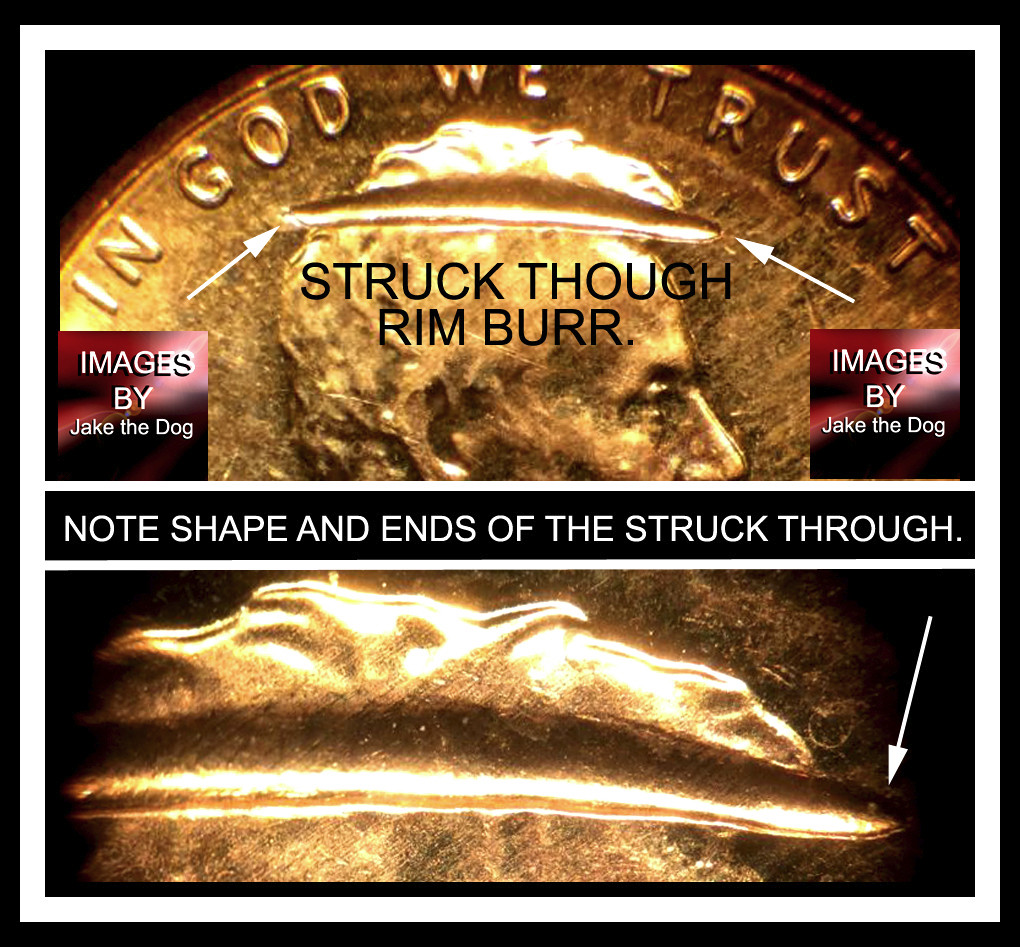 Debris: 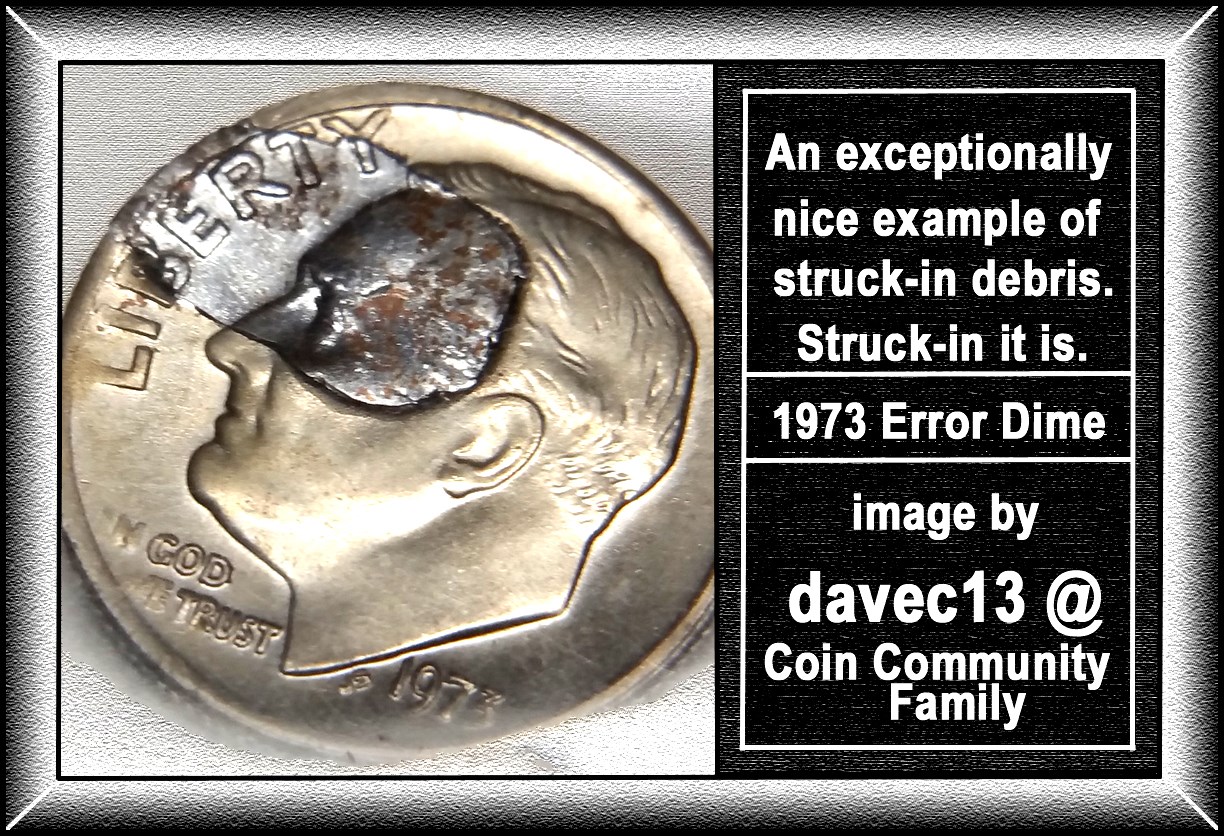 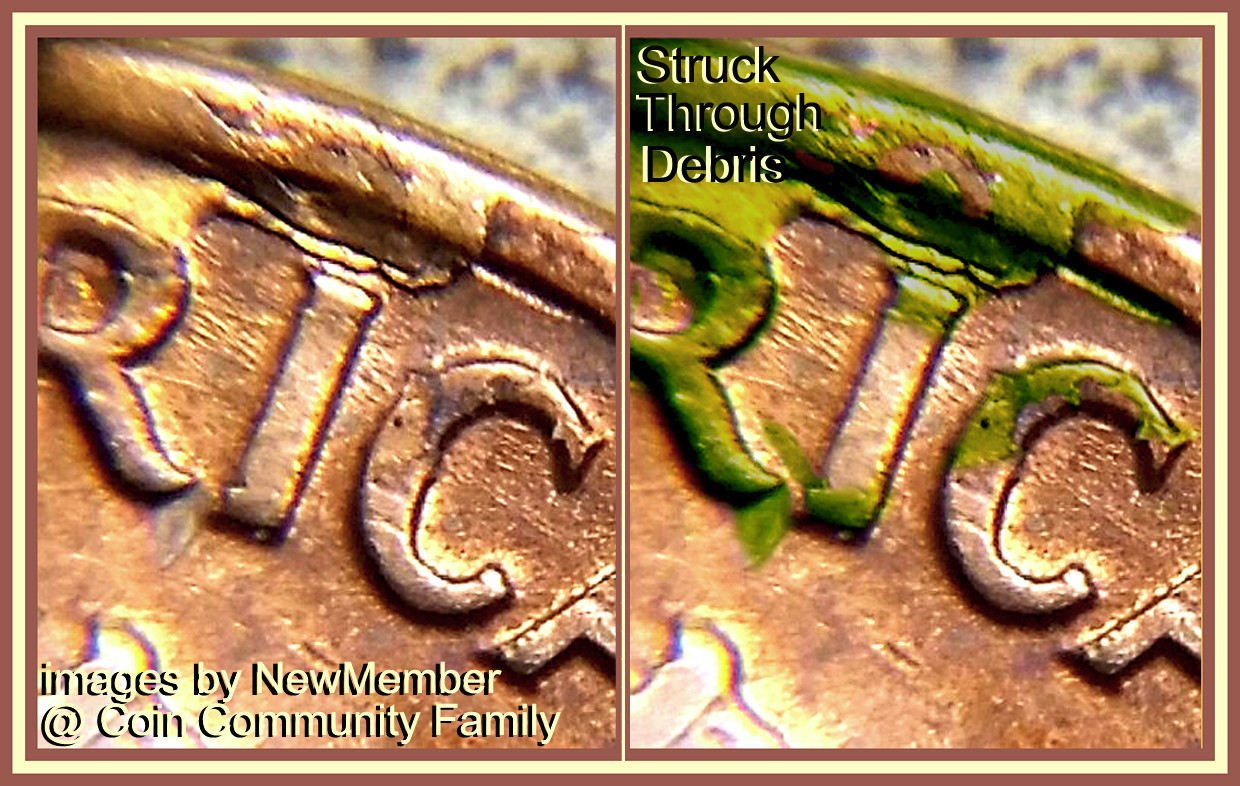 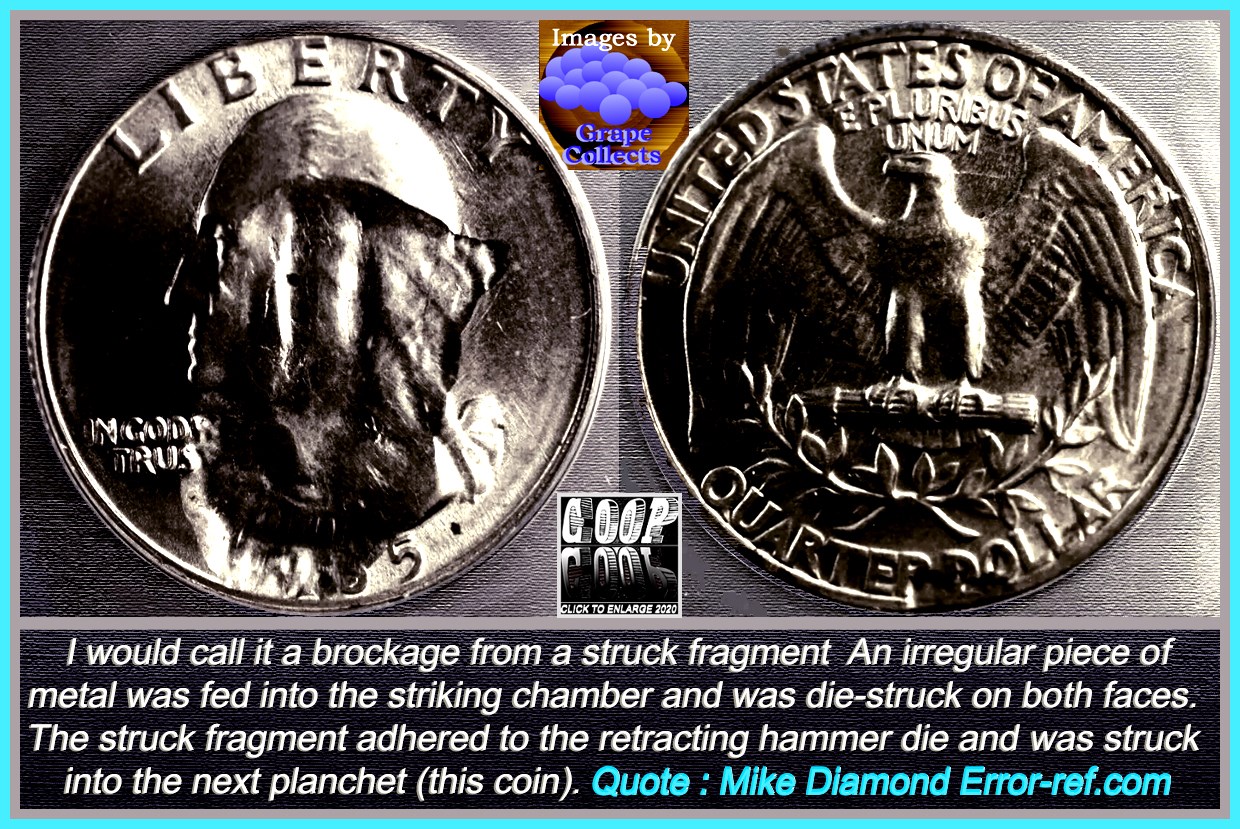 |
|
Pillar of the Community
United States
2376 Posts |
Here is a link to a video of the Canadian mint producing gold proof coins. https://www.youtube.com/watch?v=AeGXYYoSO1U The part that applies to this thread is where they turn a coin metal ingot into a coin metal sheet ready to stamp blanks. You will ser the coin metal moves in two directions. It expands in length, which produces the wood grain effect , and in width which produces the perpendicular ripples of a lam. |
|
Page 2 of 2
|
Replies: 19 / Views: 4,279 |
Page 2 of 2
|







 First Page

 Posted 12/02/2020 9:42 pm





