| Author |
 Replies: 19 / Views: 2,644 Replies: 19 / Views: 2,644 |
Page 2 of 2
|
|
|
|
Valued Member
 United States
108 Posts |
In other words, if I want to find the 1982 Small Date Zinc WDDR-002, I need to look for something that looks like this (from my original post). I am not saying that my penny is the WDDR-002, but if it were, it would have the die scratches thru the memorial, right? So it is good to know what a die scratch is (in contrast to roller marks and PMD) and where it is gonna show up on a special variety. Right? 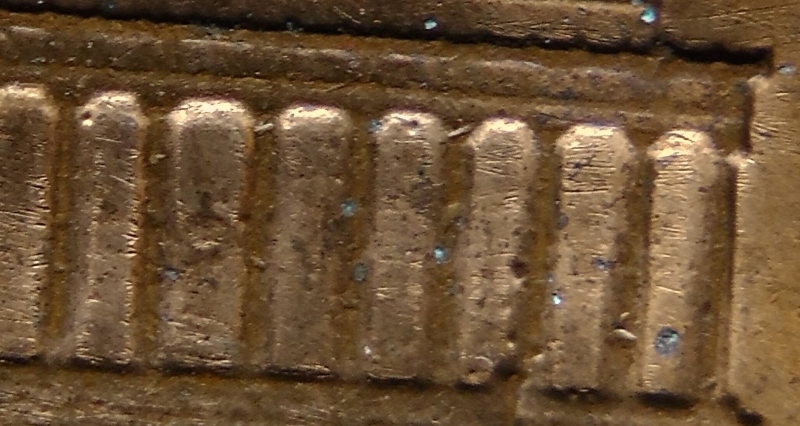 Edited by CentSeeker
08/31/2022 03:53 am
|
|
Moderator
 United States
56855 Posts |
CentSeeker, You need to find the variety first. Then you need to find the attribution number of the die pairs by looking for die markers. John1  |
|
Valued Member
United States
108 Posts |
John, Thanks for helping me understand. I still don't get it. Are you saying the only way to find the one you want is to look for the separation lines on the doubling first? Then go to those sites simply to use the markers to confirm it? Sometimes the doubling is not very obvious is why I looked at other markers I guess.
Edited by CentSeeker
08/31/2022 05:08 am
|
|
Valued Member
United States
108 Posts |
Here is a different one. Now what caught my eye on this was the ONE and I thought the upper corner of the E looked interesting and the N too, but I dunno. Still waiting on my microscope. But check out the die scratches in the memorial. There is a DDR version that has those scratches going up and down over the statue. 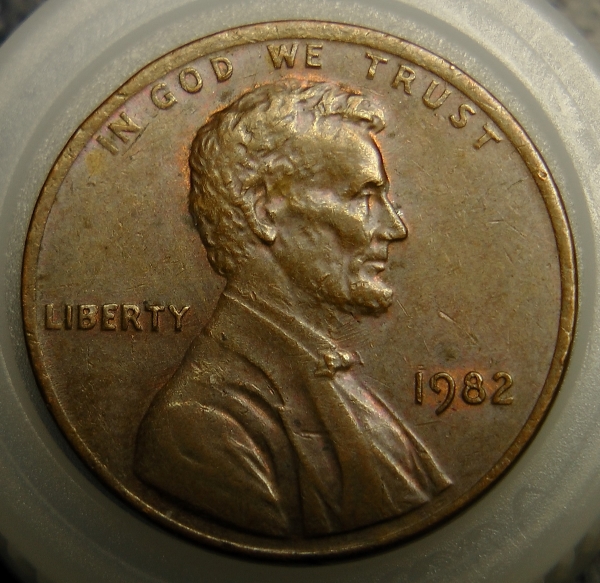 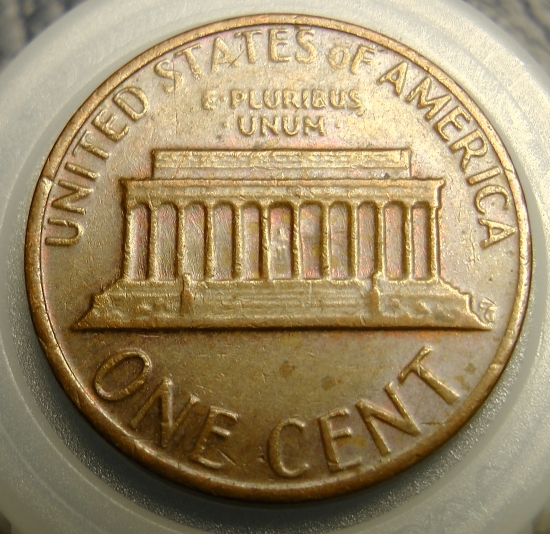 |
|
Moderator
United States
56855 Posts |
Quote:
Are you saying the only way to find the one you want is to look for the separation lines on the doubling first? Then go to those sites simply to use the markers to confirm it? Sometimes the doubling is not very obvious is why I looked at other markers I guess. Yes. There are 9 "I think" classes of hub doubling to learn, it is not just separation lines to look for. 4th post down http://www.coppercoins.com/forum/vi...hlight=classJohn1 Edited by John1
08/31/2022 09:02 am
|
|
Bedrock of the Community
United States
94367 Posts |
 to the CCF! |
|
Bedrock of the Community
United States
62064 Posts |
All dies go through the same polishing process. So die scratches could be performed over an over, if possible by the same person. So these die scratches will vary, just like finger prints vary from die to die, person to person. These die scratches fade quicker in the open fields. Then the die scratches near devices can show a pattern for a longer time. While devices in the close devices will last the longest. (inside devices, on the bays) These contain devices show die wear least. Thus the bays will keep the same die scratches for the longer amount of coins struck. Die markers are listed for the die with hub doubling and RPMs. So looking for the markers, can lead to disappointment. A die can start out without a certain know die marker. As the die ages, the markers of past die states can be weakened, altered or replaced with new die markers as the die ages. (sometimes this happens many times) But on a variety coin, they are considered so you can determine what die state you coin will match up to. Each polishing alters the fields. When the fields are reduced, the devices get smaller. Thus the variety can look a bit different as the die ages/thins. So it you were trying to locate a certain finger print, examining each person for a match would take a long time. Thus you look for the suspects and check them for a match first. Same for coins. Look for the doubling associated with the variety, rather than looking for the markers. (saves a lot more time) CoopHome: Why is it pointless to search for die markers first, rather than searching for the variety first? dies do the same job over and over, dies are polished and fields are altered Edited by coop
08/31/2022 10:51 am
|
|
Valued Member
United States
108 Posts |
Thank you so much for taking the time to explain everything! How do you tell the difference between DDD (that causes a spread-out look on devices, I think 1980 was one example) and the classes of doubled dies that tend to spread out but do not have separation lines that are clearly visible? I think they were class 3 and 9 or something. I saw info about "notches" mentioned too, but the arrows always point to the tops corners of devices but I don't see what the arrow is referring too because nothing appears unusual where the arrow is pointing. Edited by CentSeeker
08/31/2022 11:32 am
|
|
Valued Member
United States
108 Posts |
See here LIBERTY on this 1982 Large Date cent could be DDD or could it be DDO? That is what I mean about the classes of double dies that spread out. There is another example, a variety for 1982 Small Date Zinc that shows the LI really fat too. 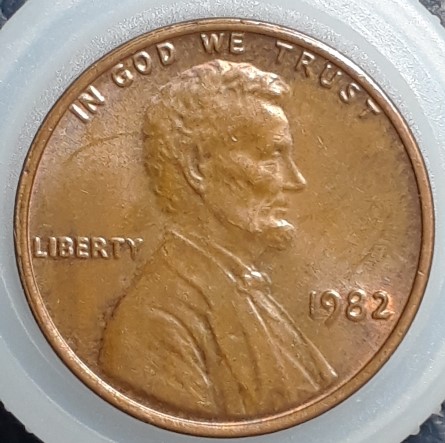 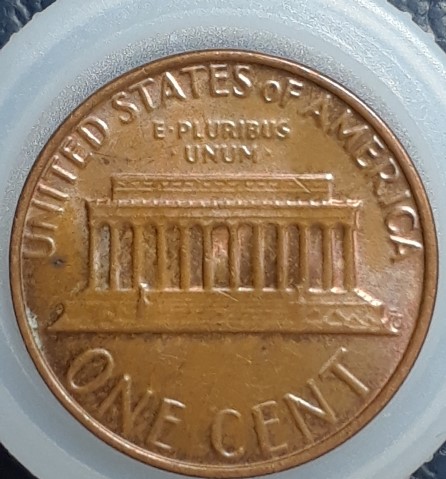 |
|
Bedrock of the Community
United States
62064 Posts |
The pre 1980 coins were using the earlier die process of multi hub die creation. During the 1980's a new process was starting to be used. (Not sure what year the single squeeze process started on the 80's zincolns yet. But looking at the 1990 on Variety vista, the DDO's slowed down a lot at that point. So that is another project in the future for me to see if I can figure this out. |
|
Pillar of the Community
United States
3237 Posts |
Die markers like gouges and scratches move and change as the die is used. It is a very bad idea to use them to identify a variety, and not a practical way to search. You should first match your coin to the doubling or other relevant features listed on the reference sites, THEN use the die markers to distinguish between similar dies if similar dies exist for the variety in question.
|
|
Valued Member
United States
108 Posts |
I am starting to realize people got the impression that I was trying to memorize all the die markers in all the varieties, and that I was inspecting every single coin I touched for all the assigned die markers. I had a pretty good deep belly laugh after realizing how funny that sounded. That is not what I am doing at all. Sorry for confusing the whole thing. And I don't blame anyone for laughing either, that is just too darn funny.
|
|
Valued Member
United States
108 Posts |
Quote:
Die markers like gouges and scratches move and change as the die is used. It is a very bad idea to use them to identify a variety, and not a practical way to search. You should first match your coin to the doubling or other relevant features listed on the reference sites, THEN use the die markers to distinguish between similar dies if similar dies exist for the variety in question. Well said. Thanks for helping me learn. |
|
Valued Member
United States
108 Posts |
Quote:Yes. There are 9 "I think" classes of hub doubling to learn, it is not just separation lines to look for. 4th post down http://www.coppercoins.com/forum/vi...hlight=classJohn1 This was very helpful, thank you. I don't recall seeing those examples before. Having the pretext from the forum was great the way the poster provided the descriptions. My big focus right now is how to identify those spreading types of doubled dies (maybe class 3 I think?) because they look so similar to the DDD. I don't think you would be able to tell the difference without a microscope. |
|
Valued Member
United States
108 Posts |
From the newbie perspective: Doubled Dies Class 3 and Class 9 are similar to DDD. Class 9 is the most hard to distinguish from DDD. Update edit: I looked again and 3, 6, 8, and 9 are hard to distingush because the doubling is basically one right on top of the other. DDD info was here for the comparison http://goccf.com/t/317950Edited by CentSeeker
08/31/2022 7:49 pm
|
|
Page 2 of 2
|
Replies: 19 / Views: 2,644 |
Page 2 of 2
|






 First Page


 Posted 08/31/2022 04:19 am


